Tag: dealership marketing

  • Car Dealer Website Templates – car dealer website templates for more leads

    Car Dealer Website Templates – car dealer website templates for more leads

    Think of a car dealer website template as a blueprint for your digital showroom. It's a pre-built, industry-specific website design that gives you all the essential pages, features, and tools you need to get online quickly. Instead of building from scratch, you start with a solid foundation designed specifically for selling cars.

    Your Digital Showroom Is Your New Forecourt

    The days of relying solely on walk-in traffic are long gone. Today, the car buying journey almost always starts on a screen, not on the lot. With tens of thousands of dealerships competing for attention across the United States, a strong online presence isn't just a nice-to-have—it's your most powerful sales engine.
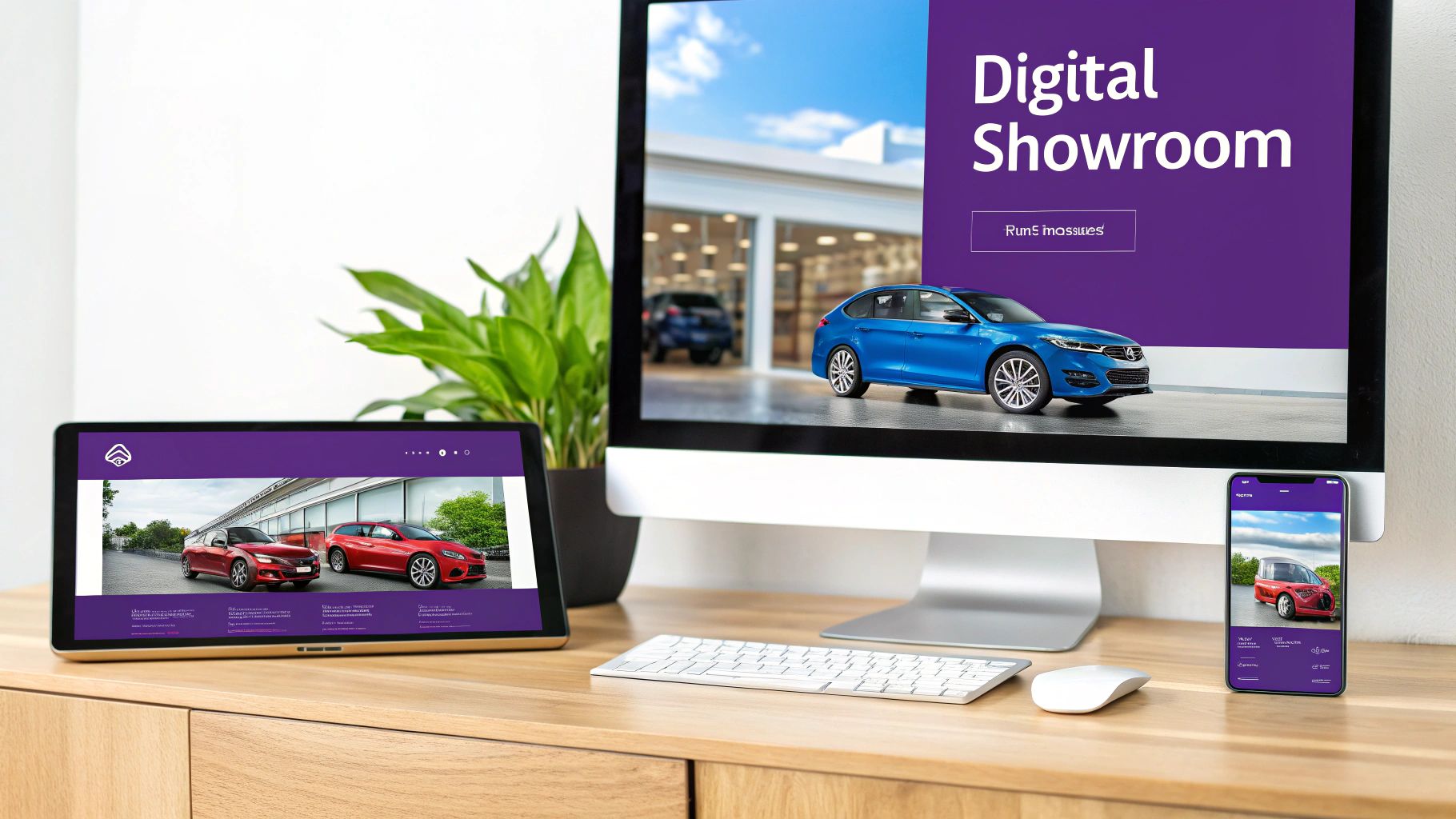
    Multiple devices on a desk, including a monitor, tablet, and smartphone, showcasing a digital car showroom website.

    This isn't just a trend; it's a massive shift in how people buy cars. The vast majority of car shoppers now begin their search online. What’s more, a large percentage of them are ready to handle much of the purchase digitally. This makes your website the first, and often most critical, handshake you have with a potential customer. You can explore the data behind digital car shopping to see just how deep this change goes.

    Leveling the Digital Playing Field

    For independent dealers, going up against the huge marketing budgets of the big franchise stores can feel like an uphill battle. A fully custom website can easily run into tens of thousands of dollars and take months to build, putting a top-tier digital storefront out of reach for many.

    This is exactly where car dealer website templates come in. They aren't just about looks; they're complete business platforms that give smaller dealerships access to the same powerful tools as the big guys.

    A great template does more than just list your cars. It turns your website into an automated sales machine that works around the clock to showcase your inventory, answer customer questions, and bring in qualified leads—freeing you up to do what you do best: sell cars.

    More Than Just a Pretty Design

    These templates are packed with features that generic website builders simply don't have. You’re not starting with a blank slate; you’re starting with a purpose-built framework that understands the nuts and bolts of the auto industry.

    The advantages are immediate:

    • Speed to Market: You can get a professional, fully working website live in a matter of days, not months.
    • Cost-Effectiveness: It’s the smart way to get premium, dealership-specific features without the hefty price tag of custom development.
    • Industry-Specific Functionality: Tools you actually need, like inventory management, VIN decoders, and finance calculators, are already built in.
    • Professional Appearance: A clean, modern, mobile-friendly design builds trust and credibility with shoppers from the very first click.

    By using a template-based platform, independent dealers can absolutely punch above their weight and create a digital experience that rivals their largest competitors. For example, systems like AutoFire™ offer a fast and modern way to launch a dealership site that’s already equipped with all the tools needed to succeed online.

    Understanding Car Dealer Website Templates

    So, what exactly is a car dealer website template? Let’s put it this way: it’s the difference between building a house from a blueprint and starting with a pile of lumber on an empty lot. A template gives you a powerful head start with a pre-built foundation designed specifically for selling cars.

    This foundation isn't just about looks, though it does include professionally designed layouts for all your critical pages, from the homepage right down to your vehicle detail pages (VDPs). The real magic is under the hood. The code is already structured to be responsive, meaning your site will look great and work perfectly on any device—which is a must-have, considering how many of your customers are scrolling through inventory on their phones.

    More Than a Generic Business Theme

    A classic mistake I see dealers make is grabbing a generic business theme and trying to shoehorn their dealership into it. That's like trying to tow a trailer with a sports car. It might move a few feet, but it’s not built for the job and is bound to break down.

    A true car dealer website template comes with the specialized tools you need already baked in. These aren't afterthoughts or plugins you have to bolt on later; they're part of the core engine.

    A purpose-built automotive template anticipates your needs. It already knows a car buyer wants to filter by make, model, and year, not by "product color or size." That built-in intelligence is what turns a simple website into a real sales tool.

    This singular focus is what makes these templates so powerful. They give you a framework that understands the unique rhythm of selling cars, making your website a seamless and effective tool for both your team and your customers.

    The Automotive-Specific Advantage

    The difference is night and day when you get into the features. A generic theme might have a simple photo gallery, but an automotive template gives you a full-blown inventory management system. It’s a completely different level of functionality.

    Here are just a few of the must-have features that set a real automotive template apart:

    • VIN Decoding: This is a game-changer. You just punch in the Vehicle Identification Number, and it automatically fills in all the key details like make, model, year, and trim. Think of the hours saved on data entry and the costly typos it prevents.
    • Advanced Inventory Filters: Your customers want to zero in on the perfect car, fast. A good template comes with ready-to-go filters for mileage, transmission, body style, and other car-specific details right out of the box.
    • Integrated Finance Calculators: An on-page loan calculator lets a buyer instantly see what their monthly payment might look like. This simple tool keeps them on your site, engaged, and one step closer to making a decision.

    These features aren't just nice-to-haves; they’re essential for delivering the modern, easy car-buying experience customers now expect. Trying to add this functionality to a generic theme usually means expensive and buggy custom work. That’s why starting with a solution built for dealers is the smartest and fastest way to get a website that actually helps you sell more cars.

    Essential Features Your Dealership Website Must Have

    When you're sifting through car dealer website templates, it's easy to get lost in all the different designs and layouts. But the best ones all have a few key things in common—features that are engineered to do one thing: sell cars.

    Think of these features as the engine, transmission, and steering of your digital showroom. A pretty website without them is just a car with no engine. It looks nice, but it's not going anywhere. A truly effective template turns your site from a simple online brochure into a 24/7 sales machine.

    Automated Inventory and VIN Decoding

    Let’s be honest, manually entering vehicle data is a soul-crushing task. It's slow, boring, and a single typo can lead to big problems. That's why the most critical feature for any dealership website is automated inventory management with VIN decoding.

    This tool is a game-changer. You just pop in a vehicle's 17-digit VIN, and the system instantly fills in the key details—make, model, year, engine, standard features, you name it. This doesn't just guarantee your listings are accurate; it frees up your team to focus on what they actually do best: selling cars.

    Advanced Search and Filtering

    Car buyers today are detectives. They show up on your site already knowing what they want, and they expect to find it fast. A simple search bar just doesn't cut it anymore. Your website needs advanced search and filtering options built specifically for people shopping for cars.

    This means customers should be able to effortlessly slice and dice your inventory by:

    • Make and Model: The absolute basics, but essential.
    • Price Range: Lets buyers shop within their budget and keeps them from bouncing.
    • Mileage: A huge trust signal and a key decision factor for used car shoppers.
    • Body Style: Helps them find that SUV, truck, or sedan they're looking for.
    • Transmission Type: Caters to buyers who have a strong preference for automatic or manual.

    Good search functionality makes all the difference. When a potential buyer can find the perfect car on your lot in seconds, they stick around.

    The diagram below shows how a specialized template hits that sweet spot between a generic theme and a full-blown custom build.
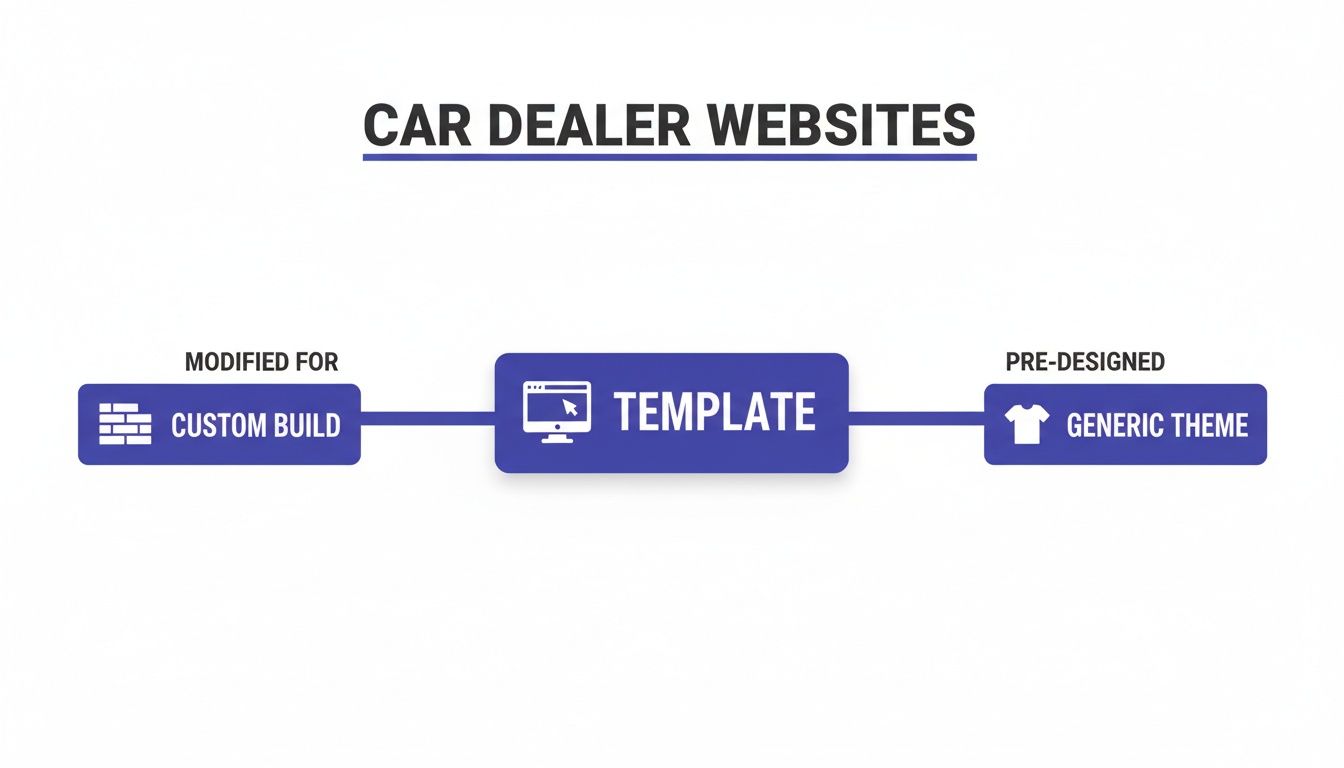
    Diagram illustrating car dealer website types: custom build from templates or pre-designed generic themes.

    As you can see, a specialized template gives you all the industry-specific tools you need without the eye-watering cost and long timeline of a custom project.

    To help you keep track, here’s a quick rundown of the must-have features and why they matter so much for your bottom line.

    Essential Features in a Car Dealer Website Template

    Feature What It Does Why It's Essential for Sales
    Inventory Automation Automatically populates vehicle listings and details from a central data feed. Saves dozens of hours, eliminates human error in listings, and ensures your online inventory is always fresh.
    VIN Decoding Instantly fills in vehicle specs like make, model, engine, and features from the 17-digit VIN. Builds trust with accurate, detailed information and makes your team incredibly efficient.
    Advanced Search & Filters Allows customers to narrow down inventory by price, mileage, body style, and other specific criteria. Helps serious buyers find exactly what they're looking for in seconds, keeping them on your site and engaged.
    Mobile-First Design Ensures the website looks and works perfectly on smartphones, tablets, and desktops. Caters to the majority of car shoppers who use mobile devices, preventing them from leaving out of frustration.
    High-Impact Lead Forms Provides strategic calls-to-action like "Schedule Test Drive" or "Get Pre-Approved" on vehicle pages. Turns passive website visitors into active, high-quality leads that your sales team can follow up on.

    These features work together to create a smooth, professional experience that guides a visitor from browsing to buying.

    Mobile-First Responsive Design

    Here’s a fact: most of your website visitors will be on their phones. If your site is a pain to use on a small screen, you're actively turning away business. A mobile-first responsive design isn't a "nice-to-have"; it's a must-have.

    This means the site is built for the mobile experience from the ground up, not as an afterthought. Buttons need to be easy to tap, photos have to load fast, and nobody should have to pinch-and-zoom just to read your vehicle descriptions.

    A slick mobile experience tells customers you're a professional operation that values their time. A clunky, slow-loading site does the opposite—it screams "we don't care" and sends them right to your competition.

    High-Impact Lead Capture Forms

    At the end of the day, your website's job is to bring in leads. This is where high-impact lead capture forms come in. I’m not talking about a generic "contact us" box buried on a back page. I mean strategic calls-to-action that make it incredibly easy for a customer to take the next step.

    The best car dealer website templates have these forms built right in:

    • Scheduling a Test Drive: This grabs high-intent leads who are ready to get behind the wheel.
    • Requesting More Information: Lets interested shoppers ask specific questions about a car.
    • Financing Pre-Approval: Engages buyers who are further along in the process and gives you valuable qualifying info.

    These four pillars—automated inventory, advanced search, a mobile-first design, and smart lead capture—are what separate a website that just sits there from one that becomes a powerful sales engine. Integrated platforms often bundle these critical elements together, and you can see how it all works by exploring all the features of an automotive-focused website builder.

    How to Choose the Right Template for Your Dealership

    Picking a car dealer website template is a bit like helping a customer find the perfect car. It’s not just about the shiny paint job; it's about what’s under the hood and whether it actually fits their lifestyle. This checklist will walk you through the big-ticket items to make sure you get a template that doesn't just look pretty, but becomes a workhorse for selling cars.

    The whole process starts by asking the right questions. We're not just talking about a feature list, but about how those features will slot into your day-to-day operations. A great template should feel like a part of your team, making your job easier, not just another complicated thing to manage.

    Verify Your Core Integrations

    Before you get attached to a specific design, the absolute first thing you need to do is check its integrations. Your website can't be an island. It has to talk to the other tools you rely on, especially your Dealer Management System (DMS).

    Ask these make-or-break questions:

    • Will this template actually connect to my DMS? If the answer is no, you’re signing up for the nightmare of manually updating your online inventory every time a car comes in or goes out. For a busy dealer, that's a complete non-starter.
    • How does the inventory sync really work? Is it a real-time, automatic feed, or do you have to mess around with exporting and importing files? True automation is what you're after.
    • Can it handle all my data fields? Make sure the template can pull everything you need, from your custom vehicle notes to different price points you’ve set.

    A template that doesn't play nice with the systems you already use is going to create headaches, not solve them. Nailing down DMS compatibility right from the start is the single most important move you can make.

    Choosing a template is a strategic business decision, not just a design one. The right platform should streamline your workflow by automating inventory updates and lead management, giving you back valuable time to close deals on the forecourt.

    Assess the Level of Customization

    Your brand is what sets you apart from the dealership down the road. While a template gives you a starting point, it has to be flexible enough to let your brand’s personality shine through. You’re not looking for a cookie-cutter site that looks like everyone else's.

    Figure out how much control you actually get over the look and feel.

    • Can you easily pop in your logo and change the color scheme? This is basic stuff, but it's absolutely essential for keeping your brand consistent.
    • How much freedom do you have with page layouts? Can you move sections around on the homepage to spotlight a special promotion or feature your top sellers?
    • Does it properly showcase high-quality media? These days, crystal-clear photos and 360-degree vehicle views are non-negotiable. You need to know the template can display them in a fast-loading, impressive gallery.

    The sweet spot is what you might call "structured flexibility." You want enough creative room to make the site feel like yours without needing a web design degree to do it.

    Understand Support and Future Updates

    Finally, think about the long-term relationship with the template provider. A website isn't a "set it and forget it" kind of thing. Technology evolves, security threats pop up, and new features become the standard. You need to be confident that the team behind your template has your back.

    Dig into the provider's policies:

    1. What's their customer support really like? Is it just email, or can you actually get a human on the phone when you have a problem that can't wait? Find out what their typical response times are.
    2. How often is the template updated? A solid provider will consistently push out updates for security patches, bug fixes, and new features.
    3. Are updates included, or are they an extra charge? Hidden costs for critical updates can turn an affordable template into a money pit real fast.

    Choosing the right platform is an investment in a solution that will grow alongside your dealership. By carefully looking at integrations, customization, and support, you can pick a car dealer website template that will be a powerful and reliable engine for your business for years to come.

    Putting Your New Website Template into Action

    Alright, so you’ve picked out the perfect car dealer website template. That's a huge win, but now comes the real work: turning that blueprint into a live, lead-generating machine for your dealership. This part can feel a little daunting, but today's platforms are built to make it surprisingly straightforward, even if you don't have an IT guy on staff.

    Think of it like getting a car ready for the front line. The frame and engine—your template—are solid. Now it’s time for the detail work: adding the polish, tuning the features, and making sure everything is perfect before a customer lays eyes on it. Let's walk through the steps to bring your digital showroom to life.
    Person using a laptop displaying a 'LAUNCH Checklist' website, working at a desk.

    Migrating Your Inventory Data

    First thing's first: you have to get your cars online. This is the single most critical task. A modern template platform makes this easy by plugging right into your Dealer Management System (DMS). We're not talking about spending hours manually uploading photos one by one. This is about setting up a clean data feed that automatically keeps your website's inventory in sync with your lot.

    During this process, accuracy is everything. You'll want to spot-check that all your vehicle data—from VINs and mileage to pricing and those custom descriptions you wrote—made it over correctly. A common headache is making sure photos match the right listings and that all the optional equipment shows up properly.

    Crafting Compelling Content

    Once your inventory is dialed in, it's time to tell your story. A great dealer site is more than just a list of cars for sale; it needs to build trust and connect with local buyers. This is your chance to flesh out the pages that set you apart.

    • About Us: What's your dealership's story? Talk about your history, how you serve the community, and what makes you different from the big-box store down the street.
    • Meet the Team: Putting real faces on your website makes your dealership feel more human and approachable. It helps build a connection before a customer even steps on the lot.
    • Financing Information: Be upfront and clear. Explain the financing options you offer and make it simple for visitors to find and fill out your credit application.

    This kind of content is what separates you from the competition and shows customers they're dealing with real people who stand behind their cars.

    Configuring Your Initial SEO

    A beautiful website that nobody can find is just a waste of money. That's why setting up your initial Search Engine Optimization (SEO) is a non-negotiable part of the launch. It’s all about sending the right signals to search engines like Google so they understand what your site is about and who to show it to.

    Think of SEO setup like putting a sign on your physical dealership. You need the business name spelled correctly and the address clearly visible so customers can find you. On your website, page titles and meta descriptions are those digital signs for search engines.

    This means giving every page a unique, descriptive title (like "Used Honda CR-Vs for Sale in Springfield") and writing a meta description that makes people want to click. A good platform will have simple fields for you to fill this stuff in without needing a degree in computer science. If you want to see how these tools work behind the scenes, you can request a demo of the AutoFire system to get a feel for the backend.

    Finally, before you go live, run through a pre-launch checklist. Test every form, click every button, and pull the site up on your phone and a friend's phone. A few minutes of testing can save you from a major headache on launch day.

    Why an Integrated Platform Beats a Standalone Template

    Picking a great car dealer website template is a huge step, but it’s really just the starting line. The real challenge pops up a few months down the road when you find yourself wrestling with plugin updates, security patches, and manually updating your inventory. This is where you’ll feel the night-and-day difference between a standalone template and an integrated platform.

    A standalone template is a bit like buying a high-performance engine off the shelf. It’s powerful, no doubt. But now it’s on you to build the rest of the car around it, maintain all the moving parts, and figure out what’s wrong when it breaks down. You end up having to duct-tape together hosting, security plugins, and inventory tools, which can quickly turn you into a part-time IT manager.

    The All-in-One Advantage

    An integrated Software-as-a-Service (SaaS) platform is a completely different animal. Think of it more like leasing a brand-new, fully-serviced vehicle. You don't just get the engine; you get the polished chassis, the leather seats, and a dedicated pit crew, all bundled into one simple package. Your provider handles all the technical heavy lifting behind the scenes.

    This all-in-one approach gives you everything you need right out of the box:

    • Automatic Inventory Syncing: Your website’s inventory updates in real time, pulling directly from your DMS. That means no more manual data entry and no more disappointed customers looking at a car you sold yesterday.
    • Managed Hosting and Security: Forget about server maintenance, backups, or worrying about the latest security threat. The platform takes care of all of it for you.
    • Continuous Feature Upgrades: As the industry evolves, your website does too. The platform rolls out new features and updates automatically, so your site never feels dated—all without you lifting a finger.

    This entire model is built to let you do what you do best: buy and sell cars. Not fight with website code.

    A Smarter Path to Growth

    The real beauty of an integrated platform is that it grows right alongside your dealership. A standalone template might feel great at first, but what happens when a critical plugin update crashes your site, or you want to add a new feature? You're often left scrambling to find a fix on your own.

    With a SaaS solution, you have a team of automotive industry experts in your corner. They get the unique challenges dealers face and are constantly building tools to solve them.

    An integrated platform shifts your focus from managing a website to using a sales tool. It’s a future-proof solution that keeps your dealership competitive by handling the technical complexities so you can concentrate on your customers and your business.

    For a busy independent dealer, this is a total game-changer. You get the power of a custom-built solution with the simplicity and reliability of a managed service. Platforms like AutoFire are built on this very principle, giving you a system where inventory, SEO, and lead capture work together seamlessly from day one. You can get started fast and grow without the friction.

    Common Questions Dealers Ask About Website Templates

    Jumping into the world of dealer websites can feel like a lot to take on. You've got questions, and we've got answers. Here are some of the most common things we hear from dealers just like you.

    Can a Website Template Hook Into My Current Inventory System?

    Yes, and this is a big one. Any decent dealer website template or platform is designed to plug right into your existing Dealer Management System (DMS). Honestly, you shouldn't even consider one that doesn't.

    Think of it this way: once connected, your website becomes a perfect mirror of your lot. Sell a car, and it disappears from the site instantly. Add a new trade-in to your DMS, and it pops up online automatically. This sync saves you an incredible amount of time and stops customers from calling about a car you sold yesterday.

    How Much Can I Actually Change a Car Dealer Template?

    You've got more control than you might think. Good templates give you plenty of room to make the site your own without needing to be a tech wizard. You can easily upload your logo, swap out colors to match your branding, and choose your own fonts and photos.

    Many platforms also come with simple drag-and-drop editors, letting you move sections around on your homepage or other pages. While it’s not the same as building a site from scratch for tens of thousands of dollars, a template gives you all the flexibility you need to create a sharp, professional-looking site that stands out.

    Will a Template Tank My SEO?

    Quite the opposite, actually. A well-built template from a company that knows the car business will give your SEO a major boost. These templates are built clean from the ground up, designed to load fast and look great on a phone—all things Google absolutely loves.

    Think of a template as the high-performance chassis of a race car. It provides a strong, reliable, and aerodynamically sound foundation. Your SEO success—winning the race—depends on the engine you put in it: your unique vehicle descriptions, high-quality photos, and local marketing efforts.

    The template handles the heavy technical lifting for you, giving search engines exactly what they want to see. Your job is to fill it with great content that brings in local buyers.


    Ready to launch a professional, high-performance website without the technical headaches? AutoFire delivers a modern, mobile-first site designed to turn browsers into buyers. Get your dealership online in minutes and start capturing leads today. Explore what AutoFire can do for you.

  • Local SEO for Car Dealerships Your Ultimate Guide

    Local SEO for Car Dealerships Your Ultimate Guide

    For car dealerships, local SEO is all about showing up online the exact moment a buyer in your town is looking for you. It's the strategy that puts your showroom front and center when someone searches for a "used truck near me" or a "Subaru service center in Springfield," making you the most obvious and convenient choice.

    Why Your Showroom Starts with a Local Search

    A person holds a smartphone displaying a location pin, standing outside a car dealership with a "Local Search" sign.

    Let’s be real: the days of customers cruising down the boulevard to discover car lots are pretty much over. The modern car-buying journey almost always kicks off on a search engine. This means your dealership's front door isn't just physical anymore—it's digital, and a solid local SEO strategy is the key that unlocks it.

    This isn’t about casting a wide net with generic SEO. A national campaign might get you ranked for "best used sedans," but what good is that if the person searching is three states away? Local SEO for car dealerships is about precision. It’s laser-focused on capturing high-intent buyers right in your backyard.

    Connecting with High-Intent Buyers

    When someone types "Ford F-150 in Dallas" or "Honda oil change near me" into Google, they aren't just kicking tires. They have an immediate need. These are your most valuable leads, and a targeted local strategy is your direct line to them.

    This hyperlocal focus is crucial because you're not just competing with other dealerships—you're competing on convenience. Today's consumer expects instant, relevant results. If you don't show up in the "local pack" (the map results at the top of the page), you're basically invisible to a massive chunk of your market.

    The link between a local search and a showroom visit is incredibly direct. Research from Google has found that "near me" searches for auto parts & services have doubled year over year, showing a clear rise in local intent. You can dive deeper into these local SEO findings for dealerships on fullpath.com.

    This immediacy is exactly why local SEO is non-negotiable. It’s not just another marketing tactic; it's a fundamental part of modern dealership operations that directly drives foot traffic and moves inventory.

    To get there, you need a coordinated approach that proves to both search engines and customers that you are the authoritative choice in your area. This table breaks down the essential pillars.

    Core Components of a Winning Local SEO Strategy for Dealerships

    Component Primary Goal Key Actions
    Google Business Profile (GBP) Maximize visibility in local search and Maps. Complete every field, upload photos/videos, use Google Posts, manage Q&A, and activate Vehicle Listings.
    On-Site SEO Signal local relevance and provide a great user experience. Create location-specific pages, optimize for mobile, improve site speed, and use vehicle schema markup.
    Reputation Management Build trust and social proof to attract customers. Proactively request reviews on Google, respond to all feedback, and showcase testimonials.
    Local Authority Building Establish credibility within your community. Build consistent business citations (NAP), earn links from local partners, and get involved in community events.

    By mastering these core areas, you create a powerful digital presence that aligns with how people actually shop for cars today. The rest of this guide is your playbook for putting each of these strategies into action and turning local searches into loyal customers.

    Turning Your Google Business Profile Into Your Digital Showroom

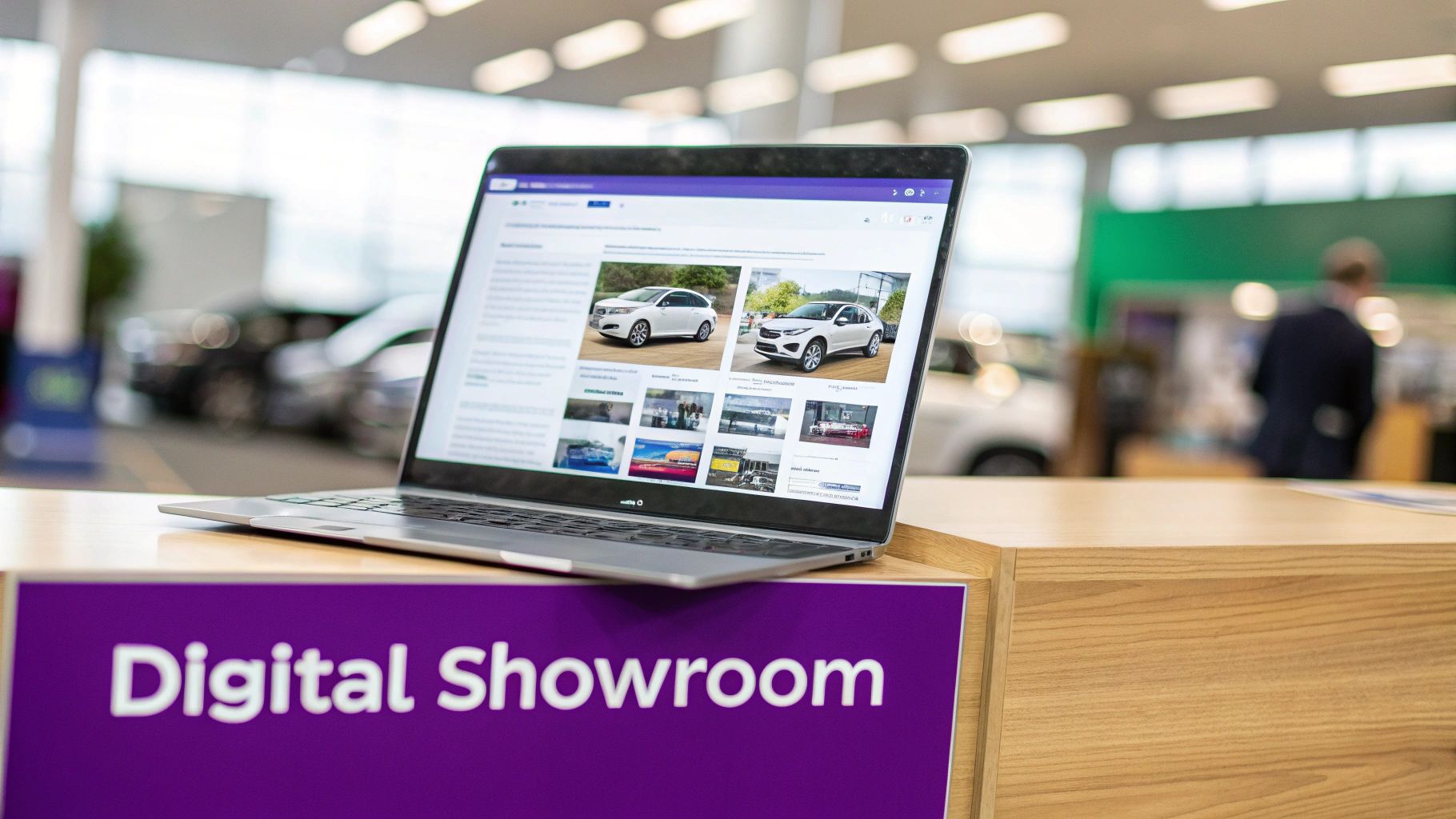
    A laptop on a wooden counter displays a digital car showroom website, with a 'Digital Showroom' sign below.

    Let's get one thing straight: your Google Business Profile (GBP) isn't just a map pin. It’s your digital front door.

    When a potential buyer searches for "used SUVs near me," your GBP is often the very first impression they get. A bare-bones profile is like showing up to a dusty, empty lot—it doesn’t inspire a lot of confidence, and it certainly doesn't invite anyone to take a closer look.

    Treating your GBP as an interactive digital showroom is one of the smartest things you can do for your dealership’s local SEO. It's where you start turning a casual searcher into a real lead, often before they even bother clicking to your website.

    Mastering Your Business Categories and Description

    So many dealerships trip up on the basics. Your primary category is the most important signal you can send to Google. For most independent dealers, this will be "Car Dealer," but the real magic happens in your secondary categories. This is where you can outmaneuver the competition.

    These extra categories help you show up for specific, high-intent searches. Go beyond the obvious and list every single service you offer.

    • Used Car Dealer: This is non-negotiable for capturing the pre-owned market.
    • Truck Dealer: A must if trucks are a big part of your inventory.
    • Auto Repair Shop: Essential for bringing in that lucrative service-related business.
    • Car Parts and Accessories Store: Catches searches directly targeting your parts department.

    Frankly, most of your competitors aren't doing this. A recent analysis found that a low percentage of auto dealerships actually use all ten available GBP categories, which is a huge missed opportunity for visibility. You can dig into the numbers yourself in this comprehensive report on auto dealership GBP usage.

    Next up is your business description. Write it for people first, but keep search engines in mind. Weave in local keywords like "[City Name] used cars" or "trusted auto service in [Your Neighborhood]," but make it sound natural. Talk about what makes you different—maybe it's your no-haggle pricing, your deep roots in the community, or your ace service team. Tell your story.

    Activating Advanced GBP Features for Real Engagement

    A static profile gets ignored. To really make your GBP work for you, you have to use the features Google built for engagement.

    Google Posts are your free billboard on the search results page. Use them constantly to announce things like:

    • New Inventory: "Just hit the lot: Low-mileage 2021 Honda CR-V. Come test drive it today!"
    • Service Specials: "This week only: Take 15% off your next oil change and tire rotation."
    • Community Events: "We're proud to sponsor the [Local High School] Tigers this season!"

    The Q&A section is another goldmine that most dealers ignore. Don't just wait for questions to roll in—seed it yourself. Post and answer common questions about financing, your trade-in process, or service hours. This lets you control the conversation and handle common objections before a potential buyer even has to ask.

    The Strategic Advantage of Department-Specific Profiles

    Here’s a pro-level move: if you have distinct service and parts departments, give them their own GBP listings.

    Think about it. A customer searching "Ford brake service in [City]" is on a completely different mission than someone looking for a new F-150. A separate, dedicated "Service Center" profile lets you intercept that targeted traffic directly.

    With this approach, you can tailor everything—categories, photos, Posts, hours—specifically to that department. The same industry study I mentioned earlier? It found that a significant number of dealerships don't have separate GBP listings for their Service & Parts departments. That’s a massive opening for you to fill.

    Setting these up ensures you appear for valuable, non-sales searches, building a relationship with customers that lasts long after they drive off the lot.

    Don't Forget Google Vehicle Listings

    The final piece of your digital showroom puzzle is Google Vehicle Listings. This feature is a game-changer. It syncs your live inventory directly to your GBP, letting shoppers browse your cars right there in the search results.

    It’s the ultimate way to show, not just tell, customers what you have in stock.

    A laptop on a wooden counter displays a digital car showroom website, with a 'Digital Showroom' sign below.

    This integration is a powerful signal to both Google and your customers that you have exactly what they’re looking for. It cuts down on friction and sends qualified buyers straight to your VDPs. Automating this sync is key to keeping it current. If wrestling with inventory feeds sounds like a headache, a platform built for dealerships can handle the heavy lifting. You can see a demonstration of how AutoFire™ handles inventory feeds here.

    By fully optimizing every part of your GBP—from the basic categories to advanced features and separate department listings—you create a rich, engaging experience that grabs local buyers right when they're ready to make a move.

    Your Website: The Digital Showroom for Local Buyers

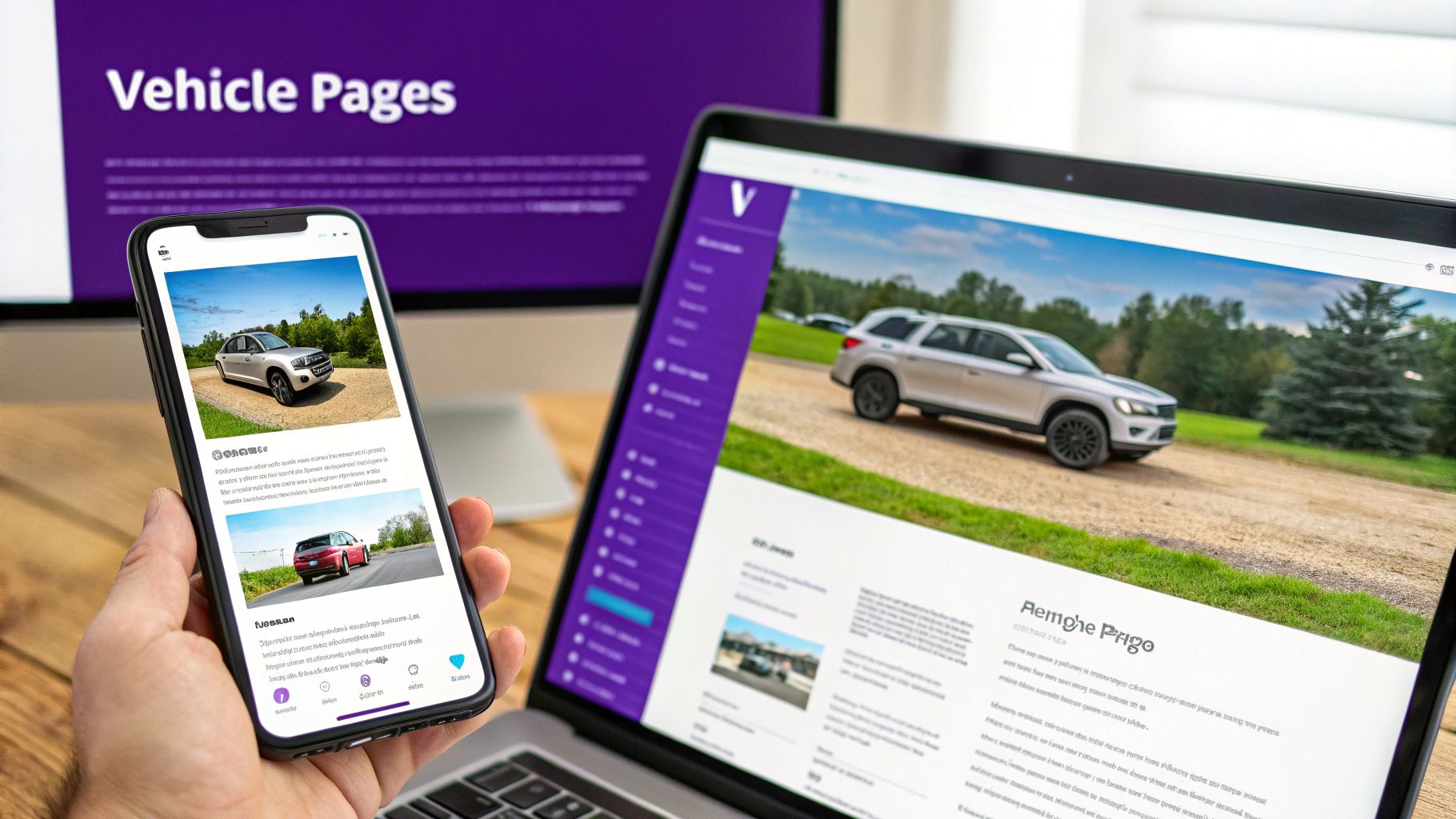
    A person views vehicle pages on a smartphone, laptop, and desktop monitor, showcasing digital automotive content.

    Think of your Google Business Profile as the sign on the highway that gets people to pull off at your exit. But once they turn onto your street, your website is the dealership itself. Does it look welcoming and easy to navigate, or is it a confusing lot that makes them drive away?

    Your website is the heart of your entire local SEO strategy. It has to be fast, dead-simple to use on a phone, and instantly give shoppers the answers they’re looking for. The stakes are high. According to Google, a staggering 53% of mobile users will leave a site if it takes more than three seconds to load.

    That’s over half your potential customers gone before they even lay eyes on your inventory. A slow, clunky site doesn't just frustrate people; it signals to Google that you offer a poor experience, which directly hurts your ability to rank locally.

    Your VDPs: Where Browsing Turns into Buying

    Let’s be clear: your Vehicle Detail Pages (VDPs) are the most important pages on your website. Full stop. When a local buyer lands here, they’re past the window-shopping phase. They are seriously considering this car. Your job is to give them everything they need to take the next step.

    A VDP needs to do more than just list specs. It needs to tell the car's story.

    • Photos and Video Are King: Get a full gallery of high-quality, well-lit photos of every angle—inside, outside, the engine, even close-ups of cool features. A simple walk-around video shot on your phone can make a world of difference.
    • Write a Real Description: Ditch the generic manufacturer copy. Write a few unique sentences for each vehicle. What makes this car special? Mention its condition, a unique feature, or who it’s perfect for (e.g., “The huge trunk space makes this SUV perfect for family trips to the lake.”).
    • Show the Price: Be upfront and clear with your pricing. Hidden fees and "call for price" are instant trust-killers for online shoppers. If you have financing specials, make that information obvious.
    • Make the Next Step Easy: Your calls to action (CTAs) should be big, bold, and impossible to miss. Use clear, action-oriented buttons like “Schedule a Test Drive” or “Check Availability.”

    When you structure your VDPs this way, you’re not just selling a car; you’re building confidence and guiding the buyer straight to your lot.

    Speaking Google's Language with Vehicle Schema

    Now for a powerful technical trick that many independent dealers miss: vehicle schema markup. This is a piece of code you add to your VDPs that translates your car’s information into a language search engines perfectly understand. It explicitly tells Google the make, model, year, mileage, price, and other key details.

    Why does this matter so much? Because schema helps your cars show up as rich results in Google search. Instead of a plain blue link, your listing can appear with a photo, price, and mileage right on the results page. This makes your inventory pop and practically begs for a click.

    Implementing vehicle schema is one of the most direct ways to boost your visibility in search. You're giving Google the exact, structured data it needs to feature your inventory, leading to more clicks from highly qualified local buyers.

    While you could add this code by hand, most modern dealership website platforms handle it automatically. For instance, a system built for car dealers can apply the correct schema as you upload inventory, giving you a huge SEO advantage without the technical headache. It's worth exploring the features included in modern dealership websites to see what's possible.

    Cast a Wider Net with Local Landing Pages

    Your VDPs are great for people searching for a specific car, but what about shoppers who are earlier in their journey? This is where location-specific landing pages come in. These pages are built to rank for those high-intent, but broader, local searches like “used trucks in Springfield” or “affordable SUVs near downtown.”

    But don't just throw a list of vehicles on a page and call it a day. To actually work, these pages need unique content that’s genuinely helpful for a local shopper.

    For example, on a "Used SUVs in Springfield" page, you could:

    • Talk about why an SUV is a great choice for the local weather or terrain.
    • Feature a few popular SUV models you typically carry.
    • Add a testimonial from a local customer who bought their SUV from you.
    • Embed a Google Map of your dealership to show how close you are.

    This strategy proves your local authority to both Google and your customers. You're building a wider net to capture valuable search traffic, guiding buyers from a general idea of what they want right to the specific cars sitting on your lot.

    Building Trust One Review at a Time

    Smiling woman points to 'Customer Reviews' banner with three stars, man holds car keys.

    In the car business, a handshake still means something. But these days, buyers look for proof of that promise online long before they ever set foot on your lot. Online reviews have become the new word-of-mouth referral, and for a dealership, they're one of the most powerful tools in your local SEO toolbox.

    Think about it from your customer's perspective. Buying a car is a massive financial decision, and nobody wants to deal with a shady operation. A high star rating and a string of positive testimonials on Google, DealerRater, or even Yelp offer immediate social proof. It eases their anxiety and makes your dealership the clear choice.

    Creating a Simple and Effective Review Generation System

    You can't just cross your fingers and hope for good reviews; you need a system to actively encourage them. The secret is making it incredibly simple for happy customers to share their experience while the excitement is still fresh. If it's complicated, they won't bother.

    The best approach is a simple follow-up, usually via SMS or email, right after a sale or service appointment. A friendly, non-pushy message works wonders.

    • Timing is everything. The sweet spot is within 24-48 hours. The positive experience is still top-of-mind, and they’re more likely to act.
    • Keep it simple. Ditch the corporate jargon. Something like, "Hi [Customer Name], thanks again for choosing us! Would you mind sharing your experience on Google? It really helps our local business," feels personal and genuine.
    • Provide a direct link. This is non-negotiable. Never make a customer hunt for your review page. Send a direct link to your Google Business Profile review section to remove all friction.

    This proactive approach doesn’t just pad your review count; it sends a strong signal to Google that your dealership is active, engaged, and valued by the local community.

    The Art of Responding to Every Single Review

    Getting reviews is only half the job. The real magic, and the real SEO value, comes from responding to them—all of them. Your replies are public, visible to every potential customer who reads your reviews. Think of it as free PR.

    A consistent response strategy shows you're engaged and that you actually care about customer feedback. It’s a crucial part of a healthy local SEO strategy for any car dealership.

    Responding to reviews is about more than just good manners; it's a powerful signal to Google's algorithm. Data shows that a consistent review response strategy, combined with frequently adding photos, can significantly boost a dealership's performance in the valuable local pack. You can explore more about these impactful dealership SEO statistics on a3brands.com.

    Turning Negatives into Positives

    Look, no dealership is perfect. Sooner or later, a negative review is going to happen. How you handle it tells potential customers everything they need to know about your commitment to service. Whatever you do, don't ignore it.

    First, acknowledge and apologize. Start by validating their frustration and offer a sincere apology, even if you feel they're off base. "We're very sorry to hear your experience didn't meet your expectations."

    Next, take it offline. The last thing you want is a public argument. Provide a direct contact, like a service manager's name and phone number, so you can resolve the issue privately. "Our manager, [Name], would like to connect with you directly to make this right. Please call them at [Phone Number]."

    Finally, stay professional. A calm, professional reply can de-escalate the situation and shows other potential buyers that you take customer satisfaction seriously. This approach often turns a public complaint into a powerful demonstration of your excellent service recovery.

    Earning Authority with Local Links and Citations

    https://www.youtube.com/embed/rN6VBqmUgUk

    Getting your own website in order is just one part of the puzzle. Google is constantly scanning the rest of the web, looking for signals that verify your dealership is a legitimate, active part of the local community. It finds these signals in two key places: citations and local links.

    Think of them as digital handshakes or endorsements. Every time a reputable local website mentions your dealership, it’s a vote of confidence. These votes build up over time, strengthening your online reputation and telling search engines you're a business people can trust. For any dealership aiming to win in local search, this off-page strategy is non-negotiable.

    The Foundation: Getting Your Citations Right

    Before you even think about earning high-powered links, you have to get your basic business information straight. A citation is simply any online mention of your dealership’s Name, Address, and Phone number (what we call NAP in the industry). You'll find them in online directories, on social media, and on auto-specific websites.

    The golden rule here is absolute consistency. Your NAP information must be a perfect match everywhere it shows up. Even a tiny difference—like using "St." on one site and "Street" on another—can create confusion for search engines and weaken your local authority.

    For car dealerships, some directories are more important than others. Nail these first:

    • Major Data Aggregators: These services are the source of truth for hundreds of smaller online directories.
    • The Big Players: This means your Google Business Profile, Apple Maps, Yelp, and Facebook page.
    • Auto-Specific Hubs: You have to be on platforms like DealerRater, Cars.com, and Edmunds. They scream relevance.
    • Hometown Directories: Don't overlook your local Chamber of Commerce or city business listings.

    Your NAP data is your dealership's digital fingerprint. Every consistent citation reinforces your location and identity, making it easier for Google to trust your business and show it to local searchers. Inconsistencies create doubt, which can directly harm your local rankings.

    Earning Links That Prove You're Part of the Community

    Citations are the table stakes. Local link building is how you win the game. A link (or backlink) is when another website directs traffic to your site. Google sees links from respected, relevant local sites as incredibly powerful endorsements.

    This isn't about spammy, old-school tricks. The goal is to earn these links naturally by actually being a valuable member of your community. It’s about forging real-world relationships that pay off with digital authority.

    Creative Link-Building Ideas for Your Dealership

    So, how do you get these valuable local links? It's less technical than you think and more about community engagement.

    Here are a few proven ideas that work wonders for dealerships:

    • Sponsor a Local Team or Event: Get involved with a high school football team, a summer festival, or a charity 5k race. Sponsorships nearly always come with a link from the organizer’s website—a fantastic local signal.
    • Partner with Neighboring Businesses: Team up with a go-to auto detailer, a trusted independent mechanic, or even a local insurance agent. You can offer mutual discounts and cross-promote each other online, which is a natural way to trade links.
    • Create a Genuinely Helpful Local Guide: Write a blog post that helps people in your area. Think "The Best Family-Friendly Road Trips from [Your City]" or a guide to local classic car shows. Share it with local bloggers and community Facebook groups; if it's truly useful, they'll link to it.
    • Offer a Scholarship: A small scholarship for a student at a local high school is a brilliant way to give back. It often earns you links from the school's website, the local newspaper, and other community outlets covering the award.

    These strategies do more than just build links. They build real goodwill, strengthen your brand, and prove to both customers and search engines that your dealership is a true pillar of the local community.

    Common Questions About Dealership Local SEO

    As you start digging into a local SEO strategy for your dealership, you’re bound to have some questions. It’s a space that changes fast, but thankfully, the fundamentals are pretty solid. Here are some of the most common questions we get from dealers, answered directly to help you plan your next move.

    How Long Does Local SEO Take to Show Results?

    This is the big one, and the honest answer is: it’s a long game. While you might see some quick traction from a fully dialed-in Google Business Profile in just a few weeks, true local SEO is about building momentum over time. Think of it like earning a great reputation in your town—it doesn’t happen overnight.

    For most dealerships, you can expect to see real, meaningful movement in local rankings and organic traffic within three to six months. The key is consistency. Unlike paid ads that vanish the second you stop paying, the work you put into SEO compounds, creating a valuable, long-lasting asset for your business.

    Local SEO vs. Traditional SEO: What's the Difference?

    The biggest difference boils down to geography and what the searcher is actually looking for. Traditional SEO is a broad net, trying to rank for national keywords like "best used SUVs." Local SEO, on the other hand, is all about your specific turf.

    It’s hyper-focused on catching customers right in your backyard who are searching with local intent. You know the ones:

    • "Toyota service center near me"
    • "Ford dealership in Springfield"
    • "Used trucks for sale in Dallas"

    This is where signals proving your local relevance become critical—things like your Google Business Profile, reviews from local customers, and listings in local online directories. It’s all about showing Google you’re the go-to dealer for your community.

    Can I Handle Local SEO In-House?

    Absolutely. Many of the foundational local SEO tasks can be managed by your team, especially if you have someone dedicated to marketing. Things like keeping your Google Business Profile updated, responding to every review, and posting about community events are totally achievable in-house.

    Where it gets tricky is with the more technical stuff. Properly implementing schema markup, diagnosing and fixing site speed issues, or running a targeted local link-building campaign often calls for a specialist. We see a lot of dealerships succeed with a hybrid model: they handle the daily activities and partner with an expert for the heavy-lifting, technical audits, and high-level strategy.

    What Is a Realistic Budget for Local SEO?

    Your budget can swing quite a bit depending on how competitive your market is and how much work needs to be done. A dealership in a crowded metro area is playing a different game than one in a smaller town with less competition.

    As a general benchmark, dealerships may invest between $3,000 and $8,000 per month for a comprehensive local SEO program that covers content, technical optimization, and proactive reputation management.

    Try to think of this as an investment, not just an expense. A powerful organic presence will dramatically lower what you have to spend on pay-per-click advertising down the road. If you're curious about what a strategy tailored to your dealership might look like, feel free to contact our team for expert guidance.


    Ready to stop wrestling with technical headaches and start showcasing your inventory on a website built to convert local buyers? AutoFire delivers a modern, mobile-first website that gets you online fast and is optimized for local search from day one. https://goautofire.com

    Article created using Outrank