Category: Marketing

  • Driving Sales The Modern Digital Automotive Marketing Playbook

    Driving Sales The Modern Digital Automotive Marketing Playbook

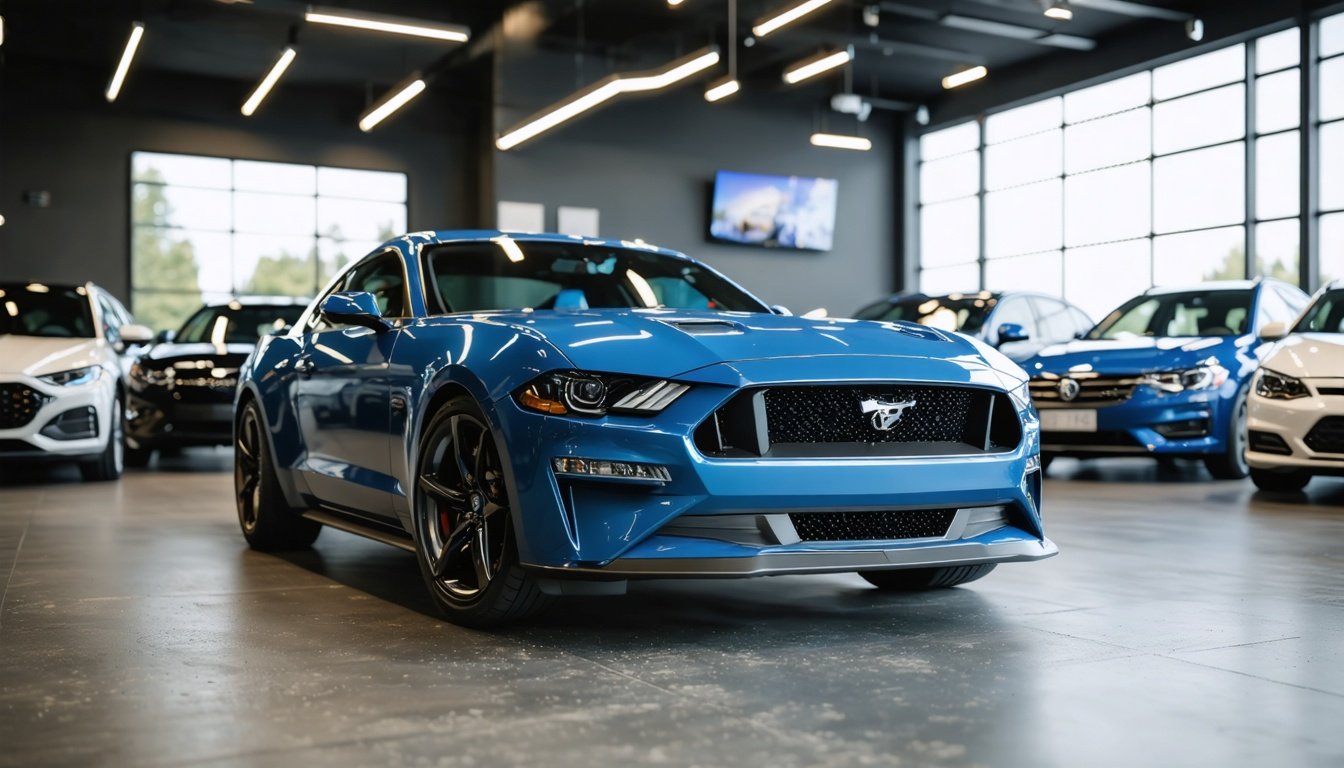
    Digital automotive marketing is simply using online tools—like your website, social media, and email—to connect with people looking to buy a car. It effectively turns your physical car lot into a digital showroom that’s open 24/7, meeting customers exactly where their journey now begins: online. For any modern dealership, getting this right is the key to attracting, engaging, and ultimately selling to today’s shoppers.

    Your Website Is The New Showroom Floor

    Let's be blunt: the days of relying on drive-by traffic and local newspaper ads are long gone. Your dealership's website is now your single most important asset. It's your primary showroom, your research hub, and your lead-generation machine, all wrapped into one. For independent dealers, this isn't a threat—it's a massive opportunity.

    Think about how people shop for cars today. A significant majority of car buyers use online resources to research and compare vehicles before they even think about visiting a lot. This is a fundamental change in how people buy cars, and you can learn more about these evolving automotive marketing trends to see just how much has shifted.

    This modern buyer's journey is a straightforward, three-step process.
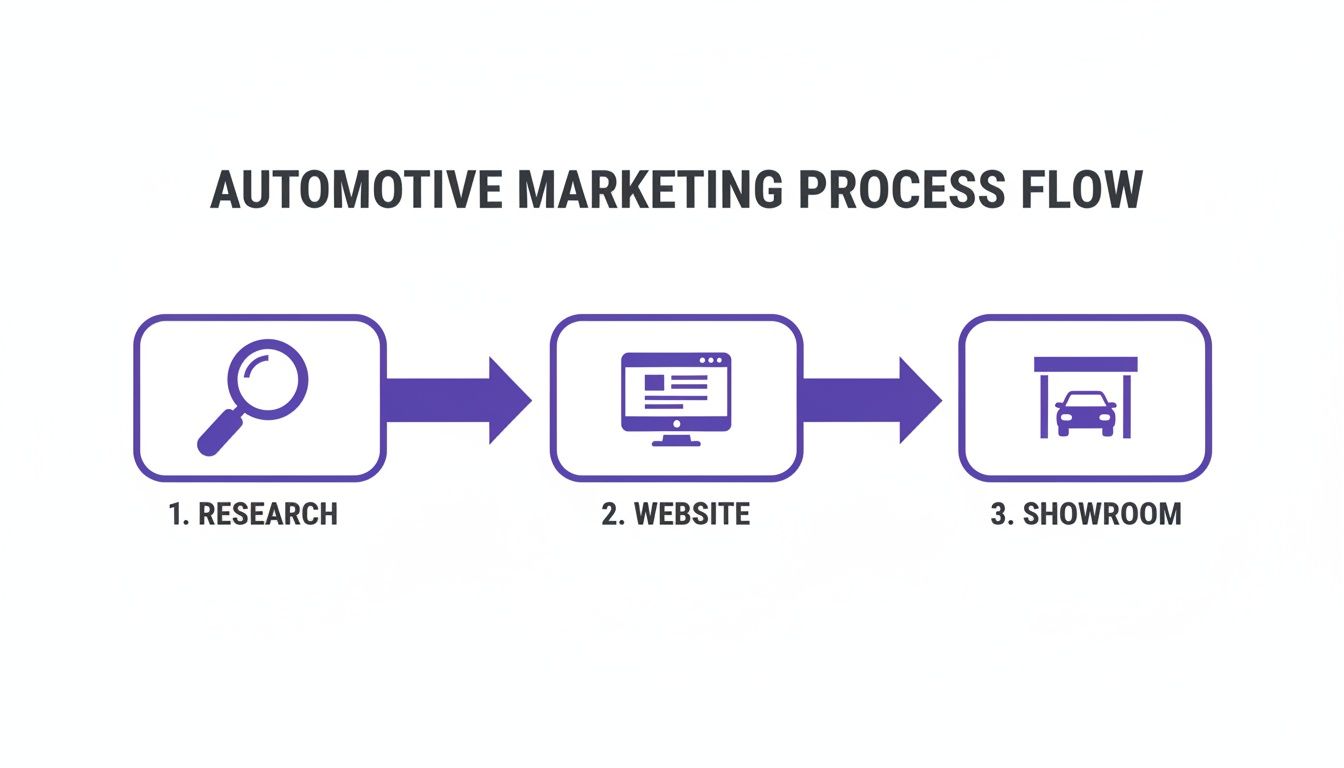
    A clear flowchart illustrating the automotive marketing process flow: research, website, and showroom steps.

    As you can see, after that initial online research, your website is the very next stop. It’s the critical bridge between their online search and an in-person visit.

    Why Your Digital Presence Matters More Than Ever

    A solid digital presence is the ultimate equalizer. It allows a sharp independent dealership to go toe-to-toe with the big franchise groups by connecting directly with local buyers right in their neighborhood. You don't need a multi-million dollar ad budget; you just need smart, targeted strategies to build trust and get people through the door.

    Think of your website as your best salesperson. It never sleeps, knows every detail about every car, and is always ready to capture a lead.

    An effective digital automotive marketing strategy isn't about being everywhere at once. It's about being in the right places with the right message when a local buyer starts their search.

    This guide is built to give you a practical, no-fluff overview of what it takes to win. We're going to break down the essential strategies that will turn your website into a powerful sales tool.

    Here's a quick look at the core channels we'll be covering.

    Core Digital Marketing Channels for Dealerships at a Glance

    Channel Primary Use Main Goal
    SEO (Search Engine Optimization) Making your dealership easy to find on Google for searches like "used trucks near me." Attract free, high-intent traffic from local buyers.
    Google Vehicle Listings Showcasing your live inventory directly on Google's search results page. Get your actual cars in front of active shoppers for free.
    Paid Search (PPC) Running targeted ads on Google to appear at the top of search results. Generate immediate, qualified leads for specific models or types of vehicles.
    Social Media Building a community, showcasing your brand personality, and running targeted ads. Build trust, engage with the local community, and stay top-of-mind.
    Email Marketing Nurturing leads, announcing new inventory, and communicating with past customers. Drive repeat business and turn leads into sales.

    Mastering these channels is what separates the dealerships that are just surviving from those that are truly thriving.

    Specifically, we’ll dive deep into:

    • The Core Channels: Mastering SEO, Google Vehicle Listings, paid search, social media, and email.
    • Measurable KPIs: Focusing on the numbers that actually move the needle and prove your marketing is working.
    • Actionable Strategies: Simple, step-by-step plays and quick wins that even a small team can implement right away.

    Building A High-Performance Dealership Website

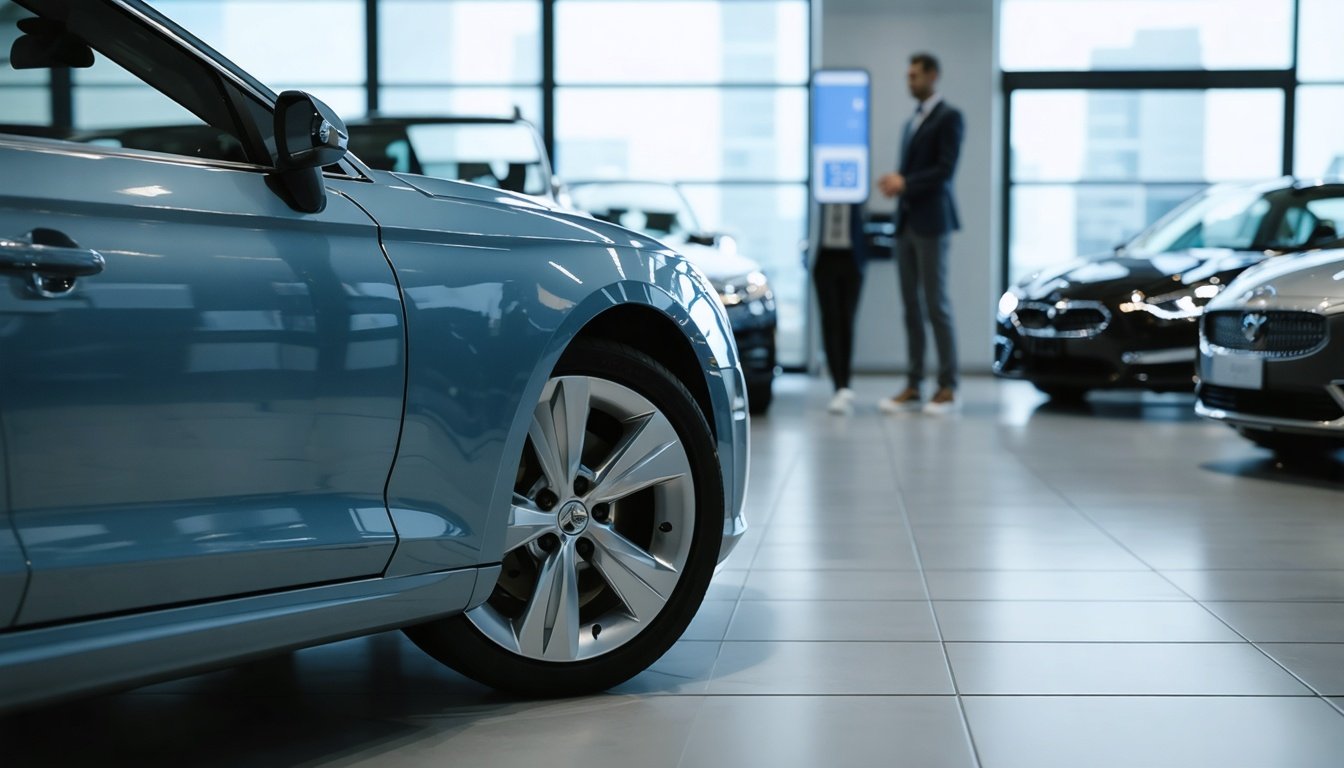
    Think of your dealership’s website as your digital storefront. It's the new front door. Long gone are the days when a website was just an online brochure; today, it’s your single most important marketing asset and the engine that powers every other part of your digital strategy.

    Your physical showroom is spotless, well-lit, and easy to navigate for a reason. You want customers to feel comfortable and find what they're looking for. The same exact thinking needs to apply to your website. If a potential buyer lands on a slow, clunky, or confusing site, they're gone. That's a lost sale, plain and simple.
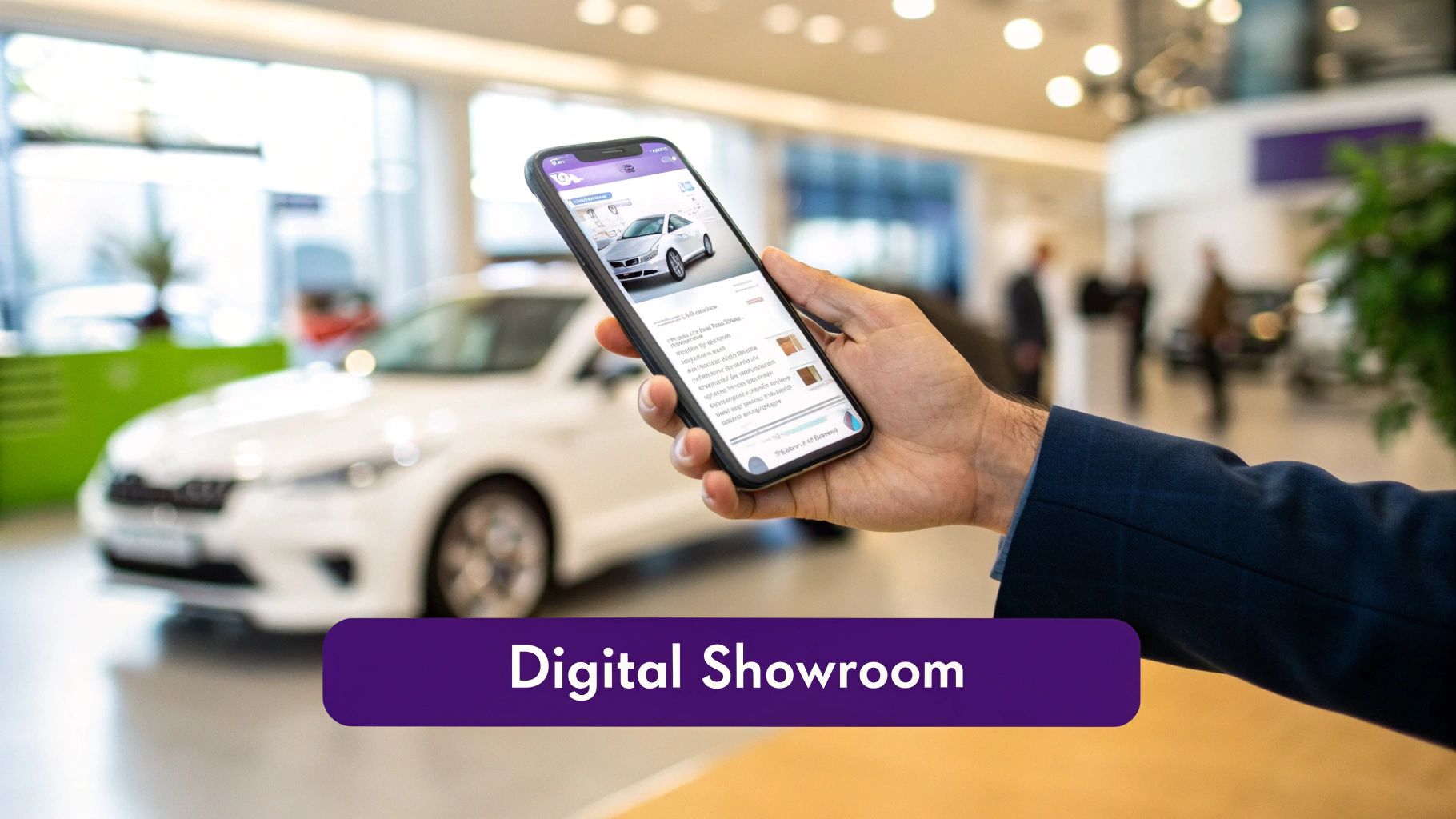
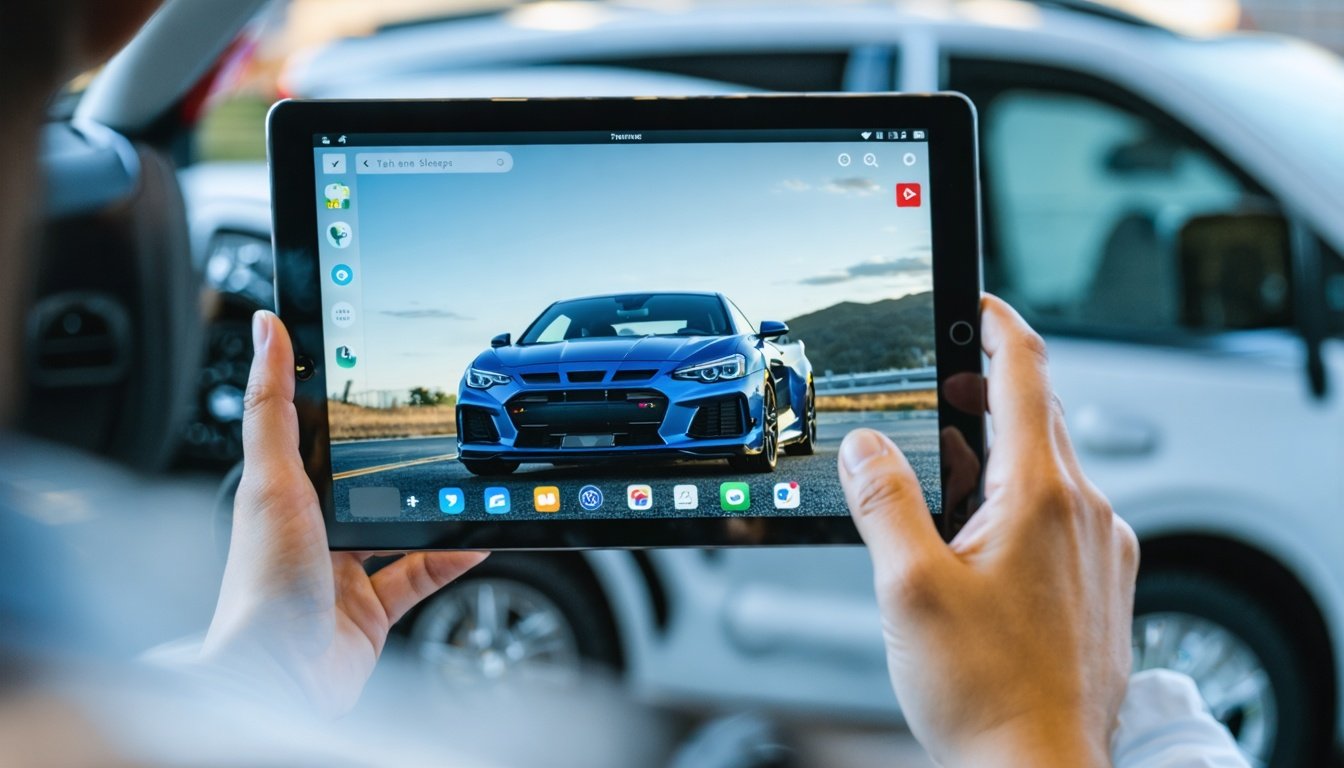
    A hand holds a smartphone displaying a car on a digital showroom website inside a car dealership.

    Prioritizing The Mobile Experience

    Let's be blunt: if your website isn't great on a smartphone, it's already broken. Today’s car shopping journey happens on the go—on a lunch break, from the couch, or even standing on another dealer's lot.

    Because of this, mobile optimization is non-negotiable. The vast majority of organic search traffic to dealership websites now comes from a mobile device. This is especially true for the younger buyers who grew up with phones in their hands.

    A "mobile-first" approach isn't just a buzzword. It means you design the experience for the small screen first and then adapt it for desktops, not the other way around. Every button, photo, and form has to be easy to use with a thumb.

    A website that loads slowly on a phone is the digital equivalent of a locked showroom door. The customer will simply give up and go to your competitor down the street.

    The goal is to deliver an experience that’s just as clean and effective on a phone as it is on a big screen. Get this right, and you're already miles ahead of the competition.

    Core Components Of A High-Converting Site

    A website that actually turns visitors into leads isn't about flashy gimmicks. It’s built on a foundation of speed, clarity, and function. To get your site firing on all cylinders, you need to master a few fundamental car dealer web design principles.

    Here are the critical parts every dealership website must nail:

    • Lightning-Fast Load Times: Every single second counts. A slow site will send potential buyers running before they even see your inventory. Your pages, especially the photo-heavy Vehicle Detail Pages (VDPs), have to load almost instantly.

    • User-Friendly Navigation: People should find what they're looking for without having to think. That means a clear menu, a logical layout, and powerful search filters that let shoppers slice and dice your inventory by make, model, price, and more.

    • Compelling Vehicle Detail Pages (VDPs): Your VDPs are your online salespeople. Each one needs crisp, high-resolution photos from every angle, a detailed and accurate description, all the key specs, clear pricing, and an obvious call-to-action.

    Turning Clicks Into Customers

    The final piece of the puzzle is actually getting leads. A beautiful website that doesn't capture customer information is just a very expensive digital art project. Your job is to make it incredibly simple for an interested shopper to raise their hand.

    This means placing clear, simple lead forms where a buyer is most likely to act. They shouldn't be annoying pop-ups, but they need to be right there when the moment strikes.

    Key Lead Capture Locations:

    1. On Every VDP: This is your money-maker. Have a form to "Check Availability," "Request More Info," or "Schedule a Test Drive."
    2. Financing Page: A secure credit application or pre-approval form captures high-intent buyers who are ready to make a move.
    3. Contact Us Page: Make your phone number, address, and a simple contact form impossible to miss.
    4. Homepage: Use a strong call-to-action to guide people straight to your inventory or a special offer.

    When you combine a fast, mobile-first design with smart navigation and well-placed lead forms, your website transforms. It stops being a static page and becomes your hardest-working salesperson, working 24/7 to bring new customers through your door.

    Winning Local Search With SEO and Google Vehicle Listings

    So, you've got a fast, mobile-ready website. That's a huge first step. But even the best website is worthless if local car buyers can't find it. This is where Search Engine Optimization (SEO) comes into play, and it’s a lot more straightforward than it sounds.

    Forget all the complicated jargon for a minute. For an independent dealer, SEO has one simple goal: making sure your dealership pops up when a local customer searches on Google for a car you have sitting on your lot. It’s all about being the best and most relevant answer when they ask Google for help.

    Think of it this way: your website is your digital showroom, but SEO is the giant, flashing sign on the digital highway, pointing motivated buyers right to your virtual front door. The best part? The traffic it brings is red-hot. Someone searching for "used Ford F-150 near me" isn't just window shopping—they're ready to buy.
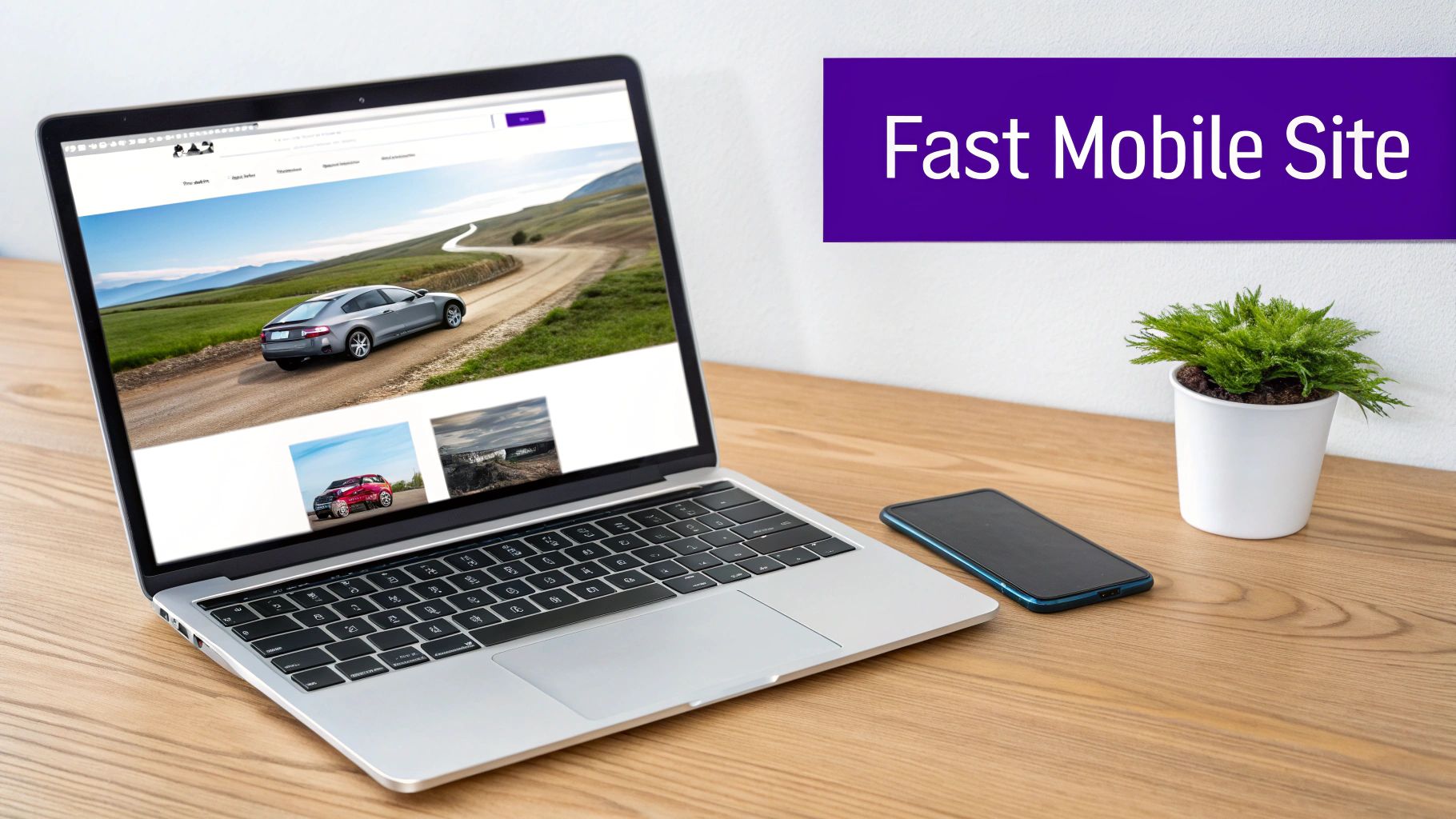
    Modern workspace with laptop showing car website, smartphone, and plant, promoting fast mobile site.

    Mastering Your Google Business Profile

    Your absolute strongest weapon in the local SEO fight is your Google Business Profile (GBP). This is that free listing that shows up in Google Maps and the local search results, displaying your dealership's name, address, phone number, and, most importantly, your reviews.

    Getting your GBP right is the single most important thing you can do to win in local search. Seriously. It’s non-negotiable if you want to compete online.

    Key GBP Actions to Take Now:

    • Fill Out Everything: Go through every single field Google gives you—services, hours, photos, a good business description. The more complete your profile is, the more Google trusts you and the more it will show you to searchers.
    • Add Fresh Photos Constantly: Snap pictures of your lot, your team, and especially your new inventory as it arrives. This signals to Google that you're an active, legitimate business and gives customers a real feel for your operation.
    • Get Reviews and Respond to Them: Positive reviews are pure gold online. Don’t be shy about asking happy customers to leave you one. And make sure you respond professionally to all feedback, good or bad. Since studies show that a majority of consumers might walk away after just one bad customer service experience, your public replies show everyone you care.

    Your GBP is often the very first impression a car buyer has of your dealership. Make it a great one.

    The Power of On-Page Local SEO

    Beyond your GBP, you need to make sure Google understands what each page of your website is about. This means using specific keywords on your inventory pages that match what local buyers are actually typing into the search bar.

    For example, a page title like "2019 Honda CR-V" is okay, but "Used 2019 Honda CR-V for Sale in Springfield, IL" is infinitely better for SEO. That small tweak immediately connects your car to a specific place, telling Google it's highly relevant for local searches.

    This strategy should carry over into your vehicle descriptions, too. Weave in natural phrases like "the perfect SUV for navigating Springfield's streets" or "swing by our lot on the west side for a test drive." These little details constantly reinforce your local connection.

    Local SEO isn't about trying to trick Google. It's about clearly communicating who you are, where you are, and what you sell. You're just making it dead simple for Google to connect you with the right customers.

    Your Secret Weapon: Google Vehicle Listings

    This brings us to a total game-changer for independent dealers: Google Vehicle Listings (GVL). This is a completely free feature that lets your actual cars—photos, price, mileage and all—show up directly in Google's search results when someone is looking for a vehicle.

    Imagine a buyer searches "used Toyota Camry." Instead of just getting a blue link to your website, they see a picture of the exact Camry you have on your lot, right there on the results page. That’s GVL in action. It puts your inventory front and center at the very moment a buyer is most interested.

    This is a massive advantage. It closes the gap between a buyer's initial search and your specific inventory, creating a smooth, direct path from Google right to your Vehicle Detail Page. If you want to go deeper on this, our Google Vehicle Listings 2025 Playbook is the perfect place to start.

    When you combine a polished Google Business Profile, smart on-page SEO, and the direct power of Google Vehicle Listings, you build a local search fortress. You stop hoping customers will stumble upon you and start showing up exactly where their car-buying journey begins.

    Driving Traffic With Smart Paid Advertising

    So you've built a solid website with great SEO—that’s the powerful engine for your dealership. Now it’s time to add the fuel. Paid advertising is your accelerator, letting you jump the line and get in front of motivated car buyers right now.

    For an independent dealer, the idea of paid ads can feel like trying to out-shout the massive franchise stores down the street. But here’s the secret: you don't have to. You can win by being smarter, not richer.

    It’s all about precision. Forget the old "spray and pray" billboard mentality. Instead, think of it as using a laser to connect with local buyers who are actively searching for the exact cars you have on your lot.

    Quick Wins With Paid Search Advertising

    Paid search, often called Pay-Per-Click (PPC), is the fastest way to get your dealership to the top of Google. You're essentially paying to rent a premium spot in the search results when a local buyer types in something like, "used Honda Civic near me." Your ad can pop up first, grabbing their attention before they even see the organic results.

    This is an incredibly powerful way to find leads because you’re targeting buyers with high intent. They aren't just window shopping; they have a problem to solve and are actively looking for a solution.

    To get started without breaking the bank, focus on these quick wins:

    • Target Hyper-Locally: Don't waste a single dollar showing ads to someone three states away. Set your campaigns to target a tight radius around your dealership, like a 15– or 25-mile circle.
    • Focus on Your Hot Sellers: Got a few popular trucks or SUVs that always fly off the lot? Create specific ad campaigns just for those models to attract the most qualified, ready-to-buy customers.
    • Use Negative Keywords: Just as important as what you target is what you don’t. Add negative keywords like “parts,” “service,” or “salvage” to stop your ads from showing to people who aren’t actually looking to buy a car.

    Using Social Media Ads To Find Hidden Buyers

    While paid search is great for capturing active shoppers, social media ads help you find potential customers before they even begin their Google search. Platforms like Facebook and Instagram let you target people based on their interests, life events (like a new job or growing family), and online behavior. This is how you build awareness and stay top-of-mind.

    Digital ad spending in automotive is exploding for a reason. The average dealership spends over $528,000 annually on advertising, but you don't need a budget that big to compete. Social media gives you a cost-effective way to get in the game. You can learn more about where the money is going with these PPC trends for car dealerships.

    Paid social media isn't just about getting 'likes.' It's a lead generation machine that lets you retarget interested visitors and showcase your best inventory directly in their newsfeed.

    One of the most effective tactics for any dealer is retargeting. This means showing ads only to people who have already visited your website. Think about it: someone checks out a Ford Explorer on your site but doesn't fill out a form. The next day, an ad with a video walkaround of that exact Explorer shows up in their Facebook feed. It’s a powerful, gentle reminder that keeps your dealership in the running.

    For more ideas, check out our full guide on maximizing sales with social media strategies for independent dealerships.

    Paid Channel Quick Wins for Small Dealerships

    Getting started with paid ads doesn't require a massive marketing department or a huge budget. The key is to pick the right tool for the job and start small. Here are a few practical tactics that deliver real results without a big upfront investment.

    Tactic Platform Best For Estimated Budget
    Inventory Retargeting Facebook/Instagram Reminding website visitors about specific cars they viewed. $10-20 per day
    Hyper-Local Search Ads Google Ads Capturing active buyers searching for specific models in your town. $20-40 per day
    Video Walkaround Ads Facebook/YouTube Building brand trust and showing off high-demand inventory. $10-15 per day
    "Just Traded" Posts Facebook Marketplace Quickly reaching a broad, local audience looking for fresh inventory. $5 per boosted post

    These low-cost campaigns are the perfect way to test the waters. You can see what works, track your results, and scale up your budget on the tactics that bring you the most qualified leads.

    Professional Inventory On Social Feeds

    When you run paid ads, your vehicle is the star of the show. Presentation is everything. A blurry, poorly lit photo is the digital equivalent of a dirty car on your front line—it kills trust instantly.

    Make sure your inventory photos are crisp, clear, and show the vehicle from multiple angles. When you shoot video—even a simple walkaround on your phone—make sure the lighting is decent and the audio is clear. This small bit of effort makes your inventory look far more appealing and shows potential buyers you're a professional they can trust.

    Turning Leads Into Customers With Email Marketing

    Getting a lead from your website or a paid ad is a great first step, but it's just that—the start of a conversation. The real work, and the real profit, happens in the follow-up. Email marketing is your secret weapon here; it's a powerful, low-cost way to turn those initial sparks of interest into actual sales and make sure no opportunity falls through the cracks.

    Think of it like this: a good email is the digital version of a helpful salesperson checking in. It's not about being aggressive or pushy. It's about staying top-of-mind and being genuinely useful. So many dealerships pour all their energy into getting new leads, but nurturing the ones they already have is almost always more profitable.
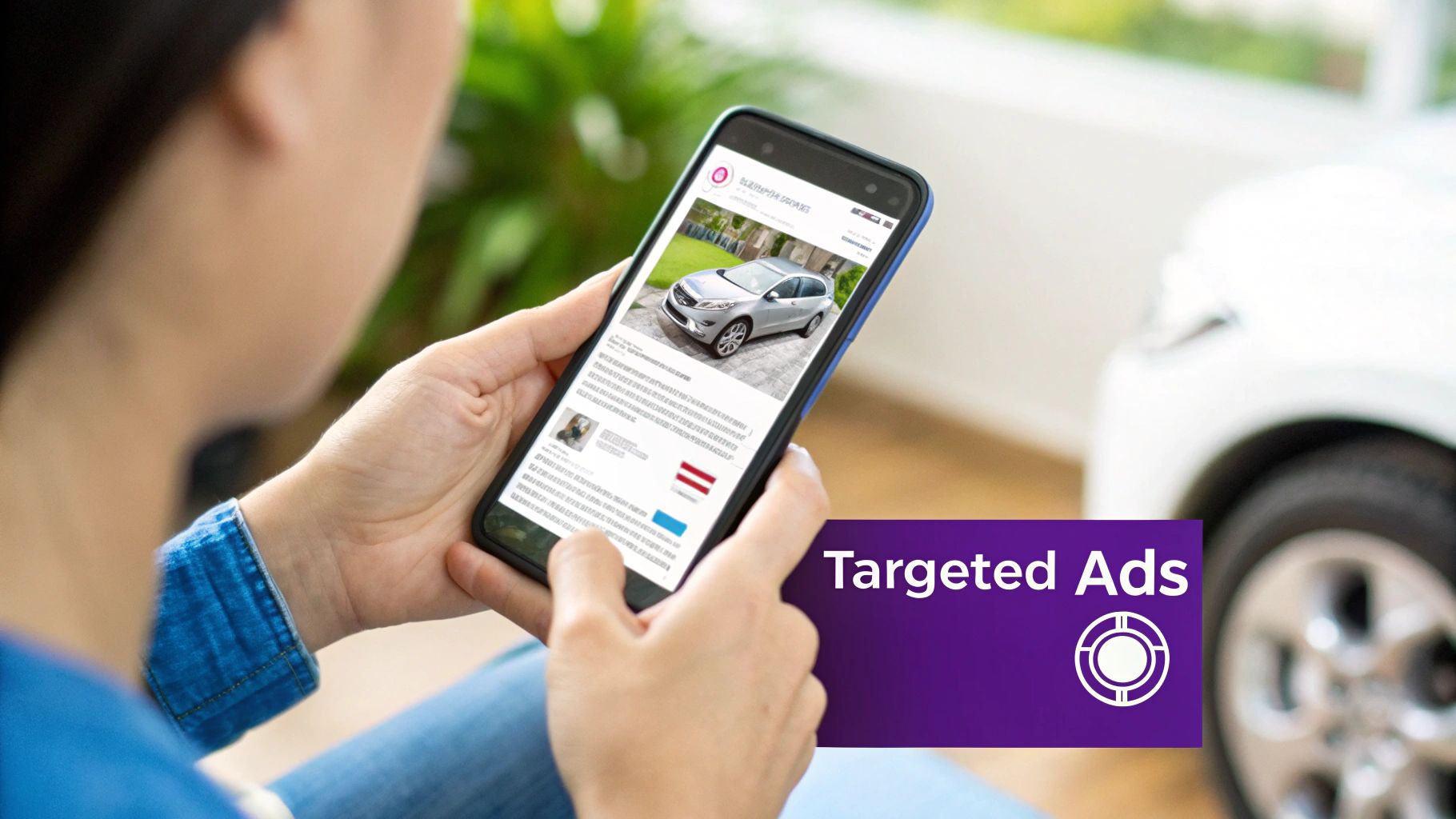
    A person views a targeted ad for a silver car on a smartphone, illustrating digital automotive marketing.

    This is a bigger deal than you might think. A shocking number of online leads are lost simply because no one follows up fast enough. In fact, studies show that nearly a quarter (23.5%) of all dealer leads are left hanging for more than 24 hours. That’s a huge pile of missed sales. A simple, automated email strategy can fix this problem almost instantly.

    Low-Effort, High-Impact Email Strategies

    You don’t need a full-time marketing person to make email work for you. The trick is to start with a couple of simple, automated sequences that do the heavy lifting in the background. They'll build relationships for you while you're out on the lot selling cars.

    Here are two must-have automations every dealership should have running:

    • The Instant Welcome Email: The second someone fills out a form on your website, an email should hit their inbox. This automation does three critical things: it confirms you got their message, thanks them for their interest, and sets expectations for what happens next. It’s a simple, professional touch that builds trust right away.
    • The New Inventory Alert: Set up a weekly or bi-weekly email that shows off the latest vehicles you've brought in. This keeps your audience engaged and gives them a reason to click back to your site. It's the perfect way to let people know about that clean truck or family SUV that just rolled onto your lot.

    Just these two tactics alone will ensure every new lead gets a prompt response and every interested shopper stays in the loop.

    An automated email doesn't just send information—it builds a relationship. It tells the customer, "We see you, we value your time, and we have what you're looking for."

    Building Long-Term Loyalty

    Email isn't just for new leads; it's also fantastic for staying in touch with the people who've already bought from you. A quick check-in email a few months after they drive off the lot, or a "Happy Anniversary" note a year later, does wonders for building the kind of loyalty that brings people back for their next car—and gets them to send their friends your way.

    Your email list is a business asset you completely own. Unlike social media followers or search rankings, which can change without warning, this is a direct line to your customers. By consistently offering something of value—whether it's new inventory updates, a few maintenance tips, or a special offer—you build a loyal community that views you as their car guy. This consistent communication is a cornerstone of a successful digital automotive marketing plan.

    Tracking The Metrics That Actually Matter

    Executing a smart digital marketing strategy is a huge win, but it's only half the battle. If you're not measuring your results, you’re just flying blind. To really know what's working, you have to move past the "vanity metrics"—things like page views or social media likes—and focus on the Key Performance Indicators (KPIs) that actually put money in your pocket.

    Think of it like the dashboard in one of your cars. You don't stare at every single gauge constantly. You watch the critical ones that tell you the engine is healthy: your speed, your fuel level, and the engine temperature. Your marketing works the same way. The goal is to track a few key numbers that prove your dealership is headed in the right direction.

    The KPIs Every Dealer Should Monitor

    Forget about getting tangled up in complicated spreadsheets and data overload. By zeroing in on a handful of core metrics, you can get a crystal-clear picture of how your marketing is performing. You don't even need fancy software; a free tool like Google Analytics is all you need to get started.

    Here are the essential KPIs for any independent dealership:

    • Website Traffic Sources: This one is simple: it tells you how people are finding your dealership online. Are they showing up from a Google search? Did they click on a Facebook ad you're running? Maybe they came from a link in an email you sent out. Knowing where your visitors come from helps you double down on the channels that work and pull back on those that don't.

    • Lead Form Submissions: This is one of the most important numbers you can track. Every time someone fills out a "Check Availability" or "Schedule a Test Drive" form, that's a direct, measurable lead. Counting these submissions shows you exactly how many potential buyers your website is generating.

    Tracking the right KPIs turns marketing from a simple expense into a measurable investment. It lets you make smart, data-backed decisions that grow your bottom line instead of just guessing what might work.

    • Cost Per Lead (CPL): The math here is easy: Total Ad Spend ÷ Total Leads. The result tells you precisely how much you're paying to get each potential customer's attention. A low CPL is a fantastic sign that your paid ads are efficient and, most importantly, profitable.

    • Vehicle Detail Page (VDP) Views: Think of VDP views as a powerful early warning system for buyer interest. When you see a specific car getting a ton of clicks, you know it's hot. Tracking which vehicles get the most attention helps you understand what your local market is looking for and which cars on your lot might need an extra promotional push to get them sold.

    Your Questions on Digital Automotive Marketing Answered

    Running an independent dealership means you're constantly juggling priorities, and figuring out digital marketing can raise a lot of questions. How much should I actually spend? What's going to move the needle? Can I even keep up? Let's tackle some of the most common concerns we hear from dealers on the ground.

    How Much Should a Small Dealership Spend on Digital Marketing?

    Forget about finding a "magic number." The best way to start is smart, not necessarily big. Your first and most critical investment isn't in ads—it's in a top-notch website platform built for SEO. Think of this as your digital showroom; it's the foundation for pulling in long-term, "free" traffic from search engines.

    Once your website is solid, you can start experimenting with paid advertising. A great starting point is a modest budget, maybe just a few hundred dollars a month. Pour that initial spend into hyper-local search campaigns focused on the types of vehicles you know are popular in your area.

    The secret here is to obsess over your cost-per-lead (CPL). When you know exactly how much it costs to get a qualified buyer on the phone or on your lot from a specific ad, you can make decisions with confidence. Track this number, and you'll know precisely which campaigns are worth scaling up and which to cut loose.

    What Is the Single Most Important Part of Dealership SEO?

    For an independent used car dealer, one thing stands head and shoulders above the rest: Local SEO. Your entire game is about showing up when someone in your town searches for a car you have. The most powerful weapon in your arsenal for this is your Google Business Profile (GBP).

    It's non-negotiable. Your GBP needs to be perfect—accurate hours, a local phone number, tons of recent photos of your lot and cars, and a consistent flow of fresh, positive customer reviews. For many potential buyers, this profile is their first impression of your dealership.

    Once your GBP is dialed in, turn your attention to creating unique, detailed pages for every single vehicle on your lot. This means more than just specs. It means high-quality photos and descriptions that naturally include local keywords. This is the raw material Google needs to connect a specific car with a specific local search.

    Can I Really Compete with Large Franchise Dealers Online?

    Yes, you absolutely can. It's easy to get intimidated by the massive marketing budgets of the big franchise stores, but as an independent, you have two secret weapons they just can't replicate: agility and a genuine local connection.

    Big dealerships are often like slow-moving battleships, tied to corporate marketing plans. You're a speedboat. You can pivot on a dime. By dominating local search terms, building a real community reputation on social media, and offering a dead-simple, fast website experience, you can build a fiercely loyal customer base.

    Never forget that many buyers want to support a trusted local business over a faceless corporation. Lean into that. It's your biggest advantage.


    Ready to build a website that competes and wins? AutoFire™ delivers fast, mobile-first dealership sites with automated inventory pages, built-in lead capture, and seamless Google integrations. Get your professional website online in minutes.
  • Driving Your Dealership to Google Stardom: A 2025 Success Playbook

    Driving Your Dealership to Google Stardom: A 2025 Success Playbook

    In the rapidly evolving world of digital car sales, staying ahead of the curve is vital for independent dealerships. With 92% of car buyers starting their journey online, the need for online presence has never. As we move into 2025, Google’s vehicle listings are set to become a game-changer for small dealerships aiming to capture local customer attention. But how can you, as an independent dealer, efficiently harness this opportunity without the hassle of complex technology?

    Introducing AutoFire™, the ultimate solution designed to streamline your path to Google stardom. By leveraging the forthcoming Google vehicle listings 2025 features, AutoFire empowers dealerships to effortlessly showcase their inventory with precision. Imagine a platform where you can set up your dealership’s online presence in just 10 minutes, complete with a Google Business Profile and an optimized Google Vehicle Listings feed. AutoFire takes the structured data registration your listings are perfectly positioned for maximum visibility.

    This post will guide you through actionable steps to get your dealership on Google, leveraging the new cars 2025 on Google’s framework. You’ll learn how AutoFire simplifies the process, helping you buyer intent and elevate. Get ready to unlock the full potential of the upcoming Google vehicle listings 2025 and transform your dealership’s digital strategy.

    Understanding Google Vehicle Listings 2025

    The automotive industry is rapidly evolving, and Google Vehicle Listings 2025 is at the forefront of this transformation. As independent car dealership owners look to enhance their online presence, understanding the ins and outs of the upcoming Google vehicle listings 2025 can provide a crucial advantage. This section delves into the features, importance of online visibility, and strategies for leveraging these listings to boost your dealership’s success.

    Google Vehicle Listings 2025 Features

    The 2025 vehicle listings on Google introduce a suite of innovative features designed to enhance online visibility for car dealerships. Key among these features is the integration of augmented reality (AR) previews, allowing potential buyers to visualize new cars 2025 on Google from the comfort of their homes. Enhanced structured data support ensures that listings are mobile-friendly and optimized for search, improving the chances of appearing in relevant searches. Google car listings 2025 also include advanced filter options, helping customers find the exact vehicle fitting their needs. These enhancements not only improve user experience but also significantly increase the likelihood of attracting high-intent buyers.

    Why Online Visibility Matters More Than Ever

    The necessity for a strong online presence cannot be overstated, especially as car shoppers increasingly rely on digital platforms. According to industry statistics, over 90% of car buyers start their journey online, underscoring the need for dealerships to prioritize digital visibility. Google vehicle listings 2025 features are crucial in this context, offering dealerships a direct line to buyers actively seeking vehicles. Having your dealership listed correctly is no longer optional — it’s imperative for reaching tech-savvy consumers who expect seamless, informative online interactions.

    Leveraging Google Auto Listings for 2025

    To effectively leverage Google auto listings in 2025, dealerships should ensure their Google Business Profile is meticulously updated, reflecting current inventory and promotions. The Google Vehicle Listings feed, integrated with your dealership’s AutoFire website, plays a critical role in maintaining accurate, up-to-date information. AutoFire’s platform ensures structured data compliance, making your listings more visible and appealing. Additionally, dealerships should focus on creating SEO-optimized content that aligns with common search queries related to their inventory. By doing so, it’s possible to capture the attention of high-intent buyers from the very start of their purchasing journey, giving your dealership a competitive edge in the digital marketplace.

    Google vehicle listings 2025 - Understanding Google Vehicle Listings 2025 for independent car dealerships

    Preparing Your Dealership for the Google Vehicle Marketplace

    As we edge closer to a digital-first world, the automotive industry is rapidly evolving, with platforms like Google’s upcoming vehicle listings in 2025 set to revolutionize how car buyers find their next vehicle. Independent car dealerships must prepare to leverage this marketplace to stay competitive. Below, we guide you through essential steps to ensure your dealership shines on Google in 2025.

    Setting Up a Google Business Profile

    Establishing a robust online presence begins with a well-crafted Google Business Profile. Start by visiting the Google Business website, where you can create or claim your profile. Ensure that all your dealership’s details are accurate, such as your business name, address, and hours of operation. Add high-quality images of your dealership and inventory to attract potential buyers. Encourage satisfied customers to leave positive reviews, enhancing your credibility. Regularly update your profile with the latest promotions or events to keep your audience engaged and informed.

    Creating a Google Vehicle Listings Feed

    Google’s vehicle listings in 2025 will offer a dynamic way to showcase your inventory to a vast audience. To set up a feed, you’ll need to compile a detailed list of your vehicles, including make, model, year, VIN, and pricing. Use structured data markup to ensure that your listings are optimized for search engines, enhancing visibility. The feed should be updated frequently to reflect current inventory and pricing, ensuring accuracy. By doing so, you’ll effectively list your car dealership online, attracting more high-intent buyers.

    AutoFire: Streamlining Your Online Readiness

    When it comes to preparing for the 2025 vehicle listings on Google, AutoFire can be your secret weapon. Its intuitive platform allows you to manage and update your inventory effortlessly. With features like SEO-optimized pages and structured data implementation, AutoFire ensures your dealership gains maximum visibility on Google car listings in 2025. The platform’s Dealer Portal acts as a centralized hub for inventory management and website customization, all without requiring technical expertise. Moreover, the Pro Plan offers advanced integrations, ensuring you’re ready for the new cars in 2025 on Google.

    In conclusion, capitalizing on Google’s 2025 vehicle listings requires proactive preparation. By setting up a Google Business Profile, creating a comprehensive vehicle feed, and utilizing AutoFire’s capabilities, your dealership can rise to stardom in the digital marketplace. Embrace these steps today to ensure you’re not just ready for the future, but leading it.

    Google vehicle listings 2025 - Preparing Your Dealership for the Google Vehicle Marketplace for independent car dealerships

    Optimizing Your Listings with Structured Data and SEO

    As we move towards 2025, the importance of optimizing your car dealership’s online presence using structured data and SEO cannot be overstated. With the advent of Google vehicle listings 2025 features, ensuring that your dealership stands out in search results is critical. This section will guide you through integrating structured data and effective SEO practices to maximize your visibility on Google.

    Implementing Structured Data Markup

    Structured data markup is a powerful tool that enhances your dealership’s visibility by providing search engines with clear information about your vehicle listings. It enables Google to display rich snippets and vehicle information directly in search results, making your offerings more attractive to potential buyers. To implement structured data, start by identifying all relevant data points for your vehicles, such as make, model, price, and VIN. Utilize schema.org’s vehicle schema to format this data properly.

    To deploy structured data on your site, you can use JSON-LD format, which Google recommends. By integrating this markup into your website’s HTML, you align your dealership with the upcoming Google vehicle listings 2025 enhancements. This alignment ensures that your listings are visible and comprehensive, boosting your chances of appearing in top search results. Regularly validate your structured data using tools like Google’s Structured Data Testing Tool to ensure compliance and effectiveness.

    SEO Best Practices for Vehicle Listings

    SEO is the backbone of online visibility, and optimizing your vehicle listings is vital for attracting high-intent customers. Begin by conducting keyword research to identify terms that potential buyers are using, focusing on phrases like “new cars 2025 on Google” and “Google car listings 2025.” Craft compelling, keyword-rich titles and meta descriptions for each listing, ensuring they match common search queries.

    Additionally, ensuring your website is mobile-friendly is crucial, as many users search for vehicles on their phones. Fast loading times and responsive design are essential to keep potential customers engaged. Always keep your Google Business Profile up to date, as this enhances local SEO and helps your dealership appear in local searches.

    Utilizing AutoFire for SEO Optimization

    AutoFire offers a suite of SEO tools designed to elevate your dealership’s online presence. By leveraging AutoFire’s comprehensive features, like structured data markup and Google Vehicle Listings integration, dealership owners can enhance their listing visibility without technical hassle. The platform’s Dealer Portal simplifies the management of your inventory and ensures that each vehicle listing is SEO-optimized and ready for 2025 vehicle listings on Google.

    AutoFire also provides customizable website templates that are inherently optimized for mobile devices, ensuring compliance with modern SEO standards. By utilizing these tools, your dealership can effectively capture the interest of car buyers searching for their next vehicle online, thus driving more traffic and potential sales.

    Google vehicle listings 2025 - Optimizing Your Listings with Structured Data and SEO for independent car dealerships

    Compliance and Best Practices for Google Vehicle Listings 2025

    As the digital landscape evolves, ensuring that your dealership’s online presence is optimized for success on search engines like Google is crucial. With the introduction of Google vehicle listings 2025, staying compliant with Google’s guidelines and adopting best practices can significantly impact your visibility and sales. This section will guide you through the essential compliance steps and best practices, ensuring your dealership shines in the competitive online market.

    Staying Compliant with Google’s Guidelines

    Google’s guidelines for vehicle listings are designed to maintain a high standard of quality and relevance, ensuring that users receive accurate and up-to-date information. To comply, dealerships must focus on accurate data entry, which includes detailed vehicle descriptions, correct pricing, and availability information. Google also requires the use of structured data markup, which helps search engines understand and display your listings effectively.

    AutoFire simplifies this process by integrating structured data and Google Business Profile management directly into its platform. This ensures that your listings are not only compliant but also optimized for visibility. Keeping your Google Business Profile updated with accurate dealership information helps reinforce your credibility and attract local buyers searching for new cars in 2025 on Google.

    Adopting Best Practices for Listing Success

    To achieve success with the upcoming Google vehicle listings 2025, focus on creating detailed, informative, and visually appealing listings. High-quality images and comprehensive vehicle descriptions enhance user engagement and trust. AutoFire’s inventory management feature allows you to upload multiple photos and detailed specifications effortlessly, ensuring that potential buyers have all the information they need.

    Another best practice is to regularly update your inventory. Fresh and accurate listings improve your chances of ranking higher in search results. Utilizing AutoFire’s Dealer Portal, you can easily manage and update your listings, keeping your potential customers informed with the latest offerings.

    How AutoFire Ensures Compliance and Quality

    AutoFire is designed to help independent dealerships establish a professional online presence without the need for extensive technical knowledge. By offering structured data integration and seamless Google Vehicle Listings feed setup, AutoFire ensures that your dealership meets compliance standards while maintaining high-quality listings.

    Through features like VIN support and a responsive design, AutoFire ensures that your listings are not only compliant but also appealing and user-friendly. This comprehensive approach helps your dealership stand out in the 2025 vehicle listings on Google, making it easier for customers to find and engage with your inventory online.

    In conclusion, by adhering to Google’s compliance guidelines and implementing best practices using AutoFire, your dealership can effectively leverage Google car listings 2025, attracting more potential buyers and driving sales growth.

    Monitoring and Improving Your Online Performance

    As an independent car dealership owner, understanding and enhancing your online presence is key to driving success in 2025. With the evolution of technology and the rise of platforms like Google vehicle listings 2025, it is essential to track and improve your dealership’s online performance. By leveraging data and analytics, you can ensure that your listings are not only visible but also compelling to potential car buyers.

    Using Analytics to Drive Improvement

    Analytics play a crucial role in gauging the effectiveness of your vehicle listings. By examining metrics such as page views, time spent on the listing, and conversion rates, you can identify what attracts or deters customers. For instance, if you notice high traffic but low engagement, it may be time to refine your vehicle descriptions or improve image quality. Additionally, tracking which vehicles garner the most attention can guide your inventory decisions, ensuring you stock in-demand models that align with 2025 vehicle listings on Google trends.

    Making Data-Driven Decisions with AutoFire

    AutoFire equips dealers with powerful analytics tools designed to optimize decision-making. Through its Dealer Portal, you gain insights into customer behaviors and preferences, enabling you to tailor your offerings accordingly. For example, if data indicates high interest in new cars 2025 on Google, focus your marketing efforts on highlighting these models. AutoFire’s analytics capabilities also support SEO optimization, ensuring your listings are compliant with Google vehicle listings 2025 features and enhancing your visibility across search engines. By integrating structured data and utilizing Google Vehicle Listings feed, AutoFire streamlines your path to digital prominence.

    Regularly Updating Your Listings for Maximum Impact

    To maintain a competitive edge, it is vital to keep your online vehicle listings up-to-date. Regular updates not only improve search engine rankings but also establish trust with potential buyers. Ensure accuracy in details such as pricing, availability, and vehicle specifications. Additionally, refreshing visuals and descriptions can capture the attention of users searching for Google car listings 2025. AutoFire simplifies these updates, allowing you to efficiently manage your inventory and enhance the online customer experience through its user-friendly website customization tools.

    By embracing these strategies, your dealership can maximize its online potential, effectively engage with modern car buyers, and achieve Google stardom in 2025.

    In conclusion, the landscape for independent car dealerships is evolving rapidly, and embracing the power of Google vehicle listings in 2025 is non-negotiable for those aiming for digital success. As we’ve outlined, setting up a robust online presence begins with actionable steps like optimizing your Google Business Profile and ensuring your dealership is ready with a Google Vehicle Listings feed. Leveraging AutoFire’s platform can streamline these processes, offering features like structured data and compliance tips, which are crucial in enhancing your visibility in the 2025 vehicle listings on Google.

    By establishing a professional online presence with tools designed specifically for small dealerships, such as AutoFire, you can effectively showcase new cars in 2025 and beyond to a broader audience. This is your opportunity to turn online searches into showroom visits, ultimately increasing sales and fostering customer loyalty. The upcoming Google vehicle listings 2025 features are set to revolutionize how customers find and engage with available inventory, and by acting now, you can secure your dealership’s place at the forefront of this digital marketplace.

    Don’t wait to get left behind–start implementing these strategies today and watch your dealership rise to Google stardom. Your future in the competitive world of online car sales begins now, with the right tools and a proactive approach.

  • The Importance of Reputation Management in the Digital Age

    The Importance of Reputation Management in the Digital Age

    In today’s digital marketplace, where information is just a click away, the power of online reputation management cannot be overstated. For independent car dealership owners, especially those operating in small local markets, managing your digital presence is absolutely crucial. Did you know that over 80% of car buyers begin their journey with online research? This means that the first impression often happens before a customer even sets foot on your lot. The shift in consumer behavior effective reputation management reviews and search results can heavily sway purchasing decisions.

    In this transformative landscape, the question isn’t whether you should manage your reputation online, but rather how to manage your reputation effectively. Reputation management services offer tools and strategies to help dealerships present a polished, professional image that attracts potential buyers. Throughout this post, we will delve into the key strategies of digital reputation management, equipping you with the knowledge to enhance your dealership’s appeal in a highly competitive online environment. So, buckle up as we explore how mastering your online reputation can drive your business success.

    Understanding Digital Reputation Management

    In today’s digital age, reputation management has become an essential component for businesses across all industries, including small car dealerships. Digital reputation management refers to the practice of monitoring, identifying, and influencing the online perception of a business. For independent car dealerships, understanding how to manage your reputation online attracting more customers

    What is Digital Reputation Management?

    Digital reputation management involves influence the public perception the internet. It differs from traditional reputation management, which relied heavily on word-of-mouth and print media. In the digital world, information travels at the speed of light, and consumers have easy access to a plethora of online reviews and ratings. Reputation management services often employ tools to track mentions, reviews, and social media activity to actively shape the public’s view. For car dealerships, this means consistently presenting a positive image across all digital platforms.

    Why Reputation Matters for Dealerships

    A strong reputation is crucial for car dealerships since consumers today are more informed and rely heavily on online research before making purchase decisions. Studies show that 97% of consumers read online reviews before visiting a dealership. In the automotive industry, where trust and credibility are paramount, reputation management for businesses plays a critical role. Customers are more likely to engage with dealerships that have positive reviews and a professional online presence. Thus, investing in digital reputation management is not just beneficial but necessary for independent dealerships aiming to compete in a saturated market.

    The Role of Online Reviews

    Online reviews significantly influence a dealership’s digital reputation. They act as word-of-mouth recommendations in the digital landscape. A single negative review can deter potential buyers, while positive feedback can enhance credibility and attract more customers. Encouraging satisfied customers to leave positive reviews can bolster a dealership’s reputation. Additionally, promptly addressing negative feedback shows prospective clients that the dealership values customer satisfaction and is committed to resolving issues. Therefore, actively managing online reviews is a vital component of effective reputation management strategies.

    reputation management - Understanding Digital Reputation Management for independent car dealerships

    Building a Strong Online Presence

    In today’s digital age, building a strong online presence is crucial for effective reputation management. For independent car dealerships, establishing a professional and engaging online image can significantly impact client perceptions and, ultimately, sales. Let’s delve into how dealerships can enhance their online footprint through strategic website design, social media engagement, and SEO-driven content marketing.

    Creating a Professional Website

    Your dealership’s website serves as the virtual storefront, and its design is a direct reflection of your business reputation. A professional-looking website reassures potential customers about the legitimacy and quality of your services. With platforms like AutoFire™, setting up an impressive website is not only quick but also straightforward, requiring no technical know-how. Dealers can customize their site with their brand colors, logos, and hero images, providing a personalized touch that resonates with customers. Moreover, having a well-structured site with clear vehicle listings and comprehensive details helps in projecting credibility and trustworthiness, which are essential components of online reputation management.

    Leveraging Social Media

    Social media platforms offer small dealerships a cost-effective way to engage with potential customers and manage their digital reputation. By maintaining active profiles on sites like Facebook and Instagram, dealerships can showcase their inventory, share customer testimonials, and engage with their audience through comments and messages. This interaction not only enhances visibility but also fosters community trust and loyalty. Responding promptly to inquiries and reviews further demonstrates a commitment to customer satisfaction, which is a cornerstone of effective reputation management for businesses.

    SEO and Content Marketing

    Search engine optimization (SEO) and content marketing are indispensable tools in enhancing a dealership’s online reputation. By optimizing your website with relevant keywords and creating valuable content, dealerships can improve their search engine rankings, making it easier for potential buyers to find them. AutoFire’s platform supports SEO-optimized pages, ensuring that your site is more likely to appear in Google search results. Additionally, by producing informative blog posts, video content, or newsletters, dealerships can position themselves as industry experts, thus reinforcing their reputation and attracting more traffic to their online platforms. Understanding how to manage your reputation online through these methods can make a significant difference in how your business is perceived.

    In conclusion, a strategic approach to digital reputation management can greatly benefit independent car dealerships. By investing in a professional website, engaging on social media, and leveraging SEO alongside content marketing, dealerships can establish a robust online presence that enhances their reputation and drives business growth.

    reputation management - Building a Strong Online Presence for independent car dealerships

    Reputation Management Tools and Services

    In the digital age, the reputation of a car dealership can be as crucial as the vehicles in its inventory. With the majority of consumers turning to the internet to research car purchases, maintaining a positive online presence is vital. This section explores various tools and services that can bolster the reputation management strategy of independent car dealerships.

    Top Reputation Management Tools

    Online reputation management involves tracking online mentions and reviews, responding to customer feedback, and ensuring that the digital presence aligns with the dealership’s values. Tools like Google Alerts and Hootsuite allow dealerships to monitor mentions and reviews across multiple platforms. These tools provide real-time notifications, making it easier to address issues promptly. Platforms such as Trustpilot and Yelp are also crucial, as they host customer reviews that significantly impact public perception. Reputation.com offers a comprehensive suite of services, including review monitoring, social media management, and customer surveys, which can be invaluable for maintaining a positive digital footprint.

    Deciding on Reputation Management Services

    While some dealerships might handle basic online reputation management in-house, there comes a time when professional services are beneficial. When faced with a crisis or significant negative publicity, hiring a reputation management service can be a wise decision. These professionals can offer strategic guidance and implement campaigns to rebuild trust. Services such as BirdEye and Podium specialize in enhancing online reputation through review management and customer interaction tools. It’s important to assess the dealership’s current reputation status and identify areas where professional guidance could make a substantial impact.

    DIY Versus Professional Management

    Choosing between managing your reputation in-house or hiring a professional service often depends on the size and resources of the dealership. Smaller dealerships with limited budgets might prefer a DIY approach, utilizing free or low-cost tools to stay on top of customer feedback and online mentions. However, managing your reputation online requires time and attention to detail. Professional services provide expertise and dedicated resources that can efficiently handle digital reputation management for businesses. Ultimately, the decision should align with the dealership’s goals, resources, and the complexity of its online challenges.

    In conclusion, whether opting for DIY methods or professional reputation management services, the key is to be proactive and responsive in maintaining your online reputation. By understanding how to manage your reputation online, dealerships can foster trust and attract more customers in an increasingly connected world.

    reputation management - Reputation Management Tools and Services for independent car dealerships

    Handling Negative Feedback Effectively

    In today’s digital age, online reputation management is critical for the success of independent car dealerships. Understanding how to effectively handle negative feedback can turn potential setbacks into opportunities for growth. Here’s how your dealership can respond to and learn from negative reviews.

    Responding to Negative Reviews

    Responding to negative reviews with professionalism and empathy can transform a dissatisfied customer into a loyal advocate. Start by acknowledging the customer’s concerns without being defensive. A simple acknowledgment like, “We appreciate your feedback and are sorry to hear about your experience,” can set a positive tone. Next, offer a solution or invite the customer to discuss their issue further offline to resolve the matter. This approach not only demonstrates that you care about their experience but also showcases your commitment to excellent customer service to potential buyers reading the reviews. It’s crucial to respond in a timely manner, as quick responses reflect a proactive approach to reputation management for businesses.

    Learning from Criticism

    Negative feedback can be a valuable resource for improving dealership operations. Analyze recurring issues or patterns in the feedback. For instance, if several reviews mention long wait times for test drives, it might indicate a need for better scheduling practices. Consider involving your team in discussing these insights to develop practical solutions. Implementing changes based on customer feedback not only enhances the customer experience but also strengthens your digital reputation management strategy. Remember, feedback is an opportunity to better understand how to manage your reputation online while continuously improving your service offerings.

    Legal and Ethical Considerations

    When dealing with negative feedback, it’s essential to maintain ethical integrity and adhere to legal guidelines. Avoid engaging in public arguments or retaliating against reviewers, as this can damage your reputation further. Instead, focus on addressing the issues raised in a professional manner. Be cautious not to disclose any personal information about customers when responding, as doing so could lead to legal complications. Utilizing reputation management services can provide additional guidance and tools to navigate these challenges while ensuring you uphold the highest standards of customer interaction. By keeping these considerations in mind, your dealership can handle criticism effectively and maintain a positive online presence.

    Cultivating a Positive Reputation Over Time

    In today’s digital age, reputation management is a critical component for independent car dealerships aiming to establish trust and loyalty among their customers. The process of cultivating a positive reputation over time involves strategic planning and consistent engagement with clients. This proactive approach not only enhances your digital reputation but also strengthens your position in a competitive market.

    Building Customer Trust

    Customer trust is the bedrock of any successful business, and it is particularly true in the automotive industry where purchases are significant investments. To build and maintain trust, dealerships must ensure that every customer interaction is consistent and reflects the integrity of the business. This consistency can be achieved by providing transparent vehicle information, offering immediate assistance through reliable customer service, and delivering on promises. When customers know they can count on your dealership for honesty and reliability, they are more likely to return and recommend your services to others. Integrating reputation management services into your strategy can further bolster this trust by monitoring and addressing any concerns promptly.

    Encouraging Positive Reviews

    Positive reviews are a powerful tool in enhancing your online reputation management. Encourage satisfied customers to share their experiences by making it easy for them to leave reviews on popular platforms like Google and Yelp. You can prompt reviews by sending follow-up emails post-purchase or by having a visible prompt on your dealership’s website. Offering incentives such as discounts on future services can also motivate customers to take the time to write a review. A steady stream of positive feedback not only improves your digital reputation but also influences potential customers who are researching your dealership online.

    Consistent Customer Engagement

    Engaging with customers consistently is key to maintaining a favorable reputation. This can be achieved through regular updates on social media, informative newsletters, and personalized communication. By actively engaging with your audience, you demonstrate that you value their input and are committed to improving their experience. This engagement is crucial for online reputation management, as it helps to address issues swiftly and publicly, showcasing your dedication to customer satisfaction. Remember, reputation management for businesses is a continuous process and requires vigilance to ensure that your dealership’s name remains synonymous with excellence.

    In today’s digital age, reputation management is no longer optional for independent car dealerships. It’s a vital, ongoing process that can dramatically impact your success in the competitive automotive industry. As we discussed, investing in online reputation management not only builds trust with prospective buyers but also enhances customer engagement and loyalty. The benefits of digital reputation management are particularly significant for small dealerships that rely heavily on local customers and word-of-mouth referrals.

    By integrating reputation management for businesses into your daily operations, you can ensure that your dealership’s image remains positive and trustworthy. Utilize reputation management services that can help you monitor and respond to customer reviews effectively. Remember, knowing how to manage your reputation online is essential in shaping the perceptions customers have of your business. A strong digital reputation management strategy will not only protect your brand but also boost your presence on search engines, ultimately driving more traffic to your website.

    Now is the time to act. Don’t let unaddressed negative reviews or a lack of online presence hinder your dealership’s growth. Embrace the tools and strategies needed to manage your dealership’s reputation effectively and ensure long-term success.

  • Harnessing Mobile Marketing: Reaching Car Buyers On the Go

    Harnessing Mobile Marketing: Reaching Car Buyers On the Go

    In today’s fast-paced digital world, mobile technology has reshaped the landscape of car shopping. Over 80% of car buyers now use their smartphones during the purchase process, highlighting an undeniable shift in consumer behavior. For independent car dealership owners, this trend emphasizes the critical need to embrace mobile marketing strategies. But how does mobile marketing help car dealerships maintain a competitive edge? It offers a unique opportunity to connect with customers who are constantly on the move, enabling dealerships to reach potential buyers exactly where they are.

    With mobile marketing for car dealerships, you can leverage SMS marketing to send personalized offers and updates, ensuring your inventory remains at the forefront of consumers’ minds. Effective mobile campaigns for auto dealerships also incorporate location-based advertising, a tactic that has proven to drive foot traffic directly to lots. The benefits of mobile advertising for car dealerships extend beyond just visibility; they also include enhanced customer engagement and increased lead generation. In this blog, we’ll explore these elements and provide actionable insights into how your harness mobile marketing attention of today’s digitally-savvy car buyer.

    Understanding Mobile Marketing for Car Dealerships

    In today’s fast-paced digital world, mobile marketing has become a game-changer for businesses of all sizes, especially within the automotive industry. For independent car dealerships, embracing mobile marketing strategies is crucial to gaining a competitive edge and enhancing customer engagement. As mobile device usage continues to soar, understanding mobile marketing for car dealerships can significantly impact how you connect with potential buyers and drive sales.

    What is Mobile Marketing?

    Mobile marketing refers to the use of mobile devices to reach consumers with marketing messages. It encompasses a wide array of strategies including mobile-friendly websites, applications, SMS marketing, and mobile ads. For car dealerships, this means ensuring that your website is responsive and user-friendly on smartphones and tablets, as well as leveraging mobile apps to offer better customer experiences. By integrating mobile marketing strategies for car dealerships, businesses can ensure they remain accessible and appealing to the tech-savvy modern buyer.

    How Does Mobile Marketing Help Car Dealerships?

    Mobile marketing offers several benefits for car dealerships. According to industry data, over 60% of all automotive searches start on a mobile device. This highlights the importance of having an effective mobile presence. By being easily accessible on mobile, dealerships can improve customer engagement and increase the likelihood of converting leads into sales. Mobile advertising for car dealerships also enables precise targeting, allowing dealers to reach potential customers based on location, behavior, and preferences. Moreover, SMS marketing for car dealerships offers a direct communication channel, fostering stronger relationships with customers.

    The Evolution of Car Buying Behavior

    The rise of mobile technology has significantly influenced car buying behavior. Today, consumers increasingly rely on their smartphones to research vehicles, compare prices, and even complete purchases. This shift towards online and mobile-first car shopping experiences means that dealerships must adapt to meet these expectations. Effective mobile campaigns for auto dealerships can capture the attention of potential buyers who are on the go, ensuring they have the information they need at their fingertips. As mobile usage continues to grow, understanding these trends and leveraging mobile marketing is not just beneficial — it’s essential for any dealership looking to succeed in today’s market.

    mobile marketing for car dealerships - Understanding Mobile Marketing for Car Dealerships for independent car dealerships

    Effective Mobile Marketing Strategies for Auto Dealerships

    In today’s fast-paced world, mobile marketing for car dealerships is essential to reach potential buyers where they are most active — on their mobile devices. With more consumers using smartphones as their primary tool for browsing and shopping, establishing a robust mobile presence is crucial. Here, we explore various mobile marketing strategies for car dealerships that can enhance visibility, boost engagement, and ultimately drive sales.

    Developing Mobile-Responsive Websites

    Creating a mobile-responsive website is fundamental for any dealership aiming to succeed in mobile marketing. With over half of all web traffic now coming from mobile devices, ensuring your website is accessible and user-friendly on smartphones is no longer optional. Mobile-responsive websites adjust seamlessly to different screen sizes, providing users with an optimal viewing experience. AutoFire™ simplifies this process by enabling dealerships to quickly set up mobile-responsive sites without technical expertise. By utilizing AutoFire’s tools, dealerships can present their inventory, brand colors, and custom images in a way that appeals to on-the-go car shoppers.

    Utilizing SMS Marketing for Car Dealerships

    SMS marketing for car dealerships offers a direct and personal way to engage with potential and existing customers. With open rates of text messages significantly higher than emails, SMS campaigns can effectively capture attention and encourage action. Dealerships can send personalized messages about new arrivals, promotional offers, or service reminders. For instance, a dealership could send a special discount to customers who haven’t visited in a while, urging them to explore the latest models. These effective mobile campaigns for auto dealerships help maintain constant contact with the audience, driving sales and customer loyalty.

    Leveraging Mobile Advertising Platforms

    Mobile advertising platforms offer dealerships a powerful way to increase their visibility and attract potential buyers. By leveraging these platforms, dealerships can target ads to appear in mobile apps, social media feeds, and search results. Google’s mobile ads, for instance, allow dealerships to target users based on their location, search behavior, and more, ensuring ads reach the right audience at the right time. The benefits of mobile advertising for car dealerships include increased brand recognition and higher chances of converting leads who are actively searching for vehicles. Through strategic use of mobile advertising, dealerships can effectively reach and influence car buyers on the move.

    Implementing these mobile marketing strategies for car dealerships not only helps in expanding reach but also strengthens customer connections. By understanding how mobile marketing helps car dealerships, owners can better position themselves in the competitive automotive market, ensuring they meet the evolving needs of today’s digital consumers.

    mobile marketing for car dealerships - Effective Mobile Marketing Strategies for Auto Dealerships

    Benefits of Mobile Advertising for Car Dealerships

    In today’s digital age, mobile marketing for car dealerships is not just an option — it’s a necessity. With more consumers relying on their smartphones to make purchasing decisions, it’s crucial for independent car dealerships to leverage mobile advertising strategies to enhance their operations and boost sales. Here, we explore the various advantages of adopting mobile marketing strategies for car dealerships, providing you with insights into how this approach can transform your dealership’s reach and engagement.

    Enhanced Customer Interaction

    Mobile advertising opens up new avenues for direct interaction with potential car buyers. By utilizing mobile platforms, dealerships can engage with customers through personalized messages, SMS marketing for car dealerships, and targeted advertisements. This direct engagement allows dealerships to tailor their marketing approaches based on individual preferences and behaviors. For instance, push notifications and in-app messages can inform customers about new vehicle arrivals or exclusive promotions, thereby keeping the dealership top-of-mind. Such interactions foster a more personalized customer experience, which can lead to higher conversion rates and increased customer satisfaction.

    Improved Local Reach

    Geo-targeting is a powerful feature of mobile advertising that allows dealerships to hone in on local audiences. By leveraging location-based services, dealerships can ensure their ads reach potential buyers who are nearby, increasing the likelihood of foot traffic to the dealership. This is particularly beneficial for small, independent dealerships that serve local communities and rely heavily on local customers. Effective mobile campaigns for auto dealerships can include special offers and events, specifically targeted to consumers within a specified geographic area, thus maximizing local reach and enhancing the visibility of the dealership within the community.

    Cost-Effective Advertising Solutions

    Mobile advertising presents a cost-effective alternative to traditional marketing methods, making it an attractive option for small car dealerships with limited budgets. Compared to print or television ads, mobile marketing strategies for car dealerships often require a lower initial investment while providing measurable results. Additionally, platforms such as social media and Google Ads offer flexibility in budgeting, allowing dealerships to allocate resources efficiently and optimize campaigns for better performance. This affordability, coupled with the ability to track and analyze ad performance in real-time, ensures that dealerships can achieve maximum return on investment from their advertising efforts.

    In conclusion, the benefits of mobile advertising for car dealerships are manifold. By enhancing customer interaction, improving local reach, and offering cost-effective solutions, mobile marketing helps car dealerships stay competitive in an increasingly digital marketplace. By implementing effective mobile campaigns for auto dealerships, independent dealerships can drive sales, engage customers, and build a robust online presence.

    mobile marketing for car dealerships - Benefits of Mobile Advertising for Car Dealerships for independent car dealerships

    Leveraging Mobile Apps for Car Sales

    In today’s digital age, mobile marketing for car dealerships has emerged as a crucial strategy for reaching potential buyers who are constantly on the move. One of the most effective mobile marketing strategies for car dealerships is the development of dedicated mobile apps. These apps serve as powerful tools, enhancing the car buying process while fostering stronger relationships between dealerships and their customers.

    Car Dealership Mobile App Marketing

    Mobile apps for car dealerships present a variety of features that streamline both customer service and inventory browsing. By offering an app, dealerships provide customers with instant access to their entire vehicle inventory, complete with detailed descriptions, multiple photos, and pricing information. This immediate availability empowers buyers to make informed decisions at their convenience. Additionally, features such as push notifications and SMS marketing for car dealerships can be leveraged to alert potential buyers about new arrivals or special sales events, making the app a dynamic platform for effective mobile campaigns for auto dealerships.

    Developing a User-Friendly App Experience

    Creating an intuitive and engaging mobile app experience is essential for maximizing user engagement. A well-designed app should prioritize usability, ensuring that navigation is straightforward and that essential information is easily accessible. Features like search filters, comparison tools, and seamless integration with social media can enhance the user experience, encouraging visitors to explore and interact with the app. By focusing on these elements, dealerships can develop mobile marketing strategies for car dealerships that not only attract but retain customer interest, ultimately boosting sales.

    Integration with Existing Dealership Systems

    For mobile apps to be truly effective, they must seamlessly integrate with a dealership’s existing systems, such as inventory and customer management platforms. This integration ensures that vehicle listings are always up-to-date and that customer inquiries can be efficiently managed. By connecting the app to these systems, dealerships streamline operations and provide a consistent and reliable experience for users. This approach not only enhances the app’s effectiveness but also highlights the benefits of mobile advertising for car dealerships, as it creates a cohesive digital ecosystem that supports the entire sales process.

    Incorporating mobile apps into a dealership’s marketing strategy isn’t just an added bonus–it’s a necessity in a world where consumers are increasingly reliant on their smartphones for making purchasing decisions. By understanding how mobile marketing helps car dealerships and implementing these strategies effectively, auto dealers can significantly increase their reach and drive sales growth.

    Best Practices for Mobile Content Marketing in Auto Sales

    In today’s digital age, mobile marketing for car dealerships is an essential element in reaching the modern car buyer. With consumers increasingly relying on their smartphones to search for and purchase vehicles, it’s crucial for independent car dealers to master mobile content marketing. By understanding mobile marketing strategies for car dealerships, dealers can attract and retain customers efficiently. Below are best practices to enhance your mobile content marketing efforts.

    Creating Engaging Mobile Content

    To captivate your audience on mobile devices, it’s important to focus on content types and formats that resonate well. Images and videos are particularly powerful. High-quality photos of vehicle inventory can instantly grab attention, while engaging videos can provide a virtual showroom experience. Moreover, concise text that complements visuals can boost engagement. Deploying SMS marketing for car dealerships is another effective strategy. Simple yet informative messages about new arrivals or exclusive offers can drive quick actions, fostering a direct connection with potential buyers.

    SEO Optimization for Mobile Content

    Optimizing your mobile content for search engines is critical in driving organic traffic to your dealership’s website. Implement structured data markup to enhance how search engines understand your vehicle listings. Additionally, the use of Google Vehicle Listings integration can improve visibility in search results. Focus on mobile-specific SEO strategies, such as fast loading times and a mobile-friendly design, to further enhance user experience. By understanding how mobile marketing helps car dealerships, you can tailor your content to meet the search habits of mobile users effectively.

    Tracking and Measuring Mobile Marketing Success

    To ensure your mobile marketing efforts are yielding results, it’s essential to track and measure campaign performance. Utilize tools like Google Analytics to monitor traffic sources, user behavior, and conversion rates. Analyzing metrics such as click-through rates and engagement levels provides insights into the effectiveness of your mobile campaigns. Additionally, real-time monitoring allows for timely adjustments, ensuring you make data-driven decisions that enhance the benefits of mobile advertising for car dealerships. By leveraging these metrics, dealerships can refine their strategies, ensuring sustained success in reaching car buyers on the go.

    In conclusion, mobile marketing for car dealerships is not just a trend — it’s a crucial component of a modern dealership strategy. As we explored, mobile marketing strategies for car dealerships harness the power of immediacy and convenience, offering unprecedented access to potential customers who are constantly on the go. By leveraging the benefits of mobile advertising for car dealerships, independent dealers can engage with car buyers in real time, delivering targeted promotions and personalized experiences directly to their devices.

    Embracing effective mobile campaigns for auto dealerships can transform how you interact with your audience, driving growth and securing a competitive edge in the market. Whether it’s through SMS marketing for car dealerships, mobile-optimized websites, or location-based advertising, the possibilities are vast and adaptable to your specific needs. We’ve shown how mobile marketing helps car dealerships connect with a broader audience and improve customer engagement.

    To capitalize on these insights, take action now. Implement these actionable strategies today and watch your dealership thrive. Remember, the future of car buying is mobile, and by aligning your marketing efforts with this reality, you’re setting your dealership up for sustained success. Embrace mobile marketing and be at the forefront of the automotive sales revolution.

  • From Clicks to Showroom: Turning Website Visitors Into Car Buyers

    From Clicks to Showroom: Turning Website Visitors Into Car Buyers

    In today’s digital age, the journey from a potential buyer’s first click on your website to stepping into your showroom has become a critical path for independent car dealerships. As online car shopping continues to skyrocket, with over 60% of car buyers beginning their search online, small dealerships face the challenge of converting these website visitors into actual car buyers. For independent car dealership owners, who often operate with limited mastering the art of website visitor conversion competitive advantage–it’s a necessity.

    Despite the growing trend of online shopping, many dealerships increase website conversions to recent studies, dealerships that implement effective website visitor conversion strategies can significantly enhance their sales performance. For instance, understanding convert website visitors to convert website traffic can greatly impact your bottom line. This blog post will delve into practical tips and actionable insights tailored specifically for independent dealership owners. You’ll learn how to turn website visitors into customers and explore proven strategies designed to increase your conversion rates and boost your dealership’s success online.

    Understanding the Online Car Shopper

    To effectively convert website visitors into customers, independent car dealerships must first understand the behavior and expectations of online car shoppers. With the digital landscape continually evolving, knowing what drives a potential buyer from mere interest to a purchase decision is crucial for increasing website conversions.

    The Modern Buyer’s Journey

    journey of an online car shopper with the initial research phase. At this stage, buyers are gathering information, comparing brands, and identifying potential vehicles that meet their criteria. As they progress, the focus shifts to narrowing down choices based on specific preferences such as price, features, and reviews. Finally, the journey culminates in the decision-making stage where the buyer is ready to make a purchase. To convert website visitors effectively, dealerships need to ensure that their online presence supports each stage of this journey, providing the necessary information and tools to guide buyers toward a purchase confidently.

    Key Factors Influencing Purchases

    There are several critical factors that influence the purchasing decisions of online car shoppers. Trust is paramount — buyers must feel confident in the dealership’s credibility and the accuracy of the information presented. Ease of navigation on a dealership’s website is also crucial, as it directly affects how quickly and efficiently a visitor can find the information they need. Comprehensive vehicle information, including detailed descriptions, high-quality images, and VIN support, plays a significant role in building buyer confidence and increasing website conversions. By focusing on these factors, dealerships can enhance their website visitor conversion strategies.

    Demographics and Behavioral Traits

    Understanding the demographics and behaviors of online car shoppers can provide valuable insights into how to convert website visitors effectively. Typically, online car buyers are tech-savvy individuals who appreciate the convenience and breadth of options available online. They are often from diverse age groups, with millennials and Gen Z leading the pack due to their comfort with digital technology. These buyers tend to research extensively, often using multiple devices, and value transparency and detailed product information. By aligning website features with these traits, dealerships can significantly improve their methods to convert website traffic and turn website visitors into customers.

    convert website visitors - Understanding the Online Car Shopper for independent car dealerships

    Website Optimization for Increased Conversions

    In today’s digital-first world, optimizing your dealership’s website is crucial for converting website visitors into actual car buyers. By enhancing various aspects of your online presence, you can significantly increase website conversions and turn casual browsers into serious customers. Here are some essential methods to convert website traffic into tangible sales.

    Effective Use of SEO

    Implementing effective SEO strategies is fundamental in increasing website conversions. Search engine optimization helps drive more relevant traffic to your dealership’s site, ensuring that potential customers can easily find you when they search for vehicles online. By incorporating targeted keywords such as “convert website visitors” and “website visitor conversion strategies” naturally into your content, you enhance your website’s visibility on search engines. Additionally, structured data markup helps search engines understand your inventory better, potentially leading to higher rankings. Remember, the goal is to attract visitors who are already interested in purchasing a vehicle, thereby increasing the chances of conversion.

    Creating an Engaging User Experience

    Another critical factor in converting visitors is creating an engaging and seamless user experience. Your website should be intuitive, allowing visitors to navigate effortlessly and find the information they need without frustration. Highlight key selling points, such as special offers, financing options, or featured vehicles prominently on your homepage. Simplify the navigation by using clear, concise menus and ensuring that essential information is readily accessible. An engaging user experience not only captivates visitors but also encourages them to take the next step toward a purchase, thereby increasing website conversions.

    Mobile Optimization Techniques

    With a significant portion of online shopping now conducted via mobile devices, ensuring your website is fully optimized for mobile users is imperative. A responsive design ensures your site looks and functions perfectly across all devices, whether it’s a smartphone, tablet, or desktop. Mobile optimization techniques include fast loading times, touch-friendly navigation, and clear call-to-action buttons that are easy to click on smaller screens. By catering to mobile users, you accommodate a larger audience, which helps in how to convert website visitors into buyers.

    By focusing on these key areas — effective use of SEO, creating an engaging user experience, and mobile optimization — your dealership can effectively increase website conversions. Implement these strategies today and turn website visitors into loyal customers.

    convert website visitors - Website Optimization for Increased Conversions for independent car dealerships

    Utilizing the AutoFire Platform

    Converting website visitors into car buyers is more than just a digital marketing goal — it’s a necessity for independent car dealerships looking to thrive in today’s competitive market. The AutoFire™ platform provides a suite of tools that empower dealers to enhance their online presence and effectively turn website visitors into loyal customers. By tapping into the platform’s comprehensive features, dealerships can significantly increase website conversions and optimize their digital storefronts for greater impact.

    Leveraging the Dealer Portal

    The Dealer Portal serves as the command center for managing your dealership’s online inventory. With user-friendly interfaces, it allows dealerships to list vehicles effortlessly, complete with comprehensive details and multiple photos. The seamless integration of VIN support ensures that potential customers receive all the necessary information they need, making it easier to convert website visitors who are browsing for specific vehicle details. By presenting a well-organized and informative inventory, dealerships can implement effective website visitor conversion strategies.

    Customizing Websites for Maximum Impact

    AutoFire’s customization features enable dealerships to craft a website that reflects their unique brand identity. By optimizing logos, brand colors, and custom hero images, dealers can create a visually appealing online presence that resonates with potential buyers. These personalization options are crucial methods to convert website traffic into tangible leads. A well-customized website not only attracts attention but also encourages visitor engagement, increasing the likelihood of turning website visitors into customers. AutoFire ensures that even those with limited technical skills can achieve this level of customization with ease.

    Importance of Structured Data and SEO

    Structured data markup and SEO optimization are critical elements in enhancing a dealership’s online visibility. AutoFire’s built-in SEO tools ensure that each dealership’s website is optimized for search engines, making it easier for potential car buyers to find them. This includes mobile-friendly designs and integration with Google Vehicle Listings, which boosts the website’s appeal and accessibility. By optimizing these elements, dealerships can effectively enhance their search rankings and attract more qualified leads, ultimately improving their ability to convert website visitors into car buyers.

    convert website visitors - Utilizing the AutoFire Platform for independent car dealerships

    Conversion Tracking and Analysis

    In the digital age, understanding how to convert website visitors into loyal car buyers is crucial for independent car dealerships. Effective conversion tracking and analysis can significantly enhance your ability to turn website visitors into customers by refining your online strategies. With an in-depth understanding of your audience’s behavior, you can implement targeted tactics to increase website conversions and ultimately boost sales.

    Setting Up Conversion Tracking

    Setting up conversion tracking is the first step in understanding website visitor conversion strategies. Utilizing tools like Google Analytics is essential for tracking visitor behavior and conversion metrics. By setting up goals and events, you can monitor specific actions visitors take on your site, such as filling out a contact form or clicking on a vehicle listing. This data helps identify which pages and elements are converting website traffic effectively and which ones require improvement. Google Analytics also offers insights into traffic sources, allowing you to see which marketing channels are driving the most engaged visitors to your site.

    Analyzing Visitor Data for Insights

    Once your conversion tracking is in place, analyzing visitor data is key to extracting actionable insights. By examining metrics like bounce rates, session durations, and conversion paths, you can identify patterns and trends that inform your marketing and sales strategies. For instance, if a particular vehicle listing page has a high exit rate, this could indicate an issue with the information provided or the need for more engaging content. Use this data to refine your strategies, ensuring that you are effectively converting visitors into customers by addressing their needs and preferences.

    Continuous Improvement Strategies

    Continuous improvement is vital for maintaining a competitive edge in the online marketplace. By reviewing data analysis and consumer feedback regularly, you can implement iterative changes to enhance website performance. A/B testing different elements such as call-to-action buttons, page layouts, and promotional banners can provide valuable insights into what resonates with your audience. Additionally, engaging with customer feedback through surveys or direct communication can offer a deeper understanding of areas needing improvement. By consistently applying these strategies, you can increase the effectiveness of your website visitor conversion methods and ensure a steady flow of potential buyers.

    Engaging Visitors with Personalized Communication

    Effective communication is a cornerstone in the journey of converting website visitors into loyal car buyers. By personalizing interactions, dealerships can significantly increase website conversions and turn casual visitors into committed customers. Here, we explore various strategies to enhance engagement through personalized communication.

    Crafting Compelling Calls to Action

    Calls to action (CTAs) are pivotal in guiding visitors through the website’s conversion funnel. To convert website visitors effectively, CTAs should be clear, persuasive, and strategically placed. A compelling CTA uses action-oriented language and urgency to motivate users to take desired actions, such as scheduling a test drive or contacting the dealership. For instance, phrases like “Explore Our Latest Models Now” or “Book a Free Consultation Today” can effectively guide visitors toward conversion. By customizing CTAs to align with specific visitor interests, dealerships can enhance their methods to convert website traffic into tangible leads.

    Utilizing Email and Social Media

    Email marketing and social media play crucial roles in nurturing leads and encouraging conversions. Through personalized email campaigns, dealerships can maintain a connection with potential buyers by providing relevant updates, special offers, and vehicle recommendations based on previous interactions. Social media platforms offer an avenue for engaging content that resonates with the audience, from showcasing success stories to highlighting new arrivals. By integrating these channels, dealerships can create a seamless communication flow that encourages visitors to revisit and eventually convert into customers. To increase website conversions, consistency across these platforms is key, ensuring that the messaging reinforces the dealership’s brand and value proposition.

    Implementing Chat Features

    Integrating live chat and automated chatbots on a dealership’s website can provide immediate assistance to visitors, enhancing engagement and user experience. Live chat allows for real-time communication, addressing visitor queries instantly and providing personalized guidance on vehicle options. Automated chatbots can handle routine inquiries outside business hours, ensuring visitors always receive timely responses. This level of interactivity is crucial in methods to convert website traffic as it nurtures trust and encourages visitors to take the next step in their purchasing journey. By offering direct communication channels, dealerships can efficiently turn website visitors into customers, improving overall visitor conversion strategies.

    In today’s digital era, transforming your website visitors into loyal customers is essential for thriving in the competitive automotive landscape. By employing effective website visitor conversion strategies, independent car dealerships can significantly enhance their online presence. The key strategies highlighted in this post, such as optimizing your website for mobile use, harnessing the power of SEO, and providing detailed inventory listings, are instrumental methods to convert website traffic into sales.

    Frequent updates and engaging content that resonates with your audience are fundamental to building trust and encouraging visitors to step into your showroom. Remember, the journey from clicks to showroom begins with a robust, user-friendly online platform that caters to the needs of modern car shoppers. AutoFire empowers you with tools that simplify this process, offering seamless inventory management and attractive website customization options.

    Now is the time to act. Implement these strategies to increase website conversions and turn website visitors into customers. Whether you’re just starting or looking to enhance your current online strategy, leveraging these insights will give you a competitive edge. Begin your journey with AutoFire today and watch as your dealership flourishes in the digital marketplace.

  • Navigating the Online Car Buying Journey: What Dealerships Need to Know

    Navigating the Online Car Buying Journey: What Dealerships Need to Know

    The online car buying journey is transforming faster than ever, reshaping how consumers purchase vehicles. For independent small car dealership owners, understanding this digital evolution is not just beneficial–it’s essential. According to a recent study, over 60% of car buyers now begin their journey online, showcasing the growing trend of researching and purchasing vehicles via the internet. This shift highlights the undeniable importance of a robust online presence, where convenience and comprehensive research meet at the heart of the modern consumer’s experience.

    As a dealership owner, navigating this new landscape can be daunting. The advantages of online car buying, from easy the best online car buying sites online car purchase process, offer customers unprecedented control and choice. Dealerships that adapt to these steps in buying a car online not only appeal to tech-savvy buyers but also position themselves as leaders in customer-centric service.

    In this blog post, we’ll delve into practical strategies that will help you attract and retain customers. By understanding how to buy a car online, you’ll learn how to cater to digital-first consumers who value both efficiency and thorough online research. Get ready to drive your dealership’s success.

    Understanding the Online Car Buying Journey

    The online car buying journey is transforming the way consumers purchase vehicles, and understanding this journey is crucial for dealerships aiming to thrive in today’s digital marketplace. As car buyers increasingly turn to the internet for their automotive needs, dealerships must adapt by recognizing and aligning with the distinct phases of the online car buying process. This comprehensive exploration will uncover each step of the journey and provide actionable insights for dealerships.

    The Initial Research Phase

    The journey begins with the initial research phase, where prospective buyers turn to the best online car buying sites to gather information and compare options. Consumers often start by seeking details about different makes and models, fuel efficiency, safety features, and price ranges. They rely heavily on search engines and automotive review sites to form their initial opinions. During this stage, the advantages of online car buying become apparent as consumers appreciate the convenience and breadth of information available at their fingertips. Dealerships can capture attention by ensuring their online presence is strong and informative. Offering detailed vehicle descriptions, comprehensive specifications, and high-quality images can make a significant difference in attracting potential buyers and keeping them engaged.

    Evaluating Options and Making Decisions

    Once consumers have gathered sufficient preliminary information, they move into the evaluation phase. Here, they delve deeper using an online car buying guide to weigh their options. This phase is critical as buyers compare vehicles based on features, prices, and reviews. Dealerships must present clear, compelling vehicle listings to stand out in this crowded digital space. Highlighting unique selling points, competitive pricing, and special offers can sway buyers’ decisions. Additionally, ensuring that the website is user-friendly, with easy navigation and responsive design, enhances the online car buying journey and builds customer trust.

    Finalizing the Purchase Online

    The final stage involves the steps in buying a car online, where consumers are ready to make a purchase decision. This stage requires dealerships to facilitate a seamless online car purchase process. Key elements include providing transparent pricing, easy financing options, and secure online transaction capabilities. Dealers should prioritize customer support, offering live chat or prompt response systems to address inquiries swiftly. By simplifying the purchase process and minimizing friction, dealerships can convert potential leads into loyal customers, leveraging the full advantages of online car buying.

    In conclusion, understanding the online car buying journey allows dealerships to tailor their strategies effectively, ensuring they meet the needs and expectations of modern car buyers. By enhancing their online presence and optimizing the purchase experience, dealerships can thrive in the digital age, capturing the attention and business of online-savvy consumers.

    online car buying journey - Understanding the Online Car Buying Journey for independent car dealerships

    The Advantages of Online Car Buying

    In today’s digital era, the online car buying journey offers significant benefits for both consumers and dealerships. As car buyers increasingly turn to the web for their vehicle purchases, understanding these advantages can help independent car dealerships leverage online platforms to their fullest potential.

    Convenience and Accessibility

    One of the most compelling advantages of online car buying is the convenience it provides. Consumers can explore a wide variety of options from the comfort of their own homes, eliminating the need to visit multiple dealerships physically. This accessibility allows potential buyers to browse and compare vehicles from anywhere, at any time, using the best online car buying sites. The steps in buying a car online are streamlined and often more straightforward, as buyers can complete most of the purchasing process without leaving their homes. This ease of access is particularly appealing to busy consumers who value efficiency and flexibility when making purchasing decisions.

    Increased Reach and Audience

    For dealerships, the shift to online platforms opens up a world of new opportunities. Unlike traditional selling methods that limit exposure to local traffic, an online presence can significantly broaden a dealership’s audience. By understanding how to buy a car online and optimizing their online car purchase process, dealerships can reach potential buyers beyond their immediate geographic area. A well-designed, SEO-optimized website can attract visitors from various locations, enabling dealerships to tap into markets they might not have previously considered. This expanded reach not only increases potential sales but also enhances brand visibility and recognition.

    Cost-Effectiveness for Dealers

    Digital operations offer a cost-effective solution for independent dealerships looking to streamline their sales pipeline. By reducing the need for large physical showrooms and extensive staffing, dealerships can lower overhead costs significantly. Online platforms like AutoFire™ provide essential tools that simplify inventory management and website customization, allowing dealers to focus more on sales and customer engagement. Additionally, the ability to manage listings and customer interactions digitally results in a more efficient transaction process, reducing time and resources spent on each sale. As a result, dealerships can allocate their budget more effectively, investing in marketing strategies that further enhance their online presence.

    online car buying journey - The Advantages of Online Car Buying for independent car dealerships

    Building a Strong Online Presence

    In today’s digital age, establishing a robust online presence is essential for independent car dealerships aiming to effectively engage with modern car buyers. Understanding the online car buying journey is crucial, as more consumers turn to the internet as a primary resource in their vehicle purchasing decisions. Here, we delve into the key strategies that can help dealerships enhance their digital footprint and attract prospects along every step of the online car purchase process.

    Creating an Attractive Website

    An attractive and user-friendly website serves as the cornerstone of a dealership’s online presence. For many potential buyers, the website is their first interaction with your business, and it can significantly influence their buying decision. A well-designed site that is SEO-optimized ensures that your dealership appears in relevant search results, thereby increasing visibility. Dealers should focus on designing mobile-friendly websites, as consumers frequently search for vehicles using smartphones and tablets. By utilizing platforms like AutoFire, dealerships can effortlessly create professional websites that include comprehensive vehicle listings, multiple photos, and detailed descriptions. This setup can guide users through how to buy a car online and demonstrate the advantages of online car buying.

    Utilizing SEO and Digital Marketing

    SEO is a critical component in elevating your dealership’s online visibility. By implementing structured data markup and integrating Google Vehicle Listings, dealerships can improve their rankings on search engine result pages. Effective use of keywords and local SEO tactics will help capture the attention of car buyers searching for the best online car buying sites. Additionally, digital marketing strategies such as pay-per-click advertising and email marketing campaigns can drive traffic to your website and nurture leads. Creating content that addresses the steps in buying a car online can also position your dealership as a credible resource, encouraging customer trust and engagement.

    Engaging Customers Through Social Media

    Social media platforms present a powerful avenue for engaging with potential car buyers and driving traffic to your dealership’s website. By sharing engaging content, such as vehicle highlights, promotions, and customer testimonials, dealerships can foster a community around their brand. Platforms like Facebook and Instagram allow dealers to interact directly with consumers, answer inquiries, and build relationships. Social media also provides an opportunity to showcase your dealership’s unique personality and values, making it an invaluable tool in the online car buying journey. By leveraging these platforms, dealerships can enhance their reach and visibility, ultimately contributing to a successful online presence.

    online car buying journey - Building a Strong Online Presence for independent car dealerships

    Ensuring Safety and Security in Online Transactions

    The online car buying journey offers consumers convenience and access to a broad selection of vehicles, but it also raises concerns about the safety and security of online transactions. As dealerships navigate the digital landscape, addressing these concerns is paramount to building trust and encouraging more buyers to purchase vehicles online. The following sections explore strategies that dealerships can employ to ensure secure online transactions and reassure their customers.

    Establishing Trust with Secure Platforms

    One of the first steps in buying a car online involves selecting a reputable platform that guarantees transaction security. Dealerships should prioritize using secure platforms like AutoFire, which offer robust security features to protect buyer information. Displaying security credentials and certifications prominently on the website helps instill confidence in potential buyers. For instance, using SSL certificates to encrypt data ensures that sensitive information, such as credit card details, is safeguarded. Trust badges and security seals visible on the dealership website also play a crucial role in convincing buyers of the site’s authenticity and reliability.

    Developing Transparent Policies

    Clear and transparent policies are essential in mitigating concerns over online transactions. Dealerships must provide detailed explanations of their payment processes, return policies, and warranty terms. This transparency helps demystify the online car purchase process and reassures buyers about the steps involved in buying a car online. For example, highlighting the advantages of online car buying, such as the ease of comparing prices and features, can further encourage buyers by focusing on the positive aspects of their online shopping experience. Additionally, offering clear guidelines on what to expect during delivery and after-sale services can significantly reduce anxiety and build confidence in the dealership’s commitment to customer satisfaction.

    Understanding Consumer Privacy Concerns

    Consumer privacy is a critical concern in the online car buying journey. Dealerships must implement robust data protection measures to safeguard customer information. It is vital to inform customers about how their data will be used and stored, adhering to privacy laws and regulations. By ensuring compliance with these laws, dealerships can demonstrate their commitment to protecting consumer data. Furthermore, offering options for anonymous browsing or limited data sharing can help reassure customers who are particularly sensitive about their privacy. Providing clear contact information for customer support also enables buyers to easily reach out with any concerns, thus fostering an environment of trust and transparency throughout the online car purchase process.

    Navigating Challenges and Opportunities in Online Car Sales

    The online car buying journey is rapidly becoming the norm, transforming how consumers search for, evaluate, and purchase vehicles. For small, independent dealerships, this shift presents both challenges and opportunities. Successfully navigating this landscape requires understanding and addressing key obstacles while leveraging unique advantages in the digital marketplace.

    Technical Challenges

    One of the primary challenges small dealerships face is the technical complexity involved in setting up an effective online presence. Many dealership owners lack the technical expertise required to build and maintain a professional website. This can be daunting, especially when considering the need for features like comprehensive vehicle listings, SEO-optimized pages, and responsive design. However, platforms like AutoFire offer a solution by providing a user-friendly interface that requires no technical skills. Dealers can establish a fully functional website in just about 10 minutes. This allows them to focus on what they do best — selling cars — without the need for technical know-how. By using these platforms, small dealerships can effectively showcase their inventory and engage customers through a streamlined online car buying journey.
    Competition with Larger Dealerships

    Another significant challenge is competing with larger dealerships that have more resources to invest in their online operations. However, small dealerships can turn this challenge into an opportunity by focusing on personalized customer service and leveraging local market knowledge. By creating a strong local online presence, utilizing customer reviews, and engaging through social media, small dealerships can build trust and rapport with potential buyers. Additionally, by using tools like AutoFire’s FireCompare Tool, they can provide customers with detailed comparisons that ease the online car purchase process, making them competitive even against the best online car buying sites.

    Adapting to Rapid Changes

    In the fast-evolving world of online car sales, staying agile is crucial. Consumer behaviors, technology, and market trends are constantly changing. Dealerships must adapt quickly to keep up. Regularly updating inventory information, optimizing websites for mobile use, and integrating new technologies are essential steps in buying a car online. By remaining flexible and responsive, small dealerships can enhance their appeal to modern car buyers who demand efficiency and convenience. The advantages of online car buying are clear, and by embracing these changes, dealerships can not only meet customer expectations but exceed them.

    To successfully navigate the online car buying journey, independent small dealerships must fully understand and embrace the digital landscape. Today’s car buyers extensively research their options, often consulting the best online car buying sites to compare prices and features. By leveraging technology like AutoFire, dealerships can meet customer expectations more effectively. Platforms designed to simplify the online car purchase process provide dealerships with tools to enhance their online presence, offering clear advantages of online car buying such as convenience and comprehensive access to information.

    Incorporating steps in buying a car online into your dealership’s strategy is not just about keeping up with trends — it’s an essential move for long-term growth. A professional, user-friendly website enhances credibility and makes the dealership more accessible to potential buyers. As you consider how to buy a car online and the preferences of modern consumers, investing in digital tools becomes a strategic necessity.

    Take action today by exploring platforms like AutoFire to transform your dealership into a vibrant, online-first entity. Embrace the digital shift to stay competitive, fulfill customer needs, and position your dealership for ongoing success in the evolving automotive market.

  • Your Dealership Never Sleeps: Building a 24/7 Digital Presence to Capture Modern Car Buyers

    Your Dealership Never Sleeps: Building a 24/7 Digital Presence to Capture Modern Car Buyers

    In the ever-evolving landscape of automotive sales, your dealership’s physical lot is just the tip of the iceberg. The real action is happening online, where an astounding 92% of car buyers begin their journey. For independent car dealership owners, the digital realm isn’t a luxury–it’s a necessity. This is your opportunity to have a digital presence that works tirelessly for you, selling cars even when your doors are closed. Imagine a customer deciding on their next purchase at 2 a.m., having never set foot on your lot, simply because your online platform provided the right information at the right time.

    The importance of digital presence in car sales cannot be overstated. It’s crucial to meet modern car buyers where they are–online. With robust car dealership digital marketing strategies, you can enhance your online visibility and capture potential buyers who spend countless hours researching online. improve your digital presence practices for car dealership online marketing. Join us as we explore how your dealership can thrive in a competitive digital arena and ensure your sales don’t stop when you do.

    Understanding the Modern Car Buyer’s Journey

    In today’s digital age, the digital presence for car dealerships is more crucial than ever. Car buyers are increasingly turning to online platforms to research, compare, and often shortlist their next vehicle before setting foot in a dealership. This shift in behavior underscores the importance of having a robust online footprint, ensuring your business is visible and accessible 24/7. By understanding the modern car buyer’s journey, dealerships can better align their strategies to capture and convert leads effectively.

    The Rise of Online Car Shopping

    The advent of the internet has transformed the way consumers shop for cars. A recent study revealed that over 80% of car buyers online research before. This trend highlights the need for dealerships to enhance their online platforms, ensuring potential buyers can access detailed vehicle information, customer reviews, and competitive pricing. By adopting best practices for car dealership online marketing, dealerships can position themselves as reliable and knowledgeable, drawing in customers who are eager to make informed decisions.

    Why 24/7 Shopping is Essential

    Your dealership’s website serves as a virtual showroom that operates around the clock. In an era where convenience is king, being able to provide a 24/7 digital presence can be the differentiator that sets your dealership apart. Many buyers browse online during off-hours, and a well-maintained website ensures you’re capturing these potential leads even when your physical showroom is closed. This continuous operation is a vital component of car dealership digital marketing strategies, allowing you to engage with customers who may complete much of their buying journey before you even realize they exist.

    Aligning with Customer Expectations

    Today’s car buyers expect seamless online interactions that are informative and visually appealing. They demand quick access to vehicle details, financing options, and contact forms. By focusing on how to improve digital presence for car dealerships, you can meet these expectations and build trust long before a customer visits your lot. Implementing strategies that emphasize responsive design and SEO optimization are crucial in enhancing online visibility for car dealerships, ensuring your business stands out in search results and attracts the right audience. Understanding and meeting these expectations is key to capitalizing on the importance of digital presence in car sales.

    digital presence for car dealerships - Understanding the Modern Car Buyer's Journey for independent car dealerships

    Building an Effective Website for Car Dealerships

    In today’s digital age, having a robust online presence is non-negotiable for car dealerships looking to thrive. A well-designed website serves as your virtual showroom, open 24/7, capturing the attention of potential buyers who prefer shopping online even before stepping into your physical lot. Car dealerships can harness this digital wave by understanding how to improve digital presence for car dealerships through strategic online marketing.

    Key Elements of Effective Website Design

    An effective car dealership website is more than just a digital business card — it must engage, inform, and convert visitors into customers. Responsive design is crucial, ensuring your site looks great and functions seamlessly across all devices, whether a desktop or smartphone. Comprehensive car listings are another vital component. By providing detailed vehicle descriptions, multiple high-quality images, and complete VIN support, you can create a richer browsing experience that attracts serious buyers. These best practices for car dealership online marketing can significantly enhance your site’s appeal.

    Importance of User Experience

    A seamless and intuitive user experience can drastically improve your dealership’s sales. When potential buyers visit your site, they should find it easy to navigate and explore your inventory. Simplifying the car-buying journey with clear calls-to-action, streamlined forms, and quick load times keeps potential customers engaged. Remember, many car buyers complete a significant portion of their shopping journey online. By providing a superior user experience, your dealership can capture their interest long before they set foot on your lot, underscoring the importance of digital presence in car sales.

    Incorporating SEO Strategies

    To enhance online visibility for car dealerships, integrating effective SEO strategies is essential. Use structured data markup to help search engines better understand your content, and ensure your site is mobile-friendly, as Google prioritizes mobile-first indexing. Incorporating relevant keywords, such as “car dealership digital marketing strategies,” throughout your content naturally can boost your search engine ranking. Additionally, leveraging tools like Google Vehicle Listings can increase your site’s discoverability, ensuring your inventory is seen by a broader audience.

    By focusing on these key aspects, car dealerships can build a digital presence that sells vehicles even while they sleep, capturing the modern car buyer’s journey at every step.

    digital presence for car dealerships - Building an Effective Website for Car Dealerships for independent car dealerships

    Leveraging Social Media for Enhanced Engagement

    In today’s digitally driven marketplace, your car dealership’s digital presence never sleeps. While your physical showroom might close, your online presence continues to showcase your inventory, partaking in the modern consumer’s car buying journey. Social media plays an integral role in reaching potential buyers as they navigate their online shopping experiences. Understanding how to harness the power of social media can significantly enhance your car dealership’s digital marketing strategies and engage more effectively with prospective customers.

    Choosing the Right Platforms

    To effectively improve the digital presence for car dealerships, it’s crucial to select the platforms that align with your audience’s preferences and behaviors. Facebook remains a dominant player, offering robust advertising tools and a vast user base ideal for reaching potential car buyers. Instagram, with its visually rich content, allows dealerships to showcase their inventory through stunning images and videos, creating a compelling narrative around each vehicle. Additionally, platforms like Twitter can be effective for customer service and real-time engagement, while LinkedIn offers opportunities to connect with industry professionals and local businesses. Understanding where your audience spends their time online is a foundational step in enhancing online visibility for car dealerships.

    Creating Engaging Content

    Once the right platforms are chosen, the next step in car dealership digital marketing strategies is developing content that resonates with your audience. Consider sharing high-quality photos and videos of your vehicles that highlight unique features and benefits. Engaging content can also include behind-the-scenes looks at your dealership, customer testimonials, and even educational content like maintenance tips. Interactive elements such as polls, quizzes, and Q&A sessions can further captivate potential car buyers. By providing value through content, you build trust and interest, essential components of the car buying journey, which often starts and progresses entirely online before a buyer even steps into your showroom.

    Building a Community

    The importance of digital presence in car sales cannot be overstated, and building a loyal online community is key to sustaining engagement. To do this, consistently interact with your followers by responding promptly to comments and messages. Host virtual events or contests to incentivize participation and foster a sense of belonging. A strong online community can serve as a powerful referral network, with satisfied customers sharing their positive experiences with their personal networks. This word-of-mouth marketing enhances your dealership’s credibility and can lead to increased sales, demonstrating best practices for car dealership online marketing.

    By strategically leveraging social media, independent car dealerships can enhance their digital presence, ensuring they’re part of the consumer’s journey 24/7. This continuous engagement allows dealerships to capture the interest of modern car buyers who are increasingly completing their car buying journey online.

    digital presence for car dealerships - Leveraging Social Media for Enhanced Engagement for independent car dealerships

    Utilizing Local SEO to Capture Local Buyers

    In today’s digital age, your dealership’s online presence is crucial for reaching car buyers who prefer to shop from the comfort of their own homes. By focusing on strategies that improve your local search visibility, you can attract buyers searching for vehicles in your area. Even when your physical dealership closes for the day, your online storefront continues to operate, capturing the attention of potential customers who are ready to complete their car-buying journey.

    Optimizing for Local Searches

    To enhance your dealership’s visibility in local searches, it’s essential to optimize your Google My Business profile. Ensure that your business information is accurate and up-to-date, including your address, phone number, and business hours. This not only helps potential customers find you but also improves your ranking in local search results. Incorporate local keywords into your website content, such as “car dealership in [Your City]” or “used cars near [Your Location],” to align with the search terms your target audience is using. These car dealership digital marketing strategies are fundamental in improving your digital presence for car dealerships.

    The Value of Customer Reviews

    Customer reviews play a vital role in building trust and influencing local buyer decisions. Encourage satisfied customers to leave positive reviews on platforms like Google and Yelp. Respond to reviews, both positive and negative, to show that you value customer feedback and are committed to improving the car buying experience. Reviews can significantly enhance your online visibility for car dealerships, as they provide social proof that reassures potential buyers of your dealership’s credibility.

    Engaging in Local Online Communities

    Participating in local forums and online communities can significantly enhance your dealership’s visibility. Join groups on social media platforms or local community sites where potential buyers are seeking information. Offer helpful advice and engage in conversations that position your dealership as a knowledgeable and trustworthy resource. This involvement not only enhances the importance of digital presence in car sales but also helps you connect with potential customers who might not have discovered your dealership otherwise.

    By implementing these best practices for car dealership online marketing, you can ensure that your digital presence works tirelessly around the clock, capturing the interest of modern car buyers and setting the stage for a successful sales journey.

    Monitoring and Adapting Your Digital Strategy

    In today’s digital landscape, maintaining an effective online presence is crucial for car dealerships striving to capture the attention of modern car buyers. Your dealership’s digital presence acts as a 24/7 salesperson, allowing potential customers to explore your inventory even when your physical doors are closed. As many buyers complete their car shopping journey online, often before even knowing about your dealership, it becomes imperative to continually monitor and adapt your digital strategies for sustained success.

    Using Analytics Effectively

    Leveraging analytics tools is essential for understanding how your digital presence for car dealerships is performing. Tools like Google Analytics offer insights into customer behavior, traffic sources, and conversion rates. By analyzing these metrics, you can identify which strategies are most effective and which require refinement. For instance, if data reveals that a significant portion of your traffic comes from mobile devices, it underscores the importance of having a responsive design–a key feature offered by platforms like AutoFire™. Regular analysis helps you align your efforts with the best practices for car dealership online marketing, ensuring your website remains a powerful tool in capturing leads.

    Adapting to Market Changes

    The automotive industry is constantly evolving, driven by shifts in consumer preferences and advancements in technology. As such, your car dealership digital marketing strategies must be flexible. For example, the increasing popularity of electric vehicles might prompt you to adjust your inventory and marketing content. Similarly, with more consumers researching vehicles online, integrating features like SEO-optimized pages and Google Vehicle Listings–part of AutoFire’s offerings–can enhance your visibility. By staying attuned to market trends, you can adapt swiftly, ensuring your dealership remains competitive and relevant.

    Measuring Success and ROI

    Setting clear Key Performance Indicators (KPIs) is vital for measuring the success of your digital marketing efforts. These could include website traffic, lead conversions, and social media engagement. By tracking these metrics, you gain a clearer picture of your return on investment (ROI). For instance, if you notice a high conversion rate from a particular marketing campaign, you can allocate resources more effectively. Continuous evaluation allows you to refine your strategies, reinforcing the importance of digital presence in car sales.

    In conclusion, maintaining a dynamic digital strategy is key to enhancing online visibility for car dealerships. By using analytics, staying adaptable, and measuring success, your dealership can thrive in the digital age, capturing modern car buyers at every stage of their journey.

    In today’s digital age, a strong online presence is no longer optional for independent car dealerships–it’s essential. As we’ve explored, many car buyers begin and often complete their buying journey online, frequently before ever setting foot on your lot. This shift underscores the importance of digital presence in car sales and highlights why your dealership needs to be ‘open’ 24/7 online. Implementing robust car dealership digital marketing strategies ensures you are visible to potential customers at all hours, even when your physical doors are closed.

    By utilizing platforms like AutoFire, you can seamlessly enhance your online visibility and improve digital presence for car dealerships without needing extensive technical know-how. AutoFire’s user-friendly interface supports you in swiftly building a professional website that showcases your inventory with comprehensive details and engaging visuals. The all-in-one dealer portal simplifies inventory management, ensuring that your online showroom is as dynamic and inviting as your physical one.

    Don’t miss out on capturing the modern car buyer. Embrace the best practices for car dealership online marketing by leveraging tools designed for simplicity and effectiveness. Visit AutoFire today to transform your digital presence and engage with customers wherever they are in their car-buying journey. It’s time to take action and ensure your dealership never sleeps, thriving in the competitive automotive market.

  • Enhancing Customer Experiences: The Key to Dealership Success

    Enhancing Customer Experiences: The Key to Dealership Success

    “`html

    Understanding the Online Car Shopping Journey

    In today’s digital age, the car shopping journey has shifted dramatically. According to a study by Cox Automotive, over 80% of car buyers begin their vehicle search online, a statistic that underscores the pivotal role of a dealership’s online presence. Independent car dealership owners, therefore, need to recognize that their customers are well-informed, tech-savvy, and demand seamless digital experiences.

    The journey often starts with potential buyers using search engines to explore options, compare pricing, and read reviews. Websites like Autotrader and Kelley Blue Book have become essential resources, providing customers with vast arrays of data including vehicle specifications, pricing, and user reviews. Consequently, the decision to purchase often hinges on the ease of finding information online, reaffirming the critical importance of a robust, professional online presence for dealerships.

    Dealership websites serve as a virtual showroom, where the first impression is often the last. Here, features like high-quality images, detailed vehicle descriptions, and easy navigation can significantly influence buying decisions. Platforms like AutoFire™, with its intuitive website customization and inventory management tools, empower dealerships to create compelling online experiences quickly and affordably.

    Moreover, mobile optimization is non-negotiable. Research from Google indicates that over 60% of automotive searches occur on mobile devices. This trend makes it imperative for dealership websites to be mobile-friendly, ensuring that customers can access information conveniently, irrespective of the device they use.

    Key Elements of Exceptional Car Dealership Customer Service

    Exceptional car dealership customer service extends beyond traditional salesmanship; it’s about creating an experience that resonates with customers both online and offline. While the online aspect is crucial, the in-person interaction often seals the deal.

    Firstly, clear and consistent communication forms the backbone of excellent customer service. Whether it’s through a website chat feature or in-person consultations, responding promptly and informatively to customer inquiries fosters trust and engagement. Furthermore, employing knowledgeable staff who can provide accurate information about vehicles such as Acura radio code customer service or Chrysler finance customer service gives customers confidence in the dealership’s expertise.

    Transparency in pricing and vehicle history is another crucial element. Customers now expect clear, upfront pricing and detailed vehicle history reports. Providing tools like vehicle history checks and detailed specifications builds credibility and reassures potential buyers of the dealership’s integrity.

    Additionally, personalized experiences create lasting impressions. Understanding customer preferences, remembering past interactions, and offering tailored recommendations can significantly enhance customer satisfaction. In today’s competitive market, these personalized touches can set a dealership apart, fostering loyalty and repeat business.

    Leveraging Technology to Improve Service

    The integration of technology into dealership operations can transform customer service delivery. By embracing modern tools and platforms, independent dealerships can not only enhance their operational efficiency but also significantly improve the quality of customer interactions.

    Inventory management systems, like those offered by AutoFire, streamline the process of updating vehicle listings with comprehensive details and multiple photos. This not only improves internal efficiencies but also ensures that online customers have access to accurate and current information, a key factor in online shopping satisfaction.

    Moreover, implementing advanced CRM (Customer Relationship Management) systems can help track customer interactions, preferences, and feedback. This data-driven approach enables dealerships to tailor their services, anticipate customer needs, and respond to inquiries efficiently. Using structured data markup for SEO optimization further enhances visibility in search engine results, bringing more traffic to the dealership’s website.

    Online tools like chatbots and automated email responses can handle routine inquiries, freeing up staff to focus on more complex customer interactions. These technologies enhance the customer experience by providing instant responses, demonstrating the dealership’s commitment to customer care.

    Cultivating a Customer-Centric Culture

    Fostering a customer-centric culture is pivotal for independent car dealerships aiming to elevate their service quality. This approach requires a mindset shift from solely focusing on sales to genuinely prioritizing customer satisfaction.

    Training staff to adopt this ethos is paramount. Employees should be empowered to make decisions that benefit the customer, ensuring that every interaction is positive and productive. This empowerment often leads to higher job satisfaction and better performance in car dealership customer service jobs.

    Listening to customer feedback is another critical component. Encouraging customers to share their experiences and suggestions provides invaluable insights into areas for improvement. Whether through surveys, online reviews, or direct feedback, acting on this information demonstrates the dealership’s commitment to continuous improvement and customer satisfaction.

    Moreover, creating a welcoming and inclusive environment can enhance customer perceptions. Simple gestures such as offering refreshments, ensuring comfortable waiting areas, and providing clear signage can make a significant difference in the overall experience.

    The Advantages of Investing in Customer Service

    Investing in customer service yields both tangible and intangible benefits, making it a crucial aspect of any successful dealership strategy. On a tangible level, excellent customer service directly correlates with increased sales and revenue. Satisfied customers are more likely to return for future purchases and refer others, expanding the dealership’s customer base.

    According to a study by Bain & Company, an increase in customer retention by just 5% can lead to a profit increase of 25% to 95%. This statistic highlights the significant financial impact of prioritizing customer service.

    Intangibly, exceptional service builds a reputable brand image. Dealerships known for outstanding service attract customers who value quality interactions and reliability. This reputation not only differentiates a dealership in a crowded market but also fosters customer loyalty and trust.

    Additionally, prioritizing customer service enhances employee morale. When employees see the positive impact of their efforts, it boosts job satisfaction and encourages a service-oriented mindset. This internal culture of excellence propels the dealership forward, creating a virtuous cycle of satisfied customers and motivated employees.

    In conclusion, independent car dealerships can significantly enhance their success by focusing on customer service. Whether it’s through understanding the online shopping journey, leveraging technology, fostering a customer-centric culture, or investing in service, each aspect plays a vital role in elevating customer experiences. As the automotive industry continues to evolve, those dealerships that prioritize customer service will undoubtedly thrive, cementing their place in the competitive marketplace.

    “`

  • Boosting Local Engagement: The Power of Community-Driven Marketing for Car Dealerships

    Boosting Local Engagement: The Power of Community-Driven Marketing for Car Dealerships

    In the bustling world of car sales, standing out in your local community can often feel like an uphill battle. With more than 90% of car buyers starting their search online, independent car dealerships must find ways to capture attention and build trust within their communities. This is where community-driven marketing becomes a game-changer. By focusing on local engagement and building relationships with potential buyers, dealerships can enhance their visibility and foster meaningful connections. But what exactly is community-driven marketing? It’s a strategy that leverages community involvement and local engagement to create a loyal customer base and increase dealership visibility. This marketing approach not only helps dealerships connect with their audience on a personal level but also differentiates them in a competitive market. Through this blog post, you’ll learn the benefits of community-driven marketing and how to implement it effectively. We’ll explore various community-driven marketing examples, providing you with actionable insights to boost your dealership’s local presence. Engaging with your community isn’t just beneficial — it’s essential for thriving in today’s digital landscape.

    Understanding Community-Driven Marketing

    What is Community-Driven Marketing?

    Community-driven marketing is a dynamic approach that focuses on engaging with and building relationships within a local community. Unlike traditional marketing tactics that often rely on broad, impersonal communication, community-driven marketing emphasizes authentic interactions and local involvement. By leveraging the power of community, this strategy encourages businesses to foster genuine connections that resonate with potential customers. For car dealerships, community-driven marketing means participating in local events, supporting community initiatives, and tailoring communications to reflect local interests and values. This approach not only builds trust but also establishes the dealership as a valuable community partner, setting it apart from competitors.

    Key Benefits of Community-Driven Marketing

    Adopting a community-driven marketing strategy offers several benefits, especially for local car dealerships. Firstly, it enhances brand loyalty by creating a sense of belonging among customers. When a dealership is seen as a supportive and active community member, it naturally attracts repeat business. Secondly, this strategy increases referral rates as satisfied customers are more likely to recommend a dealership that they perceive as caring about their community. Moreover, community-driven marketing can lead to better customer insights, as interactions with local residents provide valuable feedback that can inform business decisions. Ultimately, by embedding the dealership within the community fabric, owners can enjoy increased visibility and a stronger reputation.

    Examples of Successful Community-Driven Marketing

    There are numerous examples of effective community-driven marketing across various industries, including automotive. For instance, a local car dealership might sponsor a youth sports team, providing not only funds but also branded gear. This creates a lasting impression among families and fans, enhancing the dealership’s visibility. Another example is hosting free car maintenance workshops for the community, which not only educates but also builds trust. In the broader business world, brands like Patagonia have demonstrated community-driven marketing by aligning with environmental causes that resonate with their audience. These examples underscore how engaging with the community in meaningful ways can drive business success.

    community-driven marketing - Understanding Community-Driven Marketing for independent car dealerships

    Building a Community-Driven Marketing Strategy

    Embracing a community-driven marketing strategy can significantly enhance your car dealership’s local engagement. By focusing on the unique attributes of your local community, you can create meaningful connections that drive customer loyalty and brand recognition. Engaging with your community not only strengthens your dealership’s reputation but also positions you as a pivotal part of the local ecosystem. Let’s explore how to effectively build such a strategy.

    Identifying Your Community and Audience

    The foundation of a successful community-driven marketing strategy is understanding who your community is and what they value. Begin by researching the demographics of your local area–age, income, and lifestyle preferences can provide insights into their needs. Utilize social media platforms and local forums to listen to what your community is saying. Conduct surveys or host informal gatherings to gather direct feedback. Understanding your audience’s preferences allows you to tailor your offerings and marketing messages to resonate with them deeply.

    Crafting Relevant Content and Campaigns

    Once you have a clearer picture of your audience, it’s time to create content and campaigns that speak directly to them. Develop content that highlights community events, supports local causes, or showcases testimonials from satisfied local customers. Use storytelling to create relatable and engaging narratives that highlight the benefits of community-driven marketing. For instance, feature stories of community members who found their perfect vehicle through your dealership. Tailoring content to the interests and values of your audience ensures that your marketing efforts are authentic and impactful.

    Tools and Techniques for Community Engagement

    Leveraging the right tools and techniques is crucial for effective community engagement. Use social media to maintain an active presence where your community spends time online. Platforms like Facebook and Instagram are excellent for sharing community-driven marketing examples and interacting with followers. Host events or sponsor local activities to increase your visibility and establish your dealership as a community hub. Additionally, consider using email marketing to keep your audience informed about new inventory and community-focused initiatives. These strategies not only enhance engagement but also build long-term relationships with potential customers.

    By focusing on a community-driven marketing strategy, you can cultivate a loyal customer base and enhance your dealership’s reputation within the local community. Understanding your audience, crafting relevant content, and utilizing effective engagement tools are key steps to achieving this goal.

    community-driven marketing - Building a Community-Driven Marketing Strategy for independent car dealerships

    Implementing Community-Driven Marketing Tactics

    Community-driven marketing is a powerful strategy for car dealerships looking to deepen engagement with local customers and enhance their brand reputation. By focusing on community involvement, dealerships can build trust, foster relationships, and position themselves as integral parts of the community. Implementing effective community-driven marketing tactics can be the key differentiator that sets your dealership apart from competitors.

    Hosting and Participating in Local Events

    Engaging with your community through local events is an excellent way to bolster your dealership’s reputation. Whether you host car shows, sponsor local sports teams, or participate in charity fundraisers, these activities allow you to connect directly with potential customers in a comfortable setting. For instance, organizing a “Family Fun Day” at your dealership can attract families from the neighborhood, giving you the opportunity to showcase your inventory while strengthening community ties. Participating in local events also shows that your dealership is invested in the community’s well-being, which can significantly enhance brand loyalty among local consumers.

    Leveraging Social Media and Online Forums

    Social media and online forums are indispensable tools for extending your dealership’s reach and interaction with potential customers. Platforms like Facebook, Instagram, and local community forums can be used to share engaging content, such as behind-the-scenes videos, customer testimonials, and special promotions. This digital presence enables you to engage in two-way communication, allowing customers to provide feedback and ask questions in real time. Furthermore, creating and participating in community-focused groups can help position your dealership as a thought leader, while also facilitating deeper connections with your audience. This aspect of a community-driven marketing strategy is crucial for maintaining ongoing interaction and visibility.

    Collaborative Opportunities with Local Businesses

    Partnering with other local businesses is a strategic way to enhance your dealership’s brand visibility and credibility. Collaborative efforts, such as co-hosting events or cross-promotional campaigns, can introduce your dealership to new customer segments. For example, partnering with a local café for a “Coffee and Cars” event can draw in coffee enthusiasts and car lovers alike, creating a unique experience that benefits both businesses. By working together, you can leverage each other’s strengths and customer bases, demonstrating the benefits of community-driven marketing. This approach not only bolsters your dealership’s presence but also reinforces your commitment to the local economy and community.

    community-driven marketing - Implementing Community-Driven Marketing Tactics for independent car dealerships

    Evaluating the Impact of Your Marketing Efforts

    Understanding the effectiveness of a community-driven marketing strategy is crucial for independent car dealerships aiming to boost local engagement. By carefully evaluating your marketing efforts, you can ensure that your initiatives resonate with your community and drive meaningful results. This involves setting clear objectives, monitoring key metrics, and making adjustments based on feedback and outcomes.

    Setting Clear Objectives and KPIs

    Before delving into any community-driven marketing examples, it’s important to establish clear objectives and key performance indicators (KPIs). These objectives should align with your dealership’s overall goals, such as increasing foot traffic to your showroom, improving brand visibility within the community, or enhancing customer loyalty. For instance, if your objective is to increase local brand recognition, a relevant KPI could be the number of social media mentions or shares your posts receive. By defining these metrics, you create a roadmap that guides your marketing efforts and allows for measurable assessment.

    Monitoring Community Engagement Metrics

    Tracking engagement metrics is essential to understanding how your community-driven marketing is performing. Metrics such as website traffic, social media interactions, and customer feedback can provide valuable insights into the customer buying journey and reveal how effectively your strategies are engaging your audience. Tools like Google Analytics can track website visits and behavior, while social media platforms offer analytics on post interactions and follower growth. By regularly monitoring these metrics, dealerships can gauge the success of their marketing initiatives and identify areas for improvement.

    Adjusting Strategies Based on Feedback and Results

    Once you have collected data and feedback, the next step is refining your strategies to better meet community needs. Listen to what your audience is saying–whether it’s through direct feedback, online reviews, or social media comments–and use this information to fine-tune your approach. For example, if community members express interest in specific vehicle types or services, consider highlighting these in your future marketing campaigns. By being responsive to community feedback and results, dealerships can enhance their marketing efforts, ultimately maximizing the benefits of community-driven marketing.

    Future Trends in Community-Driven Marketing

    As the automotive industry continues to evolve, community-driven marketing has emerged as a key strategy for independent car dealerships aiming to bolster local engagement. Understanding future trends in this marketing approach is crucial for dealerships seeking to stay competitive and relevant in their communities. This section delves into the future of community-driven marketing, emphasizing the growth of digital communities, the push for personalization, and the integration of advanced technology to enhance customer interactions.

    The Rise of Digital Communities

    Digital communities are becoming increasingly vital in the marketing landscape. Platforms like Facebook, Instagram, and niche automotive forums provide car dealerships with opportunities to engage directly with potential buyers. By fostering these digital relationships, dealerships can enhance brand loyalty and drive sales. A robust community-driven marketing strategy leverages these platforms to create meaningful conversations and share valuable content, ensuring dealerships remain top-of-mind for local car buyers. As more consumers turn to online spaces for vehicle research, the importance of these communities will only continue to grow.

    Personalization and Customer-Centric Experiences

    In the realm of community-driven marketing, personalization is paramount. Today’s consumers expect interactions that cater specifically to their interests and needs. Dealerships can implement community-driven marketing by tailoring content and offers based on customer data, such as past interactions and preferences. This personalized approach not only enhances customer satisfaction but also builds trust and loyalty. For example, a dealership might use insights from customer feedback to offer bespoke deals or events, reinforcing its commitment to customer-centric experiences and illustrating the benefits of community-driven marketing.

    Harnessing Technology for Greater Engagement

    Emerging technologies like AI and data analytics are revolutionizing how dealerships engage with their communities. These tools enable the collection and analysis of vast amounts of data, offering insights into customer behavior and preferences. By integrating AI into their community-driven marketing strategies, dealerships can deliver hyper-targeted content and anticipate customer needs more effectively. AI-driven chatbots, for instance, provide instant customer support, fostering a seamless and interactive experience. As technology continues to advance, its role in enhancing community interactions will be indispensable, providing dealerships with innovative ways to connect with and serve their customers.

    In conclusion, the future trends in community-driven marketing underscore the necessity for dealerships to adapt and innovate. By embracing digital communities, prioritizing personalization, and leveraging technology, independent car dealerships can maximize the benefits of this strategy and secure their place in the ever-evolving automotive market.

    In conclusion, understanding what community-driven marketing is and how to implement community-driven marketing strategies can be a game-changer for independent car dealerships. By actively engaging with your local community, you not only enhance visibility but also build trust and deepen relationships with potential customers. These benefits of community-driven marketing are crucial for increasing sales and maintaining a competitive edge in today’s digital-first environment. As we discussed, integrating community-driven marketing strategies into your dealership’s operations can drive significant engagement and foster a loyal customer base.

    Reflecting on the community-driven marketing examples shared throughout this blog post, it is evident that embracing local connections can transform how you interact with car buyers. From hosting local events to leveraging online platforms for community engagement, the opportunities are endless. The future of car sales lies in your ability to connect with and support your community, turning these relationships into lasting business success.

    Now is the time to take actionable steps. Dive into community-driven marketing, explore creative ways to connect with your audience, and watch as your dealership not only thrives but becomes a cornerstone of your local community. Your journey towards a robust online presence and meaningful community connection starts here.

  • Navigating the Digital Car Buyer Journey: Essential Insights for Independent Dealerships

    Navigating the Digital Car Buyer Journey: Essential Insights for Independent Dealerships

    The automotive landscape is undergoing a seismic shift, with the digital car buyer journey at its epicenter. In today’s digital-first world, understanding the steps in digital car buying is not just an option for independent dealerships–it’s a necessity. Consider this: over 80% of car buyers now begin their journey online, spending nearly 60% of their buying time researching and comparing vehicles on digital platforms. For small dealership owners, this evolution in consumer behavior presents both a challenge and an opportunity. Navigating the online car purchase process effectively can mean the difference between connecting with potential buyers or losing them to competitors with a stronger online presence.

    In this post, we’ll delve into the intricacies of the digital auto buying journey and provide actionable insights on how to enhance your dealership’s online presence. You’ll discover how to meet the needs of the modern consumer by optimizing your digital car buying experience. From understanding buy a car online effectively the essential steps in digital car buying, we will equip you with the knowledge to engage and convert today’s tech-savvy car buyers.

    Understanding the digital car buying experience

    The digital car buying experience has transformed how consumers interact with dealerships and make purchasing decisions. For independent adapting to this online shift optional but essential to stay competitive. Let’s explore the various aspects of this digital journey and why it holds significant importance for your dealership.

    What Constitutes the Digital Car Buying Experience?

    The digital car buying experience encompasses a range of activities that consumers engage in online before making a purchase. This journey often begins with research, where potential buyers look for information on different car models, features, and prices. They compare various options through manufacturer websites, automotive review sites, and dealership portals. The next step involves interacting with digital platforms to view vehicle specifications, learn about financing options, and even read customer reviews. Once a decision is made, buyers may schedule test drives or complete transactions online. This seamless integration of information and convenience defines the modern digital auto buying journey.

    Why Dealerships Must Adapt to Digital Trends

    The shift towards digitalization in car buying is driven by consumer demand for efficient and transparent processes. With the majority of car buyers starting their journey online, understanding digital trends is crucial for independent dealerships. By aligning your operations with these trends, you’re not just meeting customer expectations but also positioning your dealership for growth. Failing to keep up with digital advancements can result in missed opportunities and lost sales as customers migrate to competitors offering a better online experience. As more consumers prefer the convenience of online research and transactions, ensuring your dealership is visible and accessible digitally is vital.

    Benefits of Embracing a Digital Approach

    Embracing a digital strategy offers several benefits to independent dealerships. Firstly, it broadens your reach, allowing you to connect with a larger audience beyond your immediate geographical area. A robust online presence also enhances customer relations by providing a platform for personalized interactions and prompt responses. Digital tools can streamline inventory management and improve the overall customer experience, making it easier for potential buyers to find what they’re looking for. Furthermore, by optimizing your website for search engines, you increase the likelihood of appearing in relevant searches, connecting you with more potential buyers in their initial research phase. The result is a more effective and efficient online car purchase process, driving both sales and customer satisfaction.

    digital car buyer journey - Understanding the Digital Car Buying Experience for independent car dealerships

    The Online Car Purchase Process: A Step-by-Step Overview

    Understanding the digital car buyer journey is crucial for independent dealerships striving to thrive in today’s competitive market. The online car purchase process consists of several key phases, each offering unique opportunities for dealerships to engage potential customers. By comprehending these steps, dealerships can effectively cater to the needs of modern car buyers and enhance their digital car buying experience.

    Initial Research and Discovery

    The first step in the digital car buying journey is the research and discovery phase. Here, potential buyers use online platforms to gather information about different car models, features, pricing, and reviews. Independent dealerships can capitalize on this phase by ensuring their websites are rich in detailed vehicle information, including comprehensive specs, multiple photos, and VIN support. SEO-optimized pages are essential, as they help improve visibility in search engine results, allowing buyers to easily find the dealership’s offerings. Engaging content, such as blog posts about the latest industry trends or vehicle comparisons, can also position the dealership as a knowledgeable resource, guiding buyers towards an informed decision.

    Virtual Car Showroom Experience

    Once buyers have narrowed down their choices, they often seek an interactive digital showroom experience. This is where a platform like AutoFire™ can make a significant impact. By offering customizable websites with responsive design and mobile-friendly features, dealerships can create a virtual environment that mirrors the experience of visiting a physical showroom. Potential customers can interactively explore inventory, view high-quality images, and access detailed descriptions. This immersive experience not only attracts prospective buyers but helps maintain their interest as they transition through the digital auto buying journey.

    Finalizing the Purchase: Online Transactions

    The culmination of the online car purchase process involves finalizing the transaction. Buyers today expect this phase to be seamless and straightforward. Dealerships can streamline the experience by offering online payment options, facilitating virtual paperwork, and providing clear guidance on the next steps. A platform like AutoFire supports this by integrating modern tools that simplify inventory management and customer interactions. Priority support and features like the FireCompare Tool empower dealerships to offer a smooth transaction process, increasing customer satisfaction and loyalty.

    In conclusion, understanding each step of the digital car buying journey allows dealerships to tailor their strategies effectively. By leveraging the right tools and resources, they can enhance the online car purchase process, ultimately leading to increased sales and customer satisfaction.

    digital car buyer journey - The Online Car Purchase Process: A Step-by-Step Overview for independent car dealerships

    Comparing Online vs Offline Car Buying Processes

    The digital car buyer journey has revolutionized how consumers approach purchasing vehicles, offering distinct advantages over traditional methods. Understanding the nuances between online and offline car buying processes is crucial for independent dealerships striving to meet modern expectations and remain competitive.

    Convenience and Efficiency in Digital Processes

    The digital car buying experience provides unparalleled convenience and efficiency, distinguishing it significantly from traditional car purchasing methods. Potential buyers can explore an extensive range of vehicles from the comfort of their homes, eliminating the need for time-consuming visits to multiple dealerships. Platforms like AutoFire empower dealerships to present detailed vehicle listings with comprehensive descriptions, multiple photos, and VIN support, enabling consumers to make informed decisions swiftly.

    Furthermore, the online car purchase process streamlines the buying journey by offering tools for easy comparison of different models and prices. Dealerships can utilize features such as the FireCompare Tool to enhance the user’s experience, facilitating quicker decision-making. This approach not only simplifies the steps in digital car buying but also aligns with the fast-paced lifestyle of today’s shoppers.

    Consumer Expectations in the Digital Era

    In the digital era, consumers expect a seamless and informative online car buying process. They prefer platforms that offer easy navigation, detailed product information, and the ability to complete transactions online. With structured data markup and Google Vehicle Listings integration, services like AutoFire ensure that dealership websites are optimized for search engines, helping potential buyers find exactly what they need with minimal effort.

    Buyers today are accustomed to a personalized shopping experience, which includes customized website interfaces that match their preferences. By offering features like website customization, independent dealerships can provide a tailored digital auto buying journey that satisfies these expectations, fostering trust and boosting sales.

    Potential Challenges and Solutions

    While the digital transformation of car buying processes presents numerous benefits, dealerships may encounter challenges in implementing these changes. A common issue is the lack of technical expertise, which can hinder the effective use of digital tools. Platforms like AutoFire address this hurdle by offering an intuitive dealer portal that simplifies website management and inventory control, requiring no technical skills to operate.

    Another challenge is maintaining a personal touch in an online setting. Dealerships can overcome this by leveraging responsive design features that ensure a consistent and engaging user experience across all devices, making customers feel valued at every step of the digital car buying experience. By addressing these challenges with practical solutions, dealerships can enhance their online presence and effectively compete in the digital auto buying landscape.

    digital car buyer journey - Comparing Online vs Offline Car Buying Processes for independent car dealerships

    Enhancing Your Dealership’s Online Presence

    In today’s rapidly evolving automotive market, understanding the digital car buyer journey is crucial for independent dealerships. With more consumers gravitating towards the digital car buying experience, dealerships must adapt to meet the demands of the online car purchase process. The steps in digital car buying often start with a thorough online search, making it essential for dealerships to maintain a robust and attractive online presence. Here, we explore strategies and tools that can significantly enhance your dealership’s digital profile, ultimately attracting more customers and ensuring you stay competitive in the market.

    Utilizing Advanced Tools for Inventory Management

    Effective inventory management is the backbone of a strong online presence. Platforms like AutoFire empower independent dealerships by simplifying the management and listing of vehicle inventories. This not only boosts your online visibility but also enriches the digital auto buying journey for potential customers. With easy-to-use features that allow comprehensive vehicle details, multiple photos, and VIN support, dealers can present their offerings attractively and accurately. Such tools eliminate the complexity typically associated with inventory management, allowing dealers to focus on engaging more effectively with their audience. By leveraging these capabilities, dealerships can make the online car purchase process smoother and more appealing.

    Customizing Your Dealership Website

    Customization plays a pivotal role in establishing a strong digital identity. When consumers explore how to buy a car online, they are drawn to websites that resonate with their personal taste and preferences. Through platforms like AutoFire, dealerships can easily upload logos, choose brand colors, and select custom hero images, creating a unique and cohesive brand experience. This level of personalization not only boosts consumer trust but also increases brand recall, which is a critical factor in the steps in digital car buying. By offering a tailored online experience, dealerships can better connect with their audience and stand out in a crowded market.

    SEO Optimization for Greater Reach

    Search Engine Optimization (SEO) is an indispensable element for increasing online visibility. A well-optimized website ensures that your dealership appears prominently in search results, capturing the attention of potential buyers early in their digital car buying journey. Implementing structured data markup and ensuring a mobile-friendly design are fundamental aspects of SEO that platforms like AutoFire offer. These features enhance the website’s performance on search engines, making it easier for consumers to find your listings during their online car purchase process. By prioritizing SEO, dealerships can significantly expand their reach and influence in the digital marketplace, converting more searchers into buyers.

    Tracking the Impact of Digital Transformation in Car Sales

    The digital transformation has reshaped the landscape of car sales, redefining the digital car buyer journey. Independent dealerships must embrace this shift to effectively meet the needs of modern consumers who are increasingly completing steps in their digital car buying experiences. Tracking the impact of digital transformation in car sales is crucial for dealerships aiming to improve their online presence and performance.

    Key Performance Indicators for Digital Sales

    To measure the success of their digital strategies, dealerships should focus on specific Key Performance Indicators (KPIs). These KPIs include website traffic, lead conversion rates, time spent on site, and bounce rates. By analyzing website traffic, dealerships can assess how well their sites attract potential buyers. High lead conversion rates indicate that the site’s layout and content effectively encourage visitors to take action. Monitoring the time spent on site and bounce rates helps understand user engagement and satisfaction with the online car purchase process. Additionally, tracking the number of completed online transactions and customer satisfaction scores can provide insights into the effectiveness of the digital auto buying journey.

    Adapting to Changing Consumer Behaviors

    Consumer behaviors are evolving rapidly with the rise of digital technologies. Dealerships must be agile in responding to these changes to remain competitive. For instance, more buyers are now comfortable completing significant portions of the car buying process online. This shift necessitates a user-friendly online platform that supports the entire digital car buying experience, from browsing inventory to completing the purchase. Dealerships should also consider integrating features such as virtual tours and digital finance options to enhance customer convenience. By staying responsive to consumer preferences and adopting the latest technologies, dealerships can ensure they meet customer expectations at every step of how to buy a car online.

    Case Examples of Successful Digital Implementations

    Several dealerships have successfully adapted to the digital transformation in car sales, setting examples for others. For instance, some dealerships have leveraged platforms like AutoFire to streamline inventory management and enhance website customization. This approach not only simplifies the online sales process but also ensures that the dealerships’ websites are SEO-optimized and mobile-friendly. Another example is the integration of Google Vehicle Listings by some dealerships, which has significantly increased online visibility and customer engagement. These implementations demonstrate the tangible benefits of embracing digital strategies and underscore the importance of tracking digital sales metrics for continuous improvement.

    In conclusion, understanding the digital car buyer journey is no longer optional for independent dealerships looking to thrive in the modern automotive market. By delving into the steps in digital car buying, dealerships can better align their strategies with the evolving expectations of today’s consumers. As we’ve explored, enhancing the digital car buying experience with a professional online presence is crucial. Tools like AutoFire empower dealerships to optimize their online platforms, ensuring that every touchpoint in the online car purchase process is seamless and inviting.

    Dealers must recognize the importance of a well-structured website that incorporates essential features like inventory management and SEO optimization. By doing so, they can significantly enhance their visibility in a crowded marketplace and attract potential buyers who prefer the convenience of learning how to buy a car online. Taking these strategic steps ensures that dealerships can not only engage effectively with customers but also drive sales and sustain growth.

    Now is the time to act. Embrace the digital auto buying journey by leveraging platforms like AutoFire to establish a competitive edge. By doing this, you position your dealership as a leader in the digital age, ready to meet the demands of today’s tech-savvy car buyers. Transform your online presence today and pave the way for sustained success in the automotive industry.