Blog

  • Choosing the Best Used Car Dealer Website Templates

    Choosing the Best Used Car Dealer Website Templates

    Think of a used car dealer website template as a pre-built foundation for your online showroom. It’s a customizable framework that gives you all the essential tools—inventory listings, search filters, lead capture forms—without forcing you to build everything from scratch. This lets you get a professional, high-quality site up and running fast.

    Why a Modern Website Isn't Optional Anymore

    Your digital showroom has become your single most important asset. The days of depending on foot traffic and a Saturday ad in the local paper are over. The entire car-buying journey has moved online, and for an independent dealer, that's both a massive challenge and an even bigger opportunity.

    A professional website is the cornerstone of selling cars today. It's your 24/7 salesperson and the very first impression a potential buyer gets of your dealership. We all know how much first impressions matter in this business.
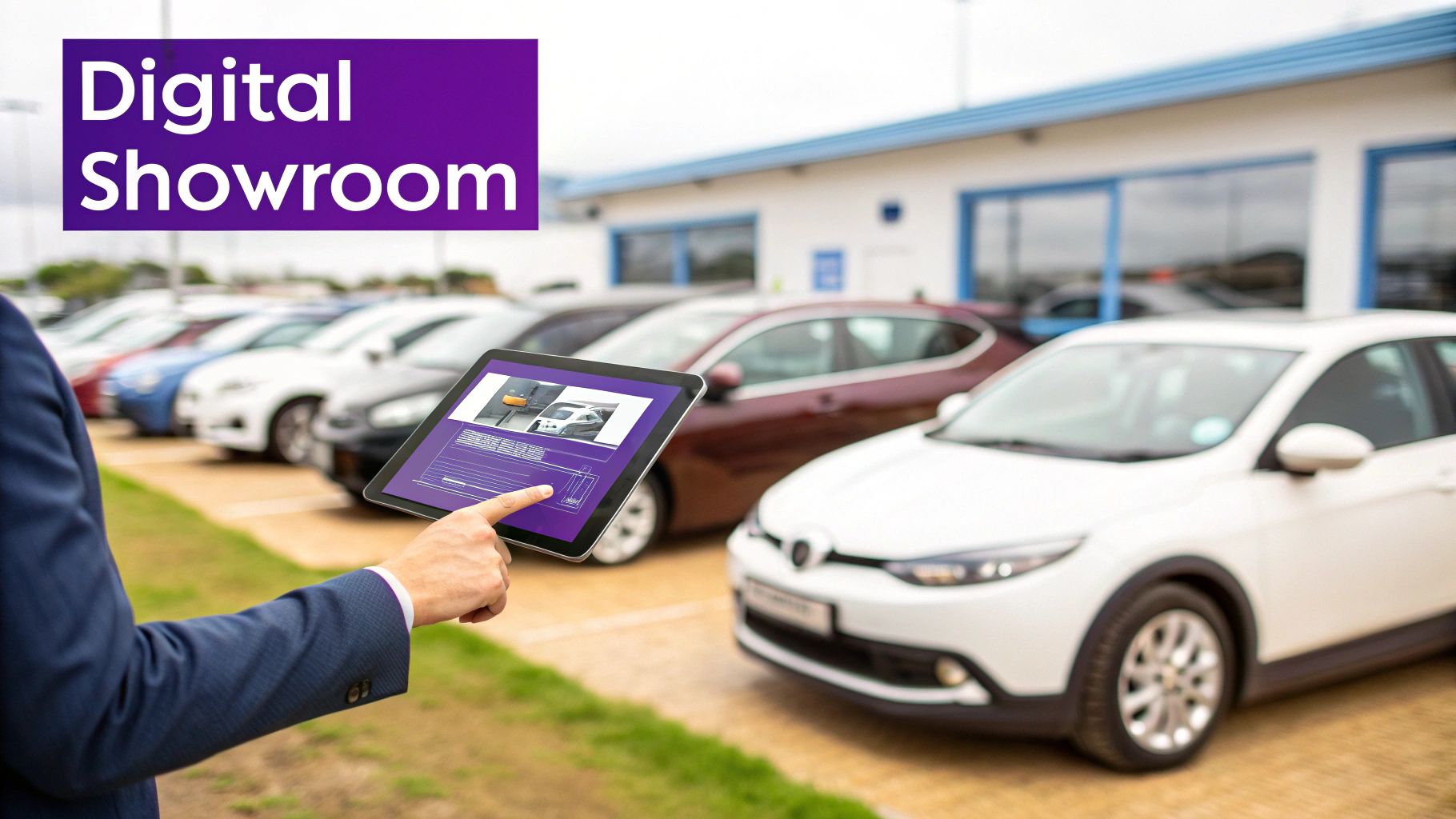
    A hand interacts with a tablet displaying a digital car showroom, with vehicles on a dealership lot.

    Your Website Is Your Dealership's Reputation

    An outdated website that’s slow or a pain to use doesn't just look unprofessional—it actively costs you business. The numbers don't lie: according to industry research, the vast majority of car shoppers now do their research online before they ever dream of stepping onto a lot.

    Even more telling, a study by Stanford University found that a staggering 75% of people admit to judging a company's credibility based purely on its website design. A clunky, amateur site can kill trust before you ever get a chance to build it. You can discover more automotive marketing statistics and see just how critical that online presence has become.

    This is exactly why choosing the right used car dealer website templates is a core business decision, not just an IT task. A modern template ensures your dealership:

    • Builds Instant Credibility: A clean, professional look tells visitors you're a serious, trustworthy business.
    • Meets Buyer Expectations: Today’s shoppers expect high-res photos, detailed vehicle specs, and intuitive navigation. Anything less is a deal-breaker.
    • Captures Leads Proactively: Strategically placed forms and clear calls-to-action can turn a casual browser into a hot lead.

    Leveling the Playing Field for Independent Dealers

    Big franchise stores might have huge marketing budgets, but a top-notch website is the great equalizer. With a superior online experience, a smaller, independent lot can absolutely compete with the big guys.

    By creating a seamless, intuitive, and trustworthy digital showroom, you can capture a buyer's interest and secure their business before they even think about visiting a larger competitor. Your website becomes your unfair advantage.

    In the end, a modern website template isn't just a facelift for your brand. It's a fundamental tool for survival and growth. It transforms your online presence from a static brochure into a lead-generating machine that works for you around the clock, making sure you never miss a chance to connect with your next customer.

    What a High-Converting Website Template Actually Needs

    It's easy to get sidetracked by flashy designs when you're looking at used car dealer website templates. But I've learned from years in this business that what sells cars are the features that work behind the scenes, not just the pretty visuals. A great website isn't an online brochure; it's your hardest-working salesperson.

    The heart and soul of your dealership's site is the inventory system. Put yourself in your customer's shoes for a minute. They're busy. They want to find the right car, right now, with zero hassle.
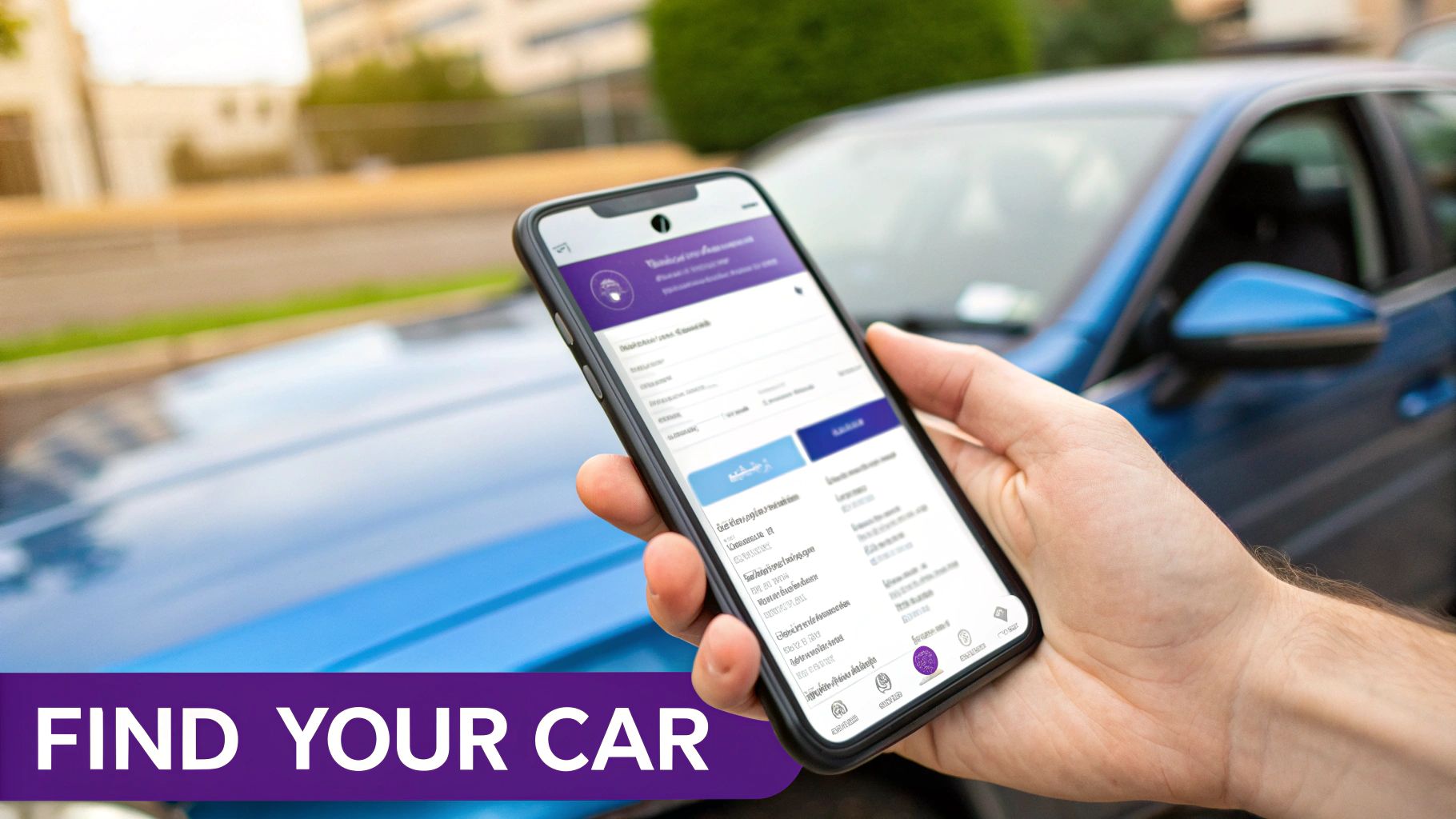
    A hand holds a smartphone displaying a car search application with a blue car in the background.

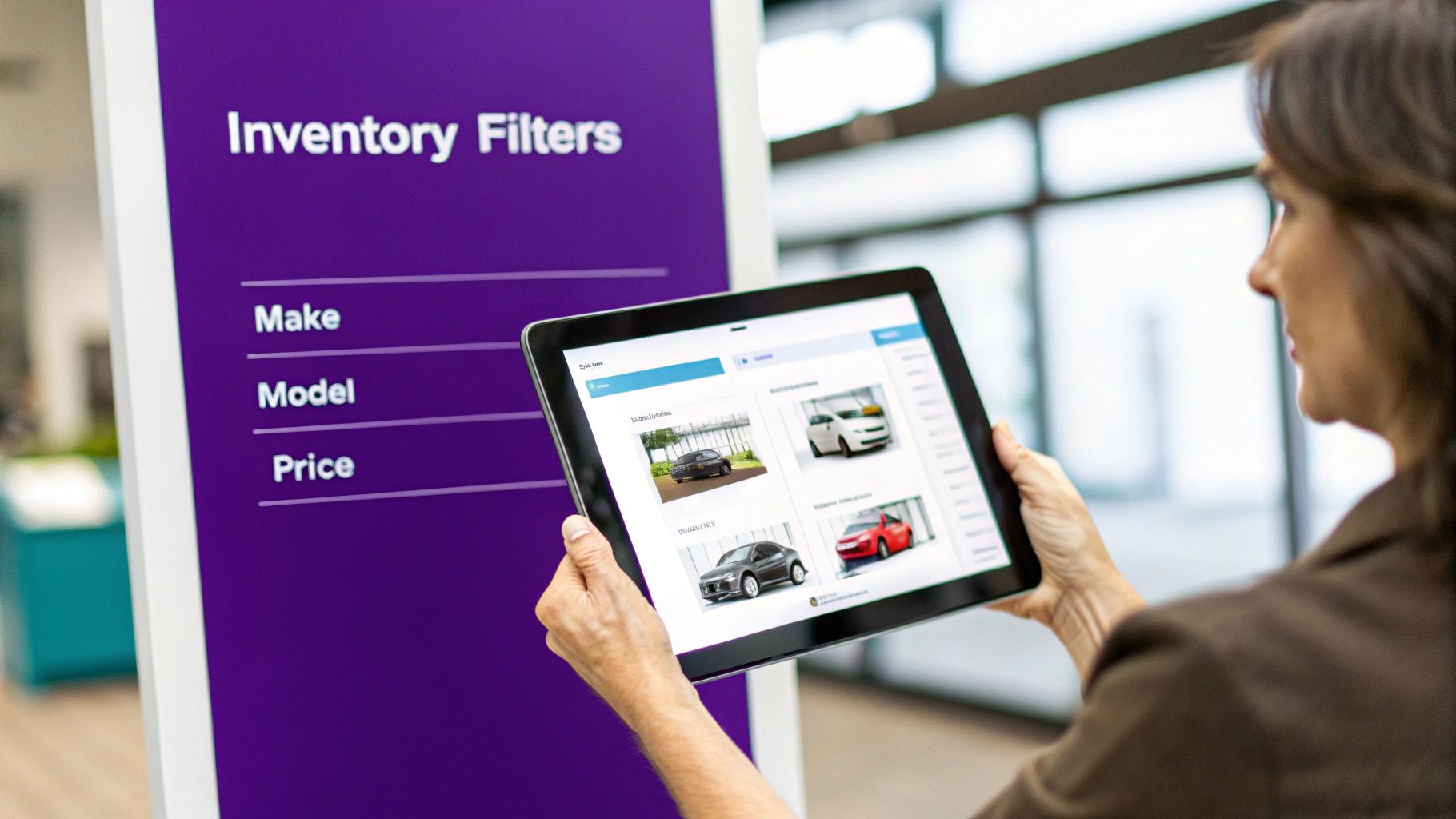
    This means your template must have a powerful search function with plenty of filters—make, model, price, mileage, body style, you name it. Today's buyers also expect to see the full financial picture upfront, so built-in payment calculators and clear financing info aren't just perks anymore; they're standard.

    To help you sort through the noise, I've put together a quick comparison of what you absolutely need versus what's nice to have. This should help you focus on the features that directly impact your bottom line.

    Must-Have vs. Nice-to-Have Template Features

    Feature Must-Have (For Core Business) Nice-to-Have (For Enhanced Experience)
    Inventory System Advanced search with multiple filters (make, model, price, mileage). Saved searches and vehicle comparison tools.
    Vehicle Pages (VDPs) High-res photo galleries, VIN-specific details, and clear pricing. 360-degree interior/exterior views, integrated CARFAX reports.
    Lead Capture Simple contact forms on every VDP ("Request Info," "Schedule Test Drive"). Live chat integration and "text us" buttons.
    Mobile Design Fully responsive, mobile-first design that passes Google's tests. Dedicated mobile app or progressive web app (PWA) features.
    Financing Tools Built-in payment calculator on each vehicle page. Full online credit application with secure submission.
    SEO Foundation Customizable title tags, meta descriptions, and clean URL structures. Automated schema markup for vehicle listings.

    Focusing on the "Must-Have" column first ensures your website can do its primary job: generate qualified leads from your inventory. The "Nice-to-Have" features are fantastic for building a premium user experience once your core functionality is solid.

    The Tools That Build Trust and Drive Leads

    To really set your dealership apart, your template needs to do more than just list cars. It should anticipate and answer customer questions, building trust before they even pick up the phone. These are the features that turn a passive browser into an active lead.

    Your template absolutely must include:

    • Immersive Photo and Video Galleries: Don't skimp here. High-resolution photos from every angle are the bare minimum. The best templates also make it easy to upload video walkarounds for each car, giving buyers a much more transparent and engaging look at what you're selling.
    • Integrated Finance Calculators: Placing a payment calculator directly on every Vehicle Detail Page (VDP) is a game-changer. It keeps potential buyers on your site, lets them see what they can afford, and effectively pre-qualifies them.
    • Strategic Lead Capture Forms: Make it incredibly easy for someone to get in touch. A simple, clear form to "Request More Info" or "Schedule a Test Drive" should be prominently displayed on every single vehicle page.

    A website's job isn't just to display cars; it's to start a conversation. Every feature should be designed to make it as easy as possible for a visitor to take the next step, whether that's calculating a payment or booking a visit.

    If It’s Not Flawless on a Phone, It’s Broken

    Let's be real: your customers are on their phones. They're scrolling through your inventory on their lunch break, waiting in line for coffee, or sitting on their couch. If your website is a pain to use on a small screen, you are losing sales. It's that simple.

    A truly responsive design does more than just shrink your desktop site to fit a smaller screen. It intelligently re-arranges the content for an effortless mobile experience. Think big, easy-to-tap buttons, text that’s readable without pinching and zooming, and images that load fast without looking pixelated.

    When you're choosing a template, make sure it was built with a mobile-first philosophy. This ensures you're meeting your customers exactly where they are. You can see how we've implemented this and other powerful tools by checking out AutoFire™'s key features.

    Connecting Your Inventory for Seamless Automation

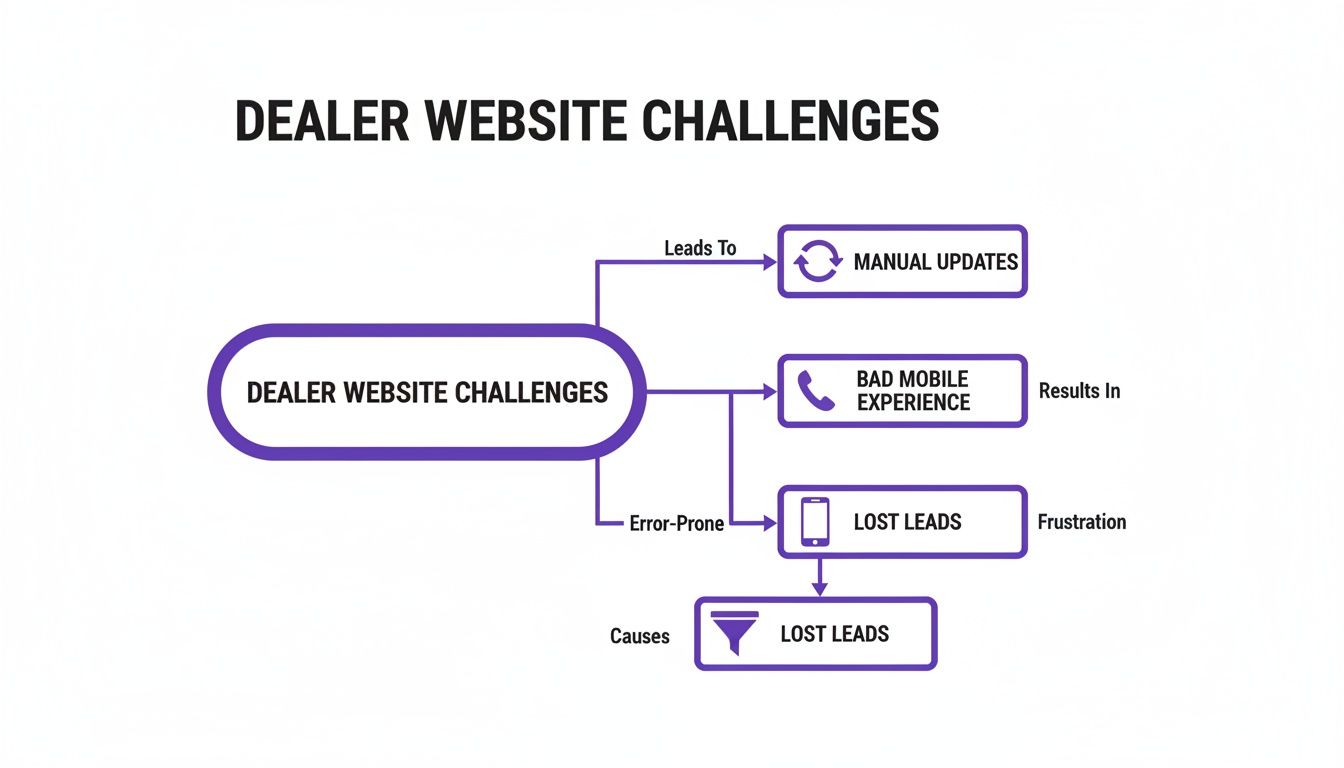
    Let's be honest: manually updating your online inventory is a soul-crushing task. You sell a car, but forget to take it off the website. A potential buyer calls, gets excited, and then you have to break the bad news. It’s frustrating for them and looks unprofessional for you.

    On the flip side, a fresh trade-in sits on the lot for days before you find the time to list it online, missing out on eager eyes. This is precisely the headache that modern used car dealer website templates are built to solve.

    The entire goal is to eliminate double-entry. Your website shouldn't be another island of data you have to manage separately. A top-tier template will plug directly into your Dealer Management System (DMS), making it the single source of truth. When you mark a car as sold in your DMS, it should vanish from your site. Instantly. No extra clicks.
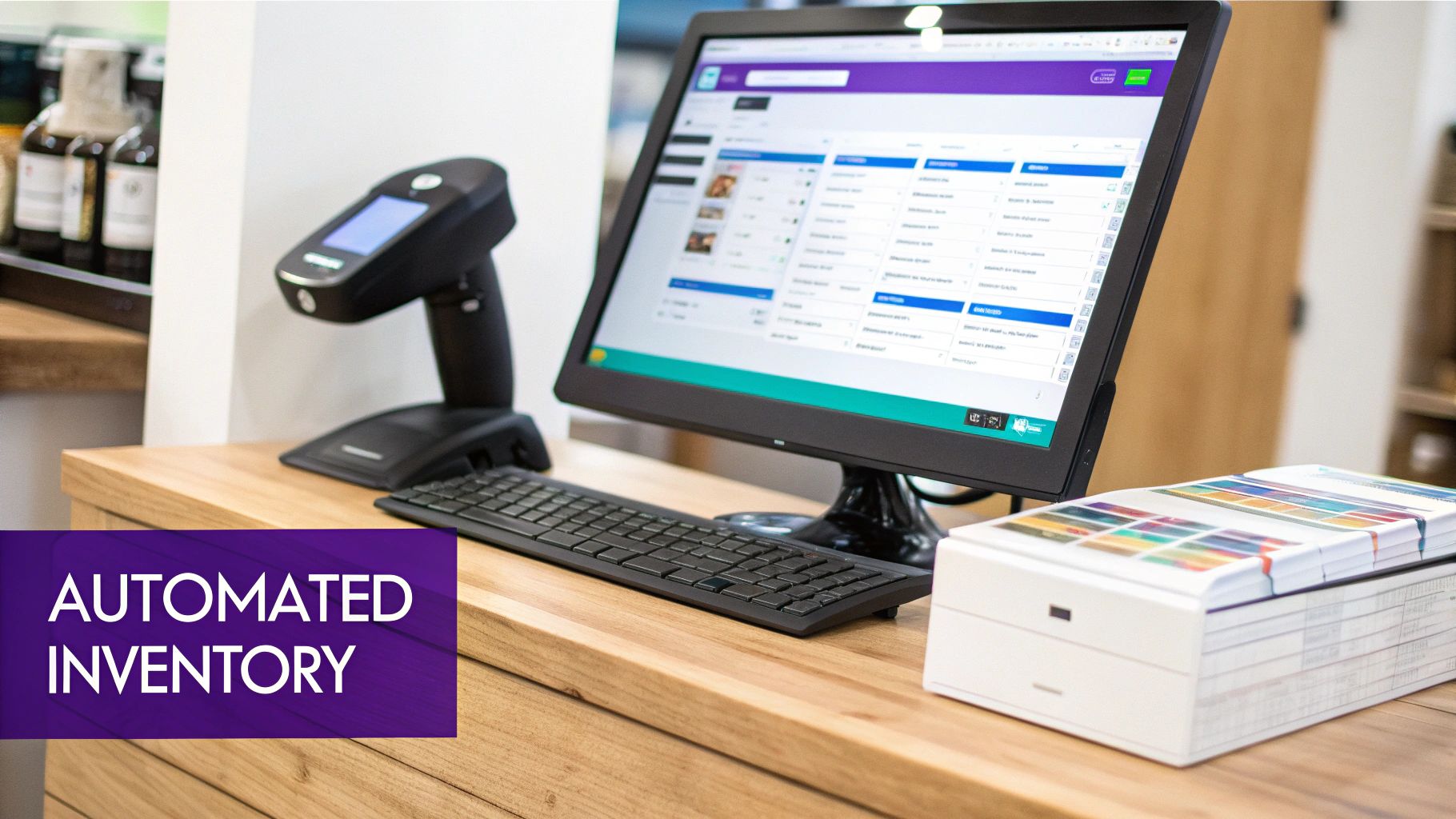
    A modern point-of-sale system with a monitor, scanner, and keyboard on a wooden counter, highlighting automated inventory.

    From VIN Scan to Live Listing in Seconds

    Think about the sheer amount of time you spend punching in vehicle details. It's repetitive and prone to mistakes. This is where automatic VIN decoding becomes your best friend. Instead of manual data entry, you just scan the VIN.

    The system does the heavy lifting, instantly populating the listing with critical details:

    • Core Vehicle Specs: Year, make, model, trim, and engine information appear automatically.
    • Factory Options: The decoder pulls in the specific packages and add-ons that car left the factory with.
    • Standard Equipment: All the base features are listed, ensuring nothing is missed.

    This isn't just a time-saver; it’s a trust-builder. An inaccurate listing can kill a potential sale before it even begins. Getting the details right from the start is non-negotiable. If you want to dig deeper into streamlining this, we have a great resource on mastering online inventory management with simplicity in our guide for independent dealerships.

    Syndicate Your Inventory Effortlessly

    Your own website is crucial, but you also need to be where the buyers are. That means places like CarGurus, Autotrader, and even Facebook Marketplace. But who has time to post and update listings on a half-dozen different platforms? It’s a full-time job in itself.

    A powerful website template should function as your inventory command center. You manage your cars in one place, and the system automatically pushes them—and any updates—out to all the third-party marketplaces you use.

    This "enter once, display everywhere" method is a game-changer for independent dealers. It guarantees consistency across every platform and puts your inventory in front of thousands more shoppers without adding a single minute to your workload. You get to focus on selling cars, not on endless data entry.

    Driving Traffic with Smart SEO and Conversion Tactics

    Let's be blunt: a beautiful website that nobody can find is just an expensive billboard in the desert. You can launch the slickest site on the planet, but if local buyers can't find it when they search, you've wasted your time and money. This is where you have to get serious about attracting the right kind of traffic and then, just as importantly, turning those visitors into real, actionable leads.

    For any independent dealer, your world revolves around your Vehicle Detail Pages (VDPs). Think of them as your digital showroom. Each VDP is your one shot to grab a search engine's attention and make a powerful sales pitch to a potential buyer.

    Getting Your Digital Showroom Ranked on Google

    The single biggest mistake I see dealers make, over and over again, is copying and pasting the generic, manufacturer-provided descriptions for their vehicles. This is an absolute killer for your SEO. Google and other search engines are designed to reward unique, helpful content, not duplicate text they've already seen on a hundred other sites.

    To get your VDPs to actually work for you, you need to do a few things right:

    • Write Your Own Descriptions: Ditch the spec sheet and tell a story. Talk about the car's actual condition, point out a unique feature, and describe the ideal person for that vehicle. A single, well-written paragraph from your own experience is infinitely more valuable than a generic list of features.
    • Put Schema Markup to Work: This is some simple code that works behind the scenes to tell Google exactly what's on your page. With the right vehicle schema, Google can pull your car's price, mileage, and VIN directly into the search results. This makes your listing pop and gives buyers the info they need at a glance.
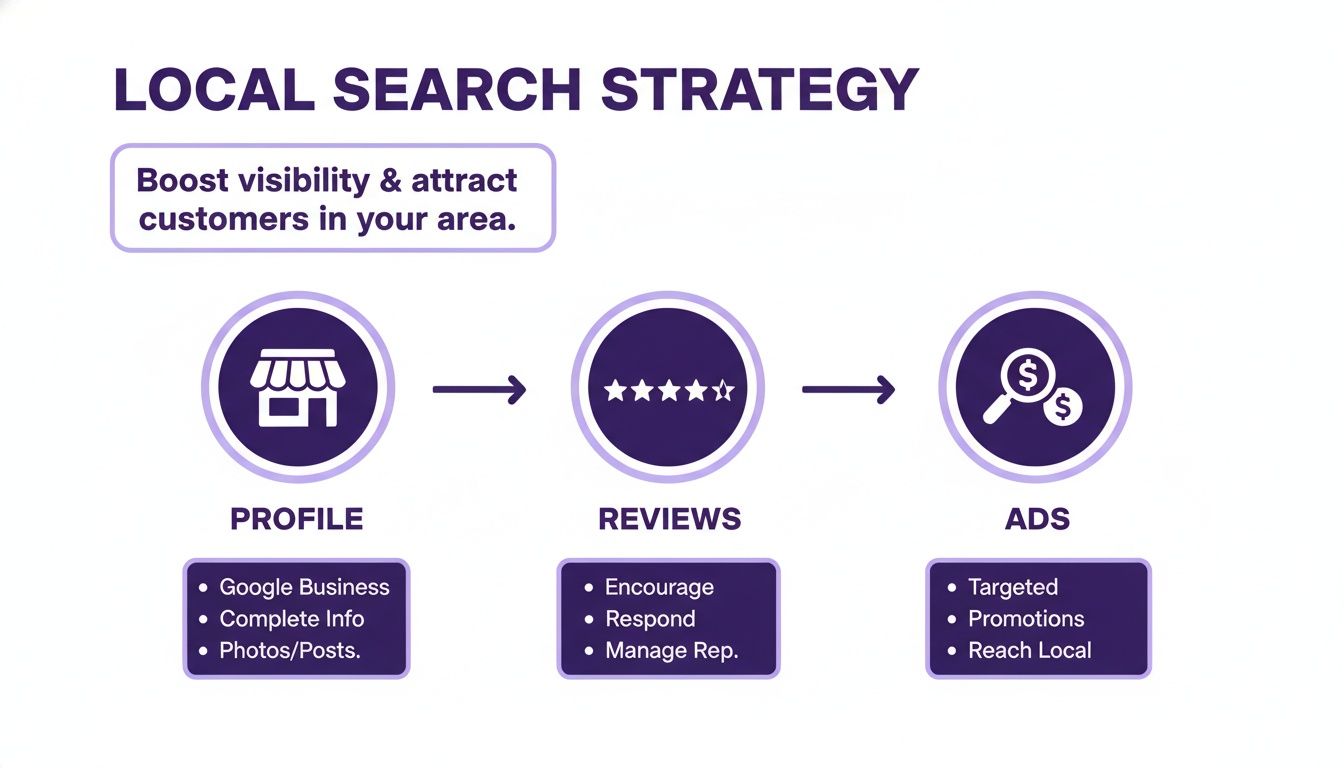
    • Dominate Local Search: Nobody is just searching for "used F-150." They're searching for "used F-150 near me." Getting your Google Business Profile in order is non-negotiable. Make sure your dealership name, address, and phone number are perfect, and start actively asking your happy customers for reviews.

    A solid SEO foundation puts you right in front of local buyers the moment they're ready to shop. If you really want to dig in and get ahead of your competition, we cover a lot more ground in our complete guide on SEO for the automotive industry.

    Turning Clicks into Customers

    Getting people to your site is just step one. Once they land on a VDP, your job is to make it incredibly easy for them to take the next step. This is all about conversion rate optimization (CRO), and a few small changes can have a huge impact on your lead count.

    Your website’s design should make the next step obvious and easy. Every button, image, and form should be strategically placed to remove friction and encourage a customer to connect with you.

    Here are a few tactics that flat-out work for dealers:

    • Make Your Calls-to-Action (CTAs) Impossible to Miss: Buttons like "Schedule Test Drive" or "Check Availability" need to be the most prominent thing on the page besides the car itself. Use a color that contrasts with your site's design so it really stands out.
    • High-Quality Photos are Non-Negotiable: Grainy, poorly lit photos scream "untrustworthy." You don't need a professional studio, but a decent smartphone and some good light can make all the difference. Get at least 20-30 high-resolution pictures of every car, showing the interior, exterior, and any notable features or flaws.
    • Offer Instant Communication: A buyer might just have one quick question. If they have to hunt for a contact form, they'll just leave. Tools like live chat or a "click-to-text" button give them an instant way to get an answer, keeping them on your site and away from your competitors.

    When you pair a great website template with smart inventory management, the results speak for themselves. Car buyers spend a significant amount of time researching online before ever stepping on a lot. They expect to find detailed information and have easy ways to inquire right from your site. This is exactly why your template needs to be more than just a pretty face—it has to be a sales machine. You can discover more about how website templates drive leads at RCTHEME.com. By combining sharp SEO with user-focused conversion tactics, your website stops being a cost and starts becoming a powerful engine for growth.

    Your Practical Launch and Maintenance Plan

    Launching a new website can feel a bit like handing a customer the keys to their new car—you want to be absolutely sure everything is perfect before they drive off the lot. A solid plan takes the guesswork out of the process, turning a potentially chaotic launch into a smooth, controlled rollout.

    Let's break this down into what you need to do before you go live and what you need to do to keep things running smoothly after.

    The Pre-Launch Checklist

    Think of this as your final inspection. You wouldn't let a car leave your dealership with a check-engine light on, and the same principle applies here. Nailing these details now saves you from major headaches and lost leads later.

    • Inventory Data Migration: Go through your inventory on the new site with a fine-tooth comb. Has every single vehicle from your DMS or previous system been imported correctly? Look for missing photos, wonky pricing, or scrambled vehicle descriptions. A single typo can kill a deal.
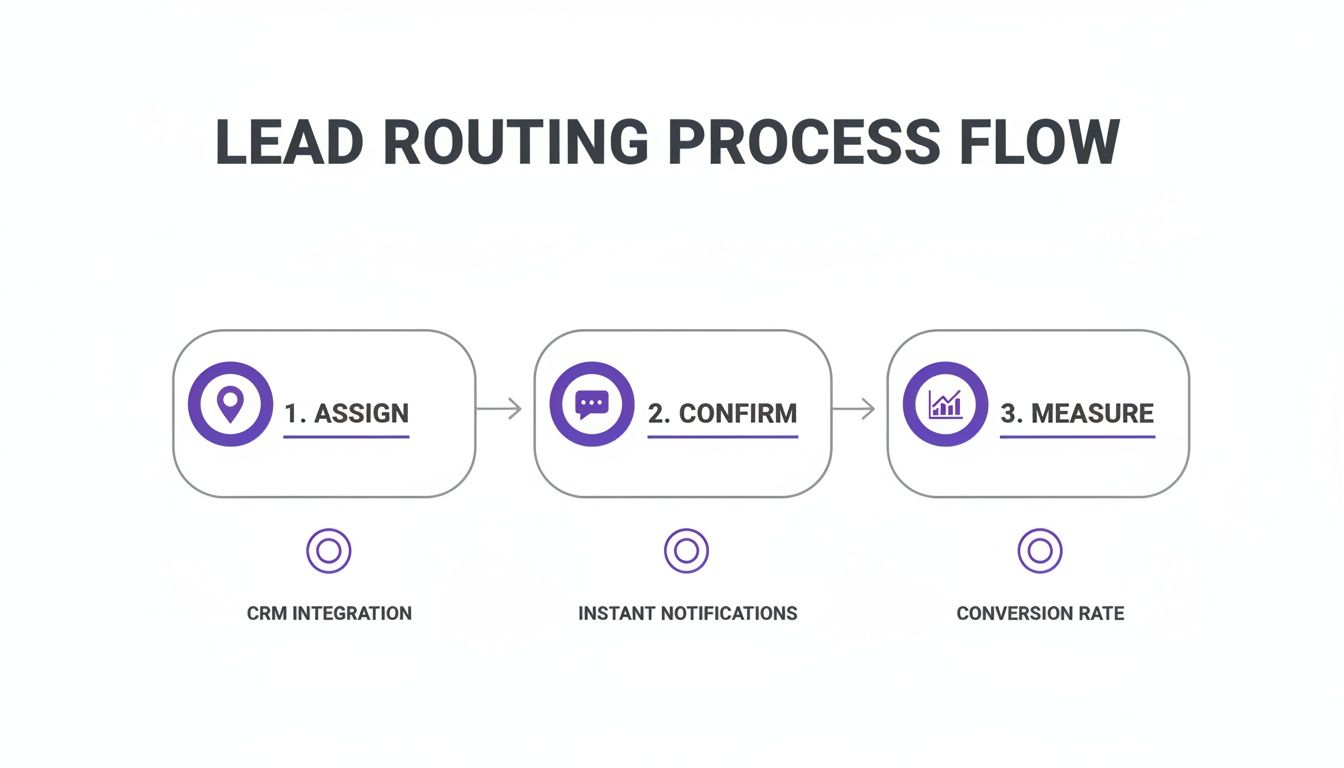
    • Lead Notification Configuration: This is critical. Send a test lead from every form on your site—the main contact form, the finance application, every "Schedule a Test Drive" button. Confirm that the notifications hit the right inboxes instantly. A lead that gets lost in cyberspace is a lost sale.
    • Functionality Testing: Get hands-on and click everything. Does the finance calculator actually calculate? Do the inventory search filters work as expected? Can you sort by price, make, and model without errors? Now is the time to find and squash any bugs.

    The whole point of this new website is to get customers from search engines to your showroom floor. The process is simple but powerful when everything works together.
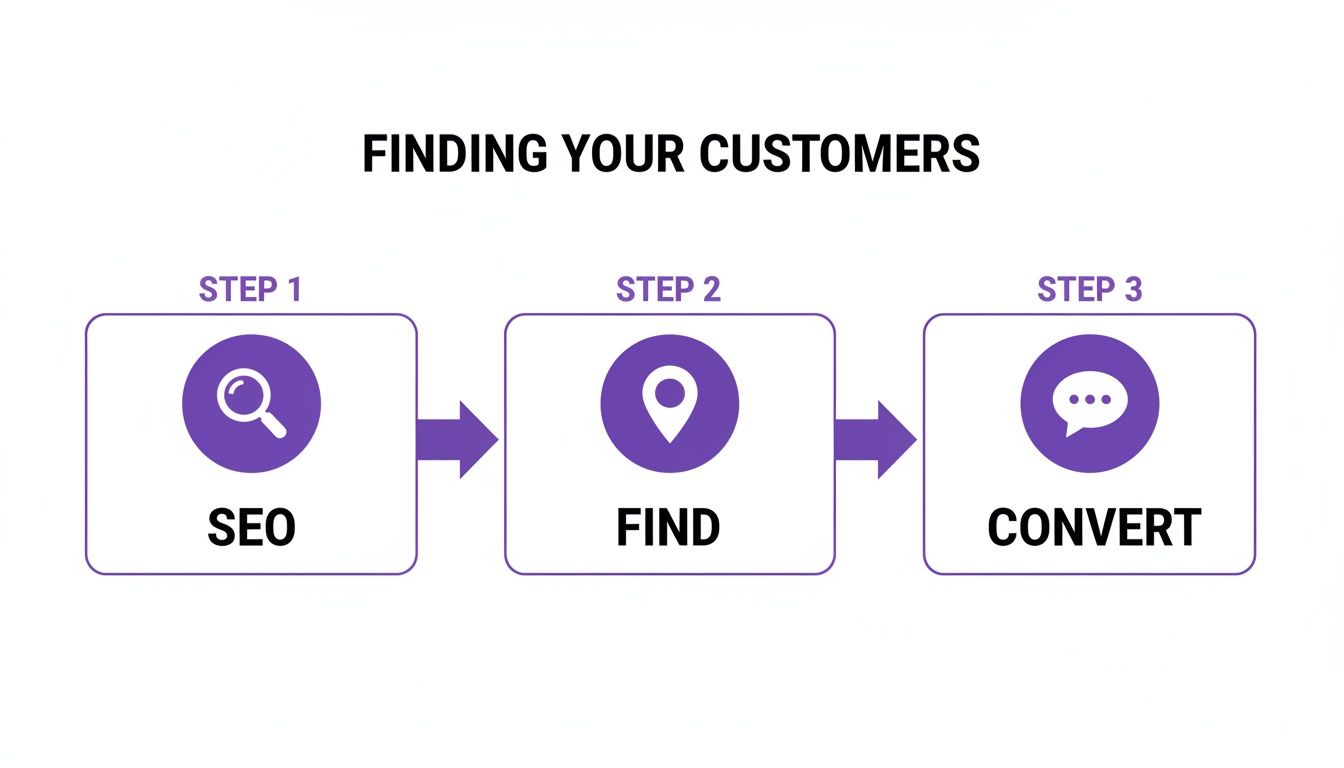
    Three-step process diagram for finding customers: SEO (magnifying glass), Find (location pin), Convert (chat bubble).

    This flow—Find, Evaluate, Convert—is the engine of your online business. A flawless launch ensures it runs smoothly from day one.

    Your Post-Launch Maintenance Routine

    Getting the site live is just the beginning. A great website is never really "done." Consistent, ongoing maintenance is what separates the top performers from the sites that fizzle out after a few months.

    Your website is a living asset, not a static brochure. Regular check-ins ensure it continues to perform at its peak, adapting to new browser updates, security needs, and customer behaviors.

    You don't need to spend hours on this every day, but setting aside a little time each month to run through a quick health check is a smart move.

    1. Monitor Site Speed: Pop your URL into Google's PageSpeed Insights once a month. Pay close attention to the mobile score. A slow-loading site, especially on a phone, will send potential buyers running to your competitor.
    2. Check Analytics: Log into your Google Analytics account and see what's happening. Which cars are getting the most clicks? What pages are people leaving from? This data is pure gold—it tells you exactly what your customers are interested in and where your site might be falling short.
    3. Keep Content Fresh: You don't have to be a professional blogger, but adding new content helps. Post pictures of happy customers with their new cars, write a quick post about a new batch of inventory, or add a few new testimonials. Fresh content tells search engines your business is active and relevant, which is fantastic for your SEO.

    Website Launch & Maintenance Workflow

    To make it even easier, here’s a simple workflow you can follow. Think of it as a repeatable process for ensuring your most important digital asset is always working for you.

    Phase Task Key Objective
    Pre-Launch Finalize All Content & Images Ensure every page has accurate, high-quality content before going live.
    Pre-Launch Test All Forms & Lead Notifications Verify that every potential customer inquiry reaches your team instantly.
    Pre-Launch Check Mobile Responsiveness Confirm the site looks and works perfectly on various phones and tablets.
    Launch Day "Go Live" – Point Domain to New Site Make the new website publicly accessible on your official domain.
    Post-Launch Submit Sitemap to Google Tell Google to crawl and index your new site for search results.
    Post-Launch Set Up Monthly Analytics Review Establish a routine to track visitor behavior and find growth opportunities.
    Post-Launch Perform Quarterly Speed & Security Audit Proactively check for performance issues and security vulnerabilities.

    Sticking to a simple routine like this demystifies website management. It ensures your initial investment continues to pay off by consistently generating leads and driving sales for your dealership.

    Common Questions About Dealership Website Templates

    Choosing a website template always brings up a few key questions. I've heard them all over the years. Getting straight answers is the only way to feel good about your decision, making sure you're putting your money and effort in the right place.

    Let's walk through some of the biggest concerns I see independent dealers grapple with when they're ready to get a new site off the ground.

    How Much Should I Expect to Pay for a Good Template?

    This is the big one, and the answer is: it really depends. The price for a solid dealership template can swing wildly, so you have to look at the whole picture, not just the sticker price.

    You’ve got basic themes on marketplaces that you can buy outright for $50 to $100. Seems like a steal, right? The catch is that you're on your own for everything else. You'll have to find and pay for hosting, security, and all the essential plugins. Those costs and the time spent managing it all add up fast.

    The other route is an all-in-one platform. These services bundle everything you need—hosting, DMS integration, support, and updates—into a monthly subscription. You'll see these range anywhere from $100 to over $500 a month. When you're weighing your options, think in terms of "total cost of ownership." The time you save on technical headaches and the value of having everything work together seamlessly often makes a subscription the smarter financial move for a busy dealership.

    Can I Switch Templates Without Losing My Inventory Data?

    Absolutely. This is a common fear, but switching your website's look and feel without losing your vehicle data is usually pretty painless if you do it right. The secret lies in how your inventory is managed.

    If you’re already using a Dealer Management System (DMS), the transition is a piece of cake. Your new website template simply needs to be connected to your DMS, and it will pull all your vehicle data right in. If you’re managing inventory through a plugin on your current site, most of those have tools to export your data, which you can then import into the new system.

    Here's a piece of advice I give every dealer: always, always perform a full backup before you touch anything. And be smart about timing—plan the switch for your slowest time of day to make sure your customers see a smooth, professional changeover.

    What Is the Most Important SEO Factor for a Car Dealer Site?

    If you take away only one thing about SEO, let it be this: the quality of your Vehicle Detail Pages (VDPs) is everything. These pages are the heart and soul of your website. They are what your customers are searching for, and they are what Google cares about most when ranking your dealership.

    To get it right, every single VDP needs:

    • A unique page title. It must include the year, make, and model.
    • A detailed, original description. Don't just copy and paste the manufacturer's specs. Write something helpful.
    • A full gallery of high-res photos. Show every angle, inside and out.
    • Complete and accurate vehicle specs. Don't leave anything out.

    On top of that, you need to implement vehicle schema markup. Think of it as a special language that helps Google instantly understand all the details about your car. Getting this right is how you show up in those special search results, which can massively boost your visibility and bring more buyers to your site.


    Ready to launch a professional website that turns visitors into leads, without the technical nightmare? AutoFire provides clean, SEO-optimized, and mobile-first website templates designed specifically for independent dealers. Get your free dealership website with AutoFire and start selling more cars today.


  • Choosing the Right Dealership Website Builder

    Choosing the Right Dealership Website Builder

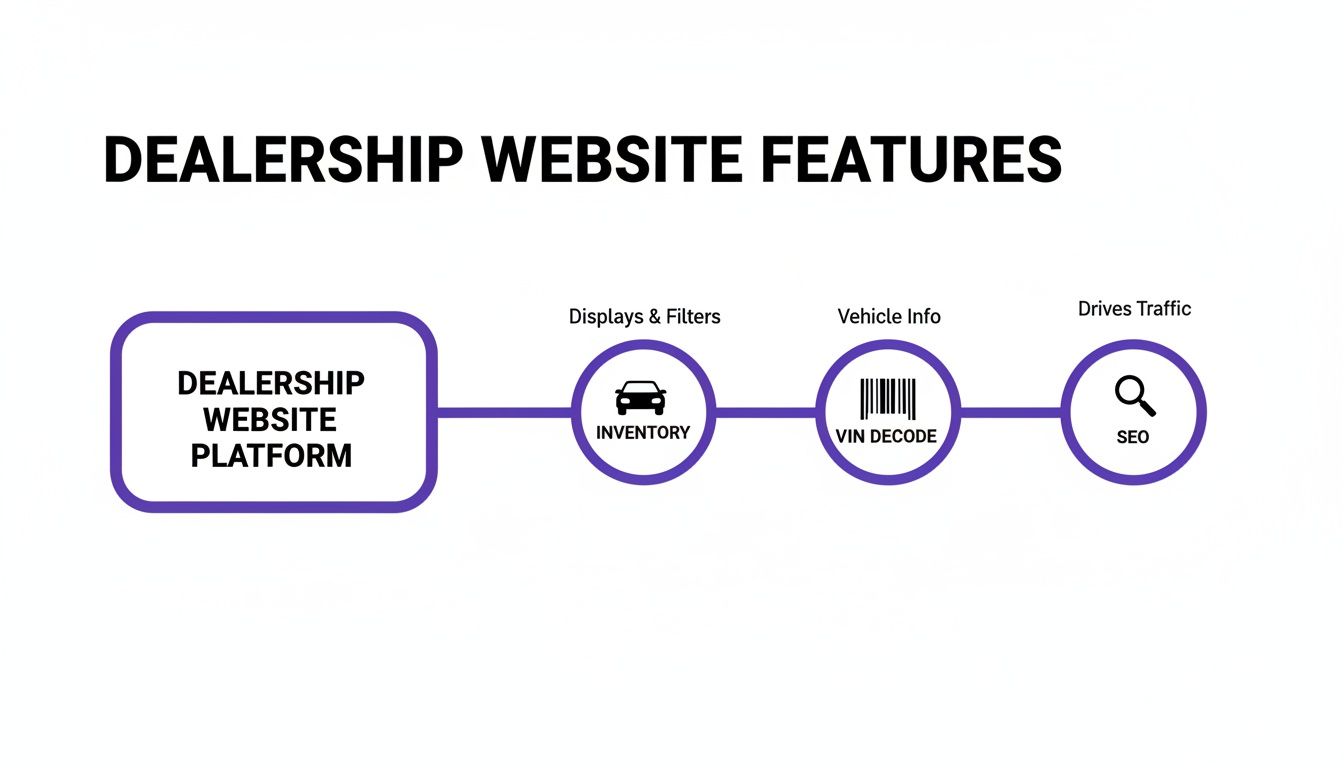
    Think of a dealership website builder as a purpose-built toolkit for creating your online showroom. Unlike a generic tool like Squarespace or Wix, it’s specifically engineered for the unique demands of selling cars, with all the essential features—like inventory management and financing calculators—baked right in.

    Your Digital Showroom Needs a Sales Engine

    Man interacts with a large digital screen displaying cars in a modern car dealership showroom.

    Let’s be real for a moment. Your website is your primary showroom now. The car buying process doesn't start with a customer wandering onto your lot anymore. It starts on a phone, usually late at night, when they finally have a quiet moment to search.

    In that context, a generic website is like having an empty lot with the gates locked. Sure, it proves you exist, but it’s not doing anything to welcome people in, answer their questions, or actually help them buy a car. It's a placeholder, not a sales tool.

    This is exactly where a specialized dealership website builder completely changes the game.

    From Static Page to Active Sales Engine

    Imagine your website as your most dedicated salesperson—one that works 24/7 without a coffee break. A platform built for auto dealers doesn't just list cars. It actively works around the clock to find potential buyers, draw them in, and turn them into real, qualified leads for your team to close.

    This isn't just a "nice to have"; it's a necessity. Why? Because today's car buyer is online first, period. A staggering number of car shoppers use the internet for their research before they even think about visiting a dealership. They're bouncing between an average of 4.2 websites, so your first impression has to count. You can dive deeper into the data on modern car shopping habits to see just how critical a strong online presence has become.

    A great dealership website transforms a simple online listing into a complete digital experience. It answers questions before they're asked, builds trust through transparency, and creates a clear path from browsing to buying.

    Connecting with Today's Buyer

    To even be in the running, your digital showroom needs the right equipment. A proper dealership website builder lays that foundation by integrating the features that modern buyers don’t just want—they expect. These core pieces work together to make the whole process smooth and intuitive for the customer.

    • Dynamic Inventory Management: New arrivals are showcased instantly with all the specs, a full photo gallery, and clear pricing. Your online inventory is always up-to-date and looks fantastic.
    • Targeted Lead Generation: You can capture serious buyers with built-in tools like trade-in value estimators and pre-approval financing applications.
    • Effortless Customer Engagement: Simple contact forms, click-to-call buttons, and easy-to-use appointment schedulers remove any friction, making it simple for a shopper to take the next step.

    When it all comes together, the right platform stops being a business expense and becomes a powerful engine for growth. It solves the fundamental challenge of modern car sales: meeting customers where they are—online—and giving them every reason to choose you.

    What Every Dealer's Website Builder Absolutely Needs

    Let's be honest, not all website builders are built the same, especially when your business is selling cars. A generic platform might get you a webpage, but a dedicated dealership website builder is what gives you the horsepower to turn online window shoppers into real, qualified buyers. These aren't just flashy extras; they are the core components that power your digital sales engine.

    Think of it like this: you wouldn't use a family sedan to tow a flatbed of cars, right? So why would you use a generic, one-size-fits-all tool to run your online showroom? The right platform is built from the ground up for automotive sales, making everything from managing your lot to capturing leads feel effortless and, more importantly, effective.

    Dynamic Inventory and Media Management

    Your inventory is the heart and soul of your dealership website. A top-tier builder automates the heavy lifting here, saving you a ton of time. You absolutely need a system with automatic VIN decoding. This feature instantly pulls in all the critical details—make, model, year, trim, and specs—eliminating tedious manual entry and the risk of costly errors. It ensures your listings are spot-on from the moment a vehicle hits your digital lot.

    Just as critical is how you show off those vehicles. Customers today expect a full virtual tour. Your builder has to support big, crystal-clear photos and walk-around videos that load in a flash. Slow-loading images will send buyers clicking away faster than a zero-down offer brings them in. That high-quality visual proof is often the final nudge a shopper needs to pick up the phone.

    A powerful inventory system doesn't just list cars. It showcases them with precision data and immersive visuals, building the trust that convinces a customer to take the next step.

    Integrated Lead Generation Tools

    Okay, a shopper found the perfect car on your site. Now what? Your website's next job is to make it incredibly simple for them to get in touch. This is where built-in lead generation tools are a game-changer, creating a smooth, frictionless path from "I'm interested" to "Let's talk."

    Look for these essential lead-capture features baked right in:

    • Online Finance Applications: Let serious buyers get a head start on financing directly through your website. This hands your sales team a red-hot lead who is not just browsing, but ready to close a deal.
    • Trade-In Estimators: Engage visitors by offering an instant valuation for their current car. It’s a great way to start a conversation and capture contact info from someone actively in the market.
    • Click-to-Call and Live Chat: Give shoppers an immediate way to ask questions. When someone's interest is peaked, you need to be there to connect right then and there, or you risk losing them for good.

    These tools shouldn't be a clunky patchwork of different software. A great dealership website builder includes them natively. This combination of sharp inventory presentation and smart lead capture is what transforms your site from a static online brochure into your hardest-working salesperson—one that’s on the clock 24/7, filling your pipeline.

    To give you a clearer picture, here’s a breakdown of the features that are non-negotiable versus those that are powerful upgrades.

    Essential vs. Optional Website Builder Features

    This table compares the absolute must-haves for any competitive dealership website against the advanced features that can give you a serious leg up on the competition.

    Feature Description Impact on Sales
    VIN Decoding Automatically populates vehicle details from the VIN, ensuring accuracy and saving hours of manual work. High. Builds trust with accurate listings and frees up time for sales-focused activities.
    High-Res Media Galleries Supports large, fast-loading photo and video galleries to showcase vehicles from every angle. High. Strong visuals are critical for online shoppers and directly influence their decision to inquire.
    Mobile-First Design The website is designed to work flawlessly on smartphones, where most car shoppers start their search. High. A poor mobile experience will turn away over half of your potential customers.
    Lead Capture Forms Simple, integrated forms for contact, test drive requests, and trade-in valuations. High. Directly captures buyer interest and provides your sales team with actionable leads.
    VDP Live Chat Allows shoppers to chat with a representative directly from the Vehicle Detail Page (VDP). Medium. Provides instant support, increasing engagement and the chance of converting an active browser.
    Personalized VDPs Customizes Vehicle Detail Pages with unique payment calculations, videos, or similar vehicle suggestions. Medium. Enhances the user experience, keeping shoppers on your site longer and guiding them to a sale.
    CRM Integration Automatically sends website leads and customer data directly into your Customer Relationship Management tool. High. Streamlines follow-up, prevents leads from falling through the cracks, and improves efficiency.

    Ultimately, the goal is to build a digital foundation that not only looks great but also works tirelessly to attract and convert customers. You can learn more about how these and other essential dealership features come together to create a powerful sales platform that drives real results. By focusing on these core functions, you ensure your website isn't just an expense—it's your most valuable asset.

    How Automotive SEO Drives Qualified Traffic

    You can have the most beautiful, feature-packed website in the world, but it’s completely useless if local car shoppers can't find it. Think of your website as your digital showroom. Search Engine Optimization (SEO) is the giant, flashing sign on the highway that points traffic right to your front door. Without that sign, you’re basically invisible.

    This is where a specialized dealership website builder gives you a massive competitive edge. These platforms are engineered not just to look good, but to speak Google’s language fluently. They handle the complex, behind-the-scenes work that gets your inventory in front of real buyers the moment they start searching.

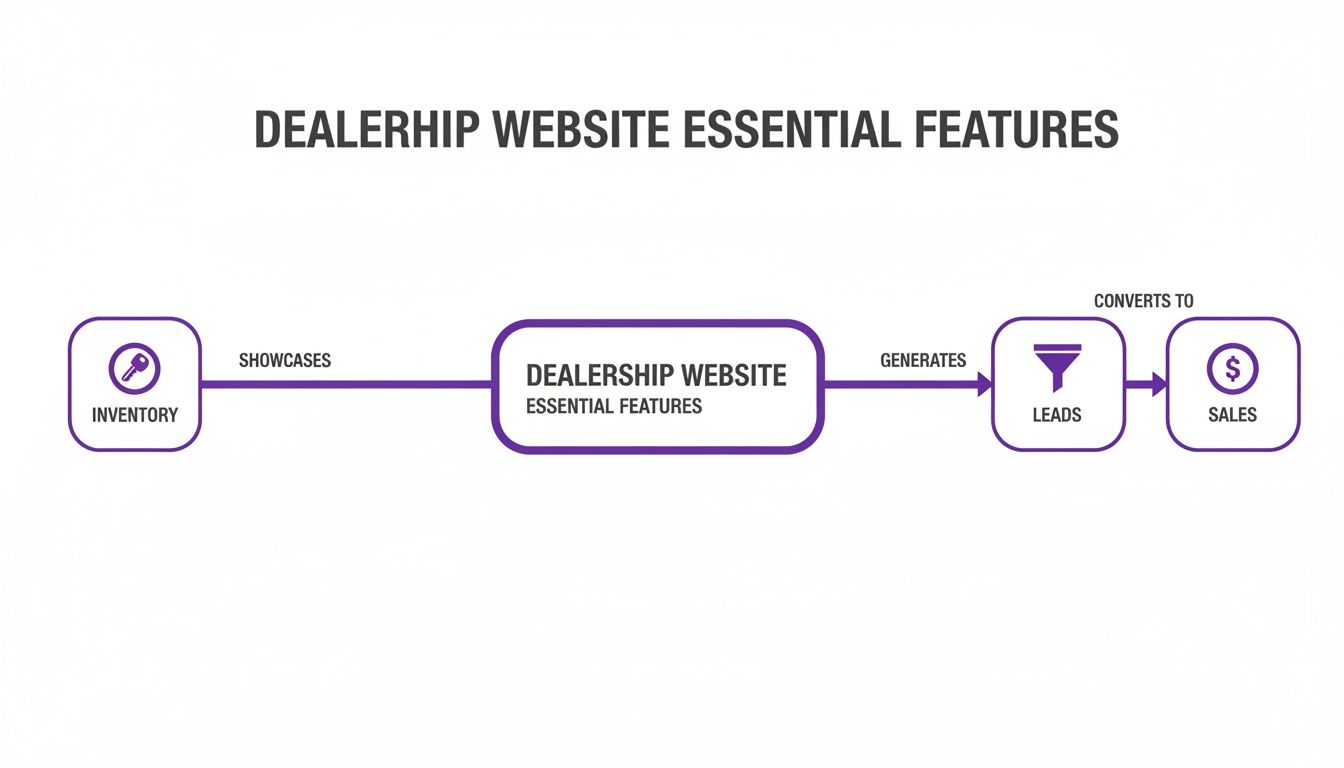
    The whole goal is to create a seamless journey for the customer, turning your online inventory into real-world leads and sales, as this flowchart shows.

    Flowchart illustrating how dealership website essential features showcase inventory, generate leads, and convert to sales.

    From showcasing your cars to capturing a lead, every feature should work together to make the sale easier.

    The Power of Vehicle Schema Markup

    One of the most potent SEO tools in a dealer's arsenal is something called vehicle schema markup. It sounds technical, but the idea is actually pretty simple.

    Think about the window sticker on a car sitting on your lot. It has all the key details: year, make, model, VIN, mileage, engine, color, price. Vehicle schema is the digital version of that sticker, but written for search engines.

    It's a specific piece of code embedded on your vehicle pages that tells Google, "Hey, this isn't just another webpage; it's a 2019 Ford F-150 with 42,000 miles." This rich, structured data allows Google to pull your cars directly into special search features like Google Vehicle Listings, putting your inventory front-and-center for high-intent shoppers.

    A proper dealership website builder automates this entire process. Every time you add a car, it automatically creates and applies the correct schema. This ensures Google always has your most up-to-date and accurate inventory information, without you lifting a finger.

    Foundational SEO That Your Builder Must Handle

    Beyond just schema, there are several foundational SEO elements that can make or break your online visibility. A generic website builder often leaves this stuff for you to figure out, but a platform built for dealers handles it automatically.

    Here are the non-negotiables:

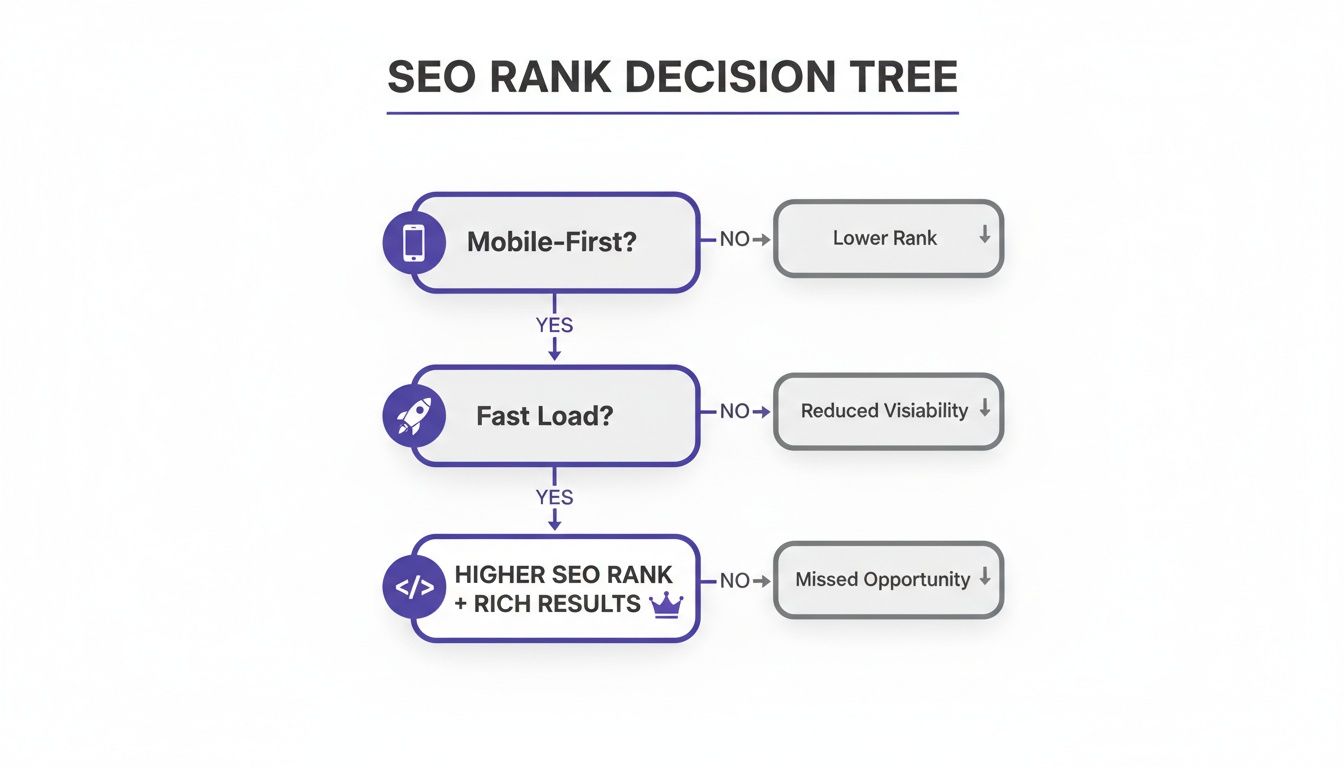
    • Blazing-Fast Page Speed: If your Vehicle Detail Pages (VDPs) take more than a couple of seconds to load, shoppers will click away. It's that simple. Google knows this and ranks faster sites higher. A good builder will optimize images and code so your pages load in a snap.
    • Flawless Mobile Responsiveness: The vast majority of car searches start on a smartphone. Your website has to look and work perfectly on any screen size. If it doesn't, you're not only frustrating potential customers but also getting penalized by Google.
    • Clean URL Structure: SEO-friendly URLs that are easy to read (like yoursite.com/inventory/2021-honda-civic-lx) do more than just look nice. They help both people and search engines understand what the page is about, which directly helps your rankings.

    At the end of the day, the right dealership website builder acts as your silent SEO partner. It manages all the technical headaches so you can focus on what you do best—connecting with customers and selling cars. For a deeper dive, check out our complete guide on automotive SEO strategies to help you dominate local search.

    Integrating Digital Retailing to Enhance Customer Experience

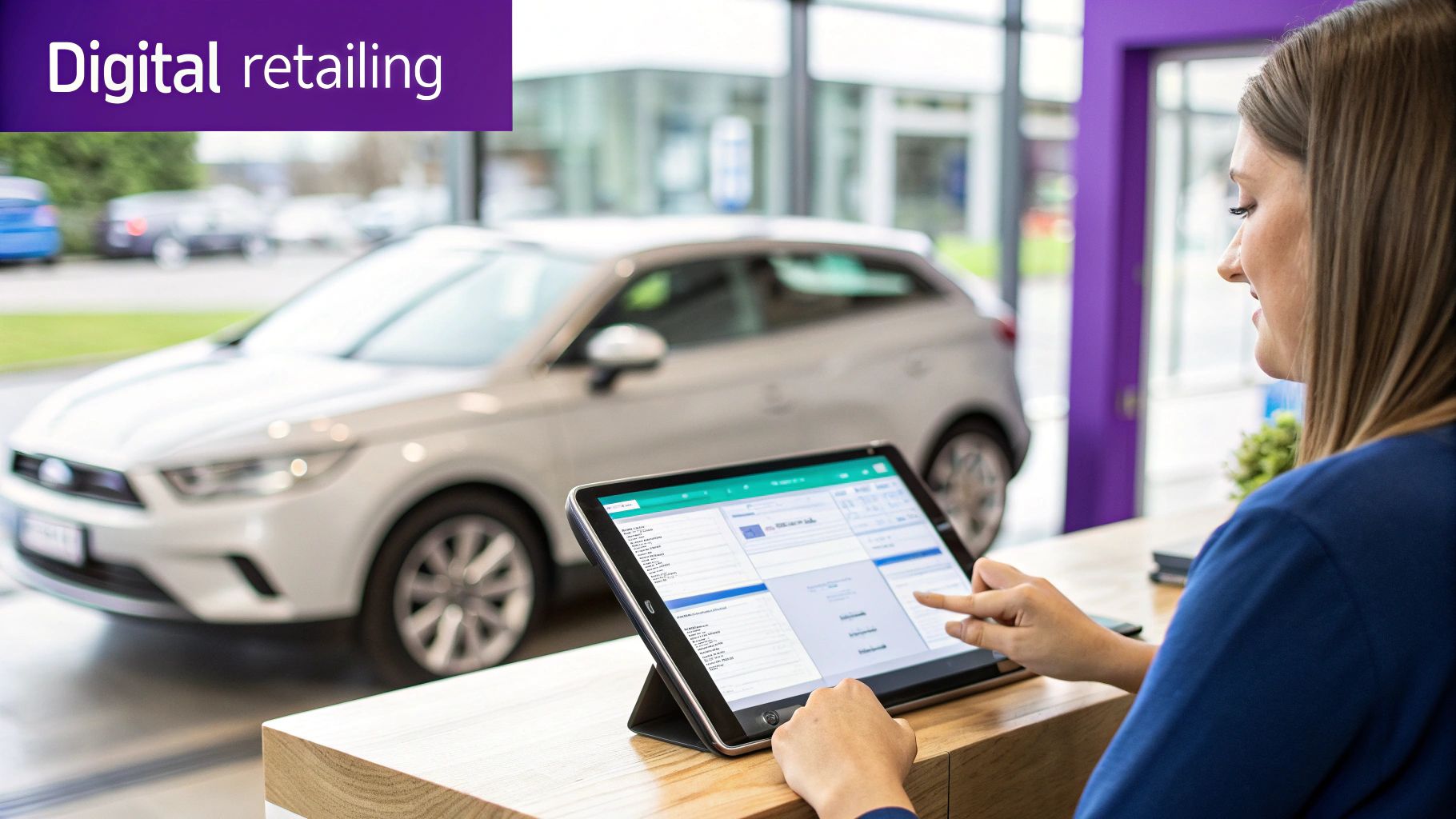
    A woman uses a tablet in a modern car dealership, showcasing digital retailing solutions.

    Just getting a name and an email address doesn't cut it anymore. Today's car buyers expect to do more than just look at pictures online; they want to start the actual buying process right on your website. This is what digital retailing is all about—giving people the tools to move themselves down the sales funnel, on their own terms.

    A proper dealership website builder bakes these tools right into your Vehicle Detail Pages (VDPs). This isn't about replacing your salespeople. It's about giving them super-powered leads. When a customer has already calculated their payments or gotten pre-qualified, they show up at your dealership more prepared, more confident, and much closer to a "yes."

    This change is happening because customers demand it. Forecasts show a huge jump in online car buying, with more and more transactions beginning online. This isn't a surprise. Buyers now expect to see things like payment calculators and financing applications, tools that speed up the sale by cutting down the friction.

    From Online Interest to In-Person Sale

    The real purpose of digital retailing is to build a smooth, unbroken path from your website to your lot. When you give customers the right tools, you build trust and make the whole process easier, which makes walking into your dealership feel like the natural next step.

    Think about how these features change the game for a shopper:

    • Payment Calculators: These let customers play with the numbers—down payment, loan term, interest rate—to see exactly how a car fits into their budget. That kind of transparency creates instant trust.
    • Online Loan Pre-Qualification: By adding a secure finance application, you let serious buyers take a huge step forward. They go from being an anonymous website visitor to a high-intent lead with real buying power.
    • Digital Paperwork Submission: Imagine the time saved—for you and the customer—if they can upload their driver's license or proof of insurance before ever setting foot in your office. It's a massive time-saver.

    By empowering customers with self-service tools, you transform your website from a passive vehicle listing site into an active deal-making platform. You’re not just showing cars; you’re starting the sale.

    Building a Modern, Customer-First Dealership

    In the end, adding these tools does more than just make one sale go faster. It changes how people see your entire business. You're no longer just a place that sells cars; you're a modern, transparent dealership that respects your customers' time and intelligence.

    When buyers feel like they're in the driver's seat, they're far more likely to buy from you instead of the competition. They arrive on your lot feeling confident, having already done most of the legwork on your website. This not only makes for a quicker, easier close but also creates the kind of great experience that brings people back and gets you five-star reviews. For a deeper dive, our guide on how to sell cars online walks through more strategies for creating this kind of seamless customer journey.

    Common Mistakes to Avoid When Choosing a Platform

    Picking the right dealership website builder is a huge decision, one that can make or break your online sales. Get it wrong, and you're looking at lost leads, frustrated customers, and marketing dollars disappearing into thin air. To make sure your new site becomes a sales engine, not just a digital brochure, you need to know what pitfalls to watch out for.

    This isn't just about picking a template you like; it’s about choosing a genuine business partner for the long haul. Let's walk through the most common slip-ups dealers make so you can avoid them completely.

    Choosing a Generic Platform

    This is, without a doubt, the biggest mistake a dealer can make. You see a slick ad for a generic builder like Wix or Squarespace and think, "Hey, I can build a site myself and save some money." While those platforms are fantastic for a local bakery or a photographer's portfolio, they are absolutely not built for the unique demands of selling cars.

    They simply don't have the specialized tools you rely on every single day. For instance, a generic builder won’t have VIN decoding built-in. That means you're stuck manually entering every single feature for every car—a mind-numbing task that’s begging for mistakes. You also won't get a proper inventory management system, so keeping your online listings synced with what's actually on your lot becomes a nightmare. Before you know it, you’re advertising sold cars, which is a surefire way to kill a customer's trust before they even step foot on your lot.

    Overlooking Poor Mobile Performance

    Picture this: a potential buyer is scrolling through their phone on their lunch break. They land on your site, but the VDPs take forever to load, the images are wonky, and trying to fill out a form is just painful. They'll be gone in ten seconds flat. You just lost a sale and you don't even know it.

    The vast majority of car shopping begins on a smartphone these days. If your site is slow or clumsy on mobile, you might as well be invisible. It's not enough for your website to just "work" on a phone; it needs a true mobile-first design that's fast and easy to navigate. Plus, Google heavily favors mobile-friendly sites in search rankings. A bad mobile experience doesn’t just frustrate users—it actively harms your ability to be found online.

    Your mobile site isn't a shrunken-down version of your desktop site. For most of your customers, it is your primary showroom. Treat it that way.

    Ignoring the Fine Print in Contracts

    Another classic trap is getting stuck in a long, complicated contract riddled with hidden fees. Some website providers will lure you in with a low monthly price, only to hit you with surprise charges for things you thought were included—like data migration, extra features, or even getting a real person on the phone for support.

    Before you sign anything, demand a crystal-clear, itemized list of every single cost. What are the setup fees? What does the monthly payment really cover? What costs extra?

    Look for a dealership website builder with transparent pricing. A company that’s confident in its product doesn’t need to lock you into an ironclad, multi-year contract. The best partners earn your business every month by delivering results, not by trapping you with legalese. Asking the tough questions upfront will save you from major headaches and unexpected bills later on.

    Your Action Plan for Launching a High-Performing Website

    You've got the insights and you know the pitfalls to avoid. Now, it's time to build. Getting a high-performing website off the ground isn't about flipping a switch; it's about following a clear roadmap that turns your digital vision into a lead-generating machine. This action plan will walk you through everything from initial planning to a successful launch.

    Think of it like getting a car ready for the showroom floor. You wouldn't just park it out front and hope for the best, right? You detail it, check the engine, and make sure every last feature shines. Your website launch deserves that same meticulous attention to detail.

    Define Your Dealership Needs

    Before you even start looking at providers, you need to look inward. What are your specific goals? Are you trying to get more online financing applications? Do you want to generate more trade-in leads? Or is it simply about showcasing your unique inventory in a more compelling way?

    Make a list of your "must-have" features versus the "nice-to-have" upgrades. This simple exercise creates a scorecard you can use to evaluate every dealership website builder objectively. It helps you find a true partner that solves your real business problems, not just a vendor pushing a one-size-fits-all product.

    Vet Providers and Ask the Right Questions

    With your needs clearly defined, you can start shortlisting potential partners. Don't just skim their marketing slicks—dig into the specific details that will actually impact your long-term success.

    Here’s a checklist of critical questions to ask any potential provider:

    • SEO Capabilities: How do you automatically handle Google Vehicle Listings and all the necessary schema markup?
    • Data Migration: What does the process look like for moving my current inventory data, and are there any hidden fees?
    • Ongoing Support: What kind of support do you offer? Is it email-only, or can I get a real person on the phone when something urgent comes up?
    • Mobile Performance: Can you show me live examples of your clients' sites and their mobile PageSpeed scores?

    Remember, most of your organic traffic is coming from smartphones these days, so a fast, responsive design isn’t a bonus—it’s a requirement. Slow, clunky sites are just giving away leads. After all, today’s shoppers average 4.2 site visits during their research, and they spend a significant amount of that time on a mobile device. You can learn more about how the top website providers for car dealerships tackle these challenges.

    Finding the right partner is less about a flashy features list and more about genuine alignment. You want a provider whose success is directly tied to your growth—one who offers the support and expertise to help you get there.

    Prepare for a Smooth Launch

    Once you’ve picked your provider, the final piece of the puzzle is preparation. Start gathering high-quality photos and videos for your key inventory and your "About Us" page. Make sure your inventory data feed is clean and up-to-date to avoid any errors during the migration.

    Finally, outline your launch-day strategy. Plan on how you'll announce the new site on your social media channels and to your email list. Taking these steps will ensure your new website starts delivering a measurable return on your investment from day one.

    Got Questions? We've Got Answers.

    Jumping into a new website platform can bring up a few questions. It's totally normal. Here are some of the most common things we hear from dealers who are thinking about making a change, along with some straight-to-the-point answers.

    What's the Typical Price Tag on a Dealership Website Builder?

    Honestly, the cost can be all over the map. For an independent dealer, a solid platform usually starts in the ballpark of a few hundred dollars a month. If you're looking at enterprise-level systems with all the digital retailing bells and whistles, you can expect a much bigger investment, but that comes with a whole different level of features and hands-on support.

    How Much of a Headache Is It to Switch My Inventory Feed?

    It’s way easier than you probably think. Any good dealership website builder is built to play nice with the major inventory management systems out there. The whole point is to make the data transfer smooth and quick, so you can get your cars online without a lot of technical fuss.

    How Long Until My New Website Is Actually Up and Running?

    You can typically expect to be live within one to four weeks. The exact timing really depends on what you need. A more complex design or custom content will take a bit longer, as will any delays in getting your inventory feed and business details over to the provider.


    Ready to launch a website that works as hard as you do? AutoFire™ delivers a professional, mobile-first site in minutes, designed to get your inventory found on Google and convert shoppers into leads. Explore our features and see how easy it is to upgrade your digital showroom.

  • Choosing The Best Dealer Website Builder For Your Dealership

    Choosing The Best Dealer Website Builder For Your Dealership

    Think of a dealer website builder as a purpose-built platform, designed from the ground up specifically for selling cars online. It's not like a generic website builder. Instead, it comes packed with essential tools for managing inventory, generating leads, and handling sales processes unique to the auto industry.

    The Foundation Of Your Digital Showroom

    Imagine trying to build a race car engine with a basic wrench set from the hardware store. You might get something to turn over, but it would be clunky, inefficient, and definitely not winning any races. Using a standard website builder for your dealership is the exact same problem—it’s simply the wrong tool for a highly specialized job.

    A dealer website builder is your professional mechanic's toolbox, filled with precision instruments. It's not just for putting up a page with your logo and phone number. It’s for launching a high-octane digital showroom that pulls in qualified buyers and makes the entire sales funnel, from the first click to the final handshake, run smoothly.

    More Than Just A Website

    The real difference is in the purpose-built features. A generic site might let you create a photo gallery, but a dealer website builder gives you dynamic Vehicle Detail Pages (VDPs). These pages automatically pull in vehicle specs and display everything in a way that turns casual browsers into hot leads. That's what separates a simple online brochure from a true sales machine.

    This specialized approach solves core industry problems that generic builders can't touch:

    • Real-time Inventory Sync: Your website updates automatically when you buy or sell a car. It connects right to your Dealer Management System (DMS), so you're never advertising a sold vehicle or failing to show off a new arrival.
    • Automotive-Specific SEO: This ensures your cars pop up in search results when a local buyer is looking for the exact make and model you have on the lot. A generic platform just can't do this without a ton of manual, complex work.
    • Integrated Financing Tools: It comes with built-in loan calculators and secure credit applications, allowing a customer to take the next step right from the VDP.

    The right platform doesn’t just display your cars; it actively works to sell them. It turns every single vehicle in your inventory into its own 24/7 marketing asset, perfectly optimized to capture a buyer's attention.

    A Growing Market For Specialized Tools

    The need for these focused solutions is exploding as more dealers hit the wall with generic tools. The global market for website builders, which includes the platforms dealers rely on, highlights this shift. Recent market analyses project significant growth in the coming years.

    According to Fortune Business Insights™, the global website builder software market is projected to grow from $2.14 billion in 2023 to $4.65 billion by 2030. A huge part of this growth comes from small and medium-sized businesses building out their e-commerce storefronts—a trend that directly mirrors independent dealers needing powerful inventory and sales features to compete.

    If you want to dig deeper, you can learn more about the growing demand for SMB-focused website solutions. This strong, steady growth points to one clear fact: for any dealership serious about winning online, a specialized builder is no longer a luxury, it’s the standard.

    What Every Successful Dealership Website Needs

    A great dealership website is more than just a digital version of your business card. It's your 24/7 sales engine, working tirelessly even when you're off the clock. So, what makes one website a powerful sales tool and another just an online placeholder? It all comes down to a handful of features designed specifically for selling cars.

    Think about it like this: a generic website builder is like a basic car chassis. It’s a start, but it won’t win any races. To get on the track, you need a high-performance engine, racing slicks, and a wind-tunnel-tested body. For a dealership, these are the critical features that convert a casual browser into a serious buyer.

    Automated Inventory Management and DMS Sync

    Let’s be honest, the biggest headache for any dealership is keeping the online inventory up-to-date. Manually adding, editing, and removing cars is a huge time-sink and a recipe for mistakes. A modern dealer website builder eliminates this problem with automated inventory management.

    This feature is a game-changer. It hooks directly into your Dealer Management System (DMS), so when you add a car to your system, it instantly pops up on your website. Sell a vehicle on the lot? It’s gone from the site in a flash. This real-time sync means your customers are always seeing what’s actually available, which builds trust right from their first click.

    High-Impact Vehicle Detail Pages

    The Vehicle Detail Page (VDP) is where the magic happens. This is your digital sales pitch, the moment a shopper decides if a car is worth coming to see. A generic site might just throw up a few photos, but a purpose-built builder delivers an experience that builds confidence and gets people excited.

    A compelling VDP absolutely must have:

    • High-Resolution Photo Galleries: Grainy, low-quality pictures are a deal-breaker. You need crystal-clear shots from every angle.
    • 360-Degree Views: Immersive walkarounds for both the interior and exterior let shoppers kick the virtual tires from their own couch. It makes the car feel real and tangible.
    • Integrated Vehicle History Reports: Putting a CARFAX report right on the page answers a buyer's biggest questions upfront and tackles purchase anxiety head-on.

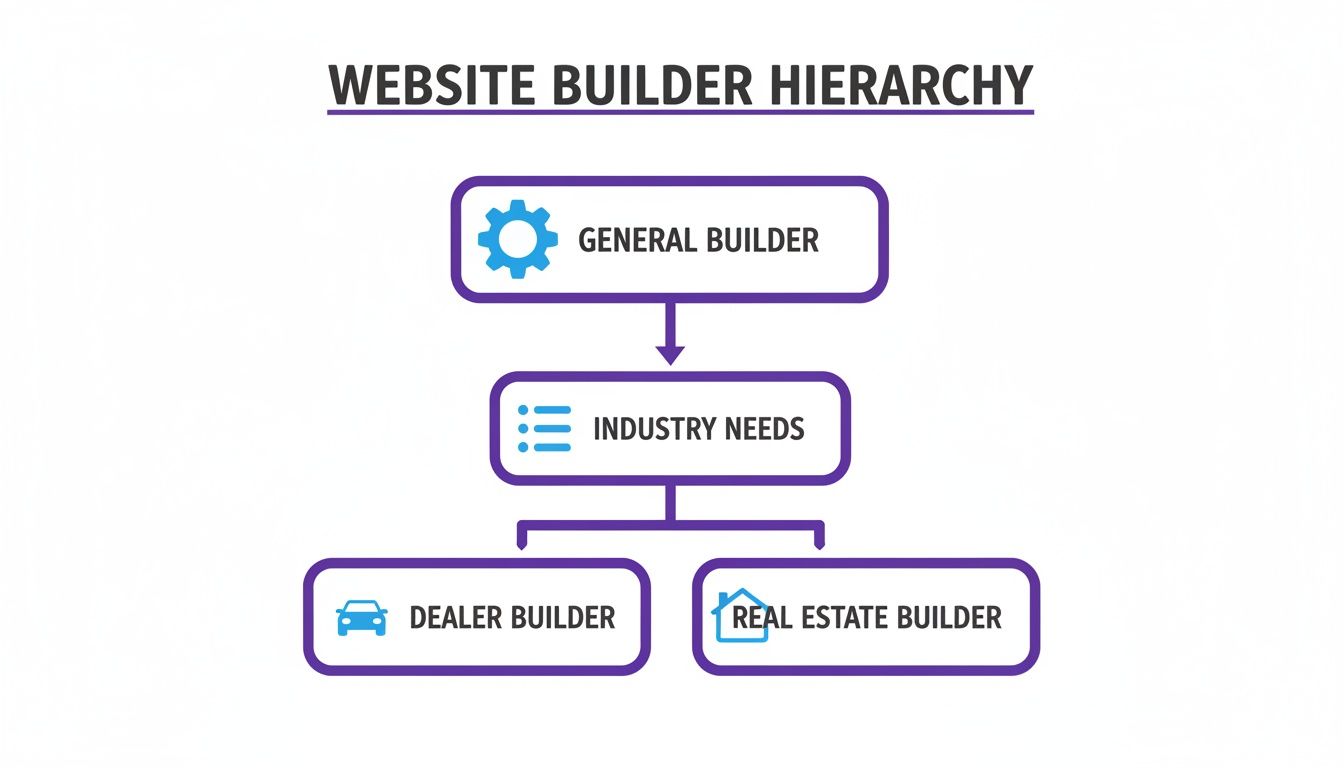
    This diagram shows why a specialized builder is set up to deliver these features in a way a general tool just can't.

    Hierarchy diagram showing a general website builder leading to industry-specific builders like dealer and real estate.

    As you can see, a dealer website builder isn't just a generic tool with a few car-related add-ons. It's a refined product where general technology has been filtered through the specific needs of a dealership to deliver exactly what you need.

    Must-Have vs. Nice-to-Have Website Builder Features

    When you're shopping for a website provider, it's easy to get overwhelmed by long lists of features. The key is to separate the absolute essentials from the "bells and whistles." The table below breaks down the core features every dealership needs to compete versus the advanced tools that can give you an extra edge.

    Feature Category Must-Have Feature Why It's Essential Nice-to-Have Feature
    Inventory Automated DMS Sync Ensures your online stock is always accurate, saving time and preventing customer frustration. AI-Generated Vehicle Descriptions
    VDPs High-Res Photo/Video Galleries Visuals sell cars. Shoppers expect to see every detail of a vehicle before visiting. Integrated Video Walkarounds
    Lead Generation Vehicle-Specific Lead Forms Captures buyer intent directly on the VDP with forms for test drives and price quotes. Trade-In Value Estimator
    Financing Secure Online Credit Application Allows serious buyers to take the next step and get pre-approved directly on your site. Payment Calculator
    SEO SEO-Friendly VDPs Helps your individual vehicle listings rank in local search results when people look for specific models. Automated Local SEO Reporting
    Design Mobile-First Design The majority of car shoppers use their phones. Your site must work perfectly on small screens. Advanced Design Customization

    Focusing on the "Must-Have" column ensures your website has a solid foundation for generating leads and sales. Once those are in place, the "Nice-to-Have" features can take your digital presence to the next level.

    Specialized Lead Capture and Financing Tools

    How you ask for a customer’s information makes all the difference. A simple "Contact Us" form just doesn't cut it anymore—it's too passive. A true dealer website builder comes equipped with smart, specialized forms that match the steps of a real car-buying journey.

    These tools are built for specific actions that move a customer forward:

    1. Test Drive Scheduling: A simple, dedicated form that lets a user pick a time and date to see a specific car.
    2. "Get ePrice" Requests: This captures lead info from highly motivated buyers in exchange for your best, no-haggle price.
    3. Secure Finance Applications: Integrated, secure credit apps allow customers to get pre-qualified for a loan without ever leaving the VDP.

    By placing clear calls-to-action on every vehicle page, you're not just showing cars—you're guiding the customer smoothly through your sales funnel. This approach generates far higher-quality leads than a generic contact form ever could.

    These features are the bedrock of a website that doesn't just sit there looking pretty but actively works to grow your business. They are what separate a static brochure from a dynamic digital showroom. To see how these pieces all fit together in a clean, intuitive layout, take a look at our guide on effective car dealer website templates. It really shows how the right features and a smart design can make all the difference in turning website traffic into showroom traffic.

    How A Specialized Builder Puts Your SEO And Marketing On Autopilot

    Let's be blunt: a dealership website is completely useless if local car buyers can't find it. You could have the best cars on the lot and the most competitive prices in town, but if you're not showing up on Google, you're invisible. This is where a dealer website builder becomes your secret weapon, working around the clock to turn your inventory into a homing beacon for search traffic.

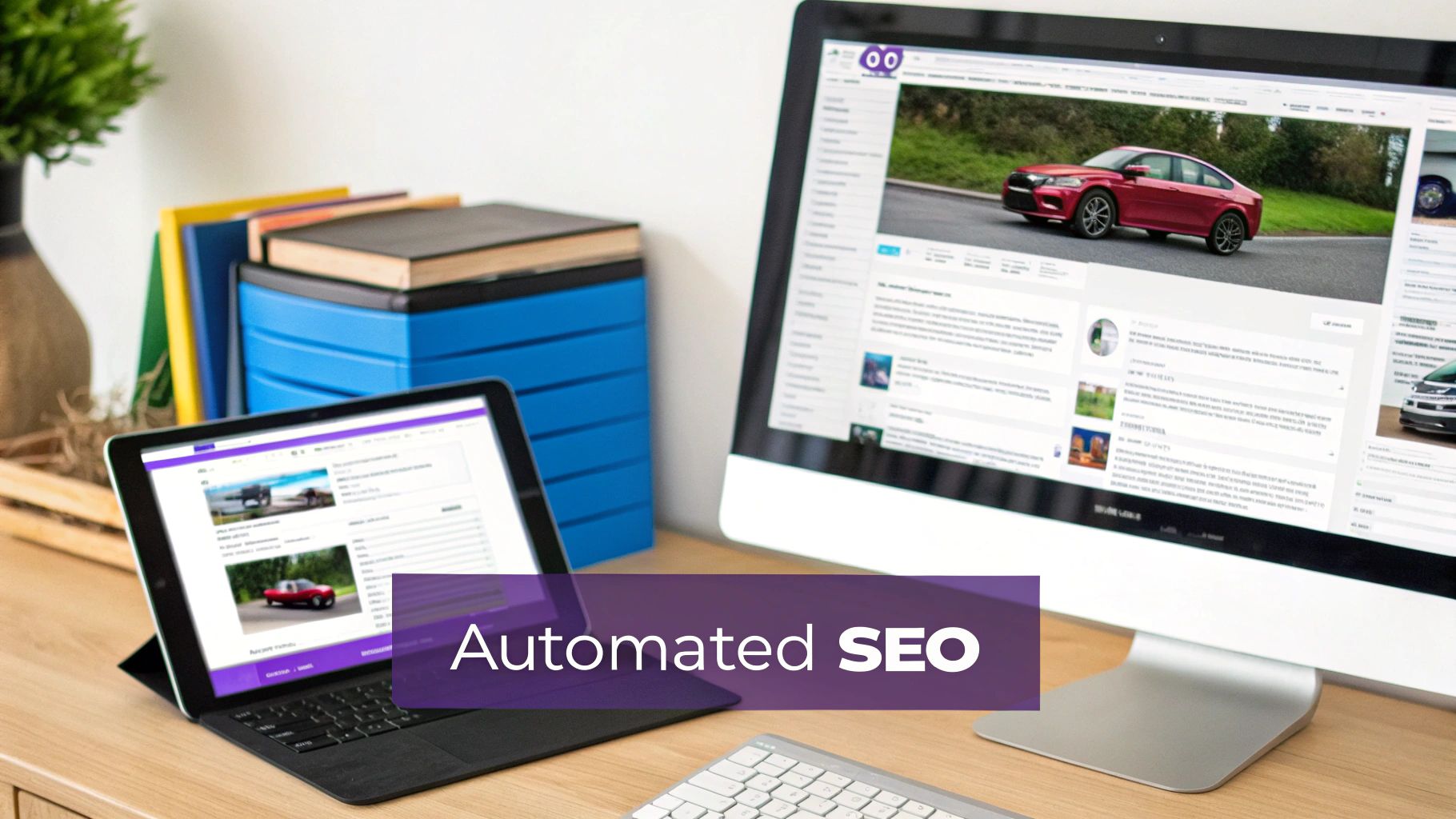
    A desk setup with a computer and tablet displaying car dealership websites, highlighting automated SEO.

    Trying to jury-rig a generic website for the unique demands of the auto industry is a technical nightmare. It’s like trying to race at Daytona with a city map—you just don't have the right tools for the job. A purpose-built platform, on the other hand, has automotive SEO baked right in, automating the heavy lifting that would otherwise take an expert and countless hours of tedious work.

    Automated VDP Optimization For Every Single Car

    Every time you add a vehicle to your inventory, a specialized builder does more than just create a new webpage. It creates a new, powerful SEO asset. Each Vehicle Detail Page (VDP) is automatically fine-tuned to rank for the exact phrases real customers are typing into Google, like "used Ford F-150 in Dallas" or "2019 Honda Civic for sale near me."

    This hands-off process typically includes:

    • Creating clean, SEO-friendly URLs that feature the make, model, and year.
    • Writing optimized title tags and meta descriptions pulled directly from vehicle data.
    • Adding descriptive alt text to images so search engines understand what's in your photos.

    What this really means is that every car on your lot gets its own shot at being discovered by a motivated local buyer. You simply can't achieve this on a generic platform without an insane amount of manual effort for every vehicle.

    Speaking Google's Language With Structured Data

    One of the most powerful, yet often overlooked, tools in automotive SEO is structured data (also known as schema markup). Think of it as a special translator that allows your website to whisper all the important details about your cars directly to search engines in a language they perfectly understand.

    For a car dealer, this is a game-changer. A specialized builder automatically wraps your VDPs in vehicle-specific schema, which can unlock "rich snippets" in search results. These are the eye-catching listings that show extra details like price, mileage, and availability right on the Google search page. They make your listing pop, setting you apart from competitors and seriously boosting the chances someone will click.

    A generic builder leaves this complex coding puzzle for you to solve. A dealer-focused platform handles it automatically, ensuring your inventory isn't just listed—it's showcased in the most compelling way on the world's biggest search engine.

    Owning The Local Search Scene

    The vast majority of your customers are searching for cars within a specific city or region. A proper dealer website builder is built from the ground up with local SEO as a core priority. It ensures your dealership's name, address, and phone number (NAP) are consistent and properly formatted for local search crawlers.

    These platforms also frequently integrate with your Google Business Profile, keeping your entire online presence in sync. When a potential customer searches for "car dealerships near me," these built-in optimizations give you a massive advantage, helping you climb the rankings in the local map pack and drive real foot traffic to your lot. For a deeper look at this, our guide on SEO for the automotive industry is packed with strategies for winning over nearby buyers.

    Trying to bolt these auto-specific SEO features onto a generic website is a losing battle. You'll spend more time fighting with plugins and code than you will selling cars. A specialized builder flips the script, transforming the technical headaches of SEO into a powerful, automated engine that works for you 24/7.

    How To Choose The Right Dealer Website Builder

    Choosing a dealer website builder is a massive decision for your business, almost as critical as picking the physical location for your lot. The platform you land on becomes the very foundation of your digital sales operation. To make the right call, you have to look past the slick designs and start asking the tough questions that directly connect a builder's features to what you actually need to do every day.

    This isn't about finding some mythical "one-size-fits-all" solution—it simply doesn't exist. It’s all about finding the right fit for your budget, the size of your inventory, and how your dealership runs. A small independent lot with 15 cars on the ground has entirely different needs than a dealer with multiple locations managing hundreds of vehicles. The goal is to match the platform to your business, not the other way around.

    Define Your Core Needs First

    Before you even sit through a single demo, take a good, hard look at your own operations. Getting that clarity will be your compass, pointing you toward a partner that helps you grow instead of just creating new headaches. If you skip this step, you risk paying a fortune for features you’ll never touch or, even worse, getting stuck with a system that can't keep up when you start to scale.

    Start by asking yourself these basic questions:

    • What's my realistic budget? Figure out a monthly number you’re comfortable with for a platform that should be actively making you money.
    • How many cars am I actually managing? Find a plan that handles your current inventory easily but still gives you room to expand.
    • What integrations are absolute deal-breakers? Make a list of your must-have tools, like your Dealer Management System (DMS), CRM, or specific financing partners.

    Answering these questions first gives you a solid framework for evaluating your options. It lets you immediately weed out any providers that just aren't going to work for you.

    Your website builder should solve your problems, not create new ones. A platform that doesn’t integrate with your essential day-to-day software will lead to frustrating manual workarounds and lost productivity.

    Template-Based Versus Fully Custom Solutions

    One of the first big forks in the road is deciding between a template-based system and a fully custom build. Each path has its own clear advantages, and the right choice really depends on your goals and resources.

    Think of a template-based dealer website builder like buying a high-quality prefabricated home. It’s built on a proven, optimized structure that gets you moved in quickly and is way more affordable. You can still pick the paint colors and furniture, but the core layout is already set. This is the perfect route for most independent dealers who need a professional, high-performing website without the huge price tag and long timeline of a custom project.

    On the other hand, a fully custom solution is like hiring an architect to design a home from the ground up. You get unlimited flexibility, but it comes with a much bigger bill and a far longer development process. For the vast majority of dealerships, the speed and cost-effectiveness of a template-based platform deliver a much better return on investment.

    This trend is backed by what’s happening in the global market. Small and medium-sized businesses (SMEs)—which includes most independent dealers—are the main force driving the growth of website builders. Market analyses show that in regions like North America and Asia-Pacific, SMEs are specifically demanding easy-to-use platforms with strong catalog features that can be launched fast. This confirms that template-driven solutions are filling a critical need for dealers who value speed and efficiency. You can learn more about the market forces shaping website builder demand in recent industry reports.

    Look For A Partner, Not Just A Provider

    At the end of the day, remember that you aren't just buying a piece of software; you're entering into a partnership. The level of customer support a company provides can absolutely make or break your entire experience.

    Before you sign anything, find out what their support system really looks like. Is it just an email address, or can you actually get a human on the phone when something goes wrong? A great dealer website builder is always backed by a team that’s genuinely invested in seeing you succeed.

    See How AutoFire Powers The Modern Dealership Website

    Okay, enough with the theory. Let's get down to brass tacks and look at how a purpose-built dealer website builder like AutoFire™ actually solves the headaches independent dealers deal with every single day. It’s one thing to talk about features, but it’s another to see how they help you move more metal off the lot.

    Man interacting with a digital kiosk featuring an "AutoFire DEMO" sign in a car dealership.

    Picture this: you're running an independent lot, going toe-to-toe with big franchise stores that have massive marketing budgets and in-house tech gurus. You need a website that's fast, looks professional, and turns online lookers into showroom visitors—all without forcing you to become a coding expert overnight. That's precisely why AutoFire was built: to level the playing field.

    Eliminating Manual Work And Human Error

    We all know the grind. One of the most tedious, mind-numbing jobs at any dealership is making sure the online inventory perfectly matches what’s actually on the ground. A single typo or forgotten update—leaving a sold car online or failing to post a new arrival—is all it takes to frustrate a potential buyer and lose a sale. This is where AutoFire's instant inventory sync becomes your best friend.

    Instead of burning hours manually updating your site, our platform handles it all for you automatically. The moment you add a vehicle to your system, it’s live on your website with every detail. This seamless connection means you can stop wrestling with your website and start focusing on selling.

    Think about the time you get back:

    • No more double data entry: Add a car once. That's it.
    • Instantaneous updates: The second a vehicle is marked sold in your system, it’s gone from the site.
    • Consistent accuracy: Buyers see exactly what you have, building trust from their very first click.

    This isn't just about making life easier; it's a huge operational advantage that gives a small team the power and efficiency of a much larger dealership.

    Engineering VDPs That Win In Search

    A generic website builder just creates a webpage. AutoFire engineers a sales machine. Every single Vehicle Detail Page (VDP) is built from the ground up with search engines in mind. So, when a local buyer Googles "2018 Toyota Camry for sale," our VDPs are designed to show up.

    How? It all happens behind the scenes. AutoFire automatically creates clean, SEO-friendly URLs, writes optimized page titles, and embeds the correct schema markup. That's a bit of special code that tells Google everything it needs to know about your car—price, mileage, VIN, you name it. This helps your listings stand out in search results, catching the buyer's eye.

    The platform transforms every car in your inventory into its own targeted marketing campaign. You’re not just hoping customers find your homepage; you’re actively capturing buyers searching for the exact vehicles you have for sale.

    Converting Visitors Into Qualified Leads

    Getting people to your site is only half the job. A great dealership website has to make it incredibly simple for an interested shopper to take the next step. AutoFire integrates lead generation tools right where they count the most: on the VDP.

    Instead of a generic "contact us" page, your visitors will find clear calls-to-action that make sense. "Schedule a Test Drive" and "Request More Info" forms are right there on the page, capturing high-intent leads that your sales team can jump on right away.

    Imagine a potential customer browsing a specific car on their phone at 9 PM. With an AutoFire site, they can book a test drive for the next day right then and there. When you walk in the next morning, a qualified lead is already sitting in your inbox. That frictionless experience is what turns casual browsers into real buyers.

    This is just a small look at how a specialized dealer website builder turns features into real-world results. By automating tedious work, making you more visible in search, and making lead capture effortless, AutoFire gives you the tools you need to compete and win. To see it for yourself, you can schedule a personalized demo of the AutoFire platform and find out how it can empower your dealership.

    A Few Common Questions About Dealer Website Builders

    Jumping into new automotive technology can feel like a big step, and it's smart to have questions. If you're thinking about moving to a modern dealer website builder, you probably have a few things you're wondering about. This section tackles the most common questions we hear from dealers just like you.

    My goal here is to cut through the noise and give you straight answers, so you can feel confident choosing a platform that actually helps grow your business, instead of just being an online brochure.

    Can't I Just Use A Generic Builder Like Wix For My Dealership?

    Technically, yes, you can. But it's almost always a bad idea that ends in frustration. Think of it like trying to use a standard family sedan to haul a load of lumber—it might work for a tiny bit, but it's the wrong tool for the job and you're likely to do more harm than good.

    Generic website builders are missing the fundamental, out-of-the-box features a car dealership absolutely needs to function online.

    You'd be missing critical pieces like:

    • Automated DMS Inventory Feeds: Without this, get ready to spend your days manually adding and deleting every single vehicle.
    • Optimized Vehicle Detail Pages (VDPs): Building compelling, search-engine-friendly listings for every car from scratch is a huge time-sink.
    • Integrated Financing Tools: You'll be forced to find third-party apps and hope they play nicely together, which they rarely do.

    Trying to rig a generic site to do all this requires expensive custom coding and a messy collection of plugins. That patchwork approach slows your site down, opens up security holes, and becomes a maintenance nightmare. A proper dealer website builder is built to handle these jobs from day one, saving you an incredible amount of time, money, and headaches.

    What Does A Dealer Website Builder Usually Cost?

    The price for a specialized dealer website builder can really run the gamut, but they almost all operate on a monthly subscription. What you end up paying usually depends on three main things: how big your inventory is, which specific features you need, and how much custom design work you want.

    For smaller independent lots, you can often find solid entry-level plans starting in the low hundreds of dollars per month. On the other end, larger dealership groups needing advanced marketing tools, custom integrations, and dedicated support could be looking at costs in the thousands.

    It's so important to see this as an investment in your sales engine, not just another monthly bill. A website that performs well should be generating more than enough high-quality leads and sales to deliver a strong return, making its cost a no-brainer.

    How Big A Deal Is Mobile Design For A Dealership Website?

    It’s not just a big deal—it's everything. The simple truth is that nearly every one of your potential customers is starting their car search on their phone. They’re scrolling through inventory on their lunch break, from the sidelines of their kid's soccer game, or while watching TV on the couch.

    If your site is slow, clunky, or just plain hard to read on a smartphone, you've lost that customer. They will click away in seconds and they will not be back.

    On top of that, Google now uses what it calls "mobile-first" indexing. This means the mobile version of your site is the one that really counts for search rankings. A bad mobile experience will actively hurt your SEO, making you invisible to local buyers searching on their phones. Any dealer website builder you even consider has to be fully responsive, delivering a perfect experience on every screen, from the smallest phone to the biggest desktop. Your bottom line truly depends on it.


    Ready to see how a platform built specifically for dealers can boost your sales? AutoFire provides a blazing-fast, mobile-first website designed for independent dealers, complete with automated inventory sync and the SEO tools you need to get found. Get your professional dealership website online today.

  • How to Generate Leads for Car Sales A Modern Dealership Guide

    How to Generate Leads for Car Sales A Modern Dealership Guide

    To really generate leads for car sales, you have to stop thinking of your website as a digital brochure. It needs to be your hardest-working salesperson, converting casual online lookers into qualified buyers around the clock. Your site is the absolute foundation of any modern sales strategy.

    Create a Digital Showroom That Captures Leads 24/7

    A laptop and smartphone on a wooden desk display car sales content with an 'Instant Leads' sign.

    In today’s world, your website is your showroom. For most customers, it’s the first impression you’ll ever make, and it needs to do more than just show off your cars. It has to actively capture a visitor's interest and information.

    Think about it: according to a study by Cox Automotive, a significant majority of vehicle buyers use digital as a key source of information. They're comparing models, checking prices, and sizing up your dealership long before they even think about setting foot on the lot.

    This means every single part of your website has to be built with one purpose: getting that visitor to take the next step. If your site is clunky, slow to load on a phone, or makes it hard to find basic information, that potential buyer is gone. They'll just click over to your competitor down the street. A fast, modern, and easy-to-use site isn’t just a nice-to-have anymore; it's the price of admission. You can learn more about what goes into a high-performance site by checking out the essential features of a modern website builder for auto dealers.

    Transform Vehicle Pages into Lead Magnets

    Your Vehicle Detail Pages (VDPs) are the most valuable real estate on your entire website. This is the make-or-break moment where a shopper decides if they're interested enough to reach out. A VDP that's just a list of specs and a price is a huge missed opportunity.

    A truly effective VDP builds trust and makes it incredibly simple for a buyer to show interest. To do this, you have to nail these key elements:

    • Stunning Visuals: We're talking high-resolution photos from every possible angle, walkaround videos, and even 360-degree interior views. These aren't just pictures; they help a buyer form an emotional connection with the car.
    • Transparent Information: Don't make people dig for the price or vehicle history. Put the CARFAX report, clear pricing, and detailed specs front and center. This transparency builds instant credibility.
    • Strategic Lead Forms: Stop making visitors hunt for a generic "Contact Us" page. Place simple, direct calls to action right there on the VDP. Think "Check Availability," "Request More Photos," or "Schedule a Test Drive."

    A potential buyer is never more engaged than when they're looking at a specific car. By placing multiple, easy-to-use conversion points on the VDP—like a trade-in estimator or a financing pre-approval tool—you capture their intent right in that moment. This simple change can dramatically increase your lead volume.

    Making It Easy to Say "Yes"

    At the end of the day, your goal is to reduce friction. Every extra click, every confusing step, every moment of hesitation is another reason for a potential lead to give up and leave. By building user-friendly tools directly into your inventory pages, you empower customers to move forward on their own terms.

    Consider adding a payment calculator or a prominent trade-in value estimator. These tools give the visitor instant value, and in return, you get their contact information for your sales team to follow up. This approach shifts the whole dynamic. You're no longer just selling; you're providing a helpful service, which makes customers far more willing to give you their details and start a conversation.

    Win Your Neighborhood and Grab Local Buyers

    Your website is your home base, but for an independent dealer, winning the local game is everything. When a buyer down the street pulls out their phone and types in "used SUVs near me," you absolutely have to be there. This is where a killer local search presence goes from a nice-to-have to your most powerful sales tool.

    Think about it. Google doesn't just give them a list of websites anymore. It shows a map, a handful of top-rated dealerships, and even specific cars for sale right there in the search results. If you’re not showing up in those prime spots, you're invisible to the hottest leads in your own backyard.

    Your Google Business Profile: The New Front Door

    Treat your Google Business Profile (GBP) like the digital storefront for your dealership. For most local shoppers, it’s the very first impression they'll have of you. If it's sloppy, incomplete, or has old information, it sends a clear message that you don't care about the details—and that's a terrible look when you're selling cars.

    Dialing in your GBP is one of the highest-impact things you can do to bring in local customers. Go through it with a fine-tooth comb and make sure everything is perfect:

    • Nail the Basics: Your name, address, phone number (NAP), and business hours have to be 100% accurate and consistent everywhere they appear online.
    • Define Your Turf: List out the specific towns, zip codes, and neighborhoods you serve. This helps you show up when someone searches for a dealer in a neighboring community.
    • Show, Don't Just Tell: Keep a fresh stream of high-quality photos flowing. Post pictures of your lot, your team, and especially your newest inventory. A quick walkaround video of a hot-ticket truck can work wonders for engagement.

    Get Your Cars Directly on Google

    This is a big one. Google Vehicle Ads put your actual inventory right on the search results page. So, instead of a shopper just seeing your dealership's name, they see the exact 2019 Honda CR-V you have in stock, complete with a picture, the price, and the mileage.

    This is a massive shortcut. It puts your best inventory in front of buyers at the exact moment they’re looking for it, often getting them to skip other websites and click straight to your Vehicle Detail Page. For a deeper dive on mastering this, check out our complete guide to local SEO for car dealerships.

    Your Reputation is Your Best Salesperson

    All the visibility in the world can't save you from a 2.5-star rating. Your online reviews are your street cred. A long list of positive reviews from real, happy customers is more convincing than any ad you could ever run. It’s the deciding factor between a buyer choosing your lot or the one down the road.

    Of course, getting those reviews is the tricky part. You need a system that's simple and doesn't feel pushy.

    The secret is to ask when the customer is happiest. That golden moment is right after you've handed them the keys and they're beaming. That's when you strike.

    A simple text or email an hour or two later with a direct link to your Google review page is incredibly effective. Make it dead simple for them—one click and they're writing the review. Build this into your sales process, and you’ll create a powerful engine for trust that keeps bringing new local buyers through the door.

    Drive High-Quality Traffic with Targeted Ad Campaigns

    Let's be honest, organic reach is great, but it takes time. When you need to move metal now, paid advertising is your express lane to active car buyers. A smart ad campaign is one of the quickest ways to put your best inventory right in front of the people who are ready to pull the trigger.

    The secret isn't just spending money; it's spending it on the right people at the right time. This means focusing on high-intent moments.

    Think about the difference between someone searching for "used cars" versus "used Ford F-150 under $25k near me." That second person isn't just browsing—they're shopping. Your ad should take them directly to the VDP for that exact truck, not dump them on your homepage to fend for themselves.

    This is all part of a bigger local strategy. Your paid ads work best when they amplify an already strong digital presence, as this visual breaks down.

    Infographic illustrating a local search strategy to boost visibility and attract customers using profile, reviews, and ads.

    As you can see, your business profile, customer reviews, and targeted ads all work together to win over local buyers.

    Reaching In-Market Buyers on Social Media

    While Google Ads are perfect for capturing people actively searching, platforms like Facebook and Instagram let you find buyers before they even hit Google. These platforms are incredibly good at identifying users showing signs of being "in-market for a vehicle."

    Here, you're not just capturing existing demand—you're creating it. You can run ads featuring your best-looking inventory right into the feeds of locals who've been browsing other car sites or liking automotive content.

    Pro Tip: Don't just post a static photo with the price. That's an ad people scroll right past. Instead, use a short, 15-second walkaround video or a carousel of high-quality interior and exterior shots. The goal is to stop the scroll and make someone think, "Wow, I need to check that car out."

    For a deeper dive into making your inventory look irresistible on social media, check out our complete guide on social media strategies for independent dealerships.

    Making Every Ad Dollar Count

    Paid ads can feel like a money pit if you're not careful. To win, you have to be smarter with your budget.

    To get started, it's helpful to understand the strengths and weaknesses of each platform.

    Digital Advertising Channel Comparison for Car Dealers

    This table breaks down the main digital advertising channels, what they're best for, and how to measure success when your goal is generating real leads.

    Channel Best For Primary Targeting Method Key Metric
    Google Search Ads Capturing high-intent buyers actively searching for specific vehicles. Keyword Targeting (e.g., "used Honda CR-V Boston") Cost Per Lead (CPL)
    Google Vehicle Ads Showcasing specific inventory directly in search results with images/pricing. Inventory Feed Integration VDP Clicks
    Facebook/Instagram Building brand awareness and reaching "in-market" audiences before they search. Behavioral & Demographic Targeting Click-Through Rate (CTR)
    YouTube Ads Engaging visual storytelling with walkarounds and dealership promos. In-Market & Affinity Audiences View-Through Rate (VTR)

    No matter which channels you choose, the key is to track what's working and what isn't. An ad campaign is never a "set it and forget it" activity.

    Here are a few final pointers to keep in mind:

    • Ad Copy That Connects: Speak to your local buyers. Use phrases like "Low mileage," "One-owner trade-in," or "Flexible financing for our neighbors." Make it personal.
    • Visuals Are Everything: On social media, the photo or video is 90% of the battle. Use clean, well-lit photos and snappy videos that highlight a car’s best features.
    • Test and Refine: Always be testing. Run small A/B tests on your headlines, images, and calls-to-action to see what gets the best response. Cut what isn't working and put more budget behind your winners.

    Turn Your Physical Lot into a Lead Generation Engine

    Car salesperson talks to a female customer next to a purple car with a QR code sign.

    While your digital showroom is humming 24/7, don't sleep on the power of your physical lot. It's still one of the best places to find high-quality leads. Think about it: every person who gets out of their car to browse your inventory is a genuinely interested prospect, even if they're "just looking" today.

    The trick is having a simple, repeatable process for capturing their info without scaring them off.

    Your team’s first impression is everything. A hard sell pushes people away, but a friendly, low-pressure conversation can build instant trust. The goal is to get their contact details as a natural part of the conversation, not by force. This is absolutely critical during a test drive, which is the peak moment of interest for any shopper.

    Capturing Leads During Walk-Ins and Test Drives

    Give your team some easy, effective scripts that sound more like good customer service than a sales pitch. It’s all in the framing. Instead of bluntly asking for a phone number, position it as a benefit for them. This small tweak makes a huge difference.

    Here are a couple of approaches that actually work:

    • For the Walk-in Browser: "I know you're just getting a feel for things today, but we get fresh cars in almost daily. If you'd like, I can shoot you a quick text if a similar SUV with lower miles comes in next week. What's the best number for that?"
    • During the Test Drive: "While you’re taking it for a spin, I can send a link with the full vehicle history report and a copy of the window sticker right to your phone. What's your number?"

    Both of these methods offer immediate value in exchange for contact information. It feels helpful, not pushy.

    Key Takeaway: Every single piece of contact info gathered on the lot needs to go straight into your Customer Relationship Management (CRM) system. This is how a casual Saturday browser turns into a long-term opportunity instead of being forgotten by Monday morning.

    Bridge the Gap with QR Codes

    Let's face it, not every visitor wants to talk to a salesperson, especially if they're browsing after hours. This is where you can blend your physical lot with your digital strategy using QR codes.

    Placing a unique QR code on every window sticker is a game-changer. A quick scan with a smartphone instantly connects a shopper to a wealth of online info.

    A well-placed QR code can link directly to:

    • The Vehicle Detail Page (VDP): They can immediately see more photos, watch a walkaround video, and check the CARFAX report right from the driver's seat.
    • A Simple Lead Form: Pair it with a compelling call to action like "Scan to Lock In This Price" or "Get Notified of a Price Drop."

    This simple strategy turns your entire lot into an interactive, 24/7 lead capture machine. It ensures that even when your dealership is closed, you’re still filling your pipeline for the next day.

    Build a Follow-Up System That Converts Leads into Sales

    Getting a lead is just the starting line. The real race is won or lost in the minutes, hours, and days that come after. Let a hot inquiry sit unanswered for too long, and you can bet that customer is already on the phone with your competitor down the street.

    Speed isn't just important; it's everything. Think about this: some studies have shown that contacting a new lead within the first five minutes can significantly increase conversion rates. That’s why a repeatable, automated follow-up system isn't a "nice-to-have"—it's your most valuable play in the book. It’s how you guarantee no lead ever goes cold.

    Set Up Instant Automated Responses

    The second someone hits "submit" on your website, a timer starts. Your very first move has to be instant and automated. A simple Customer Relationship Management (CRM) system can be your best friend here, firing off an immediate text and email without you lifting a finger.

    This first touchpoint isn’t about going for the hard sell. It's about acknowledging the customer and setting expectations.

    • Automated Text Message: "Hi [First Name], we got your inquiry for the [Vehicle Make/Model]. A member of our team is looking it over and will call you from our dealership number shortly. Thanks!"
    • Automated Email: Your email can be a bit more detailed. Confirm the vehicle they're interested in, include your dealership's contact info, and maybe even link to a few similar cars on your lot.

    This immediate contact accomplishes two critical things: it lets them know their form went through, and it shows you're on the ball. That initial professionalism builds trust from the get-go.

    Map Out a Multi-Touch Follow-Up Cadence

    After that first automated ping, you need a smart sequence that mixes automation with a real human touch. Most prospects need to hear from you a few times before they’re ready to book a test drive. A structured follow-up plan, or cadence, ensures every single lead gets a consistent, professional experience.

    You don't need anything overly complicated. A simple, effective sequence could look like this:

    1. 5-15 Minutes After Inquiry: A real salesperson needs to pick up the phone. This is the most important step. If they don't answer, leave a quick, friendly voicemail.
    2. Day 2: Send a personal email. Mention the car they liked and ask a simple, open-ended question. "What was it about the F-150 that caught your eye?" works wonders.
    3. Day 4: Shoot them a text with something valuable. It could be a link to a video walkaround of that specific car or a heads-up that you just got a similar vehicle in stock.
    4. Day 7: Time for another phone call. Just a quick check-in to see where they are in their search and if they have any new questions.
    5. Ongoing: If they haven't bought yet, drop them into a long-term nurture campaign. A monthly email with your newest inventory or service specials keeps your dealership on their radar.

    A structured follow-up process is your safety net; it prevents leads from slipping through the cracks. By blending automated texts and emails with personal phone calls, you create a persistent but helpful presence that keeps your dealership top of mind.

    This systematic approach is quickly becoming the main competitive advantage in our industry. In fact, by 2025, the dealerships that are methodically capturing and using their own data—like website visits, test drive records, and phone calls—are going to see much higher close rates.

    It all starts with making sure 100% of your leads get into your CRM within minutes and are acted on immediately. If you want to dive deeper, you can learn more about how first-party data is shaping automotive marketing.

    Answering Your Top Questions on Car Sales Leads

    Even the sharpest dealers have questions. Once you start digging into lead generation, it's natural to wonder what's "normal" and where you can get an edge. Let's break down some of the most common questions I hear from independent dealers trying to grow their business.

    What's a Realistic Cost Per Lead for My Dealership?

    This is the big one, and the answer isn't always straightforward. Industry-wide, you'll see averages for automotive leads bouncing between $200 and $300. But for an independent lot with a smart, localized strategy, you can often beat that number.

    The key is to look past the cost-per-lead (CPL) and focus on your cost-per-sale. A $250 lead that turns into a customer is a win. Dozens of cheap, tire-kicker leads that waste your team's time? Not so much. Quality over quantity is the name of the game here.

    How Fast Do I Really Need to Respond to Online Leads?

    I can't stress this enough: you need to be lightning-fast. The data is absolutely brutal on this point. Research has shown that if you can get in touch with a new web lead within the first five minutes, your conversion rates can increase substantially. The chances of even having a meaningful conversation plummet after the first hour.

    Waiting 30 minutes is like waiting a week in internet time. Your goal should be an instant, automated text or email confirming you got their request. That simple "we got it!" message buys you a few minutes for a real person to pick up the phone and make a call.

    That immediate response doesn't just improve your odds; it shows the customer you're on the ball and respect their time. It’s your first chance to make a great impression.

    Where Should I Spend My Time on Social Media for Leads?

    When it comes to generating actual, ready-to-buy leads, you want to go where the targeting is best. Right now, that's Facebook and Instagram. Nothing else really comes close for a local dealership.

    Their advertising platforms let you zero in on exactly who you want to reach. You can get incredibly specific:

    • Location: Target people in your exact city, zip code, or even a few miles around your lot.
    • Interests: Show your ads to users who follow specific car brands or pages like Car and Driver.
    • Behaviors: This is the goldmine. You can directly target people whose online activity shows they are "in-market for a vehicle."

    And don't forget about Facebook Marketplace. It continues to be an absolute powerhouse for connecting with local buyers who are actively searching for cars right now. While platforms like TikTok are fun for brand awareness, Facebook’s tools are built to drive sales.


    Ready to turn your website into a 24/7 lead generation machine? AutoFire™ delivers modern, SEO-optimized websites designed specifically for independent dealers. Get online in minutes and start capturing high-quality leads without any technical headaches. Start your free trial today at https://goautofire.com.

  • How to Generate Car Sales Leads With Proven Strategies

    How to Generate Car Sales Leads With Proven Strategies

    If you need to fill your sales pipeline quickly, think of your strategy as a four-legged stool. Each element supports the others: a responsive website, targeted local SEO, paid channels, and lightning-fast follow-up. Together, they drive both quantity and quality of leads.

    Four Core Pillars To Generate Leads

    High-Performance Website

    Your site is more than a digital showcase—it’s where buyers decide to reach out. Make sure pages load in under two seconds and that inventory listings feature clear photos and concise specs. A prominent “Schedule Test Drive” button or chat widget reduces friction and channels visitors straight into your CRM.

    Local SEO That Converts

    When someone types “used cars near me,” you want to appear at the top. Start by claiming your Google Business Profile and keeping your NAP (Name, Address, Phone) consistent across directories. Tailored landing pages for each neighborhood—think “Pre-Owned SUVs in Westville”—encourage clicks and build trust through localized content.

    Paid Ads And Partnerships

    Immediate visibility comes from paid channels. Rotate Google Ads with targeted Facebook Marketplace listings and team up with local businesses—say, a co-branded weekend sale at your neighborhood car wash. Watch how different offers perform; you might find that “Free Oil Change with Purchase” drives more visits than a straight discount.

    Swift Follow-Up Workflows

    A hot lead grows cold in minutes. Map out automated SMS confirmations, email drips with personalized vehicle suggestions, and a clear callback script for your sales team. Industry research suggests that adopting a two-hour response SLA can significantly improve appointment rates, as explored on The LMB Marketing Group blog.

    Key Lead Generation Tactics Comparison

    Below is a snapshot of common lead-generation tactics. For detailed benchmarks on cost per lead and conversion rates, see Leadspicker.

    • Website Forms
    • Local SEO Organic
    • Google Ads
    • Facebook Marketplace
    • Community Event Partnerships

    Dealerships focusing on integrated digital strategies often see measurable lift in leads and sales.

    Learn More About 2025 Automotive Lead Benchmarks on Leadspicker

    “Balancing digital channels with rapid workflows transforms lead volume into real showroom visits.”

    Next, we’ll walk through specific page tweaks that boost form submissions and share follow-up templates that turn clicks into test drives.

    What To Test First

    Every lot has its own sweet spot. Start by:

    • Matching landing-page headlines to your ad copy
    • Reducing form fields to the essentials
    • Tweaking Google Ads bid strategies by time of day
    • Swapping out incentives at local events to see what resonates

    Track these experiments against your cost-per-lead goals and keep an eye on lead-to-showup ratios. Use your CRM reports and web analytics to see which channels deliver both volume and quality, then double down on the winners.

    Optimizing Your Website And Google Vehicle Listings

    Dealer website dashboard

    Your website often sets the tone for a customer’s entire journey. It must guide visitors straight to the vehicles that spark their interest, without any guesswork.

    Picking a flexible platform makes growth painless. You avoid technical headaches and keep your listings fresh as inventory changes.

    Explore website builders designed for dealers here.

    Selecting A Scalable Website Platform

    Think about how each feature impacts your day-to-day:

    • Automated Inventory Sync that refreshes every listing in real time.
    • Built-In SEO Tools like meta-tag managers and XML sitemaps.
    • Mobile-First Layouts ensuring pages render flawlessly on any device.
    • Global CDN And Fast Hosting to shave page-load times under two seconds.

    Some dealers see significant increases in form submissions after redesigning landing pages with these capabilities.

    Crafting Clear Navigation And Speed Optimizations

    Labels like Inventory, Specials, and Contact aren’t fancy, but they get the job done. Breadcrumbs and quick filters allow shoppers to zero in on what they want in seconds.

    Behind the scenes, image compression and deferred scripts cut down on page weight. Add browser caching, code minification, and lazy loading to shrink load times even more.

    “According to Google, a one-second delay can cut conversions by 7%.”

    Leveraging Schema Markup For Automotive Inventory

    Rich snippets catch the eye—and schema is the ticket. Tag each vehicle with properties such as price, mileage, VIN, and color.

    When you include star ratings from customer reviews, search results look more credible. According to industry reports, implementing schema markup can boost organic click-through rates.

    Watch out for pitfalls:

    • Skipping required fields like availability or price.
    • Pointing to broken image URLs that kill the carousel.
    • Running outdated markup that misses new attributes.

    Always run Google’s Rich Results Test to catch those mistakes early.

    Monitoring Performance With Analytics

    You don’t need every metric under the sun. Focus on the essentials:

    • Impressions and click-through rates on each vehicle page.
    • Form-submission percentages and average time-on-page for listings.
    • Bounce rates on mobile to confirm a frictionless experience.

    Spotting which pages dominate SERP clicks reveals where to double down.

    Setting Up Google Vehicle Listings

    Enabling Google Vehicle Listings lets cars appear directly in search results with photos and specs. Follow this workflow:

    • Create a Merchant Center account and verify your dealership site.
    • Build an inventory feed with all required fields and high-resolution images.
    • Upload your feed, then fix any dashboard errors right away.
    • Link Merchant Center to Google Ads under settings in your Ads account.
    • Turn on Vehicle Listing ads and set a daily budget that fits your goals.

    Once the feed is live, it runs itself—no extra coding needed.

    According to Invoca’s blog, digital marketing channels generate 70% more automotive leads than traditional methods, with average lead costs at $283 and call leads converting faster and retaining at higher rates. When your site is dialed in and your vehicle feed is humming, searchers become solid leads—and that means more showroom visits.

    Focus on quick wins:

    • A/B test headlines on key landing pages.
    • Experiment with image resolutions to balance clarity and speed.
    • Refresh mobile CTAs every day to see what prompts more clicks.

    Improving On-Site Lead Capture And User Experience

    Dealership staff reviewing lead forms

    Getting a click is one thing—keeping someone engaged is another. Every extra field or confusing prompt risks losing a potential buyer. That’s why smoothing the path to contact is crucial.

    Adaptive forms change on the fly, showing only what matters. Imagine a visitor arrives on mobile and instantly sees a callback option. No guesswork, just clarity.

    • Dynamic Forms that tailor fields based on where the lead came from
    • Trade-In Calculators placed alongside prices to spark instant quotes
    • Pre-Qualification Quizzes that address budget questions upfront

    Dealers report that adding trade-in calculators can boost inquiries significantly.

    Dynamic Forms And Behavior Triggers

    When a shopper filters for SUVs, smart forms can surface questions about seating or towing capacity. It feels seamless, but the payoff is big.

    • Group address and contact inputs into one compact section
    • Reveal model-specific dropdowns only after a selection
    • Trigger a callback option if someone lingers over inventory for more than 20 seconds

    These tweaks can significantly reduce drop-offs without overwhelming the visitor.

    Live Chat Scripts And Callback Placement

    A well-timed chat prompt can flip hesitation into a conversation. On high-exit pages, a “Talk to an Expert” pop-up driven by user behavior can boost engagement.

    Stick a callback button in your mobile header so phone-first users never miss a chance to call.

    “A timely chat trigger hooks users just as they are about to leave, boosting engagement.”

    Studies show phone leads often close at higher rates than email-only forms.

    Interactive Tools And Measurement

    Interactive elements like trade-in calculators or budget quizzes build trust and keep prospects clicking.

    • Embed pricing guides in slide-in panels
    • Set up custom goals in Google Analytics to track form events
    • Watch abandonment rates and A/B test different trigger times

    This level of tracking shows exactly where visitors bail—and where you can make small changes for big gains.

    For a deeper look, check our guide on converting website visitors into car buyers.

    Embedding Lead Magnets And Tracking

    Downloadable resources give hesitant buyers something tangible to hold onto. For example:

    • Price Guide PDF with key specs and comparison charts
    • Video Walkthrough highlighting top models
    • Financing Checklist outlining loan options

    Keep files under one-second load times. Label CTAs clearly—“Download Pricing Guide” or “Get Financing Tips”—and host on a fast CDN.

    • Track each download as a Google Analytics event
    • Retarget downloaders with personalized email offers
    • Refine your forms based on performance data

    By combining dynamic forms, smart chat, interactive tools, and focused lead magnets, you eliminate every barrier between a visitor and a lead. Next up: dive into your Analytics paths, spot drop-offs, and keep those conversions climbing. Continuous testing means you’ll never run out of fresh ways to bring in car-buying customers.

    Using Local SEO And Content To Attract Buyers

    Getting your dealership on the local map means showing up exactly when someone nearby searches for “used cars near me.” Your Google Business Profile isn’t just a listing—it’s your storefront to potential buyers on phones and tablets.

    Here’s how to make it impossible to overlook:

    • Claim and verify your address through Google My Business.
    • Upload high-resolution photos of your lot, featured vehicles, and service area.
    • Select precise categories and attributes such as “Car Dealer” and “Auto Repair.”
    • Post updates regularly—think new arrivals, sales events, and customer spotlights.

    Building Location Specific Pages

    Creating pages for each neighborhood helps Google connect you with buyers in those areas. It’s not enough to list your city—you want to rank for “pre-owned SUVs in Riverdale” or “affordable sedans in Midtown.”

    Add elements that speak to locals:

    • Quick snippets about nearby parks, schools, or commuter routes.
    • A tailored inventory display featuring models that resonate with that community.
    • Testimonials from residents or a link to a detailed local blog post.

    “Local pages tend to drive more clicks when they reflect real community insights.”

    Leveraging Local Content To Boost Visibility

    Writing about weekend drives, neighborhood car shows, or popular service spots brings in nearby traffic without paid ads. A neighborhood guide can increase visits noticeably within weeks.

    Content Type Benefit
    Local Guide Builds trust by showing you know the area
    Maintenance Tips Captures long-tail searches from DIY enthusiasts
    FAQ Section Keeps visitors on your site longer

    To keep your name consistent across the web, run a simple citation audit:

    • Log your business name, address, and phone (NAP) in each directory
    • Correct any mismatched details—hours, suite numbers, or spelling
    • Schedule quarterly checks to catch drift before it hurts your rank

    Tracking your rankings with a tool focused on local terms like “auto repair Riverdale” ensures you’re always a click ahead. Learn more about local SEO for car dealerships in our guide to claiming and optimizing your Google Business Profile.

    Tracking Local Rankings And Reviews

    Good reviews are social proof that can push you to the top of map packs. Encourage buyers to share feedback immediately after purchase and showcase their comments on your location pages.

    • Automate SMS review requests post-sale
    • Highlight recent five-star reviews in your page sidebar
    • Reply promptly to praise and address concerns

    “Good reviews boost local rank and can deliver more clicks in map listings.”

    Pair review monitoring with rank tracking tools like BrightLocal or Moz Local to maintain a clear snapshot of your visibility. Combining these tactics means more qualified leads walking through your doors every month.

    Maximizing Paid Ads, Social Media And Partnerships

    When you’re ready to ramp up your lead flow, a blend of paid campaigns and community tie-ins is a winning formula. Mixing search ads with social media promos and local co-branding efforts uncovers fresh pockets of buyers.

    “Paid ads and local partnerships can deliver a significant spike in test-drive bookings.”

    Google Ads, Facebook And Instagram Tactics

    Search campaigns on Google catch buyers the moment they’re typing “used cars near me.”
    Aim for crisp headlines that echo their exact queries—think “2021 Honda Civic Under $16k” or “Affordable Pre-Owned SUVs Nearby.” Wrap up with a direct prompt like “Book Free Test Drive Today.”

    Try these attention-grabbers:

    • Inventory snapshots in 4K resolution to stop scrollers in their tracks
    • Countdown timers highlighting limited-time offers
    • Click-to-call extensions right in the search results

    On Facebook Marketplace and Instagram, dynamic ads retarget people based on the models they browsed. This approach can reduce cost-per-click compared to static feed promos.

    Budget Segmentation And Audience Targeting

    It pays to split your ad dollars among distinct groups. Start by building:

    • Lookalike Audiences from your top customers
    • Custom Audiences of site visitors who lingered on detailed vehicle pages

    Then zero in on ZIP codes and price ranges that match realistic budgets. This approach weeds out window-shoppers and delivers more qualified leads.

    A simple framework: divide spend evenly across three camps—intenders, active shoppers, and past visitors—and tailor your message to each group.

    Co-Branding Partnerships That Expand Local Reach

    Offline partnerships give your digital efforts a serious boost. By teaming up with car washes, insurance brokers, or credit unions, you tap into pre-qualified audiences before they even start looking for cars.

    Quick partnership ideas:

    • Bundle a “Drive Ready” kit at a neighborhood service station
    • Feature partner logos in social ads to build instant trust
    • Host a mini showroom in a credit union lobby

    When you follow up, mention the partner:

    “Hi [Name], it’s [Your Name] from [Dealership]—thanks for stopping by our local partner! Ready to see that SUV in person?”

    Paid And Partnership Channel Performance

    Compare channels by cost, reach, and lead quality to decide where to lean in and where to pull back. Revisit these numbers monthly, shifting dollars toward your top performers and testing fresh angles each quarter. That way, you keep ad fatigue at bay and costs per lead under control.

    Streamlining Lead Routing Follow-Up And Measurement

    Capturing a lead is only half the battle. What really moves the needle is a rapid, personalized follow-up that turns inquiries into showroom visits and signed contracts.

    An automated workflow removes the guesswork. It routes leads by ZIP code or vehicle interest, then fires off confirmations and reminders without missing a beat.

    Key Actions:

    • Assign each lead to the right salesperson based on location or model preference
    • Confirm receipt instantly via SMS or email
    • Drip targeted email sequences tailored to interest level
    • Call reminders for scheduling appointments or answering questions

    Automated Lead Routing Setup

    First, map every incoming inquiry to the correct territory. ZIP code boundaries or vehicle filters ensure each lead lands with the right rep.

    Next, tweak your lead-scoring rules to highlight high-value prospects. For example, someone eyeing an SUV with a budget above $30K jumps to the top of the list.

    Consider:

    • Geofence tags for ultra-local responsiveness
    • Interest labels for body style and price bracket
    • Urgency thresholds based on lead source

    According to The LMB Marketing Group blog, responding within the first hour makes leads up to 7x more likely to convert compared to longer delays.

    Infographic about how to generate car sales leads

    This visual breaks down routing, confirmation, and measurement into a clear flow—no guesswork, just continuous improvement.

    Templates That Convert

    Personalized messages can increase scheduled appointments. Here are examples:

    • SMS Confirmation
    “Hi [Name], thanks for your interest in the 2019 Honda CR-V. Let’s lock in a test drive tomorrow at 3 PM. Reply ‘YES’ to confirm.”

    • Email Drip Sequence
    Subject: Your Custom SUV Options Await
    Body: Links to matching inventory, customer testimonials, and financing tips.

    • Reminder Call Script
    “Bob, this is Sarah from AutoFire. I saw you requested a test drive for the CR-V. Does 2 PM Wednesday still work?”

    Pro Tip: Boost your lead score when prospects complete forms, chat live, or revisit your website.

    Tracking Key Metrics

    Monitor these typical targets as a benchmark:

    Metric Definition Typical Target
    Lead-to-Appointment Ratio Percentage of leads who schedule test drives 30% or higher
    Cost Per Acquisition Total ad spend divided by new qualified leads Under $150
    ROI Revenue from sales divided by marketing spend 3x or higher

    Timing Tweaks Case Studies

    Even small reductions in response time can improve show-up rates. Experiment with a chat reply at two minutes, followed by an SMS at the 30-minute mark. Test different sequences until you find your sweet spot.

    “By cutting our follow-up window in half, we connected with ready-to-buy customers before they wandered off.”

    Optimizing Follow-Up Channels

    Different buyers prefer different methods. SMS grabs mobile-first shoppers in a flash. Email drips offer depth for those who like to research. Chatbots handle off-hour FAQs, and calls build rapport with hot leads.

    • SMS for instant confirmations
    • Automated email drips with FAQs and comparisons
    • Chatbots on-site for after-hours questions
    • Scheduled calls for high-intent leads

    One split test pairing an SMS ping with an email summary within 30 minutes drove a significant increase in replies. Adjust your mix by lead source and time of day for best results.

    CRM Automation Examples

    Turn manual follow-up steps into a single automated process. Here’s a simplified workflow breakdown:

    • Trigger: lead_received
    • Assign by: ZIP code
    • Actions:

    • Send SMS: “Your test drive is scheduled, reply YES to confirm”
    • Send Email: “Here are matching vehicles with specs and pricing”
    • Schedule Call: +2 hours

    Everything runs from one dashboard—no detail slips through the cracks.

    Continuous Improvement With A/B Testing

    Small tweaks drive big gains. Try swapping SMS subject lines—like from “Test Drive Ready” to “Your Ride Awaits”—to see which resonates. Keep iterating on messages, templates, and schedules to boost your showroom traffic each week. Apply these workflows and watch your visits climb.

    Frequently Asked Questions

    Dealers often ask how to pull car sales leads and sync Google Vehicle Listings with on-site forms—without hiring a developer. What’s worked for many is a CMS plugin that supports webhooks. As soon as you add or update a vehicle, it flows straight into your lead database.

    Here’s a quick checklist to keep you moving:

    • Install a plugin such as Vehicle Sync Pro or AutoList Connect on your CMS.
    • In Google Merchant Center, grab your API credentials and paste them into the plugin settings.
    • Map each feed attribute—image, price, VIN—to the matching form field.
    • Turn on webhooks so new listings trigger instant inventory updates.
    • Run tests with sandbox data before going live.

    Deciding between paid search and social ads really comes down to buyer intent and ROI timing. Paid search can start driving leads within hours at around $120 CPA. Social ads, on the other hand, cost less up front and nurture awareness, generally converting over days or weeks.

    Paid Channel Decision Guide

    Evaluate your options using these criteria:

    • Intent: Search ads capture hot buyers typing specific queries. Social ads build broader awareness.
    • Budget Deployment: Do you need an immediate outlay or a drip campaign?
    • Tracking Window: Will you measure quick click-to-convert actions or rely on multi-touch attribution?

    Knowing when to pour dollars into offline events versus digital tactics can reshape your budget’s efficiency. If your lot depends on local foot traffic, consider allocating a portion of your budget to car shows or co-branded neighborhood events.

    Personalized follow-up sequences keep you out of the spam folder. Use first names, reference the exact vehicle they inquired about, and space your outreach based on lead score.

    Mini checklist:

    • Use merge tags to insert names and key details.
    • Schedule messages over a three-day window with varied send times.
    • Include one custom note—like a trim feature—in every message.

    You’re all set to start generating higher-quality leads today.
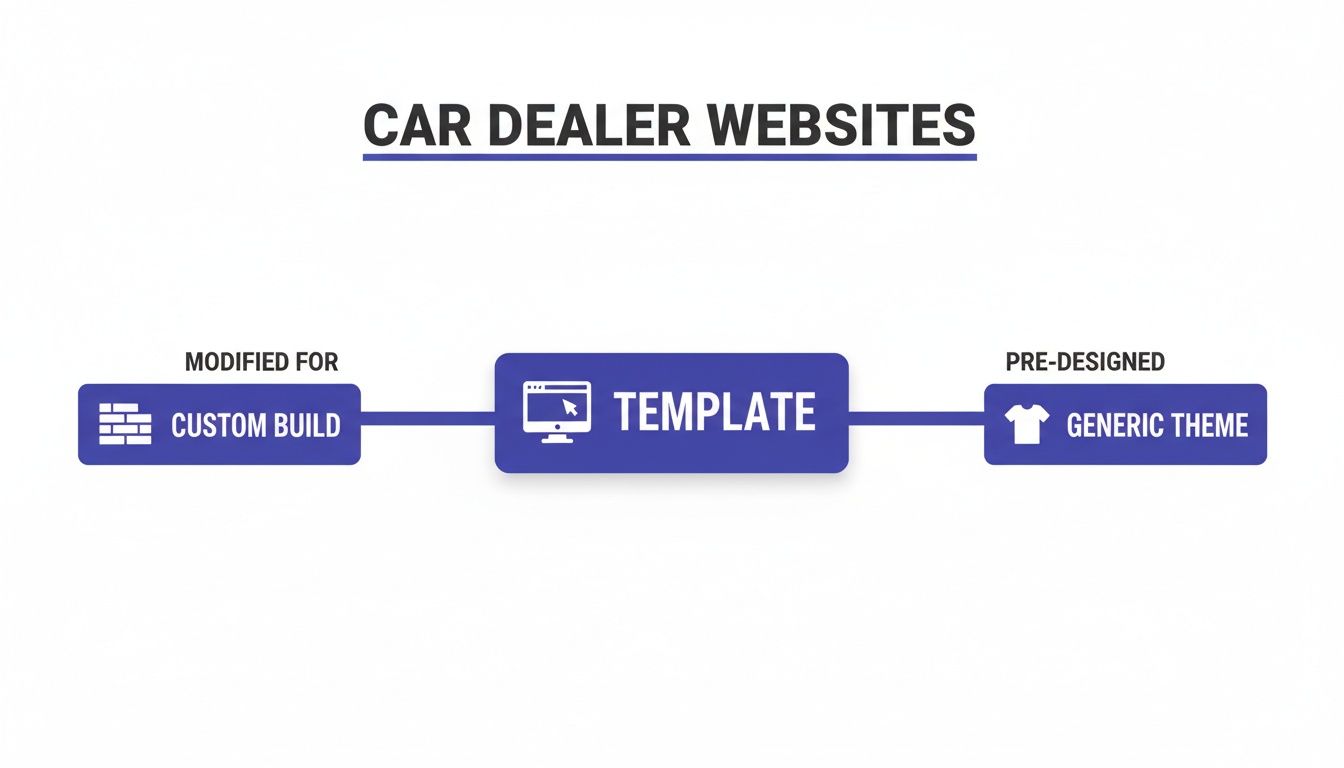

    Try AutoFire™ at AutoFire to capture quality leads fast.

  • Choosing a Website Builder for Auto Dealers

    Choosing a Website Builder for Auto Dealers

    A website builder for auto dealers isn't your average website tool. It's a specialized platform built from the ground up to handle the very specific digital needs of a car dealership—things generic builders simply can't do. Think of it as the engine powering your entire digital showroom, handling everything from inventory management to closing sales online. It’s the single most important tool for turning casual online browsers into paying customers.

    Your Digital Showroom Needs a Specialized Toolkit

    Man in a car showroom with a tablet displaying a digital showroom interface for car models and tools.

    The car buying journey almost always starts online now. That means your dealership's website is no longer a simple digital brochure. It has become your main storefront, your 24/7 sales floor, and the very first impression you make on nearly every potential customer. With so much riding on it, the platform you choose to build and manage this vital asset matters more than ever.

    You might be tempted to use a general-purpose website builder, the kind a local bakery or a blogger might use. While those platforms are great for simple sites, using one for a dealership is like trying to fix a modern performance engine with a basic wrench set. You might tighten a bolt or two, but you’ll be missing the specialized tools needed for the complex, high-stakes job of selling cars.

    The Right Tools for the Automotive Trade

    A generic builder simply wasn't designed for the unique demands of automotive retail. It doesn't speak the language of VINs, makes, models, or financing. This is exactly where a dedicated website builder for auto dealers proves its worth. It’s not just a tool; it’s a professional-grade toolkit built specifically for running a high-performance digital operation.

    Take a look at how a generic platform stacks up against a purpose-built solution for dealerships.

    General vs Specialized Auto Dealer Website Builders

    This quick comparison highlights the essential tools dealers need to succeed online, which are often missing from generic builders.

    Feature Generic Website Builder (e.g., Wix, Squarespace) Specialized Auto Dealer Website Builder
    Inventory Management Manual entry required; no automated feeds. Automated, real-time sync with Dealer Management Systems (DMS).
    VIN Decoding Not available. All vehicle details must be entered by hand. Instant and automatic. Populates listings with accurate specs.
    Financing Tools Relies on basic forms or third-party plugins. Fully integrated payment calculators and credit applications.
    Trade-In Estimators Requires third-party widgets that can be clunky. Built-in tools that capture leads directly from the website.
    Vehicle Detail Pages (VDP) Basic page templates; not optimized for vehicles. Highly optimized VDPs designed to convert shoppers.
    SEO for Automotive General SEO tools; lacks industry-specific features. Specialized SEO for vehicle models, locations, and local search.

    As you can see, specialized platforms come loaded with non-negotiable features built right into their core. You get everything you need, working together seamlessly, right out of the box.

    The modern dealership website must function as a complete sales and marketing hub. It’s not just about showcasing cars; it's about providing a seamless, interactive experience that guides a customer from initial research to a final purchase decision, all within a single, cohesive platform.

    Adapting to the Digital-First Car Buyer

    The need for these specialized tools is a direct response to a massive shift in how people buy cars. The growth of digital retail in the automotive sector has significantly changed consumer behavior, moving much of the sales process online.

    This trend makes one thing crystal clear: your website is now the primary battleground for winning new customers. Its design, speed, and integrated features have a direct impact on your bottom line. You can explore more about these evolving automotive trends and what they mean for your dealership. The right platform isn’t just an expense; it’s a strategic investment in capturing leads, streamlining sales, and staying ahead as the industry accelerates online.

    Must-Have Features for a Dealer Website That Actually Sells Cars

    A computer monitor on a wooden desk displays an automotive inventory website featuring a silver car.

    A top-tier dealership website is so much more than a digital business card. It’s a sales machine, and every single part needs to be engineered to turn a casual browser into a serious buyer. While a generic website can show a picture of a car, a platform built specifically for dealers creates an entire shopping experience around it.

    These features aren't just bells and whistles. They're the core machinery that grabs a customer's attention, builds trust, and captures qualified leads long before they ever set foot on your lot. Each tool is designed to meet a buyer exactly where they are in their journey, from early-stage research to the final financing questions.

    Inventory Management That Does the Heavy Lifting

    Let's be honest, your inventory is the heart and soul of your website. A proper website builder for auto dealers knows this and provides smart, automated systems to save you hours of work and prevent expensive mistakes. Forget manually typing in every last detail for every single vehicle.

    A perfect example is automatic VIN decoding. You just plug in the VIN, and the system instantly populates the listing with the right information—engine size, transmission type, standard features, you name it. This kills two birds with one stone: it eliminates tedious data entry and drastically reduces the chance of human error. It's the difference between a sparse, unprofessional listing and a detailed, trustworthy one that gives buyers confidence.

    Building Vehicle Detail Pages That Pop

    Your Vehicle Detail Pages (VDPs) are the most valuable real estate in your digital showroom. This is where a browser decides to become a buyer. A high-converting VDP needs to be visually stunning and loaded with all the information a shopper is looking for.

    • High-Resolution Photos and Videos: Buyers want to see everything. Your site has to support big, beautiful photo galleries and video walkarounds that show off the vehicle from every angle, inside and out. This is the visual proof that gets someone to book a test drive.
    • Smart, Clean Layouts: Key details like price, mileage, and a big, obvious call-to-action button should be visible right away—no scrolling required. A good design naturally guides the visitor's eye to the most important info, making the whole experience feel easy.

    A great VDP answers a customer's questions before they even think to ask. It lays everything out in one place, from specs to financing options, removing friction and pushing the buyer closer to making a decision.

    Interactive Tools That Reel In Serious Buyers

    The best dealer websites don't just throw information at people; they engage them with interactive tools that help them figure things out. These features are absolute lead magnets because they attract shoppers who are past the "just looking" phase and are genuinely thinking about buying.

    Industry research backs this up. Studies on automotive website performance have shown that integrated tools like payment calculators and vehicle history reports can dramatically increase how long users stay on a site. It turns out that a slick look, fast load times, and interactive features are key drivers of customer satisfaction.

    Here are a few tools you just can't do without:

    1. Integrated Financing Calculators: Letting a customer estimate their monthly payment right on the VDP keeps them on your site. It makes an abstract price tag feel real and manageable, and it helps them qualify themselves right then and there.
    2. Trade-In Value Estimators: Most car deals involve a trade-in. A built-in estimator tool is a genius way to capture a lead's contact info and current vehicle details in exchange for an instant, helpful quote.
    3. Vehicle Comparison Tools: Shoppers are almost always weighing their options. A tool that lets them see two or three vehicles' specs side-by-side keeps them on your website instead of sending them back to Google to get lost on a competitor's page.

    By building in these kinds of features, a dealership website goes from being a static brochure to a dynamic sales assistant that works 24/7. You can check out a full list of these powerful AutoFire™ features to see how they all work together to create a better customer experience and grow your dealership.

    Dominating Local Search with Automotive SEO

    Let's be blunt: a stunning website that nobody can find is just a pretty picture. It's the digital equivalent of a pristine showroom hidden down a back alley with no sign. If you want to connect with local car buyers, you have to show up where they're looking—and that means dominating local search results on Google.

    This isn't about some secret trick or a stroke of luck. It's about building your website on a rock-solid technical and search engine optimization (SEO) foundation. Think of SEO as the detailed map and bright, flashing road signs that guide Google's algorithms directly to your inventory. Without them, your dealership is lost in a sea of competitors. A proper website builder for auto dealers handles all the heavy lifting behind the scenes, making sure search engines can find your site and understand exactly what you have on the lot.

    The Technical Foundation for Visibility

    Before we even get to keywords and content, your site has to pass Google's basic technical inspection. These aren't just suggestions; they're non-negotiable requirements for earning a high rank, especially since most of your customers are searching on their phones.

    • Mobile-First Design: Your website absolutely must look and work perfectly on a smartphone. Search engines are all-in on mobile, and a clunky, hard-to-use mobile site will get buried in the search results.
    • Fast Page Load Speeds: Every single second matters. If your Vehicle Detail Pages (VDPs) lag, potential buyers will hit the back button before they even see the car. Meeting Google's Core Web Vitals isn't just a good idea; it's essential proof that your site offers a great user experience.
    • Clean URL Structures: A clean, readable URL like yourdealership.com/inventory/used-2022-ford-f150 does more work than you'd think. It helps both shoppers and search engines instantly understand what the page is about, unlike a messy URL filled with random characters.

    Get these elements right, and you've built the bedrock of your online presence. Without them, even the most aggressive marketing campaigns will struggle to gain traction.

    Automotive-Specific SEO That Drives Traffic

    With a solid technical base, you can start layering on SEO strategies designed specifically for the car business. This is where a specialized website builder leaves generic platforms in the dust. The game isn't just about ranking for "used cars nearby"; it's about making every single vehicle in your inventory pop up for the right buyer at the right time.

    The real goal of automotive SEO is to translate your physical inventory into a digital language that Google can read, understand, and rank highly. It’s all about structuring your vehicle data to perfectly match what a car shopper is typing into the search bar.

    The most powerful weapon in your arsenal for this is schema markup. In simple terms, this is a special code that acts like a label for all the key details on your VDPs—the make, model, year, price, mileage, and more. When Google sees these labels, it understands your inventory with perfect clarity.

    The payoff? Google can then feature your vehicles in highly-visible "rich results," like the interactive carousels you see at the very top of the search page. Snagging a spot in that prime digital real estate can send a flood of highly-qualified traffic straight to your VDPs.

    Optimizing Your Most Valuable Pages

    Your Search Results Pages (SRPs) and VDPs are where the magic happens—it's where shoppers turn into leads. They need to be perfectly optimized for search from the get-go. A good dealer website platform will give you templates that are already built for SEO success. That means they automatically generate keyword-rich titles, meta descriptions, and headers that align with common search terms.

    Finally, a truly effective platform gives you the tools to build your reputation as the local authority. An integrated blog is a perfect example, letting you publish articles that answer real customer questions like, "What are the best used SUVs for families?" or "What should I look for when buying a used truck?" This shows you're an expert, not just a seller. Couple that with tools for managing your Google Business Profile, and you'll be well on your way to dominating the local map pack and driving actual foot traffic to your showroom.

    How to Choose the Right Website Builder Partner

    Choosing a website builder isn't just a technical decision; it's a strategic partnership. You’re not just buying a piece of software. You’re picking a technology partner that will play a huge role in your dealership’s growth for years to come.

    A great partner will feel like an extension of your team, making your life easier and your sales process smoother. The wrong one? They'll become a massive roadblock, costing you valuable time and, more importantly, sales. The key is to look past the flashy sales pitch and really dig into the details that matter to your daily operations.

    Vetting Potential Partners Systematically

    First things first: schedule live demos. Don't settle for a pre-recorded video. You need to be on a call with a real person, walking you through the platform in real time. This is your chance to interrupt, ask very specific questions, and see how the system handles the exact scenarios your dealership faces every day.

    During these demos, zero in on integrations. A dealership website is useless if it’s an island. You have to confirm—not just assume—that the platform has solid, proven connections to your existing Dealer Management System (DMS) and Customer Relationship Management (CRM) software. Ask the nitty-gritty questions: How often does the data sync? Is it a one-way push or a two-way conversation? Flawless integration is non-negotiable.

    Think of your website builder as the central hub of your digital operations. If it can't talk seamlessly with your DMS and CRM, you’re just creating data logjams that will bring your entire sales process to a crawl.

    Asking the Hard Questions

    Once you’ve confirmed the tech can do the job, it’s time to talk about what happens when things go wrong—and how you’ll get started. If you're moving from an old site, how will they handle migrating all your existing data? A bumpy transition can disrupt business for weeks.

    And what about customer support? When your site is down or a feature isn't working, you need expert help, fast.

    • What are their support hours? Are they available when you actually need them?
    • Is support handled by experts or a generic call center? You need someone who understands the car business, not just a script.
    • What are the guaranteed response times? Don’t accept vague promises. Get a real commitment.

    This decision tree shows just how crucial foundational elements like mobile-first design and fast loading speeds are. They aren't just nice-to-haves; they are the absolute starting point for achieving better SEO and unlocking those valuable rich results on Google.

    SEO Rank Decision Tree showing mobile-first design and fast loading as key factors for higher SEO and rich results.

    This visual makes it clear: without these core technical pillars in place from the start, all your other SEO efforts will be fighting an uphill battle. You need a provider that builds its platform on this solid foundation.

    Scrutinizing the Fine Print

    Finally, demand a detailed breakdown of all costs. It’s a classic move: lure you in with a low monthly fee, then hit you with a dozen hidden charges for things you can’t operate without. Get a complete fee schedule in writing before you sign anything.

    Keep an eye out for extra costs tied to:

    1. Initial setup and data migration
    2. DMS/CRM integration modules
    3. Premium support tiers
    4. Specific feature add-ons

    A transparent partner will be completely upfront about every potential expense. By following this process and asking tough, detailed questions, you can truly compare providers on an apples-to-apples basis. Taking the time to schedule a personalized demo will give you a clear picture of what a modern, dealer-focused platform should deliver. This approach ensures you choose a partner that doesn't just meet today's needs but is ready to help your dealership grow for the long haul.

    AutoFire: A Platform Built for Dealer Growth

    A man in a suit views two laptops showing data dashboards and charts in an office environment, featuring 'AUTOFIRE PLATFORM'.

    It’s one thing to understand the need for specialized tools, great features, and a rock-solid SEO foundation. It's a completely different challenge to find a single platform that actually brings it all together. This is where AutoFire comes in. We go way beyond a simple checklist of features to deliver a complete growth engine for your dealership.

    AutoFire was built from the ground up to solve the real-world problems dealers face every single day. Think of it less like another piece of software and more like a partner designed to help you save time, capture more leads, and ultimately, sell more cars.

    From Good Ideas to Real Results

    We've talked about how critical unique, high-quality content is for your Vehicle Detail Pages (VDPs). But let's be honest—manually writing compelling descriptions for every single car on your lot is a massive job that often falls by the wayside. AutoFire tackles this head-on with AI-powered VDP descriptions that generate engaging, SEO-friendly content automatically. This ensures every vehicle listing is pulling its weight to attract buyers.

    The same idea applies to technical performance. You shouldn’t have to be a web developer to compete online. AutoFire’s lightning-fast architecture is engineered to satisfy Google's demanding Core Web Vitals right out of the box. That means your website is built for speed and mobile performance from day one, giving you an immediate leg up in local search.

    AutoFire bridges the gap between knowing what your dealership needs and actually having it. It translates best practices in automotive marketing and SEO into a practical, automated platform that works for you 24/7.

    More Than a Website—A Growth Partner

    A truly effective website builder for auto dealers is all about benefits, not just a long list of features. Every tool within the AutoFire platform is designed with one clear goal: to drive your dealership's success and give you a competitive edge.

    • Seamless Inventory Management: Forget about tedious manual updates. AutoFire syncs directly with your inventory, using tools like our VIN Decoder to ensure every listing is accurate and rich with detail. This saves your team countless hours, freeing them up to focus on selling.
    • Advanced Lead Generation Tools: We build the tools that capture serious buyers directly into the shopping experience. From trade-in estimators to financing calculators, every feature is strategically placed to turn passive browsers into hot leads for your sales team.
    • Effortless SEO Dominance: AutoFire handles the technical heavy lifting of automotive SEO. From creating clean URL structures to implementing the schema markup that helps your inventory stand out in Google, the platform does the work so you can reap the rewards.

    Tapping Into a Growing Digital Market

    The shift to online car shopping isn't just a trend; it's a permanent change in how people buy cars. The global automotive ecommerce market continues to expand, with forecasts predicting aggressive growth for years to come. For dealerships, this is a massive opportunity, but only for those with the right digital tools. You can read more about the automotive ecommerce surge on BigCommerce.

    This is precisely the environment AutoFire was built for. We give independent dealers the technology to compete and win in this expanding digital marketplace. By bringing everything you need into one cohesive platform, we get rid of the technical hurdles that hold so many dealerships back.

    Ultimately, choosing AutoFire is a commitment to your own growth. We handle the tech, the speed, the security, and the SEO so you can concentrate on what you do best: building relationships and moving metal. To see how this all comes together, you can explore the entire AutoFire platform and find a smarter way to run your digital showroom.

    Your Top Questions About Dealer Websites, Answered

    Choosing a new website platform is a big move for any dealership. It’s totally normal to have questions about how it all works, what it costs, and what it really means for your business. Let's tackle some of the most common questions we hear from dealers to give you the straight scoop.

    How Long Does It Take To Launch a New Dealer Website?

    Downtime is a deal-killer, and nobody wants a launch to drag on forever. The good news? With a team that knows the auto industry, getting a powerful new site live doesn't have to be a painful process. While every dealership is different, a typical timeline from kickoff to launch is usually somewhere between two and six weeks.

    A professional launch isn’t just a flip of a switch; it's broken down into clear, manageable stages. This makes sure nothing falls through the cracks and your team is ready for the changeover.

    • Discovery and Design: We start by getting to know your dealership—your brand, your goals, and your customers. This helps us create a design that feels like you.
    • Data Migration: This is where the magic happens. We pull your entire vehicle inventory from your Dealer Management System (DMS) and get it loaded onto the new site. A good partner makes this completely painless.
    • Content and SEO Setup: We build out your core pages and put all the foundational automotive SEO in place, so search engines can start finding you from day one.
    • Training and Go-Live: Your team gets a walkthrough of the new system, learning how to manage leads and update content. Once everyone feels confident, we launch the site.

    A dedicated project manager should be your guide through this entire process. Their job is to handle all the technical details, keep you in the loop, and make sure the transition is so smooth your business never misses a beat.

    Can a New Website Integrate With My Existing CRM and DMS?

    Yes, it absolutely has to. This is a non-negotiable. Any top-tier website builder for auto dealers is built from the ground up to connect with the major Dealer Management Systems (DMS) and Customer Relationship Management (CRM) tools you already use. This is the glue that holds your digital operations together.

    Why is this so critical? Seamless integration automates your most important work. When a customer fills out a form on your site, that lead should instantly appear in your sales team's CRM. No more manual data entry, no more delays, and no more good leads getting lost in the shuffle.

    It also keeps your online inventory perfectly in sync with your physical lot. A car sells? It’s automatically removed from the website. This prevents that frustrating call from a customer asking about a vehicle that’s already gone. Before you sign with any provider, get a firm "yes" that they have proven, certified integrations with the systems you rely on every day.

    What Is the Real ROI of a Specialized Auto Dealer Website?

    The return on your investment goes way beyond just a fresh design. A specialized dealer website impacts your bottom line in several real, measurable ways. It's not an expense; it's an investment in a more efficient, profitable business.

    First and foremost, you'll see a big jump in both the quantity and quality of your leads. Smart tools like payment calculators, trade-in estimators, and engaging Vehicle Detail Pages (VDPs) are designed to capture the interest of serious buyers. They help you connect with shoppers who are much further down the road to making a purchase.

    Second, think of the operational efficiency you'll gain. When you automate inventory management, VDP creation, and lead routing, you give your team their time back. They can spend less time on busywork and more time on what they do best: building relationships and selling cars.

    Think of the ROI in two ways: making more money and saving more money. Great SEO drives more organic traffic over time, which means you can gradually pull back on how much you spend on paid ads.

    Finally, a fast, professional, and easy-to-use website builds your dealership's reputation. In an industry built on trust, a high-quality digital showroom tells customers you're credible and gives them the confidence to do business with you. That better experience leads directly to higher closing rates and customers who come back again and again.

    How Much Does a Website Builder for Auto Dealers Cost?

    Getting a clear picture of the costs is essential. For a dedicated website builder for auto dealers, the price is usually split into two parts: a one-time setup fee and an ongoing monthly subscription.

    The one-time setup fee covers all the initial heavy lifting—things like the custom design work, the technical process of migrating your inventory data, and getting your foundational SEO configured.

    The recurring monthly subscription is for all the ongoing services that keep your site secure, fast, and up-to-date. This fee typically bundles:

    • High-speed web hosting
    • Security monitoring and software updates
    • Platform feature enhancements
    • Access to customer and technical support

    Monthly costs can range from a few hundred to over a thousand dollars, depending on the provider and the features you need. A word of caution: be wary of rock-bottom prices. They often hide extra fees for things that should be standard, like CRM integrations or key sales tools. Always ask for a detailed proposal that spells out every single cost before you sign anything.


    Ready to see how a modern website can drive real growth for your dealership? AutoFire provides an all-in-one platform engineered to get you online fast and start capturing leads immediately. Discover the AutoFire difference today!

  • Your Guide to the Best Auto Dealer Website Builder

    Your Guide to the Best Auto Dealer Website Builder

    Think of an auto dealer website builder as a specialized software platform, built from the ground up to create and run websites for car dealerships. These aren't your average website tools; they come packed with everything a dealer needs, like automatic inventory updates, VIN decoding, and lead capture forms designed specifically for selling cars.

    Why Generic Builders Don't Work for Car Dealerships

    Trying to run a dealership website on a generic platform like Wix or Squarespace is a bit like showing up to a Formula 1 race in a family sedan. Sure, it gets you on the track, but you're not equipped to compete, let alone win. A car dealership isn't just a simple online store—it's a complex, inventory-heavy operation that needs a purpose-built digital showroom.

    Generic builders are fantastic for artists, bloggers, or small shops selling t-shirts. They're just not built to handle the unique data and fast-paced nature of automotive retail. Their "add product" model simply can't cope with the dozens of data points tied to every single vehicle.

    It's the difference between seeing a family doctor and a heart surgeon. For a complex, critical procedure, you want the specialist. An auto dealer website builder is that specialist, armed with the precise tools to drive your business forward.

    Two people using a laptop in a car dealership, with a 'Specialized Builder' sign visible.

    The Critical Gaps in General-Purpose Tools

    When you use a generic builder, you quickly run into roadblocks. You’re forced to patch things together with clunky workarounds or expensive custom coding that inevitably breaks. The foundational pieces just aren't there.

    Here’s what’s missing:

    • No Automated VIN Decoding: Imagine manually typing in the specs, options, and history for every car. It’s a massive time-sink and a recipe for mistakes.
    • Lack of DMS Integration: There's no clean way to sync your website with your Dealer Management System (DMS). This means your online inventory is constantly out of date, leading to frustrated shoppers calling about sold vehicles.
    • Generic Lead Forms: A basic "Contact Us" form doesn't cut it. You need forms that capture which car a buyer is interested in, gather trade-in details, and pre-qualify them for financing.

    A general-purpose builder gives you a nice-looking shell, but it's empty inside. It’s missing the engine required to manage real-time inventory, syndicate listings, and create sales funnels that actually convert.

    Why Specialization Is a Necessity

    Let's face it, the modern car buying journey begins online. The vast majority of today's car shoppers use digital tools for their research, checking out multiple websites before they ever step onto a lot. A huge chunk of that research happens on a smartphone, so a mobile-first website isn't a luxury—it's table stakes.

    A specialized builder helps plug major leaks in your sales process. When leads are mishandled or never make it into a CRM, potential sales can be lost. Seamless website funnels are designed to solve exactly that problem. You can dive deeper into these automotive trends in research from Spyne.ai.

    A specialized auto dealer website builder is engineered from day one to manage inventory, engage buyers, and turn website traffic into real, qualified leads. It ensures your digital showroom works just as hard as your best salesperson.

    What Really Matters: The Must-Have Features for Your Dealership Website

    When you're picking an auto dealer website builder, it's easy to get distracted by flashy designs. But the real power isn't in the paint job; it's under the hood. A great dealership website is more than an online brochure—it's an automated sales machine, and the features that drive it are non-negotiable if you want to compete.

    Think of it like this: anyone can weld a car frame together, but it's the engine, transmission, and all the wiring that actually make it go. The core features of a specialized website builder are what turn a static page into a genuine lead-generating powerhouse. These are the tools that do the heavy lifting, freeing you up to focus on what you do best: selling cars.

    These essentials all work in harmony to pull in local buyers, give them the details they’re looking for, and make it dead simple for them to take the next step.

    Automated Inventory Management and DMS Sync

    We’ve all seen it happen. A customer finds the perfect car on your site, calls in all excited, only to hear, "Sorry, that one sold yesterday." That single moment doesn't just lose a sale; it kills trust and sends a hot lead right down the street to your competitor. Trying to manage inventory by hand is just asking for this to happen.

    A top-tier auto dealer website builder puts an end to this nightmare with automated inventory management. This feature creates a direct, live connection between your physical lot and your digital showroom.

    It works by plugging directly into your Dealer Management System (DMS). The second a vehicle is added to your system or marked as sold, your website reflects that change instantly. This real-time sync guarantees your online inventory is always accurate. No more disappointed customers, and no more wasted hours for your team on manual data entry.

    Automatic VIN Decoding for Rich VDPs

    A car’s Vehicle Identification Number (VIN) isn't just a string of characters; it's the vehicle's DNA. It holds everything from the engine and trim to all the factory-installed options. Typing all that information in by hand for every single car is not only painfully slow but also an open invitation for mistakes.

    This is where automatic VIN decoding completely changes the game. You plug in the VIN, and the platform instantly builds out a detailed and accurate Vehicle Detail Page (VDP).

    A powerful VIN decoder takes a simple stock number and turns it into a rich, engaging VDP packed with high-res photos, detailed specs, and a compelling vehicle history. This automation builds buyer confidence and keeps them glued to your site.

    This one feature creates all the content a shopper needs to feel confident, transforming a basic listing into a serious research tool that keeps them on your website longer.

    Mobile-First Design for On-the-Go Shoppers

    Let's face it, most of the car buying journey now happens on a smartphone—during a lunch break, in a waiting room, or on the couch. If your website is a clunky, hard-to-use mess on a small screen, you're actively turning away customers. A "mobile-friendly" site just doesn't cut it anymore; you need a mobile-first design.

    This approach means your site was designed for the phone from the very beginning, not squished down as an afterthought. Every button, every photo, and every form is built for touchscreens and smaller displays. It guarantees a smooth, easy experience for every visitor, which is absolutely critical for turning that traffic into actual leads.

    Built-In Local SEO Tools

    Showing up on the first page of Google when someone in your town searches for "used trucks near me" is pure gold. Generic website builders might give you some basic SEO settings, but they know nothing about the auto business.

    A purpose-built platform for dealers comes with built-in SEO tools that are wired for one thing: selling cars locally. This includes things like:

    • Automated Schema Markup: This is special code that tells search engines your listings are vehicles, helping you show up in special results like Google Vehicle Listings.
    • Optimized VDPs: Your vehicle pages are automatically structured to rank for specific searches like "used Ford F-150 in Anytown."
    • Local SEO Focus: The entire site is built to signal to Google that you are the authority for used cars in your city.

    These tools are essential for making sure local buyers find you before they find anyone else. To see how all these pieces fit together, you can learn more about the complete feature set of a modern dealership platform.


    To put it all in perspective, let's break down the difference between a tool built for dealers and a generic, one-size-fits-all website builder.

    Essential vs. Generic Website Builder Features

    Feature Auto Dealer Website Builder Generic Website Builder
    Inventory Management ✅ Real-time DMS sync; updates automatically. ❌ Manual product entry; prone to errors.
    VIN Decoding ✅ Instantly populates vehicle specs and options. ❌ Not available; requires manual data input.
    Lead Forms ✅ Optimized for credit apps & trade-in valuations. ❌ Basic contact forms only.
    Local SEO ✅ Automotive schema markup and location-focused tools. ❌ General SEO settings; lacks industry context.
    Mobile Design ✅ Mobile-first; designed for the car shopping journey. ❌ Mobile-responsive; often a scaled-down desktop site.
    Integrations ✅ Connects with DMS, CRM, and marketing tools. ❌ Limited, non-automotive integrations.

    As you can see, the right tool isn't just about having a website—it's about having a sales engine that understands the unique demands of running a dealership.

    How to Turn Your Website Into a Sales Engine

    A great dealership website is more than just an online showroom; it's your best salesperson, working 24/7 to turn casual browsers into serious buyers. It shouldn't just sit there looking pretty—it needs to actively pull customers in and guide them toward a sale. This is where smart integrations come in, connecting your site to the tools that actually run your business.

    Think of it this way: these tools aren't just fancy add-ons. They build a bridge between a customer's online research and their visit to your lot. When everything works together, your website becomes the command center for your entire sales process, making sure no lead ever gets lost.

    Seamless CRM Integration for Flawless Follow-Up

    Every time a customer fills out a form on your site—a test drive request, a trade-in quote, a credit application—that's a hot lead. But if those leads just land in a cluttered email inbox, they'll go cold fast. That's why Customer Relationship Management (CRM) integration is non-negotiable.

    Instead of manually entering data, a direct link to your CRM automatically logs every lead, assigns it to the right person, and even sets a reminder for follow-up. This simple automation gets rid of human error and ensures a speedy response, which is exactly what today's buyers expect. Your team gets everything they need to start a real conversation the moment the lead comes in.

    Expanding Your Reach with Inventory Syndication

    Your website might be your home turf, but your customers are everywhere else—on sites like CarGurus, Autotrader, and Cars.com. Manually posting your cars on each of those platforms is a nightmare of a task, full of tedious data entry and potential mistakes. Inventory syndication makes that whole problem disappear.

    With this feature, your auto dealer website builder acts as a central hub. It automatically pushes your inventory—photos, pricing, descriptions, and all—out to dozens of third-party marketplaces.

    The best part? When you sell a car or change a price on your site, that update instantly goes out everywhere. You multiply your visibility and put your vehicles in front of millions of shoppers without lifting an extra finger.

    This diagram shows how these core website features—inventory, VIN decoding, and SEO—all work together.

    Flowchart illustrating key features of a dealership website platform: inventory, VIN decode, and SEO.

    As you can see, having accurate inventory data is the foundation for everything else, from getting found on Google to generating real leads.

    Engaging Customers with Interactive Tools

    Nobody makes a big purchase after just passively scrolling. To really get a customer invested, you need to give them things to do on your website—tools that help them take the next step in their buying journey.

    Here are a few must-have interactive tools:

    • Online Finance Applications: Let motivated buyers get the ball rolling on financing right from your vehicle detail page. It saves everyone time and instantly flags customers who are ready to make a deal.
    • Trade-In Value Calculators: "What's my car worth?" is one of the first questions on a buyer's mind. Offering an instant trade-in estimate is a killer lead magnet that gives them valuable info in exchange for their contact details.
    • AI-Powered Chatbots: A good chatbot can handle common questions, book test drives, and capture lead info long after your team has gone home. It's like having a receptionist on duty around the clock.

    By plugging in tools like these, you stop having a static online brochure and start running an interactive sales funnel. Each feature is designed to capture a different kind of lead and move them down the path, turning your website into your hardest-working employee.

    Your Checklist for Choosing the Right Platform

    Choosing an auto dealer website builder feels a lot like picking a car off a crowded lot. On the surface, they all look shiny and promising, but the real difference is under the hood. To make the right call, you need a solid checklist to cut through the sales pitches and get to what really matters.

    Think of this as your pre-purchase inspection. Each point is designed to help you pop the hood on a potential platform and check its engine, transmission, and electronics. This ensures you're investing in a tool that will actually drive your dealership forward, not leave you stranded.

    Let's get into the essentials.

    Technical Power and Performance

    The technical guts of your website are completely invisible to your customers, but they feel the effects on every single click. A slow, glitchy, or insecure site is the digital equivalent of a "check engine" light—it sends buyers running for the exit.

    Here’s what to look for:

    • Hosting Quality: Does the provider manage the hosting for you? You're a car dealer, not a server admin. A good platform handles all the technical heavy lifting—maintenance, security, and backups—so you can focus on selling cars.
    • Site Speed: Don't just take their word for it. Ask for real-world performance data or examples. A site that loads in a flash is non-negotiable for keeping visitors engaged and staying on Google's good side.
    • Security: An SSL certificate (the "s" in https://) should be standard, no questions asked. This encrypts customer data, protects their privacy, and shows them your dealership is trustworthy.

    User Experience and Ease of Use

    The most powerful features are worthless if your team needs a computer science degree to use them. The platform’s backend, or Content Management System (CMS), has to be intuitive. You should be able to add a new car, update a price, or post a special offer without calling for tech support.

    A simple test: Could someone on your sales team add a new vehicle to the site, complete with photos and a description, in less than five minutes? If the answer is no, the system will become a major headache.

    The best way to know for sure is to get behind the wheel. Ask for a live demo or a trial account. See for yourself how easy it is to manage your digital showroom. To get a feel for what a modern, user-friendly system looks like, you can schedule a demo of the AutoFire™ platform and take it for a spin.

    Marketing Muscle and SEO

    Your website isn't just a digital business card; it's your #1 marketing tool. It needs to be a magnet for local car buyers. A website builder designed for dealers should come packed with tools built specifically to get you found online.

    Key marketing features include:

    • Local SEO Tools: The entire system should be engineered to help you rank for money-making search terms like "used trucks in [Your Town]."
    • Schema Markup: This is a big one. It's a special type of code that tells Google, "Hey, this is a vehicle listing!" This helps your inventory show up in more prominent, vehicle-specific search results.
    • Blog Integration: A built-in blog is your secret weapon for content marketing. It lets you write articles that answer customer questions, attract local search traffic, and position you as the go-to expert in your area.

    Integration and Pricing Transparency

    Finally, your website can't operate on an island. It has to talk to the other systems you rely on every day. It also needs to come with a price tag that doesn't have a bunch of surprises buried in the fine print.

    • Critical Integrations: Before you sign anything, confirm the platform syncs with your Dealer Management System (DMS) and any CRM software you use. This automation is absolutely fundamental for keeping your inventory and leads up to date without manual work.
    • Pricing Structure: Look past the monthly subscription fee. Are there hefty setup costs? Hidden fees for "premium" features? Will you be locked into a long-term contract? A trustworthy partner lays all the costs out on the table from day one.

    The online car sales market is exploding, with projections showing significant growth in the coming years. With that kind of market shift, a high-performance website isn't just a nice-to-have—it's an absolute necessity for staying competitive. You can discover more insights about online auto industry growth and see just how big the opportunity is.

    Picking the right auto dealer website builder is a big win, but it's just the start. The actual launch can seem daunting, but breaking it down into a clear plan turns a massive project into a series of simple, manageable tasks. A great launch isn’t about speed; it's about being meticulous so your new digital showroom works flawlessly from the moment it goes live.

    Think of it like prepping a car for a big auto show. You wouldn’t just give it a quick wash and push it onto the floor. You'd detail every inch, polish the chrome, and double-check the engine to make sure it purrs on the first try. Your website launch needs that same level of care to make a killer first impression.

    Two professionals collaborating in an office, one working on a laptop, the other by a project planning whiteboard.

    Your Pre-Launch Preparation Checklist

    Before you even think about flipping the switch, you need to get all your assets in order. This groundwork is what gives your site substance, ensuring it has everything needed to connect with customers and properly represent your dealership. Trying to rush this part almost always leads to a messy, unprofessional site and frustrating delays.

    Here’s what you absolutely need to have ready to go:

    • Your Dealership's Story: This is your chance to write a compelling "About Us" page. People buy from people, so share your history, what you stand for, and what sets you apart from the dealership down the street.
    • High-Quality Photos: Get professional headshots of your team and some crisp, inviting photos of your dealership. This builds immediate trust and puts a human face to your name.
    • Essential Business Information: It sounds basic, but you’d be surprised how often it's wrong. Triple-check that your address, phone number, and hours are correct and ready to be placed front and center.

    A classic launch-day nightmare is realizing your inventory feed isn’t hooked up right. Test the connection to your Dealer Management System (DMS) long before the go-live date to make sure every single vehicle shows up online exactly as it should.

    Protecting Your SEO and Migrating Data

    One of the biggest fears when launching a new site is watching your hard-earned search rankings vanish. If Google suddenly can't find your old pages, your traffic can tank overnight. That's why a smart migration strategy is non-negotiable.

    The absolute key here is implementing 301 redirects. This is a simple but incredibly powerful step that basically tells search engines, "Hey, this old page you liked? It has permanently moved over here." Think of it as setting up mail forwarding for your website. It ensures all your SEO authority transfers cleanly to the new platform, and any decent auto dealer website builder will make this process easy.

    The Final Go-Live and Post-Launch Review

    If you've done your prep work and planned the migration, the actual go-live day should be pretty drama-free. But your job isn't done just because the site is public. A thorough post-launch check is your last line of defense to catch small glitches before they become major headaches for your customers.

    Your Post-Launch Inspection:

    1. Test Every Form: Fill out every single lead form on the site—credit apps, trade-in valuations, test drive requests. Make sure they not only work but also that the leads are actually getting to your team.
    2. Check on Mobile: Pull out your phone and act like a customer. Browse your inventory, click through photos, and tap every button in the navigation. The mobile experience has to be perfect.
    3. Verify Inventory Sync: Add a new car to your DMS and see how quickly it pops up on the website. Then, mark a vehicle as sold and confirm it disappears just as fast.
    4. Review Key Pages: Give your "About Us" and contact pages one final read-through to spot any last-minute typos or wonky formatting.

    Launching a new website is a team sport. If you hit a snag or just have questions along the way, having a reliable support team to call on is crucial. For any questions about making the switch, you can always get in touch with our team for guidance.

    Common Mistakes to Avoid After You Go Live

    Getting your new website live is a huge step, but it’s really just the starting line. The real work starts now—the day-to-day effort of turning that shiny new site into a machine that consistently brings in leads and closes deals. Too often, a dealership will invest time and money into a great new website, only to let it sit and gather dust, losing all the momentum from the launch.

    Think of your website like a brand-new car you just put on the front line of your lot. You wouldn't just park it there and assume it’ll sell itself, right? It needs to be washed, detailed, and prepped to look its best. Your new site, even one built with a powerful auto dealer website builder, needs that same kind of regular attention to give you the best possible return on your investment.

    Neglecting Your Visual Merchandising

    Want to turn a potential buyer off in seconds? Show them bad pictures. Your vehicle photos are the single most important part of your Vehicle Detail Pages (VDPs). If they're dark, blurry, or look like they were taken on a flip phone in 2005, your inventory—and by extension, your entire dealership—comes across as unprofessional.

    Your online showroom deserves the same care as your physical one. Make sure every car is clean and photographed professionally from all the key angles, inside and out. Crisp, high-quality images build trust and are often the final push a customer needs to book that test drive.

    Letting Hot Leads Go Cold

    When a lead form comes in from your website, that's a customer raising their hand, ready to talk business. And yet, one of the biggest (and most expensive) mistakes dealers make is responding too slowly. Every minute that ticks by after someone hits "submit" is another opportunity for them to click over to a competitor who gets back to them faster.

    The goal shouldn't be to respond in a few hours—it should be minutes. A quick, helpful reply tells a customer you value their time and you're serious about winning their business.

    Get instant notifications set up for your sales team and make sure everyone knows exactly who is responsible for grabbing online leads. A fast follow-up process is a simple tactic that directly leads to more appointments set and more cars sold.

    Ignoring Your Local SEO and Content

    Your new website is a powerful tool for grabbing the attention of local car shoppers on Google, but it doesn't work on autopilot. A huge missed opportunity for many dealers is launching a site and then never touching the blog or content tools again.

    Publishing fresh content that answers the real questions your customers are asking is essential for local SEO. You could easily write articles about things like:

    • Vehicle Comparisons: Put two of your most popular models head-to-head.
    • Financing Guides: Offer helpful tips for first-time buyers in your town.
    • Maintenance Advice: Share simple "how-to" posts that establish you as the local authority.

    This is exactly the kind of stuff that helps you show up for valuable local searches, pulling in customers who are deep in the research phase of their car-buying journey.

    Overlooking Your Website Analytics

    Your auto dealer website builder comes packed with a goldmine of data showing you exactly how people use your site. Flying blind by ignoring these analytics is a recipe for failure. You absolutely need to know which cars are getting the most VDP views, where your visitors are coming from, and what pages are making them hit the "back" button.

    Make it a habit to pop into your analytics dashboard. Are shoppers spending tons of time looking at your truck inventory? Maybe it's time for a truck promotion. Is your "Apply for Financing" page getting a lot of clicks but very few submissions? The form might be too long or confusing. This data gives you the hard facts you need to constantly tweak your strategy and improve your results.

    Frequently Asked Questions

    When you're looking into an auto dealer website builder, you're going to have some questions. It's only natural. These are the real-world, bottom-line concerns every dealer has before they commit. Let's get you some straight answers to the most common ones we hear.

    What Does an Auto Dealer Website Builder Cost?

    That's a bit like asking, "How much for a car?" The honest answer is: it depends on what you need under the hood. The price tag can be broken down into a few pieces, which should give you a better sense of the total investment.

    Most builders run on a subscription model. Here’s what you’ll typically run into:

    • Setup Fees: Some companies charge a one-time fee to get your site designed and built. This could be anywhere from a few hundred dollars to a few thousand, depending on the complexity.
    • Monthly Subscription: This is the ongoing fee for hosting, software updates, customer support, and access to the builder's tools. Plans can start under $100 for the basics and go up from there for more inventory, advanced marketing features, and premium integrations.
    • Add-On Costs: Need to connect to a specific CRM or syndicate your inventory to more places? Those often come as add-ons with their own monthly fees.

    The most important thing to remember is to look past the sticker price. A cheap website that doesn't bring in customers is a money pit. A platform that costs a bit more but fills your pipeline with solid leads is an investment that pays for itself.

    Can I Switch Platforms Later?

    Yes, you absolutely can, but doing it without a major headache requires a little planning. The single most important thing to check is data ownership. Before you sign on the dotted line, make sure you can easily export your inventory, customer lists, and all your leads. If you can't, you're effectively handcuffed to that provider.

    Also, keep an eye out for long-term contracts. Some builders try to lock you into multi-year commitments that are expensive to break. A great partner is confident you'll stay because their service is good, not because a contract forces you to.

    How Long Does a New Website Launch Take?

    For a typical dealership, getting a new website live can take anywhere from a few weeks to a couple of months. What really dictates the timeline is how custom you want to get. A simple site built from a great-looking template can be up and running pretty fast.

    The main things that affect the timeline are:

    • Design Complexity: A fully custom design involves more mockups, revisions, and development, which naturally takes longer.
    • Number of Integrations: The more systems you need to connect—your DMS, CRM, finance portals—the more time it takes to get everything talking to each other correctly.
    • Content Readiness: The launch can only go as fast as you can. If you have your "About Us" page written and staff photos ready to go, things will move much quicker.

    Do I Need to Be a Tech Expert to Manage My Site?

    Not at all. In fact, that's one of the main reasons to use a builder designed specifically for car dealers. These platforms are built for people who sell cars, not for developers. They come with a simple Content Management System (CMS) that makes managing everything a breeze.

    Think of it this way: if you can update your dealership's Facebook page, you have all the skills you need. You and your team will be able to add new inventory, upload vehicle photos, create specials, and even write blog posts without ever seeing a single line of code. The whole point is to let you focus on what you do best—selling cars.


    Ready to stop wrestling with technology and start getting more leads? AutoFire delivers a modern, mobile-first website that gets you online in minutes. Launch your professional dealership website today.
  • Choosing a Car Dealer Website Builder That Drives Sales

    Choosing a Car Dealer Website Builder That Drives Sales

    A car dealer website builder is a platform built specifically for one job: creating websites that sell cars. Unlike generic tools, it comes packed with features essential for automotive sales, like automated inventory management and VIN decoding. It’s designed from the ground up to help dealerships get their vehicles seen, capture buyer leads, and climb the ranks in local search results.

    Why Generic Website Builders Fall Short for Dealerships

    Trying to run a car dealership's website on a generic platform like Wix or Squarespace is like trying to build a high-performance engine with a standard home toolkit. Sure, you have a hammer and a wrench, but you're missing the specialized machinery needed to handle the complex moving parts of automotive sales.

    For a dealership, this approach leads to a frustrating cycle of manual work, missed opportunities, and a clunky experience for potential buyers. Staff waste hours manually updating inventory, a tedious task ripe for errors. You might end up advertising a car you sold yesterday or listing the wrong features. Worse yet, leads from various forms get scattered across inboxes instead of funneling into a system built to manage them. It’s a recipe for chaos.

    The Digital Showroom Dilemma

    Let’s face it: the car buying journey no longer starts on the lot. It starts on a screen. Modern car shoppers overwhelmingly turn to online resources before they ever set foot in a dealership.

    These buyers aren't just browsing; they're deep in research, often visiting multiple websites and spending a significant amount of that time on their phones. A seamless digital experience isn't a "nice-to-have" anymore—it's absolutely essential. You can dig deeper into these automotive digital marketing trends and see how they're reshaping the industry.

    This is where a purpose-built car dealer website builder stops being an upgrade and becomes a necessity. It’s not just a different tool; it’s an entirely different machine designed for one thing: selling cars online.

    Think of it as your dealership's digital command center. It’s an all-in-one system engineered to sync inventory automatically, capture high-quality leads with car-specific forms, and dominate the local search results where your customers are actually looking.

    Built for a Specific Purpose

    The core issue is that generic builders weren't designed to handle the unique demands of the car business. It's not in their DNA. Trying to force them to work often exposes critical gaps.

    For example, they don't have:

    • Automated Inventory Sync: There are no built-in connections to your Dealer Management System (DMS) for real-time stock updates.
    • VIN Decoding: The ability to instantly pull vehicle specs from a VIN is a feature you simply won't find out of the box.
    • Automotive SEO: They lack the specialized tools needed to get your inventory showing up in Google Vehicle Listings, which is crucial for attracting ready-to-buy shoppers.

    To really illustrate the difference, let’s compare a generic builder to a platform designed for dealerships.

    Generic Builder vs. Specialized Automotive Platform

    Key Function Generic Website Builder (e.g., Wix) Car Dealer Website Builder
    Inventory Management Manual data entry for each car. Prone to errors and delays. Automatically syncs with your DMS. Real-time updates.
    VIN Decoding Not available. All vehicle details must be entered by hand. Instant VIN lookup populates specs, features, and history.
    Lead Capture Forms Basic contact forms. Not tailored to auto sales inquiries. Custom forms for test drives, trade-ins, and financing apps.
    SEO for Cars General SEO tools. No specific features for vehicle listings. Optimized for Google Vehicle Listings and local auto searches.
    Integrations Limited to general apps (e.g., email, calendars). Connects to DMS, CRM, and auto marketing platforms.
    Mobile Experience Mobile-responsive, but not designed for vehicle browsing. Mobile-first design for easy inventory search and viewing.

    The table makes it clear: while a generic builder can put you online, a specialized platform is what gives you the power to actually compete.

    Ultimately, a solution built for dealers is the key to turning online browsers into showroom visitors. It provides the powerful, integrated framework you need to build a stronger, more efficient sales pipeline from the ground up.

    So, What Exactly Is a Car Dealer Website Builder?

    Let’s get straight to it. A car dealer website builder isn't just another tool like Squarespace or Wix with a car-themed template slapped on top. It’s a complete, purpose-built platform designed specifically for the business of selling cars online.

    Think of it like this: a generic website builder gives you an empty garage. You have the space, but you still have to source all the tools, build the car lifts, and figure out how to run the diagnostics yourself. A specialized dealer platform, on the other hand, is a fully-equipped, turn-key service bay. Everything you need is already there, integrated, and ready to go from day one.

    The Engine Room: Automated Inventory Management

    The absolute heart of any dealer website builder is its inventory management system. This is the engine that drives your entire online operation. It’s not just a gallery to upload photos; it’s a living, breathing system that syncs directly with your dealership's reality.

    It hooks into your Dealer Management System (DMS), creating a seamless connection between your physical lot and your digital showroom. When a car sells, it automatically disappears from the website. No more awkward phone calls explaining that the "2019 Civic they just saw online is already gone."

    A key part of this engine is the VIN decoder. You just plug in the vehicle's VIN, and the system instantly pulls in all the critical details—trim level, engine size, factory options, the works. This saves you countless hours of mind-numbing data entry and, more importantly, ensures your listings are accurate. Accuracy builds trust, and trust sells cars.

    The flowchart below shows what happens when this engine sputters. Manual updates, a clunky mobile site, and confusing navigation don't just create headaches for you; they actively drive potential buyers away.

    Flowchart illustrating car dealer website challenges, including manual updates, bad mobile experience, and resulting lost leads.

    As you can see, a weak foundation leads to a domino effect of problems that ultimately costs you real leads and sales.

    The Framework: Built for Mobile Shoppers and Sales

    Next, let's talk about the chassis—the underlying structure of the website itself. For any car dealership today, this has to be mobile-first. Period. The vast majority of your customers start their car search on their phone, often while standing on another dealer's lot. If your site is a pinch-and-zoom nightmare on a small screen, you’ve already lost them.

    A proper dealer platform is designed from the ground up to give mobile users a smooth, intuitive experience. Browsing inventory, filtering by make or price, and viewing vehicle details should feel effortless. The entire layout is engineered to guide visitors from a casual search toward taking the next step, whether that's getting a trade-in value or scheduling a time to come in.

    A purpose-built platform isn't just a passive online brochure. It's an active sales assistant. Every button, every form, and every photo gallery is strategically placed to do one thing: turn a curious browser into a qualified lead in your CRM.

    The Showroom Floor: Tools That Engage and Convert

    Finally, you have the customer-facing features—the digital equivalent of your showroom floor. These are the interactive tools that let shoppers kick the virtual tires and get genuinely engaged with your inventory.

    These aren't just fancy add-ons; they are essential for modern car sales:

    • High-Resolution Photo Galleries: Crystal-clear images from every angle are non-negotiable. Shoppers want to see it all before they even think about visiting.
    • Walk-Around Video: A simple video tour gives a much better sense of a car's condition and presence than static photos ever could.
    • Payment & Financing Calculators: Empowering buyers to crunch the numbers and see what they can afford makes them far more likely to take the next step.
    • Integrated Lead Forms: Smart, simple forms for everything from test drive requests to credit applications, placed right where the customer needs them.

    When the engine, framework, and showroom all work together seamlessly, your website transforms from a simple online listing into a powerful, 24/7 sales machine. Your inventory is always up-to-date, customers have a great experience on any device, and the site actively works to bring them through your dealership's door.

    Features That Turn Online Traffic Into Test Drives

    A specialized car dealer website builder isn't just a digital business card; it's an active sales machine humming in the background 24/7. The right features don't just look good—they create a straight line from a casual online search to a scheduled test drive. These are the non-negotiable tools that transform your website from a passive online brochure into an engine for serious growth.

    A smartphone displays a white car on a website, next to a purple sign that reads 'CONVERT VISITORS'.

    Automated Inventory and VIN Decoding

    First things first: imagine never having to manually update your online inventory again. This is the single biggest time-saver a dedicated platform can offer. Automated inventory synchronization plugs directly into your Dealer Management System (DMS), making sure your website always shows what’s actually on your lot.

    When a car sells, it's gone from the site automatically. When you get a new vehicle, it pops up online within minutes. This simple feature is huge for customer trust—no more angry calls about a car you sold yesterday.

    Tied directly to this is VIN decoding. Instead of painstakingly typing out every single feature and spec, you just enter the VIN. The system instantly fills in the listing with the correct trim level, engine type, and factory options. This not only saves you hours of tedious work but also prevents costly mistakes in your listings.

    A Mobile-First Design for Today's Buyers

    Let’s be honest, modern car shoppers aren’t waiting to get home to their desktops. They’re browsing for their next car on their phone during a lunch break, on the couch, or even while standing on a competitor's lot. If your website is a clunky, slow-loading mess on a small screen, you've already lost them.

    This is why a mobile-first design is non-negotiable. It means your website was built for a phone from the ground up, not just a shrunken-down version of your desktop site. A great mobile experience boils down to a few key things:

    • Large, Tappable Buttons: No fat-fingering tiny links. Controls for filtering cars and viewing details should be easy to use.
    • Blazing-Fast Load Times: People are impatient. Pages and photos need to load instantly to keep them engaged.
    • Simple Navigation: A clear, intuitive menu helps shoppers find exactly what they're looking for without getting frustrated.
    • Click-to-Call Functionality: A potential buyer should be able to call you with a single tap.

    Focusing on the mobile journey is just smart business. As the automotive retail landscape evolves, buyers expect everything from payment calculators to vehicle history reports at their fingertips, and a solid website builder is what makes that possible.

    A website that works flawlessly on a phone isn't just a nice-to-have; it's a powerful lead-gen tool that meets customers where they are. It respects their time and gives them the confidence to take the next step.

    Automotive SEO and Google Vehicle Ads Integration

    Having a website is one thing, but getting found is another. Generic website builders offer basic SEO tools, but they’re completely outgunned in the competitive car sales market. A specialized platform comes with automotive SEO baked right in, specifically designed to help your inventory show up for high-intent local searches like "used Honda CR-V near me."

    A big part of this is handling the technical stuff, like schema markup for vehicles, which helps Google understand your listings. Even better, a good builder integrates directly with Google Vehicle Ads. This lets your cars appear at the very top of Google's search results with photos, pricing, and mileage—placing your inventory right in front of motivated buyers at the exact moment they're looking. It’s one of the best ways to get free, highly qualified traffic to your site.

    Advanced Lead Forms and CRM Integration

    Okay, so a shopper is interested. Now what? You need a smooth, easy way to capture their info. A proper car dealer website builder knows a generic "contact us" form won't cut it. You need specialized forms that match exactly what the buyer wants to do next.

    These are the essential lead capture tools you should look for:

    1. Test Drive Request Forms: Simple forms that let a user quickly book an appointment to see a specific car.
    2. Trade-In Valuation Forms: Allows a potential customer to submit details on their current vehicle to get a trade-in estimate, starting a crucial conversation.
    3. Financing Applications: Secure forms that capture the info needed to get the credit approval process started.

    And here’s the most important part: those leads shouldn't just die in a cluttered email inbox. They need to flow directly into your Customer Relationship Management (CRM) system. This CRM integration ensures every single lead is tracked, assigned to the right salesperson, and followed up on quickly, so potential sales don't fall through the cracks. Exploring the full range of available features shows just how deeply these tools can tie into your existing sales process.

    Your Framework for Evaluating Website Builder Providers

    Picking the right partner for your dealership’s website is a huge decision, maybe just as important as the technology itself. The platform gives you the tools, sure, but the company behind it is what really dictates your long-term success through support, updates, and genuine guidance.

    To make the right call, you need a smart way to cut through the sales pitches and evaluate providers on what actually matters to your business. This simple framework will help you ask the right questions and compare your options head-to-head. By zeroing in on four critical areas, you'll get a crystal-clear picture of who will be a real growth partner for your dealership.

    Inventory and DMS Integration

    Let's be honest, your inventory is the heart and soul of your dealership. That means a seamless connection to your Dealer Management System (DMS) is absolutely non-negotiable. A clunky or unreliable integration creates a domino effect of problems: inaccurate listings, hours of wasted time, and seriously frustrated customers.

    So, when you’re looking at a car dealer website builder, start by digging into how their inventory system really works.

    Don't just ask, "Do you integrate with my DMS?" Ask how they do it. Is it a real-time, two-way sync, or just a lazy data dump that happens once a night? A delay of even a few hours could mean you’re still advertising a car you sold that morning.

    Here are the essential questions you need answered:

    • Does your platform support my specific DMS? You need a firm "yes" for your exact system, not a vague "we support most of them."
    • How often does the inventory sync run? You should be looking for real-time or, at the very least, updates every few minutes to keep everything accurate.
    • Is the VIN decoder built-in, and how accurate is it? Make them prove that it automatically pulls the correct trim levels and factory options. This saves you a massive amount of manual work.

    Marketing and SEO Tools

    A beautiful website that nobody can find is just a very expensive digital brochure. Your website platform has to come loaded with marketing and search engine optimization (SEO) tools built specifically for dealers. Generic SEO plugins from WordPress just won’t cut it when you’re fighting for local car buyers.

    The absolute must-have feature here is built-in support for Google Vehicle Listings. This is what gets your inventory to pop up directly in Google's search results when someone is looking for a specific make and model near you. It’s one of the single most powerful ways to get in front of shoppers who are ready to buy right now.

    A provider that treats automotive SEO as an afterthought is setting you up for failure. The platform should be engineered from the ground up to make your vehicles as visible as possible on search engines where your customers are actively looking.

    Lead Management and Customization

    Once you get shoppers to your site, its primary job is to turn those clicks into leads. The lead management tools a provider offers will have a direct impact on your sales pipeline. Basic "contact us" forms aren't enough—you need tools designed for the car buying journey.

    Check out how customizable their lead forms are. Can you easily create forms for test drive requests, trade-in appraisals, or financing pre-approvals? And just as important, where do those leads end up? The system needs to plug right into your dealership’s CRM so every single lead is tracked and followed up on immediately. A good provider can show you exactly how this works—and you can see it for yourself by requesting a personalized demo to understand the lead flow.

    Support and Onboarding

    Finally, you have to think about the people behind the product. When something inevitably goes wrong or you need a hand making a change, what’s their support like? A fantastic product with terrible support will become a major headache, fast.

    Ask about their onboarding process. Will they hold your hand through migrating all your data and getting your team comfortable with the new system? Get a clear understanding of their support channels (phone, email, chat) and their typical response times. A company that invests in quality support is a partner that's invested in your success, making sure you have the help you need, right when you need it.

    Provider Comparison Scorecard

    Choosing a partner is a big commitment. Use this checklist to score potential website builder providers across the most important features and services for your dealership. It's a simple way to keep your evaluation objective and focused on what truly matters for your bottom line.

    Evaluation Criteria Provider A Score (1-5) Provider B Score (1-5) Notes
    DMS Integration Quality Real-time sync? Accurate data?
    VIN Decoder Accuracy Pulls correct trims/options?
    Google Vehicle Listings Is it built-in and automated?
    Automotive SEO Tools VDP optimization, local SEO, etc.
    Lead Form Customization Can you build specific forms easily?
    CRM Integration Does it connect to your system?
    Onboarding Process Do they handle migration? Training?
    Support Quality & Speed Phone support? Fast response?
    Mobile-First Design How does it look/work on a phone?
    Overall Value for Price Is the cost justified by features?

    After scoring each potential partner, the right choice should become much clearer. The provider with the highest score in the areas most critical to your dealership is likely the best long-term fit.

    How to Navigate Pricing and Avoid Hidden Fees

    A great website platform shouldn't come with financial surprises. Investing in a car dealer website builder is a smart move, but you need to get a firm handle on the costs to budget properly and avoid getting hit with unexpected bills later on. The first step is understanding how these services are typically priced.

    The online car market is on fire right now. Recent data from IBISWorld shows the online car dealer industry in the U.S. has grown to a significant market size and has been expanding steadily for the past five years. This incredible growth proves that a powerful, cost-effective online presence isn't just nice to have—it's essential for any dealership that wants to compete. You can find more data on the online car dealer market on ibisworld.com.

    Decoding Common Pricing Structures

    As you start looking at different providers, you'll run into a few common pricing models. Each one is structured a bit differently, so knowing what you're looking at will help you compare your options apples-to-apples.

    Most modern platforms run on a monthly subscription model. This is a predictable, recurring fee that usually covers hosting, security updates, and basic customer support. It makes budgeting simple.

    You might also see a one-time setup fee. This usually covers the initial legwork of building your site, pulling in inventory from your old system, or setting up your DMS integration. It’s less common with today's SaaS platforms, but it’s always something to ask about.

    Finally, many plans are tiered based on your inventory size. A small, independent lot with 20 cars on the ground will pay less than a larger dealership managing over 100 vehicles. This approach makes sense—you only pay for what you actually use.

    Exposing the Hidden Costs

    Be careful, because the price on the sales page isn't always the final price. Hidden fees can quickly inflate what you thought was a good deal, turning it into a real budget-buster.

    A transparent provider will be upfront about all potential costs. If you have to dig for information on pricing for essential features, consider it a red flag. True partners want you to succeed, not to surprise you with invoices.

    Keep an eye out for these common extra charges:

    • Third-Party Integration Fees: Will they charge you extra to connect to your specific DMS or CRM? This is one of the first questions you should ask.
    • Advanced Feature Add-Ons: Sometimes, critical tools like a VIN decoder or advanced SEO features are locked behind a pricier plan or sold separately.
    • Premium Support Charges: Basic email support might be included, but what if you need to talk to someone on the phone? Or want a dedicated account manager? Find out what level of help your plan includes.
    • Data Migration Costs: Moving your current inventory and customer data over to the new platform might come with its own service charge.

    The best way to protect yourself is to ask the right questions before you commit. Before signing anything, get in touch with the provider and get the total cost in writing, including any add-ons you might need down the road. A simple conversation today can save you from a major headache tomorrow.

    A Smooth Launch Plan for Your New Dealership Website

    Three diverse professionals collaborate on project planning, reviewing documents and making notes at a white table.

    Switching to a new website can feel like trying to swap out an engine while the car is still running. But it doesn't have to be that chaotic. With a solid plan, the entire process becomes much more manageable, moving from a source of stress to a straightforward project.

    A smart launch is all about breaking it down into clear, logical steps. Think of it in three key stages: what you do before you flip the switch, what happens on launch day, and how you fine-tune everything afterward. This approach helps you sidestep common headaches like your site going down, your Google rankings tanking, or your inventory data getting scrambled.

    The Pre-Launch Preparation Phase

    This is where all the important groundwork happens. Before anyone sees your new site, your website provider should be deep in the details, getting everything just right. This stage is all about gathering your assets, moving your data, and locking in the final look of your new digital showroom.

    Your main job here is to provide the raw materials:

    • Content and Asset Gathering: You'll need to hand over high-quality logos, photos of your team, the "About Us" story that makes your dealership unique, and any other brand content.
    • Design Finalization: This is your chance to review and approve the site’s layout, colors, and overall vibe. Does it feel like your dealership? Now's the time to say so.
    • Data Migration Review: You'll work with your provider to double-check that all your existing inventory specs, customer info, and other essential data are mapped correctly for a clean transfer.

    Think of this phase as the final walk-around before a customer takes delivery. It’s your chance to check every detail, confirm all the features are in place, and give the final sign-off before the keys are handed over.

    The Go-Live Process

    Once all the prep work is done, it's time for the technical launch. This part is almost entirely handled by your car dealer website builder partner—they do the heavy lifting behind the scenes. The goal is a seamless switchover with zero disruption to your business.

    Here’s what’s typically happening on their end:

    1. Final Technical Setup: They'll be configuring the server, installing security certificates, and making sure the site is rock-solid and ready for visitors.
    2. DMS Integration Activation: The live connection to your Dealer Management System gets turned on, ensuring your inventory is syncing perfectly in real time.
    3. Quality Assurance Checks: One last, thorough sweep of the live site is done to catch any broken links, weird formatting, or bugs on mobile devices.

    Post-Launch Optimization and Success

    Congratulations, your new website is live! But the job isn't quite finished. The first few weeks are critical for making sure the site is performing as it should and that your team is comfortable using it. Now is the time to watch your analytics, get your people trained up, and hit the gas on your marketing.

    Your focus should shift to these key activities:

    • Staff Training: Make sure your sales team and office staff know their way around the new system. Can they easily manage leads? Can they update a vehicle description?
    • Performance Monitoring: Keep a close eye on your website analytics. You’ll want to track traffic, how many lead forms are being filled out, and whether people are sticking around or bouncing right off the site.
    • Marketing Campaign Activation: It's time to drive traffic. Launch those new marketing campaigns you've been planning and start taking advantage of your site's new SEO power and better lead-gen tools.

    Got Questions? Here Are the Answers

    Moving to a new website platform is a big step, and it's smart to have questions. To give you some extra clarity, we've pulled together the most common things we hear from dealers who are thinking about a car dealer website builder. Getting good, honest answers is the only way to feel confident you're making the right move for your lot.

    Let's tackle these questions head-on so you know exactly what to expect.

    How Long Does It Take to Get My New Site Online?

    This is usually the first thing dealers ask. The timeline really depends on the provider you choose and how complex your setup is, but a modern platform should have you up and running quickly. We’re talking weeks, not months.

    The launch process generally breaks down into a few simple stages:

    • Discovery and Design: Nailing down the look and feel you want.
    • Data Integration: Hooking up your DMS so your inventory syncs perfectly.
    • Adding Your Content: This is where you add your dealership’s story, staff photos, and other custom pages.
    • Final Look-Over and Launch: One last check before you hit the big green button.

    Can I Keep My Current Domain Name?

    Of course. In fact, you absolutely should. Your domain name is a huge part of your brand and holds all the SEO value you've worked hard to build. Starting over is the last thing you want to do.

    The switch is straightforward. When your new website is ready, you'll just need to update your domain's settings to point to the new hosting servers. Any good website partner will give you clear instructions or even handle this part for you to make sure everything goes off without a hitch.

    A professional car dealer website builder will never ask you to change your domain. Their job is to make the switch seamless, protecting the online reputation and search engine trust you've already earned.

    What Kind of Support Can I Expect?

    Support levels can be all over the map, so this is a big one to dig into. Most providers offer different tiers of support to fit what your dealership needs and can afford.

    Typically, a standard plan will get you email or ticket-based help for any technical hiccups. If you go with a more premium plan, you might get perks like direct phone support, a dedicated person to call, or faster help when something urgent comes up. Make sure you ask exactly what's included so there are no surprises when you need a hand.

    How Does a New Website Actually Help Me Sell More Cars?

    At the end of the day, this is what it’s all about. A great website builder helps you sell more cars by smoothing out all the bumps in the online car-shopping process. It’s not just about having a prettier site; it's about having one that works smarter.

    A platform built for dealers connects all its features to real-world results:

    • It gets you better leads. Optimized forms for test drives, financing, and trade-ins capture buyers who are serious, not just kicking tires.
    • It makes you more visible. With built-in automotive SEO and integrations like Google Vehicle Ads, your cars show up right when local shoppers are searching for them.
    • It converts mobile shoppers. So many customers browse on their phones. A fast, easy-to-use mobile experience keeps them on your site and turns that interest into an appointment.

    Ready to see how a modern, purpose-built website can drive more leads and simplify your operations? With AutoFire™, you can launch a professional, mobile-first website in minutes and start showcasing your inventory where buyers are searching. Get started for free today.
  • Car Dealer Website Templates – car dealer website templates for more leads

    Car Dealer Website Templates – car dealer website templates for more leads

    Think of a car dealer website template as a blueprint for your digital showroom. It's a pre-built, industry-specific website design that gives you all the essential pages, features, and tools you need to get online quickly. Instead of building from scratch, you start with a solid foundation designed specifically for selling cars.

    Your Digital Showroom Is Your New Forecourt

    The days of relying solely on walk-in traffic are long gone. Today, the car buying journey almost always starts on a screen, not on the lot. With tens of thousands of dealerships competing for attention across the United States, a strong online presence isn't just a nice-to-have—it's your most powerful sales engine.

    Multiple devices on a desk, including a monitor, tablet, and smartphone, showcasing a digital car showroom website.

    This isn't just a trend; it's a massive shift in how people buy cars. The vast majority of car shoppers now begin their search online. What’s more, a large percentage of them are ready to handle much of the purchase digitally. This makes your website the first, and often most critical, handshake you have with a potential customer. You can explore the data behind digital car shopping to see just how deep this change goes.

    Leveling the Digital Playing Field

    For independent dealers, going up against the huge marketing budgets of the big franchise stores can feel like an uphill battle. A fully custom website can easily run into tens of thousands of dollars and take months to build, putting a top-tier digital storefront out of reach for many.

    This is exactly where car dealer website templates come in. They aren't just about looks; they're complete business platforms that give smaller dealerships access to the same powerful tools as the big guys.

    A great template does more than just list your cars. It turns your website into an automated sales machine that works around the clock to showcase your inventory, answer customer questions, and bring in qualified leads—freeing you up to do what you do best: sell cars.

    More Than Just a Pretty Design

    These templates are packed with features that generic website builders simply don't have. You’re not starting with a blank slate; you’re starting with a purpose-built framework that understands the nuts and bolts of the auto industry.

    The advantages are immediate:

    • Speed to Market: You can get a professional, fully working website live in a matter of days, not months.
    • Cost-Effectiveness: It’s the smart way to get premium, dealership-specific features without the hefty price tag of custom development.
    • Industry-Specific Functionality: Tools you actually need, like inventory management, VIN decoders, and finance calculators, are already built in.
    • Professional Appearance: A clean, modern, mobile-friendly design builds trust and credibility with shoppers from the very first click.

    By using a template-based platform, independent dealers can absolutely punch above their weight and create a digital experience that rivals their largest competitors. For example, systems like AutoFire™ offer a fast and modern way to launch a dealership site that’s already equipped with all the tools needed to succeed online.

    Understanding Car Dealer Website Templates

    So, what exactly is a car dealer website template? Let’s put it this way: it’s the difference between building a house from a blueprint and starting with a pile of lumber on an empty lot. A template gives you a powerful head start with a pre-built foundation designed specifically for selling cars.

    This foundation isn't just about looks, though it does include professionally designed layouts for all your critical pages, from the homepage right down to your vehicle detail pages (VDPs). The real magic is under the hood. The code is already structured to be responsive, meaning your site will look great and work perfectly on any device—which is a must-have, considering how many of your customers are scrolling through inventory on their phones.

    More Than a Generic Business Theme

    A classic mistake I see dealers make is grabbing a generic business theme and trying to shoehorn their dealership into it. That's like trying to tow a trailer with a sports car. It might move a few feet, but it’s not built for the job and is bound to break down.

    A true car dealer website template comes with the specialized tools you need already baked in. These aren't afterthoughts or plugins you have to bolt on later; they're part of the core engine.

    A purpose-built automotive template anticipates your needs. It already knows a car buyer wants to filter by make, model, and year, not by "product color or size." That built-in intelligence is what turns a simple website into a real sales tool.

    This singular focus is what makes these templates so powerful. They give you a framework that understands the unique rhythm of selling cars, making your website a seamless and effective tool for both your team and your customers.

    The Automotive-Specific Advantage

    The difference is night and day when you get into the features. A generic theme might have a simple photo gallery, but an automotive template gives you a full-blown inventory management system. It’s a completely different level of functionality.

    Here are just a few of the must-have features that set a real automotive template apart:

    • VIN Decoding: This is a game-changer. You just punch in the Vehicle Identification Number, and it automatically fills in all the key details like make, model, year, and trim. Think of the hours saved on data entry and the costly typos it prevents.
    • Advanced Inventory Filters: Your customers want to zero in on the perfect car, fast. A good template comes with ready-to-go filters for mileage, transmission, body style, and other car-specific details right out of the box.
    • Integrated Finance Calculators: An on-page loan calculator lets a buyer instantly see what their monthly payment might look like. This simple tool keeps them on your site, engaged, and one step closer to making a decision.

    These features aren't just nice-to-haves; they’re essential for delivering the modern, easy car-buying experience customers now expect. Trying to add this functionality to a generic theme usually means expensive and buggy custom work. That’s why starting with a solution built for dealers is the smartest and fastest way to get a website that actually helps you sell more cars.

    Essential Features Your Dealership Website Must Have

    When you're sifting through car dealer website templates, it's easy to get lost in all the different designs and layouts. But the best ones all have a few key things in common—features that are engineered to do one thing: sell cars.

    Think of these features as the engine, transmission, and steering of your digital showroom. A pretty website without them is just a car with no engine. It looks nice, but it's not going anywhere. A truly effective template turns your site from a simple online brochure into a 24/7 sales machine.

    Automated Inventory and VIN Decoding

    Let’s be honest, manually entering vehicle data is a soul-crushing task. It's slow, boring, and a single typo can lead to big problems. That's why the most critical feature for any dealership website is automated inventory management with VIN decoding.

    This tool is a game-changer. You just pop in a vehicle's 17-digit VIN, and the system instantly fills in the key details—make, model, year, engine, standard features, you name it. This doesn't just guarantee your listings are accurate; it frees up your team to focus on what they actually do best: selling cars.

    Advanced Search and Filtering

    Car buyers today are detectives. They show up on your site already knowing what they want, and they expect to find it fast. A simple search bar just doesn't cut it anymore. Your website needs advanced search and filtering options built specifically for people shopping for cars.

    This means customers should be able to effortlessly slice and dice your inventory by:

    • Make and Model: The absolute basics, but essential.
    • Price Range: Lets buyers shop within their budget and keeps them from bouncing.
    • Mileage: A huge trust signal and a key decision factor for used car shoppers.
    • Body Style: Helps them find that SUV, truck, or sedan they're looking for.
    • Transmission Type: Caters to buyers who have a strong preference for automatic or manual.

    Good search functionality makes all the difference. When a potential buyer can find the perfect car on your lot in seconds, they stick around.

    The diagram below shows how a specialized template hits that sweet spot between a generic theme and a full-blown custom build.

    Diagram illustrating car dealer website types: custom build from templates or pre-designed generic themes.

    As you can see, a specialized template gives you all the industry-specific tools you need without the eye-watering cost and long timeline of a custom project.

    To help you keep track, here’s a quick rundown of the must-have features and why they matter so much for your bottom line.

    Essential Features in a Car Dealer Website Template

    Feature What It Does Why It's Essential for Sales
    Inventory Automation Automatically populates vehicle listings and details from a central data feed. Saves dozens of hours, eliminates human error in listings, and ensures your online inventory is always fresh.
    VIN Decoding Instantly fills in vehicle specs like make, model, engine, and features from the 17-digit VIN. Builds trust with accurate, detailed information and makes your team incredibly efficient.
    Advanced Search & Filters Allows customers to narrow down inventory by price, mileage, body style, and other specific criteria. Helps serious buyers find exactly what they're looking for in seconds, keeping them on your site and engaged.
    Mobile-First Design Ensures the website looks and works perfectly on smartphones, tablets, and desktops. Caters to the majority of car shoppers who use mobile devices, preventing them from leaving out of frustration.
    High-Impact Lead Forms Provides strategic calls-to-action like "Schedule Test Drive" or "Get Pre-Approved" on vehicle pages. Turns passive website visitors into active, high-quality leads that your sales team can follow up on.

    These features work together to create a smooth, professional experience that guides a visitor from browsing to buying.

    Mobile-First Responsive Design

    Here’s a fact: most of your website visitors will be on their phones. If your site is a pain to use on a small screen, you're actively turning away business. A mobile-first responsive design isn't a "nice-to-have"; it's a must-have.

    This means the site is built for the mobile experience from the ground up, not as an afterthought. Buttons need to be easy to tap, photos have to load fast, and nobody should have to pinch-and-zoom just to read your vehicle descriptions.

    A slick mobile experience tells customers you're a professional operation that values their time. A clunky, slow-loading site does the opposite—it screams "we don't care" and sends them right to your competition.

    High-Impact Lead Capture Forms

    At the end of the day, your website's job is to bring in leads. This is where high-impact lead capture forms come in. I’m not talking about a generic "contact us" box buried on a back page. I mean strategic calls-to-action that make it incredibly easy for a customer to take the next step.

    The best car dealer website templates have these forms built right in:

    • Scheduling a Test Drive: This grabs high-intent leads who are ready to get behind the wheel.
    • Requesting More Information: Lets interested shoppers ask specific questions about a car.
    • Financing Pre-Approval: Engages buyers who are further along in the process and gives you valuable qualifying info.

    These four pillars—automated inventory, advanced search, a mobile-first design, and smart lead capture—are what separate a website that just sits there from one that becomes a powerful sales engine. Integrated platforms often bundle these critical elements together, and you can see how it all works by exploring all the features of an automotive-focused website builder.

    How to Choose the Right Template for Your Dealership

    Picking a car dealer website template is a bit like helping a customer find the perfect car. It’s not just about the shiny paint job; it's about what’s under the hood and whether it actually fits their lifestyle. This checklist will walk you through the big-ticket items to make sure you get a template that doesn't just look pretty, but becomes a workhorse for selling cars.

    The whole process starts by asking the right questions. We're not just talking about a feature list, but about how those features will slot into your day-to-day operations. A great template should feel like a part of your team, making your job easier, not just another complicated thing to manage.

    Verify Your Core Integrations

    Before you get attached to a specific design, the absolute first thing you need to do is check its integrations. Your website can't be an island. It has to talk to the other tools you rely on, especially your Dealer Management System (DMS).

    Ask these make-or-break questions:

    • Will this template actually connect to my DMS? If the answer is no, you’re signing up for the nightmare of manually updating your online inventory every time a car comes in or goes out. For a busy dealer, that's a complete non-starter.
    • How does the inventory sync really work? Is it a real-time, automatic feed, or do you have to mess around with exporting and importing files? True automation is what you're after.
    • Can it handle all my data fields? Make sure the template can pull everything you need, from your custom vehicle notes to different price points you’ve set.

    A template that doesn't play nice with the systems you already use is going to create headaches, not solve them. Nailing down DMS compatibility right from the start is the single most important move you can make.

    Choosing a template is a strategic business decision, not just a design one. The right platform should streamline your workflow by automating inventory updates and lead management, giving you back valuable time to close deals on the forecourt.

    Assess the Level of Customization

    Your brand is what sets you apart from the dealership down the road. While a template gives you a starting point, it has to be flexible enough to let your brand’s personality shine through. You’re not looking for a cookie-cutter site that looks like everyone else's.

    Figure out how much control you actually get over the look and feel.

    • Can you easily pop in your logo and change the color scheme? This is basic stuff, but it's absolutely essential for keeping your brand consistent.
    • How much freedom do you have with page layouts? Can you move sections around on the homepage to spotlight a special promotion or feature your top sellers?
    • Does it properly showcase high-quality media? These days, crystal-clear photos and 360-degree vehicle views are non-negotiable. You need to know the template can display them in a fast-loading, impressive gallery.

    The sweet spot is what you might call "structured flexibility." You want enough creative room to make the site feel like yours without needing a web design degree to do it.

    Understand Support and Future Updates

    Finally, think about the long-term relationship with the template provider. A website isn't a "set it and forget it" kind of thing. Technology evolves, security threats pop up, and new features become the standard. You need to be confident that the team behind your template has your back.

    Dig into the provider's policies:

    1. What's their customer support really like? Is it just email, or can you actually get a human on the phone when you have a problem that can't wait? Find out what their typical response times are.
    2. How often is the template updated? A solid provider will consistently push out updates for security patches, bug fixes, and new features.
    3. Are updates included, or are they an extra charge? Hidden costs for critical updates can turn an affordable template into a money pit real fast.

    Choosing the right platform is an investment in a solution that will grow alongside your dealership. By carefully looking at integrations, customization, and support, you can pick a car dealer website template that will be a powerful and reliable engine for your business for years to come.

    Putting Your New Website Template into Action

    Alright, so you’ve picked out the perfect car dealer website template. That's a huge win, but now comes the real work: turning that blueprint into a live, lead-generating machine for your dealership. This part can feel a little daunting, but today's platforms are built to make it surprisingly straightforward, even if you don't have an IT guy on staff.

    Think of it like getting a car ready for the front line. The frame and engine—your template—are solid. Now it’s time for the detail work: adding the polish, tuning the features, and making sure everything is perfect before a customer lays eyes on it. Let's walk through the steps to bring your digital showroom to life.

    Person using a laptop displaying a 'LAUNCH Checklist' website, working at a desk.

    Migrating Your Inventory Data

    First thing's first: you have to get your cars online. This is the single most critical task. A modern template platform makes this easy by plugging right into your Dealer Management System (DMS). We're not talking about spending hours manually uploading photos one by one. This is about setting up a clean data feed that automatically keeps your website's inventory in sync with your lot.

    During this process, accuracy is everything. You'll want to spot-check that all your vehicle data—from VINs and mileage to pricing and those custom descriptions you wrote—made it over correctly. A common headache is making sure photos match the right listings and that all the optional equipment shows up properly.

    Crafting Compelling Content

    Once your inventory is dialed in, it's time to tell your story. A great dealer site is more than just a list of cars for sale; it needs to build trust and connect with local buyers. This is your chance to flesh out the pages that set you apart.

    • About Us: What's your dealership's story? Talk about your history, how you serve the community, and what makes you different from the big-box store down the street.
    • Meet the Team: Putting real faces on your website makes your dealership feel more human and approachable. It helps build a connection before a customer even steps on the lot.
    • Financing Information: Be upfront and clear. Explain the financing options you offer and make it simple for visitors to find and fill out your credit application.

    This kind of content is what separates you from the competition and shows customers they're dealing with real people who stand behind their cars.

    Configuring Your Initial SEO

    A beautiful website that nobody can find is just a waste of money. That's why setting up your initial Search Engine Optimization (SEO) is a non-negotiable part of the launch. It’s all about sending the right signals to search engines like Google so they understand what your site is about and who to show it to.

    Think of SEO setup like putting a sign on your physical dealership. You need the business name spelled correctly and the address clearly visible so customers can find you. On your website, page titles and meta descriptions are those digital signs for search engines.

    This means giving every page a unique, descriptive title (like "Used Honda CR-Vs for Sale in Springfield") and writing a meta description that makes people want to click. A good platform will have simple fields for you to fill this stuff in without needing a degree in computer science. If you want to see how these tools work behind the scenes, you can request a demo of the AutoFire system to get a feel for the backend.

    Finally, before you go live, run through a pre-launch checklist. Test every form, click every button, and pull the site up on your phone and a friend's phone. A few minutes of testing can save you from a major headache on launch day.

    Why an Integrated Platform Beats a Standalone Template

    Picking a great car dealer website template is a huge step, but it’s really just the starting line. The real challenge pops up a few months down the road when you find yourself wrestling with plugin updates, security patches, and manually updating your inventory. This is where you’ll feel the night-and-day difference between a standalone template and an integrated platform.

    A standalone template is a bit like buying a high-performance engine off the shelf. It’s powerful, no doubt. But now it’s on you to build the rest of the car around it, maintain all the moving parts, and figure out what’s wrong when it breaks down. You end up having to duct-tape together hosting, security plugins, and inventory tools, which can quickly turn you into a part-time IT manager.

    The All-in-One Advantage

    An integrated Software-as-a-Service (SaaS) platform is a completely different animal. Think of it more like leasing a brand-new, fully-serviced vehicle. You don't just get the engine; you get the polished chassis, the leather seats, and a dedicated pit crew, all bundled into one simple package. Your provider handles all the technical heavy lifting behind the scenes.

    This all-in-one approach gives you everything you need right out of the box:

    • Automatic Inventory Syncing: Your website’s inventory updates in real time, pulling directly from your DMS. That means no more manual data entry and no more disappointed customers looking at a car you sold yesterday.
    • Managed Hosting and Security: Forget about server maintenance, backups, or worrying about the latest security threat. The platform takes care of all of it for you.
    • Continuous Feature Upgrades: As the industry evolves, your website does too. The platform rolls out new features and updates automatically, so your site never feels dated—all without you lifting a finger.

    This entire model is built to let you do what you do best: buy and sell cars. Not fight with website code.

    A Smarter Path to Growth

    The real beauty of an integrated platform is that it grows right alongside your dealership. A standalone template might feel great at first, but what happens when a critical plugin update crashes your site, or you want to add a new feature? You're often left scrambling to find a fix on your own.

    With a SaaS solution, you have a team of automotive industry experts in your corner. They get the unique challenges dealers face and are constantly building tools to solve them.

    An integrated platform shifts your focus from managing a website to using a sales tool. It’s a future-proof solution that keeps your dealership competitive by handling the technical complexities so you can concentrate on your customers and your business.

    For a busy independent dealer, this is a total game-changer. You get the power of a custom-built solution with the simplicity and reliability of a managed service. Platforms like AutoFire are built on this very principle, giving you a system where inventory, SEO, and lead capture work together seamlessly from day one. You can get started fast and grow without the friction.

    Common Questions Dealers Ask About Website Templates

    Jumping into the world of dealer websites can feel like a lot to take on. You've got questions, and we've got answers. Here are some of the most common things we hear from dealers just like you.

    Can a Website Template Hook Into My Current Inventory System?

    Yes, and this is a big one. Any decent dealer website template or platform is designed to plug right into your existing Dealer Management System (DMS). Honestly, you shouldn't even consider one that doesn't.

    Think of it this way: once connected, your website becomes a perfect mirror of your lot. Sell a car, and it disappears from the site instantly. Add a new trade-in to your DMS, and it pops up online automatically. This sync saves you an incredible amount of time and stops customers from calling about a car you sold yesterday.

    How Much Can I Actually Change a Car Dealer Template?

    You've got more control than you might think. Good templates give you plenty of room to make the site your own without needing to be a tech wizard. You can easily upload your logo, swap out colors to match your branding, and choose your own fonts and photos.

    Many platforms also come with simple drag-and-drop editors, letting you move sections around on your homepage or other pages. While it’s not the same as building a site from scratch for tens of thousands of dollars, a template gives you all the flexibility you need to create a sharp, professional-looking site that stands out.

    Will a Template Tank My SEO?

    Quite the opposite, actually. A well-built template from a company that knows the car business will give your SEO a major boost. These templates are built clean from the ground up, designed to load fast and look great on a phone—all things Google absolutely loves.

    Think of a template as the high-performance chassis of a race car. It provides a strong, reliable, and aerodynamically sound foundation. Your SEO success—winning the race—depends on the engine you put in it: your unique vehicle descriptions, high-quality photos, and local marketing efforts.

    The template handles the heavy technical lifting for you, giving search engines exactly what they want to see. Your job is to fill it with great content that brings in local buyers.


    Ready to launch a professional, high-performance website without the technical headaches? AutoFire delivers a modern, mobile-first site designed to turn browsers into buyers. Get your dealership online in minutes and start capturing leads today. Explore what AutoFire can do for you.
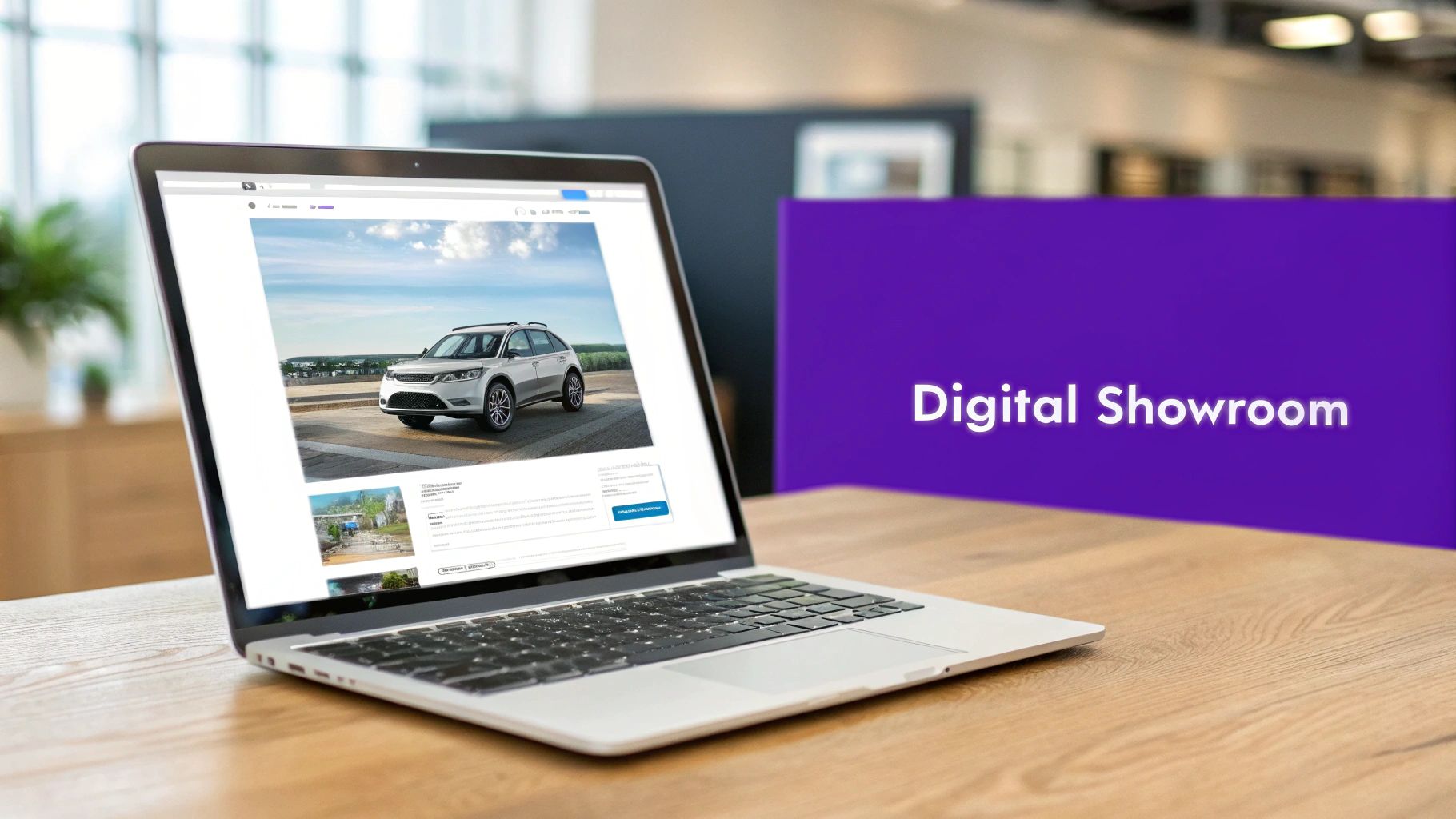
  • Choosing Auto Dealer Website Templates That Drive Sales

    Choosing Auto Dealer Website Templates That Drive Sales

    So, what exactly are auto dealer website templates? Think of them as pre-built websites, specifically designed for dealerships. They provide the complete foundation you need—from showcasing your cars to capturing customer info—turning a simple online page into your most powerful sales tool. It's the key to creating a digital showroom that's open 24/7.

    Your Digital Showroom: Why a Modern Website Template Matters

    Imagine your physical showroom, but it never closes and is accessible to every single car buyer in your area. That’s what a modern website does for your dealership. In a world where almost every car purchase starts with a Google search, your site isn't just a nice-to-have; it's the front door to your entire business.

    A silver laptop on a wooden table displays an auto dealer website featuring a white SUV and 'Digital Showroom' text.

    This is where a template built for auto dealers becomes a non-negotiable. It’s not just about looking good. These are specialized blueprints, engineered from the ground up for the unique demands of the car business. A generic website builder just can't keep up.

    Engineered for Dealership Success

    Let’s use an analogy. A standard website template is like an empty commercial building. Sure, you could try to sell cars out of it, but you'd be missing the service bay, the showroom floor, and the finance offices.

    An auto dealer template, on the other hand, is like a purpose-built dealership facility. It comes equipped with all the essentials you need to start moving metal from day one.

    These fundamentals include:

    • Inventory Management Systems: Built to let you easily upload, update, and display your entire stock of new and used vehicles.
    • Lead Capture Forms: Placed strategically to prompt visitors to book a test drive, ask for a quote, or get pre-approved for financing.
    • Vehicle Detail Pages (VDPs): These are rich, detailed layouts designed for showing off photos, specs, and features for every car, creating an immersive shopping experience right from the couch.

    The whole point is this: the right template turns your website from a passive online brochure into an active, high-performance sales engine. It works around the clock to build trust and bring in leads long before a customer ever sets foot on your lot.

    A professional and responsive website is the cornerstone of modern automotive sales. It builds immediate trust, showcases your inventory effectively, and guides potential buyers from casual browsing to serious inquiries.

    The Competitive Advantage

    In the cutthroat world of car sales, a strong online presence is a massive advantage. Studies show that the vast majority of car shoppers begin their journey online. With thousands of dealerships in the US all fighting for attention, many are still stuck with clunky, outdated sites. They're missing out on a significant number of buyers who prefer to handle more of the purchase process digitally.

    Ultimately, picking the right website template is one of the most important marketing decisions you'll make. It’s the foundation of your digital strategy and directly impacts your ability to attract and convert today's car buyers.

    For independent dealerships who need an all-in-one solution, platforms like AutoFire™ provide a modern SaaS alternative to get a high-performing site up and running fast.

    The Must-Have Features of a High-Converting Template

    Looks are one thing, but a website template that actually sells cars is a whole different beast. The real power lies in the features working behind the scenes—the tools that turn your website from a simple online brochure into a lead-generating machine.

    Think of it like this: the design is the shiny paint job, but these features are the engine, the transmission, and the GPS. They're what actually drive performance.

    A person uses a tablet to browse car inventory with digital filters for make, model, and price.

    Without these core functions, even the most stunning website will just sit there, failing to turn visitors into real, paying customers. A great template is engineered to guide a buyer from their first curious click all the way to a test drive request. Let's dig into the non-negotiables.

    To make it easier to spot a winner, here's a quick checklist of the essential features you should be looking for in any template or platform.

    Essential Features Checklist for Auto Dealer Website Templates

    This table breaks down the must-have features, explaining why they are so critical and what specific functionality to look for when you're evaluating your options.

    Feature Why It's Critical for Your Dealership Key Functionality to Look For
    Dynamic Inventory & Search This is your digital lot. If customers can't easily find what they want, they'll leave in seconds. Advanced filters (make, model, price, body style), fast loading speeds, and an intuitive management system for your team.
    Immersive VDPs The Vehicle Detail Page (VDP) is your online sales pitch. It's where a browser becomes a serious buyer. High-resolution photo/video galleries, 360-degree views, and automated vehicle spec population.
    Automatic VIN Decoding Saves dozens of hours and eliminates data entry errors that can kill a deal. One-click VIN input that auto-populates all factory specs, options, and features accurately.
    Strategic Lead Capture A website without lead forms is a salesperson who never asks for the sale. Multiple, targeted forms like "Schedule Test Drive," "Get ePrice," and "Value Your Trade" placed on every VDP.
    Mobile-First Design A majority of car shoppers use their phones. If your site is clunky on mobile, you're invisible to most of your audience. A fully responsive layout that looks and works perfectly on any screen size, with large, easy-to-tap buttons.

    Having this checklist in hand ensures you're not just picking a pretty design, but a powerful sales tool that will actively grow your dealership's bottom line.

    Dynamic Inventory Management and Search

    The heart and soul of your website is your vehicle inventory. It has to be seamless. A top-tier template gives you a dynamic inventory management system that makes uploading, updating, and featuring vehicles dead simple for you and your staff.

    For the customer, the experience has to be even better. They need advanced search and filtering tools that let them instantly slice and dice your inventory. This turns an overwhelming list of cars into a short, manageable list of perfect matches.

    At a minimum, they need to be able to filter by:

    • Make and Model: The absolute basics.
    • Price Range: So they can shop within their budget.
    • Year and Mileage: To find newer or low-mileage options.
    • Body Style: To zero in on the exact type of vehicle they need (SUV, truck, sedan, etc.).

    An intuitive inventory search is like a great salesperson. It listens to what the customer wants and immediately presents them with the best options, building confidence and accelerating the path to a sale.

    Immersive Vehicle Detail Pages

    Once a shopper finds a car they like, the Vehicle Detail Page (VDP) is where you close the deal. This is your digital pitch for that specific car, and it has to be compelling. A high-converting template will have a VDP layout that's both packed with information and visually stunning.

    The single most important element here is a high-resolution photo and video gallery. People want to see everything—every angle, inside and out. Blurry or limited photos are an instant red flag and will send visitors clicking away to your competitor. Your template must support big, crystal-clear images and embedded videos for virtual walkarounds.

    On top of that, automatic VIN decoding is an absolute game-changer. Instead of typing out every last feature and spec by hand, you just enter the VIN. The system does the rest, auto-populating the VDP with accurate manufacturer data. This saves you countless hours and prevents costly mistakes.

    Strategic Lead Capture Forms

    A beautiful website is useless if it doesn't capture leads. This is where you have to be smart about placing contact forms. A good template doesn't just stick a "Contact Us" form on a forgotten page; it weaves lead capture opportunities right into the shopping experience.

    These forms need to be designed for specific actions a buyer is ready to take, such as:

    • Requesting a Test Drive: This form should be big, bold, and right on the VDP for high-intent leads.
    • Applying for Financing: Place this on VDPs and in a main "Financing" section to move buyers down the funnel.
    • Valuing a Trade-In: Make this easy to find from the main navigation to engage customers with a car to trade.
    • Getting an "ePrice": A clear call-to-action on vehicle listings for price-sensitive buyers ready to talk numbers.

    By making it incredibly easy for customers to take the next step, these forms turn passive browsing into active sales opportunities. You can see a full breakdown of these lead-generating tools by exploring the features of a modern dealer platform.

    How Performance and SEO Get Your Dealership Found Online

    A beautiful website that nobody can find is like a dealership hidden down a backroad with no signs. It doesn't matter how great your inventory is if potential buyers can't get there. This is where the technical guts of your auto dealer website templates become your most powerful marketing tool, directly impacting how you show up on Google.

    A modern workspace with a smartphone, keyboard, monitor, and plants, featuring a 'MOBILE-FIRST SEO' banner.

    Think of a slow-loading website like having only one salesperson on the floor during a massive weekend sale. Customers get impatient and leave before they even see what you have to offer. It’s not just a feeling; Google’s own research shows that when a page’s load time goes from one second to three, the chance of a visitor bouncing increases by a whopping 32%. A high-performance template keeps your digital doors wide open and ready for business.

    Performance in a Mobile-First World

    The modern car buyer lives on their smartphone. They’re researching models during a lunch break, comparing prices while standing on another dealer’s lot, and scheduling test drives from their couch. Their entire journey is mobile, which makes a mobile-first, responsive design non-negotiable for your dealership.

    A responsive template automatically resizes and rearranges its layout to fit any screen, from a big desktop monitor to the phone in their hand. This isn't just about looking pretty; it’s about making the site work. Buttons need to be easy to tap with a thumb, images have to load fast over a cellular connection, and inventory filters must be simple to use on a small touchscreen.

    When you're looking at templates, you'll run into a couple of key terms:

    • Retina-Ready: This just means your website's photos will look incredibly sharp on high-resolution screens, like those on newer smartphones and laptops. Grainy, pixelated images can make even a pristine vehicle look cheap.
    • Cross-Browser Compatibility: This ensures your site works perfectly whether a customer is using Chrome, Safari, Firefox, or something else. It prevents broken pages or missing features that will frustrate a buyer and send them elsewhere.

    A great mobile experience is mission-critical, since that's where most car searches start. The best templates are built for flawless performance on any device, which boosts both user engagement and your Google rankings. To get a feel for what this looks like, you can explore various automotive templates with these features and see them in action.

    SEO: The Blueprint for Getting Found

    Search Engine Optimization (SEO) is simply the work you do to make your website more attractive to search engines like Google. A template with a strong SEO foundation gives you a massive head start—it's like having the perfect blueprint for Google’s crawlers to follow.

    The two biggest ingredients here are clean code and fast load times. Search engines reward websites that are well-structured and deliver information to users quickly. A template built with clean, modern code is easy for Google's bots to read and understand, helping you rank higher. Slow speeds, on the other hand, are a major penalty.

    Schema Markup: Your Secret SEO Weapon

    Beyond sheer speed, one of the most powerful SEO tools an auto dealer template can have is built-in schema markup. Think of schema as a set of secret "tags" you add to your website's code to tell Google exactly what your content is about.

    For a dealership, this is a game-changer. Schema can label specific bits of information on your Vehicle Detail Pages (VDPs), such as:

    • The vehicle's make and model
    • Its price and mileage
    • The VIN and body style
    • Your dealership's name and location

    When Google can clearly understand this information, it can show it directly in the search results as a "rich snippet." Suddenly, your listing stands out from the competition with photos, pricing, and key details, grabbing the shopper's attention and making them far more likely to click through to your site.

    How to Pick and Personalize Your Website Template

    Choosing from the endless ocean of auto dealer website templates can feel a lot like trying to pick one specific car from a lot filled with a thousand vehicles. It's overwhelming. To get it right, you need a clear plan that takes you from just browsing options to launching a website that truly represents your brand.

    This isn't about finding a template that just looks pretty. You're looking for a genuine business tool—a solid foundation you can build on without calling a developer every time you want to tweak something small. Let's walk through how to actually evaluate these templates and find one that fits your dealership like a glove.

    A Practical Evaluation Process

    Before you sign on the dotted line, you have to take the template for a test drive. Seriously. Don't just glance at screenshots or skim a list of features. Getting hands-on is the only way to know what the experience will be like for you and, more importantly, for your customers.

    Here’s a simple, three-step evaluation you can follow:

    1. Run Through Live Demos: Pretend you're a car shopper. Go to a live demo of the template and use it. Play with the search filters, browse the VDPs, click on a few cars, and try to fill out a contact form. Does it feel smooth and easy, or did you hit a few frustrating bumps?
    2. Test It On Your Phone: This is non-negotiable. Pull up the demo on your smartphone and do it all again. How easy is it to tap the buttons? Can you actually see the photos clearly? Is the text readable without pinching and zooming? If it’s a pain to use on mobile, you’re going to lose a massive chunk of your audience.
    3. Assess the Customization Level: How much can you actually change? Dig into the template's settings or admin panel. Can you upload your logo, swap out the colors, and change the text and images yourself, or does it feel locked down?

    The best templates give you the power to make the site your own. They provide the heavy-duty structure but hand you the keys to customize the branding, messaging, and calls-to-action so it feels like your dealership.

    Making the Template Uniquely Yours

    Once you've found a solid template, it's time to make it your own. This is where you turn a generic design into your dealership's digital showroom. It’s all about putting your brand's stamp on everything to build trust and recognition with shoppers.

    Start with the visual basics:

    • Upload Your Logo: Your logo needs to be front and center, usually in the website header. It’s the first thing people should see.
    • Apply Your Brand's Color Palette: A good template lets you easily change the main colors—for things like buttons and links—to match your dealership’s branding.
    • Choose Your Fonts: Pick fonts that are easy to read and match your brand's vibe, whether that's modern and sleek or classic and trustworthy.

    Beyond the look and feel, you need to make sure the template's tools work for you. This means setting up lead forms to send inquiries straight to the right person on your sales team or directly into your CRM. The goal is a seamless handoff from the customer's click to your team's follow-up.

    Putting in the effort here really pays off. A well-structured template can manage a massive inventory and deliver incredible results, including a significant jump in website sessions, top SEO rankings, and a strong return on investment. The right choice and customization can drive real-world success, as many dealer case studies show. You can read more case studies on rctheme.com to see how these features drive real-world success.

    Common Mistakes to Avoid With Dealer Templates

    Getting your hands on an auto dealer website template is a great starting point, but it's not a magic bullet. I've seen dealers make the same few mistakes over and over, turning a potentially powerful tool into a real money pit. Let's walk through the most common pitfalls so you can sidestep them and get your digital showroom humming from day one.

    Choosing and launching a template isn't just a single click. It's a process that requires a bit of strategy to get right.

    A three-step diagram outlining the website template setup process: evaluate requirements, customize design, and launch website.

    Think of it this way: a successful website launch comes from a series of smart decisions, starting with a careful evaluation, moving through branding, and ending with a well-executed public reveal.

    Mistake 1: Focusing Only on Visuals

    One of the biggest traps you can fall into is picking a template based purely on looks. Sure, it has to look good, but a stunning design is completely useless if the site is slow, a nightmare to use on a phone, or invisible to Google. It's like buying a car with a slick paint job but never bothering to pop the hood and check the engine.

    You need to find a healthy balance between form and function. Before you commit to any template, run its demo through Google's PageSpeed Insights to check its speed. Even more importantly, pull it up on your own phone. If the experience isn't smooth and intuitive, walk away.

    Mistake 2: The "Set It and Forget It" Mentality

    Another huge misstep is launching your site with the template's default settings and then never touching it again. This "set it and forget it" mindset leaves you with a cookie-cutter website that looks exactly like a hundred other dealerships using the same theme. It does absolutely nothing to tell customers who you are or why they should buy from you.

    Your website template is the foundation, not the finished house.

    A template gives you the framework, but your brand, your story, and your unique offers are what connect with customers. A generic website makes your business feel just as generic.

    To avoid this, you have to put in the work to make it your own. That means:

    • Uploading your logo and making sure it's crisp and clear.
    • Customizing the color scheme to match your brand's colors on buttons, links, and headers.
    • Writing a genuine "About Us" page that tells the story of your dealership.
    • Featuring real testimonials from happy customers to build social proof.

    This is how you turn a generic template into your digital storefront.

    Mistake 3: Neglecting High-Quality Content

    Finally, remember that even the most brilliantly designed template can't save you from bad content. This is especially true when it comes to your vehicle listings—the heart and soul of your website. Blurry photos and lazy, one-line vehicle descriptions will kill a customer's trust in a heartbeat.

    Online shoppers are leaning on your website to get a real sense of a car before they ever step foot on your lot. If your pictures are terrible, they'll assume the car is, too.

    Make great content a non-negotiable. Invest the time to take at least 15-20 clear, well-lit photos of every single vehicle. Get all the angles, inside and out. Then, write descriptions that do more than just list features—sell the car. Paint a picture for the buyer and tell them why that specific vehicle is a fantastic choice. That extra effort shows you care and gives customers the confidence they need to reach out.

    Taking the Next Step: Why Automotive SaaS Platforms Outpace Templates

    A top-notch auto dealer website template is a fantastic starting point—it's the blueprint for your digital showroom. But what if you could have the entire showroom built, staffed, and managed for you? That's the leap from a template to a dedicated automotive SaaS platform. We're no longer just talking about a website; we're talking about an integrated sales and marketing engine.

    Here’s a good way to think about it. A website template is like getting a world-class engine. It's powerful, for sure, but you still have to build the car around it, wire up all the electronics, and find a crew to keep it running. An automotive SaaS (Software-as-a-Service) platform, on the other hand, is the whole race-ready car, complete with a professional pit crew.

    The Power of an All-in-One System

    The single biggest difference is integration. When you start with a template, you’re the one responsible for bolting on other tools. You have to find and connect a CRM, an inventory manager, marketing plugins, and analytics software. This patchwork approach often creates compatibility nightmares, opens up security holes, and eats up your time with technical busywork.

    A SaaS platform, however, is built from the ground up with all these critical functions already woven together into one seamless system.

    A dedicated automotive SaaS platform lets you stop managing technology and start selling more cars. It takes care of the technical heavy lifting—security, updates, performance—so your team can focus on what really moves the needle.

    Key Benefits of the SaaS Approach

    Dealers who make the switch to a SaaS model find they have a serious competitive advantage. Why? Because their operations and technology are streamlined, and the benefits hit the bottom line directly.
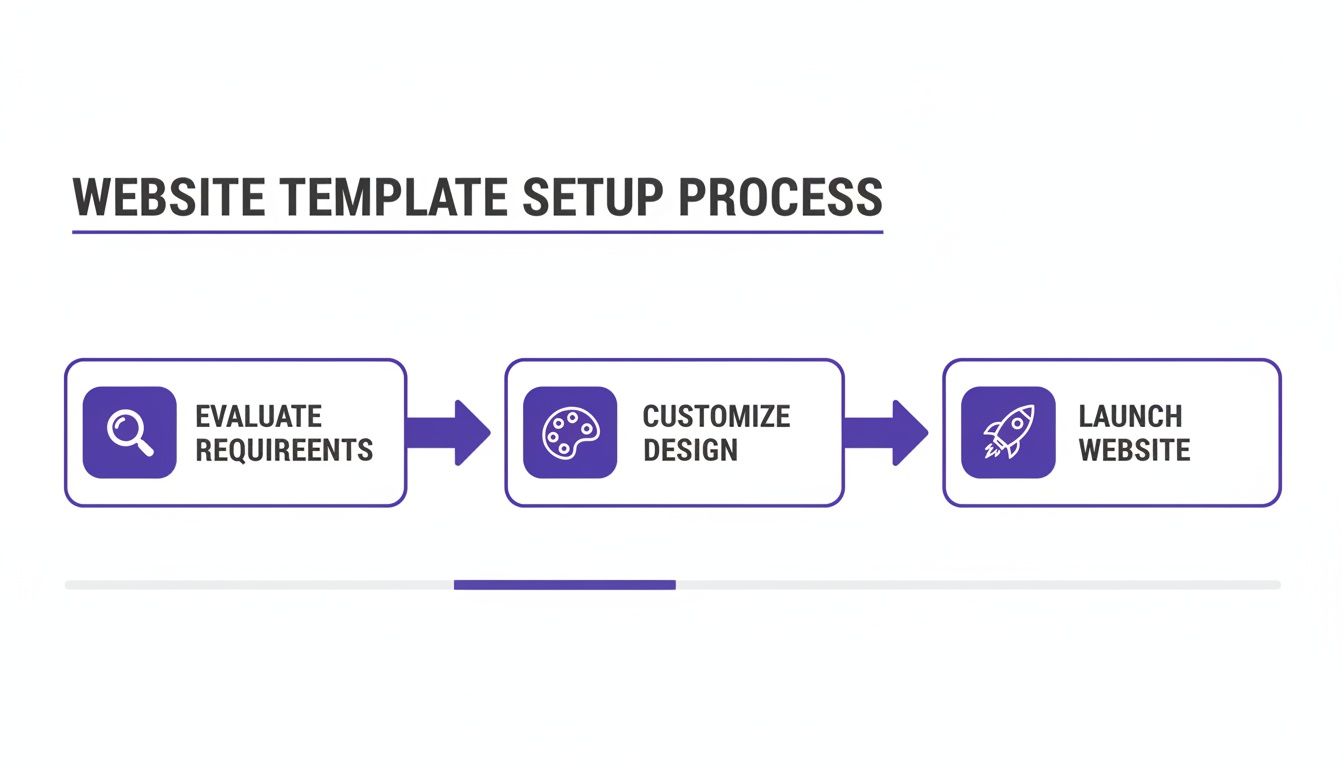
    • Simplified Operations: Imagine managing everything in one place. No more juggling multiple software subscriptions and logins. From updating a vehicle's price to tracking a new lead, it all happens within a single dashboard.
    • Worry-Free Updates and Security: The SaaS provider manages all the technical headaches behind the scenes. Security patches, software updates, and new features are rolled out automatically. Your site is always up-to-date and secure, and you didn't have to do a thing.
    • Truly Advanced Tools: The best platforms offer features that are incredibly difficult to piece together yourself. Think about automated email campaigns that trigger when a car's price drops, or deep analytics that show you a customer's entire journey, from their first Google search to the moment they book a test drive.
    • Guaranteed Performance: The software and hosting are built to work in perfect harmony. This means SaaS platforms deliver the kind of speed and reliability that's essential for keeping visitors happy and ranking high on Google.

    For any dealership serious about long-term growth and leading the market, a SaaS solution is the logical next step. While a template can get you in the game, an integrated platform like AutoFire provides the end-to-end system you need to scale your business and outmaneuver the competition. It's not about looking down on templates, but about knowing when your dealership is ready to graduate to something more powerful.

    Frequently Asked Questions

    When you start digging into website templates for your dealership, a few common questions always pop up. Let's tackle them head-on so you can move forward with confidence.

    How Much Should a Good Template Cost?

    You'll find that template pricing generally falls into two buckets. First, there are the one-time purchase themes, which you can often find for anywhere between $50 and $100. These are a decent starting point, but the catch is you're usually on your own for security patches and updates down the road.

    The other, more common model today is a monthly subscription. These can run from $30 to over $200 per month, and the price really depends on what's included. The higher-end plans typically wrap in powerful features like automatic VIN decoding, dedicated support, and continuous security updates, which means less for you to worry about.

    Can a Template Integrate with My Inventory System?

    This is a big one. The short answer is yes, but you absolutely have to verify this before you commit. The best templates are specifically designed to sync up with dealership inventory systems. You'll want to look for compatibility with standard data feed formats like XML or CSV.

    This integration is what makes your website a living, breathing part of your business. When a car is sold or a new one comes in, your site updates automatically. No more manual data entry. This kind of automation is a game-changer for keeping your listings accurate and your team sane.

    A template that doesn’t sync with your inventory is like a showroom that never gets updated. It creates confusion for customers and headaches for your team, making seamless integration a non-negotiable feature.

    How Long Does It Take to Launch a Website?

    Using a template is hands-down the fastest way to get your dealership online. A fully custom website can take months of development, but a template gives you a massive head start.

    Realistically, you could be looking at a launch timeline anywhere from a few days to a couple of weeks. The template provides the foundation, but the final timing depends on you—things like getting your branding just right, writing the content for your pages, and uploading your entire vehicle inventory. The more you have your photos and data ready to go, the faster you'll cross the finish line.


    Ready to launch a professional, high-performance website without the technical headaches? AutoFire provides an all-in-one platform designed to get your dealership online and capturing leads in minutes. Explore our features and see how easy it can be.