Tag: used car inventory

  • Automobile Inventory Management for Modern Dealerships

    Automobile Inventory Management for Modern Dealerships

    Think of automobile inventory management as the art and science of having the right cars on your lot, at the right price, at the right time. For an independent dealer, it’s not just about counting cars—it's about strategically handling your biggest investment to keep cash flowing and profits rolling in. This is the operational engine that powers your entire dealership.

    Why Smart Inventory Management Is Your Dealership's Superpower

    Picture your car lot as a high-end grocery store. The freshest, most sought-after produce—your popular, in-demand vehicles—flies off the shelves at full price. But the older items that linger start to spoil, eventually needing massive discounts just to get them out the door. This is a perfect analogy for automobile inventory management.

    Every single day a car sits on your lot unsold, it's losing value and tying up cash that you could be using to buy fresh, profitable stock.

    Good inventory management isn't something you do once and forget about. It's a constant, active strategy. You're always analyzing market data, hunting for the right vehicles, pricing them to sell, and marketing them effectively to turn them over quickly. When you get this rhythm right, your inventory stops being a static liability and becomes a dynamic, profit-generating machine.

    The True Cost of Inefficient Inventory

    Letting your inventory get stale has real financial consequences that echo through your entire business. A car that doesn't sell isn't just taking up a parking spot; it’s actively costing you money in depreciation, insurance, and financing—what we call holding costs. These costs eat directly into your profit margins.

    On the flip side, a well-oiled inventory system creates a powerful positive cycle:

    • Better Cash Flow: Cars that sell fast free up your capital. That means you can immediately reinvest in the vehicles your local market is screaming for right now.
    • Higher Profit Margins: Selling cars before they get old means you can ask for better prices and avoid those painful, profit-slashing discounts.
    • A Stronger Reputation: When you're known for stocking desirable, well-priced cars, you become the go-to dealer in town. More buyers start coming to you first.

    Navigating Today's Volatile Market

    The recent chaos in the market has made agile inventory strategies more critical than ever. Supply chain hiccups mean you can't rely on the old ways of doing things. Market data shows just how fast things can change, with fluctuations in both new and used vehicle supply being common. This kind of environment rewards dealers who are quick on their feet and guided by data.

    The core principle is simple: your profit is made when you acquire the vehicle, not just when you sell it. A smart acquisition strategy, informed by data, sets the stage for a profitable sale before the car even hits your lot.

    To truly master this, you need a system built on proven and adaptable strategies, like these essential inventory management tactics for growth. It's all about consistently putting the right cars in front of the right buyers, which is what separates the dealerships that thrive from those that merely survive.

    Key Metrics for Automobile Inventory Management Health

    To get a real handle on your inventory's performance, you need to track the right numbers. These Key Performance Indicators (KPIs) give you a clear, data-backed picture of what's working and what's not. Think of them as the vital signs for your dealership's biggest asset.

    Metric What It Measures Why It's Critical
    Days' Supply How long it would take to sell your entire current inventory at the current sales rate. A high number means slow-moving stock and rising holding costs. A low number might mean missed sales opportunities.
    Inventory Turn Rate How many times your entire inventory is sold and replaced over a specific period (usually a year). This is a core measure of efficiency. A higher turn rate means capital is working harder for you and profits are generated faster.
    Stock-to-Sales Ratio The ratio of vehicles in stock versus the number of vehicles sold in a given period. Helps you align your stock levels with actual sales demand, preventing both overstocking and understocking.
    Average Holding Cost The total cost to keep a vehicle in inventory per day (includes financing, insurance, depreciation, etc.). Knowing this number highlights the real, tangible cost of a slow-selling car and adds urgency to your sales process.
    Aged Inventory % The percentage of your inventory that has been on the lot for more than a set period (e.g., 60 or 90 days). This is a direct red flag for potential losses. A high percentage signals problems with acquisition, pricing, or marketing.

    Tracking these metrics isn't just about crunching numbers; it's about gaining the insight needed to make smarter, more profitable decisions every single day.

    The Five Stages of a Winning Inventory Lifecycle

    Every car on your lot takes a journey, from the moment you bring it in to the second it drives off with a new owner. This is its inventory lifecycle, and how well you manage that journey is what separates the top-performing dealerships from everyone else. When you start thinking about this process in distinct stages, you can easily spot weak points and turn them into major strengths.

    Get one stage right, and that success builds momentum for the next. Suddenly, you've got a profit-generating engine, not just a process. It’s not about being perfect at one thing; it’s about being consistently good across the entire lifecycle, making sure every car moves smoothly and profitably from acquisition all the way to the final sale.

    This flow chart boils the whole thing down to its essence: stock the right cars, analyze what’s happening, and turn it into profit.
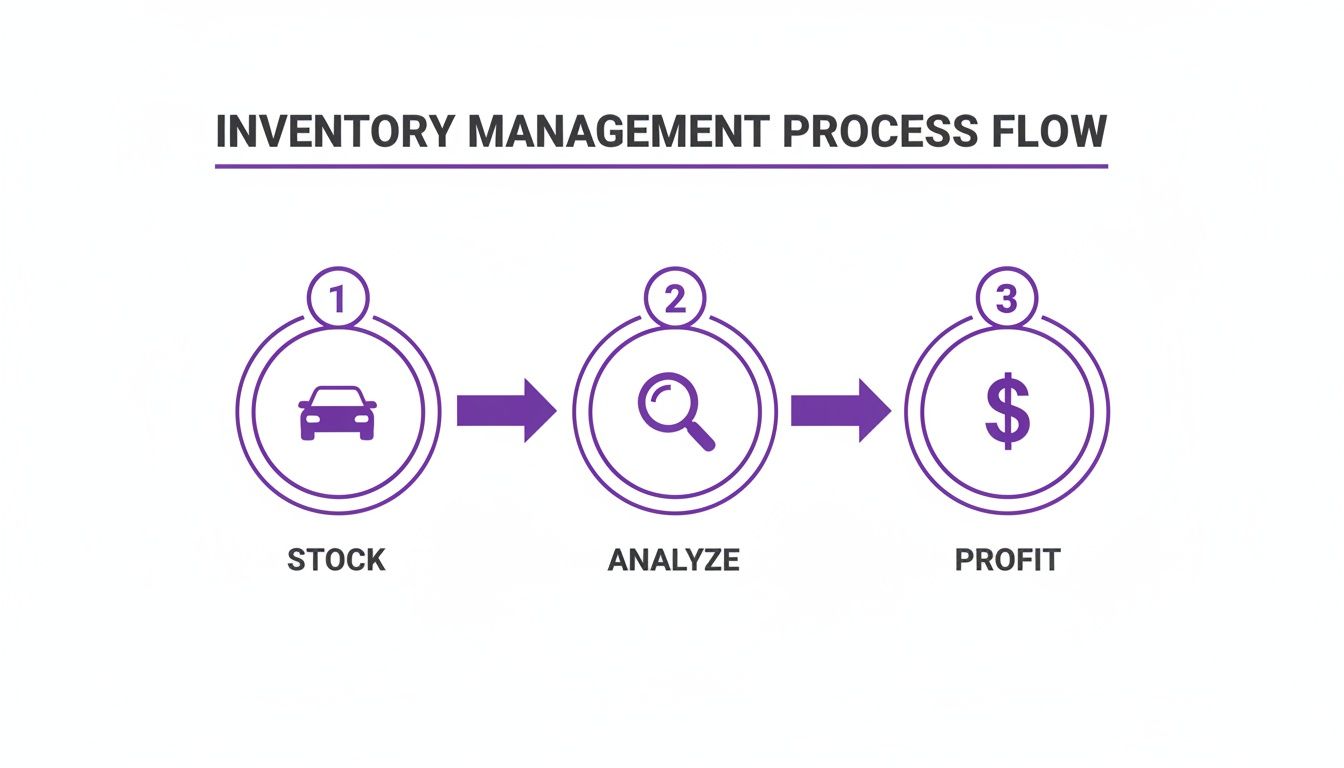
    Inventory management process flow diagram illustrating stock, analyze, and profit steps.

    As you can see, it's a continuous loop. Smart stocking decisions feed into data analysis, which in turn helps you maximize your profitability on every single unit.

    Stage 1: Smart Acquisition

    Here’s a hard truth: you make your money when you buy the car, not just when you sell it. Smart acquisition is the bedrock of the entire lifecycle. This stage is all about finding vehicles that have a high probability of selling fast and for a healthy margin right here in your local market. It means you have to stop relying on gut feelings and start using real data to guide your buying.

    This also means looking beyond the traditional auction block. Think about other sourcing channels like private-party buys, trade-ins, and even partnerships with local service centers. The goal is simple: get your hands on in-demand inventory at a cost that leaves you plenty of room for reconditioning and profit.

    Stage 2: Efficient Reconditioning

    The moment you acquire a car, the clock starts ticking. Loudly. Every single day a vehicle sits in reconditioning is a day it can’t be sold, adding to your holding costs. The reconditioning (or "recon") process has to be a well-oiled machine—fast and efficient, but without ever compromising on quality.

    The best dealers have a streamlined workflow down pat: inspection, mechanical work, detailing, and photography all happen in a quick, coordinated sequence. If there’s a bottleneck anywhere in that chain, it costs you money and kills your inventory turn.

    A well-run reconditioning process is a massive competitive advantage. It gets cars frontline-ready faster, slashes holding costs, and accelerates your path to a profitable sale.

    This kind of efficiency is what keeps the momentum going, ensuring your fresh inventory hits your lot and your website without missing a beat.

    Stage 3: Strategic Pricing

    Pricing is where art meets science. Nailing the price from day one is absolutely critical for attracting serious buyers while still protecting your gross profit. This takes a deep understanding of what the market is doing right now, not what a similar car sold for a month ago.

    Effective automobile inventory management relies on dynamic pricing tools to look at the real-time data:

    • Market Supply: How many similar cars are for sale in your area?
    • Days' Supply: How quickly are those cars actually selling?
    • Consumer Demand: What are local buyers searching for and clicking on online?

    With this data, you can position your car competitively. That doesn’t always mean being the cheapest; it means being the best value for the money.

    Stage 4: Compelling Merchandising

    Let's be honest, your online listing is your real showroom now. Compelling merchandising is how you make a car pop off the screen and stand out from the dozens of others a buyer is scrolling through. This is so much more than just posting a few quick photos.

    You need to create a complete digital package that tells the vehicle’s story. We’re talking high-quality photos from every possible angle, detailed video walkarounds, and sharp, well-written descriptions that sell the car's best features. This is your first—and maybe only—chance to build trust and get a potential buyer excited before they even think about visiting your dealership.

    Stage 5: A Smooth Sale

    This is the final leg of the journey: turning an interested browser into a happy car owner. A smooth, transparent sales process makes sure all your hard work in the other stages pays off. This means having every piece of information—vehicle history reports, service records, and feature lists—ready to go.

    It also means your sales team needs to be armed with the knowledge to answer any question confidently. When a customer is ready to pull the trigger, the process should feel easy and transparent. A great sales experience doesn't just close one deal; it builds your reputation and brings in the repeat business and referrals that keep you growing.

    Building Your Data-Driven Acquisition Strategy

    Ask any successful independent dealer, and they'll tell you the same thing: you make your money when you buy the car, not just when you sell it. Getting away from relying on gut feelings and intuition is the single biggest step you can take to build a dealership that lasts. A data-driven acquisition strategy changes your buying process from a reactive scramble to a proactive, powerful edge over your competition.

    Instead of just guessing what might sell, you'll know—with real confidence—which cars people in your local market are actually looking for. It’s all about systematically stocking vehicles that are set up to sell quickly and for a good margin. Your lot becomes a curated collection of high-demand assets, and that's the core of modern automobile inventory management.

    Analyzing Your Market to Find the Winners

    First things first: you need to become an expert on your local automotive scene. This means digging into the data to see which makes, models, and price points are moving fastest right in your backyard. Your goal is to spot the "hot sellers" and avoid the "lot poison"—those cars that just sit for months, eating away at your profits with every passing day.

    Your analysis should give you clear answers to a few key questions:

    • What's selling right now? Look at sales velocity data for your area to see what's turning over quickly.
    • What's hard to find? Pinpoint vehicles with a low market days' supply but high search volume from customers. These are your golden tickets.
    • What are the pricing trends? Get a handle on current retail and wholesale values so you can be sure you're buying at a number that leaves you room to make a profit.

    When you focus on these data points, you're swapping guesswork for evidence. Every car you bring onto your lot has a high probability of success from day one.

    Crafting Your Ideal Inventory Mix

    Once you have a good feel for your market, it’s time to define your ideal inventory mix. Think of this as the perfect recipe for your dealership's success. It’s a blend of different types of vehicles designed to hit your business goals and match what local buyers want. And this isn't a "set it and forget it" plan; it needs to be flexible enough to adapt to seasonal changes and market shifts.

    For example, your data might show that SUVs and trucks are big sellers from August through November as families get ready for winter. A smart, data-driven strategy would tell you to start acquiring those vehicles in the early summer to meet that predictable wave of demand. This kind of foresight lets you buy smarter when prices might be lower, bumping up your potential return. A solid mix also depends on a Vehicle Identification Number (VIN) analysis, which is a non-negotiable step for checking a car's history and specs. You can learn more about using a VIN decoder to make your acquisition process even stronger.

    Your inventory mix is your dealership's strategic identity. It tells customers what you specialize in and ensures that the cars on your lot are the ones they are actively looking to buy.

    This proactive approach makes sure your capital is always tied up in assets with the best chance for a quick and profitable turn.

    Using Data for Smarter Purchasing Decisions

    Having a data-backed strategy is especially crucial when the market is all over the place, and brand performance can swing wildly. Take recent industry data, for example. In late 2023, Toyota and Lexus were flying off the lots with lean 33- and 34-day supplies, respectively—a sign of incredibly efficient turnover. At the same time, some brands like Dodge and Chrysler were struggling with supplies over 120 days. That massive gap shows just how differently vehicles perform and drives home why you need predictive tools to avoid getting stuck with slow-moving inventory. You can find more insights on how market fluctuations impact new vehicle inventory on coxautoinc.com.

    Don't forget that your own historical sales data is one of your most valuable tools in this process. By looking back at what you've sold, you can spot patterns unique to your dealership and your customers. When you combine that internal knowledge with broader market intelligence, you create a powerful framework for every single buying decision, ensuring your lot is always stocked for maximum profit and sales speed.

    Turning Your Digital Showroom into a Sales Magnet

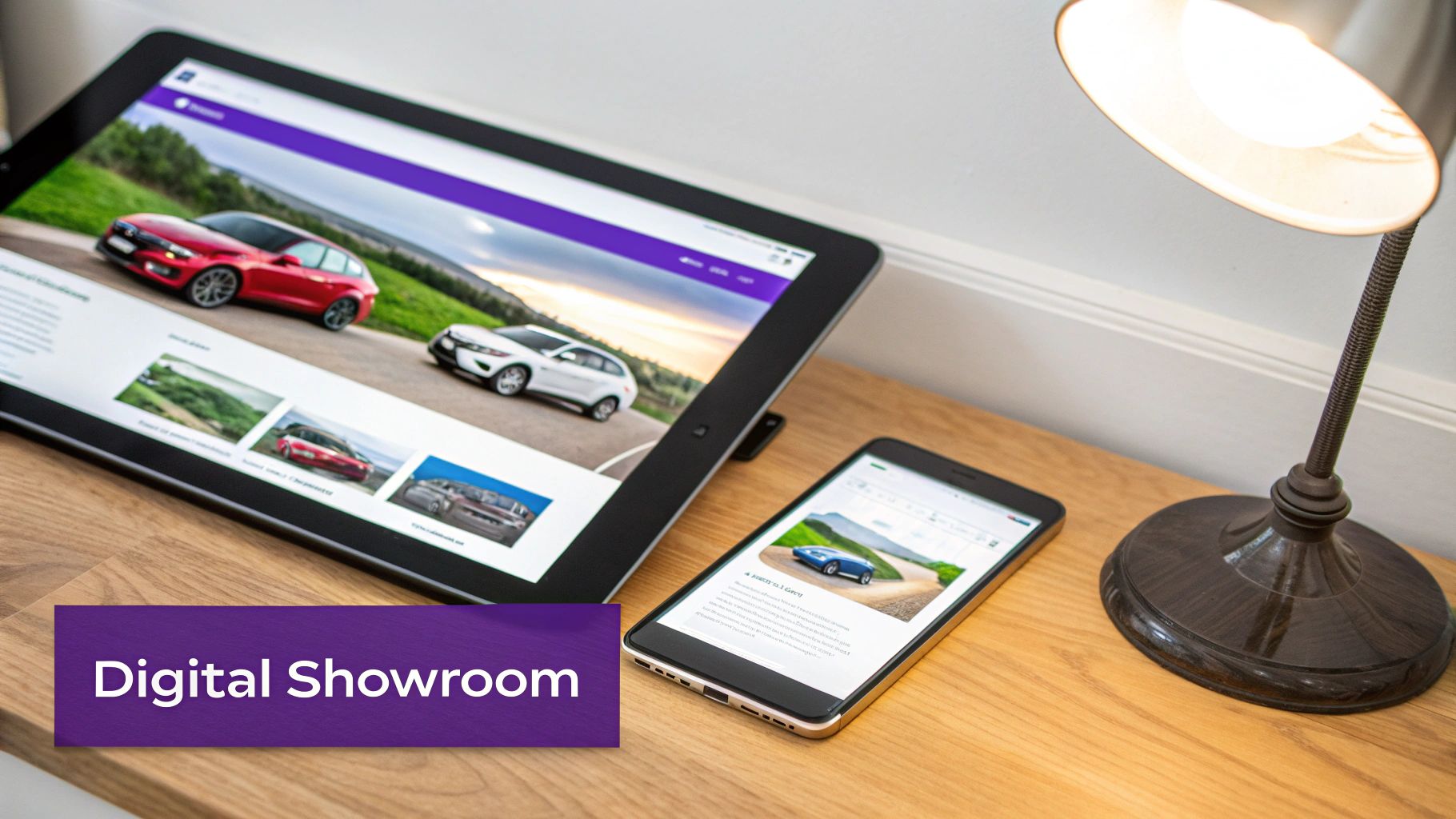
    In today's market, your most valuable real estate isn't the front row of your physical lot—it's your website and online listings. This digital showroom is where the overwhelming majority of your customers will first lay eyes on your inventory. Getting that online experience right isn't just a nice-to-have anymore; it's a non-negotiable part of solid automobile inventory management.

    To really make it work, you need to nail two things: dynamic pricing that moves with the market and top-notch merchandising that makes every single vehicle look like a must-have.

    A person holds a smartphone displaying a digital car showroom app, with a blue car in the background.

    Price with Precision, Not Just Aggression

    Getting the price right from day one is everything. If you price a car too high, it’s going to sit there, racking up holding costs and becoming another piece of aged inventory. But price it too low, and you're just throwing away gross profit. The real goal isn't to be the cheapest guy in town; it's to offer the best value for what the market will bear right now.

    This is where dynamic pricing comes in. It’s all about using live market data to find that perfect sweet spot where you can maximize both how fast the car sells and how much you make on it. This data-driven approach goes way beyond simply looking up book values.

    To do it right, you need to be watching a few key things:

    • Local Market Supply: How many similar cars are for sale within your local area?
    • Sales Velocity: Are those competing cars actually selling, and how fast?
    • Consumer Demand: What are real shoppers in your area actually searching for and clicking on?

    When you analyze this info, you can place each car in the market strategically to attract real, serious buyers without sacrificing your bottom line. It’s about being smart, not just being cheap.

    The Art of Digital Merchandising

    Once you've got the price dialed in, you need to present the vehicle in a way that stops scrollers in their tracks and builds genuine interest. This is the art of digital merchandising—transforming a basic online listing into a powerful sales tool. High-quality merchandising also gives you a massive boost in search engine optimization (SEO), helping your vehicles show up higher on Google and other sites where your customers are looking.

    A great online listing does more than just show a car; it tells its story. It builds trust and an emotional connection, making a potential buyer feel like they already know the vehicle before they even step onto your lot.

    A well-merchandised car simply moves faster. Period. Think of it as a direct investment in lowering your days' supply and cranking up your inventory turn rate. How a car looks online is just as important as the car itself, and a stunning digital presence is a huge piece of your overall car dealership website design strategy.

    Crafting Listings That Convert

    Creating listings that actually sell cars doesn't require a big marketing budget or a professional crew. Armed with a modern smartphone and a little bit of effort, you can produce merchandising that stands shoulder-to-shoulder with the big franchise stores.

    To help you get every listing right, we've put together a quick checklist.

    The Ultimate Digital Merchandising Checklist

    Use this checklist for every vehicle to ensure your online listings are professional, engaging, and optimized to attract qualified buyers.

    Checklist Item Impact on Buyers Pro Tip
    30+ High-Res Photos Builds trust and shows you have nothing to hide. Allows for a complete virtual inspection. Shoot on an overcast day or during the "golden hour" (early morning/late evening) to avoid harsh shadows and glare.
    Compelling Vehicle Description Moves beyond specs to create an emotional connection and highlights the car's unique story. Instead of "good on gas," try "the perfect, fuel-sipping daily driver for your commute."
    Walkaround Video Increases engagement and offers a dynamic, real-life view that photos can't capture. A simple 2-minute video on your phone is enough. Start the engine so they can hear it run!
    Highlight Key Features & Benefits Answers common questions upfront and showcases the value beyond the price tag. Focus on benefits, not just features. "Heated seats for cold winter mornings," not just "Heated seats."
    Transparency on Imperfections Establishes credibility and reduces surprises (and renegotiations) when they see the car in person. A clear photo of a small scratch shows honesty and manages expectations.
    Clear Call-to-Action (CTA) Guides the shopper on what to do next, turning passive browsing into an active lead. Use direct, simple language: "Schedule Your Test Drive Today" or "Click Here for Financing."

    Following these steps for every car ensures a consistent, professional look across your entire digital showroom, which is key to building your brand and moving inventory. By combining sharp pricing with beautiful, informative merchandising, you transform your online presence from a simple list of cars into a true sales magnet that brings in qualified buyers and helps you turn your inventory faster than ever.

    Automating Your Inventory for Maximum Reach

    Trying to manually keep your inventory updated across a half-dozen different websites is a surefire way to burn yourself out and lose sales. It's a constant, frustrating game of whack-a-mole. To truly connect your physical lot to the digital world, you need a modern game plan, and that plan revolves around automation. This is where inventory syndication comes in—the magic of automatically sending your vehicle listings out to all the online marketplaces where buyers are looking.

    The whole system starts with your own website. It has to be your single source of truth. Think of it as the master file for your entire dealership. Every single car you bring in, recondition, and price gets entered here first. Once it's in your system, that data can be pushed out everywhere else.

    This simple shift solves one of the most frustrating problems in this business: a customer calls about a car you sold yesterday. When your website and third-party listings are out of sync, you waste their time and yours. It’s a terrible first impression that can sour a potential relationship before it even starts.
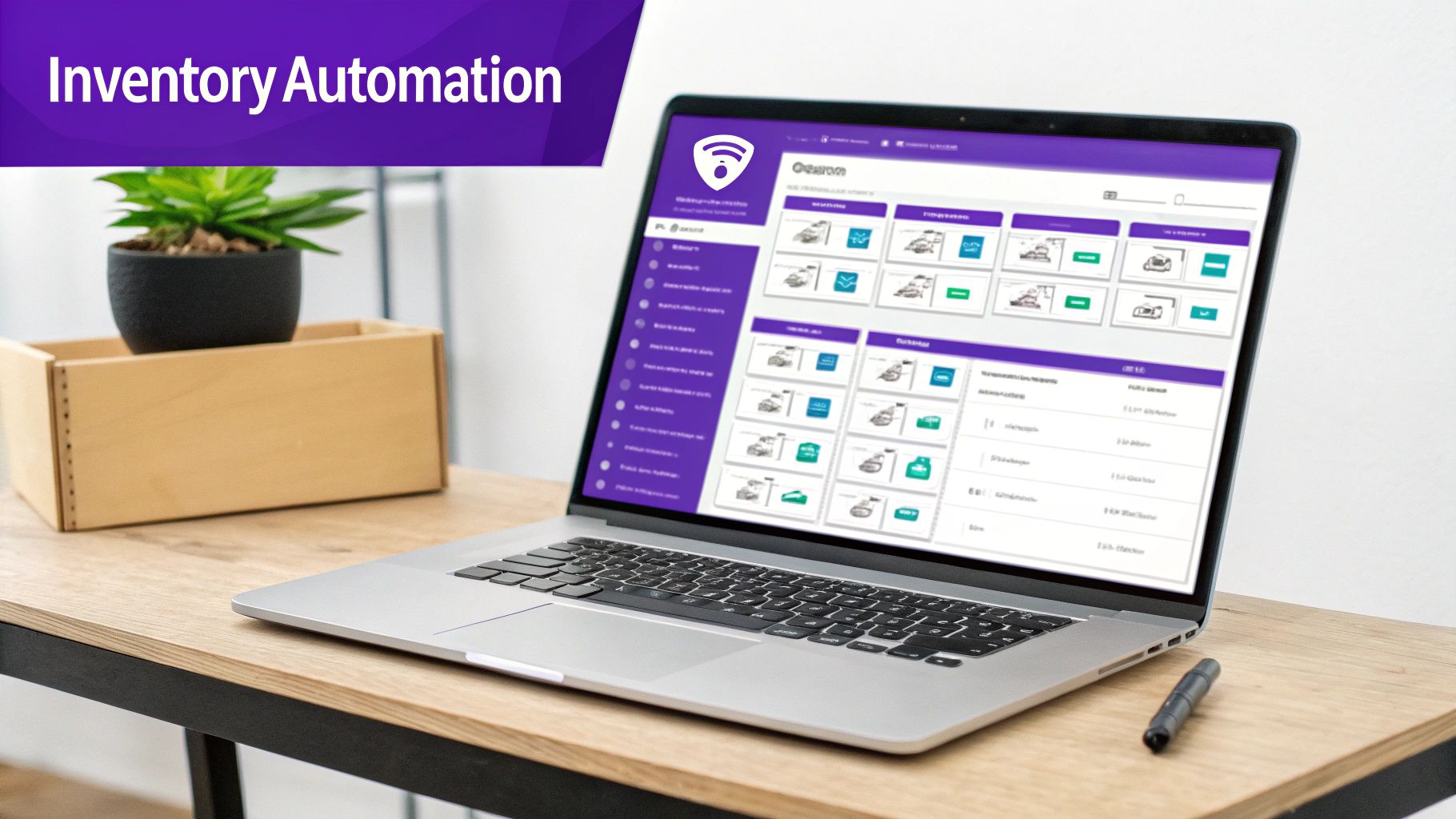
    Modern laptop showcasing inventory automation software for efficient management on a wooden desk.

    This kind of setup, where one central hub pushes your inventory out, is the heart of a smart automation strategy. It's about working smarter, not harder, and saving yourself countless hours of tedious data entry.

    The Power of a Central Hub

    Modern dealership software is built to crush this exact kind of manual work and the costly errors that come with it. A good platform acts like a digital ops manager, handling the entire syndication process automatically and making sure your listings are consistent no matter where a customer finds them.

    Here’s what happens when you add a new car to your website with a system like this in place:

    • An SEO-Optimized Vehicle Detail Page (VDP) is Instantly Created: The system builds a webpage for that specific car designed to show up when local buyers search on Google.
    • Listings are Sent to Marketplaces: Without you lifting a finger, that new car appears on major sites like Cars.com or CarGurus.
    • Updates Happen in Real-Time: The moment you mark a car as sold, it's removed from every single platform at once. No more dead-end phone calls.

    Saving Time and Casting a Wider Net

    The most obvious win here is the sheer amount of time you get back. Forget spending hours every week uploading photos, writing descriptions, and taking down sold listings on five different sites. You do it once, and you're done. That frees you up to do what actually makes money: sourcing cars, talking to customers, and closing deals.

    By automating your listing distribution, you ensure your vehicles are consistently and accurately presented to the largest possible audience of buyers, exactly when they are searching. This transforms your website from a simple digital brochure into a powerful sales engine.

    Platforms like AutoFire™ were built specifically for this. They do the heavy lifting of creating clean, fast, and search-friendly VDPs while pushing your inventory out to the places buyers are already shopping. You can explore various automotive inventory management software options to see what fits your dealership, but the goal is the same: use technology to get your cars in front of the right people at the right time.

    This kind of efficiency isn't just a nice-to-have anymore. It’s a fundamental part of running a successful dealership today.

    Putting Your Modern Inventory System into Action

    So, where do you start? The thought of overhauling your entire process can feel overwhelming, but making the switch to a modern automobile inventory management system doesn't have to be a painful, all-or-nothing project. The smartest way to do it is step-by-step, especially for a busy owner who can't afford to shut everything down.

    The journey begins with an honest look at what you’ve got on the lot right now.

    Forget spreadsheets for a moment and just walk your inventory. How long have some of these cars been sitting here? Now, pull your sales data and see what’s actually moving versus what’s collecting dust. This simple audit gives you a real-world baseline—the starting point for making changes that actually matter.

    Once you know where you stand, you can decide what to measure. Don't get lost trying to track a dozen different things. Just pick two or three metrics that will have the biggest impact on your bottom line. For most independent dealers, those are Days' Supply and Inventory Turnover Rate. If you focus on improving just these two numbers, you’ll naturally make better decisions on everything from buying to pricing.

    Choosing Your Tools and Taking the First Step

    With a clear picture of your inventory's health and your key metrics in hand, you can start looking at tools. The trick is to find something that fits your dealership's size and budget without being overly complicated. Think of your website as the launchpad for this whole strategy.

    A modern website platform designed specifically for dealers can act as your central command center. When you use a service like AutoFire, you're not just getting a website—you're getting an inventory system with powerful, built-in features that handle the heavy lifting of getting your cars online and generating leads from day one.

    The goal is to start small and build momentum. Focus on one or two key improvements—like automating your online listings—to see immediate returns. This creates a positive feedback loop that makes it easier to tackle the next challenge.

    By using a platform that’s easy to set up, you solve several problems at once. Your inventory is automatically discoverable on Google, lead capture is handled for you, and you can get back to focusing on strategy instead of fighting with technology. This approach lets even the smallest teams put a sophisticated system in place without the usual headaches, getting you on the path to smarter inventory management right away.

    Common Questions About Car Inventory Management

    Getting a handle on inventory management always brings up a few questions. Let's tackle some of the most common ones I hear from independent dealers, with straightforward answers to help you sharpen your strategy and fatten your wallet.

    What’s a Good Inventory Turnover Rate for Used Cars?

    Everyone wants a magic number, and you'll often hear that 6 to 8 turns per year is the industry benchmark. But the truth is, the "right" number for your dealership isn't that simple. A great turnover rate for you depends on your business model, your local market, and the kind of cars you sell.

    Before you start chasing an industry average, figure out your own rate. Calculate where you stand right now to get a baseline. From there, you can set a realistic goal that actually makes sense for your cash flow and profit targets. Small, steady improvements are always better than trying to hit some arbitrary number you read online.

    How Can Small Dealerships Compete with the Franchise Giants?

    As a smaller, independent dealer, you have a secret weapon: agility. You're never going to outspend the big franchise stores, but you can definitely out-think and out-hustle them.

    Your edge comes from using your local knowledge and flexibility to find cars where the big guys aren't even looking. That’s the heart of smart inventory management for an independent lot.

    Here are a few ways to build an advantage in acquiring great cars:

    • Go after private-party buys: Make it a priority to buy cars directly from local sellers.
    • Build a referral network: Team up with local mechanics and body shops. They see great cars and potential sellers every day and can send them your way.
    • Own a niche: Become the go-to expert for a specific kind of vehicle. Think classic trucks, unique European models, or super fuel-efficient commuters. The big stores often ignore these specialized markets.

    What Is the Most Important First Step to Take?

    If you do just one thing, start with data clarity. You don’t need fancy software to get going—just a little discipline. Begin by consistently tracking three critical dates for every single car on your lot.

    1. Acquisition Date: The day the title is in your name.
    2. Recon Completion Date: The day it’s officially frontline-ready and ready for a test drive.
    3. Sale Date: The day the deal is done and the car leaves.

    Just tracking these three dates unlocks your Days' Supply, which is the single most important metric for understanding how long your cash is tied up in a vehicle. This simple habit shines a light on your biggest opportunities for improvement and is the foundation for everything else. With the market always shifting—late 2023 reports showed used-vehicle inventory hitting a high of 2.31 million units—keeping a close watch on this data is non-negotiable. You can learn more about how market trends impact used vehicle inventory from CBT News.


    Ready to turn these strategies into sales with a website that actually works? AutoFire builds clean, fast, SEO-friendly websites designed to get your inventory in front of buyers and turn them into real leads. Get started for free today and see how simple it is to build a powerful digital showroom.
  • How to Start a Used Car Dealership From Scratch

    How to Start a Used Car Dealership From Scratch

    Starting a used car dealership is about more than just a passion for cars; it’s about building a real business from the ground up. The foundation you lay in the beginning—covering everything from legal licensing and securing financing to building that first batch of inventory—will make or break your success.

    Your Roadmap to a Profitable Dealership

    Jumping into the used car market is a big move, but it's a move into a massive, thriving industry. The global used car market was valued at USD 1.66 trillion in 2022 and is projected to grow significantly. Forecasts show it could reach USD 2.67 trillion by 2030.

    Right now, North America is a major player in that market, signaling a massive opportunity for anyone ready to get started. If you're a numbers person, you can review the full research on the global used car market to see the trends for yourself.

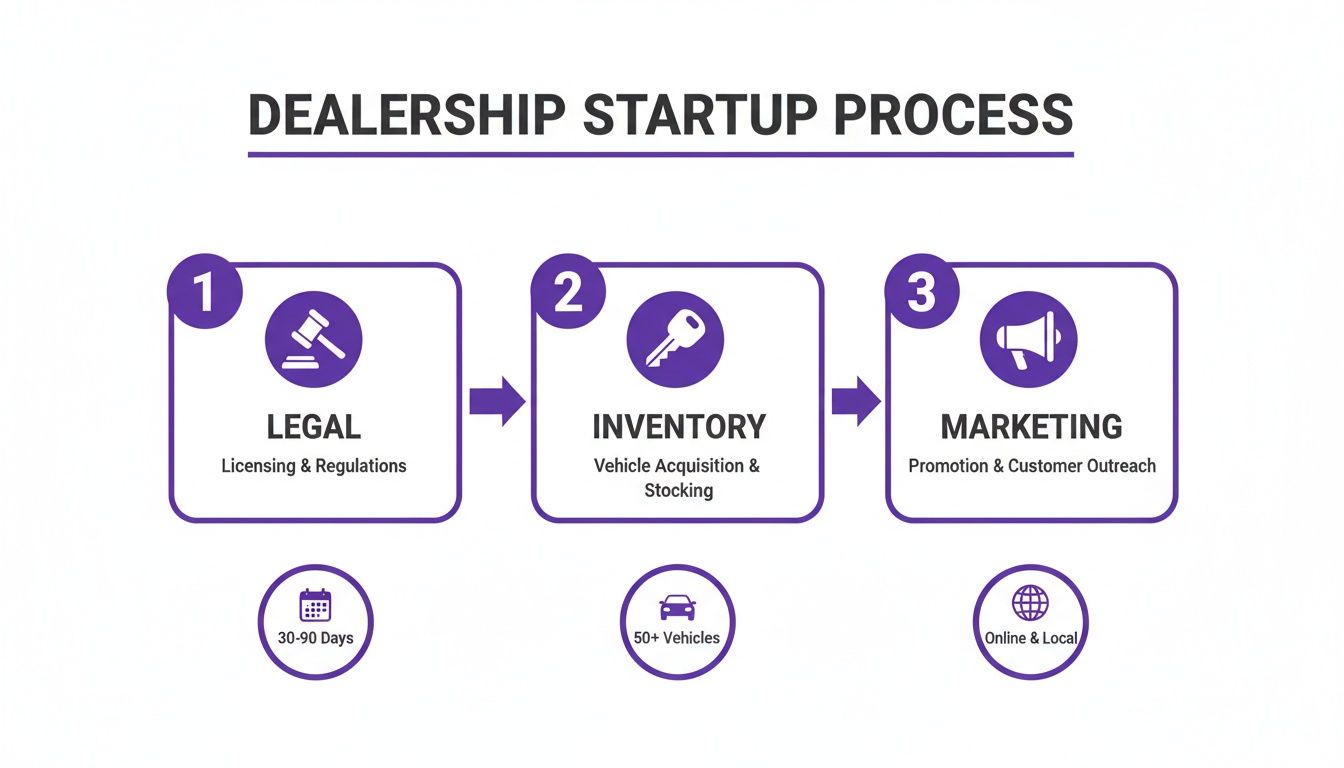
    To get your piece of the pie, you need to think beyond a simple to-do list. It's about building a solid framework around the core pillars of the business. We've broken down the entire journey into a clear, actionable roadmap to guide you from a great idea to your very first sale.

    A three-step infographic illustrating the dealership startup process with Legal, Inventory, and Marketing stages.

    This visual shows you how everything connects. Notice that a solid legal and financial foundation comes first—it’s the non-negotiable step before you can even think about buying cars or marketing your new business.

    To give you a clearer picture of the road ahead, here's a quick summary of the main stages you'll navigate.

    Startup Phases at a Glance

    Phase Key Activities Primary Goal
    Phase 1: Planning & Legal Business plan, entity formation, licensing, surety bond, financing. Establish a legally compliant and financially sound business entity.
    Phase 2: Location & Inventory Secure a physical lot or online setup, source initial vehicles. Create the physical or digital "storefront" and stock it with sellable cars.
    Phase 3: Operations & Marketing Set up sales process, staffing, website, online listings, launch plan. Build the systems to attract customers, manage sales, and generate revenue.

    This table provides a bird's-eye view, but we'll dive deep into each component. We'll tackle real-world challenges head-on, from navigating your state's complex licensing rules to overcoming those early funding hurdles. For instance, knowing when to use personal capital versus a specialized floor plan financing solution can be the difference between staying small and scaling fast.

    The goal here is to replace uncertainty with a confident, manageable plan. You don't need to be an expert in everything at once, but you absolutely need a clear map of the road ahead.

    By the time you're done with this guide, you’ll see the entire process not as one giant, intimidating task, but as a series of achievable steps. That clarity will empower you to tackle each stage with purpose and get your dealership off the ground.

    Building Your Legal and Financial Foundation

    An office desk with a laptop, calculator, documents, and plants, with a 'Legal & Finance' banner.

    Before you even think about buying your first car or signing a lease, you need to turn your idea into a real, bankable business. This is the foundation. It’s the behind-the-scenes work that gives you the legal right to operate and the financial runway to actually succeed.

    Too many aspiring dealers jump straight to the fun stuff—inventory and marketing—but the ones who last are masters of their business plan and financials first. Think of this stage as building the blueprint for your entire operation. It's what will guide your decisions and, more importantly, convince lenders that you're a safe bet.

    Crafting a Business Plan That Works

    Your business plan isn't just a document to satisfy a bank. It's your North Star. It's what keeps you on track when things get chaotic, and it's absolutely critical for securing any kind of funding. Lenders want to see more than your passion for cars; they need a clear, logical path to profitability.

    Your plan needs to be rooted in reality, not just wishful thinking. It should cover:

    • Executive Summary: A quick, powerful snapshot of your dealership’s mission, your legal structure (LLC, sole proprietorship, etc.), and what makes you different from the lot down the street.
    • Market Analysis: Who are you selling to? Get specific. What's the competition look like in your area? What kinds of cars are people actually buying?
    • Operational Strategy: The nitty-gritty. How will you source inventory? What’s your sales process from "hello" to "here are the keys"? Who handles the title work?
    • Financial Projections: Be honest and conservative here. Map out your startup costs, monthly overhead, inventory expenses, and projected revenue for the first one to three years.

    This process forces you to confront the tough questions early, saving you from costly mistakes down the road.

    Demystifying Licenses and Legal Requirements

    Let's be clear: navigating the world of dealer licensing can be a headache. The rules change dramatically from state to state, but this is a step you absolutely cannot skip. Trying to operate without the right licenses is a fast track to hefty fines and getting your business shut down before it even starts.

    Your state's Department of Motor Vehicles (DMV) or an equivalent agency is usually in charge. While the details vary, the core requirements are fairly standard.

    Common Dealer Licensing Requirements Checklist:

    1. Completed Application: The official state form to get the ball rolling.
    2. Business Registration: Proof that your company legally exists in your state.
    3. Surety Bond: This is basically insurance that protects your customers if you do something shady. The bond amount can be anywhere from $10,000 to over $50,000, depending on your state. California, for example, requires a $50,000 bond.
    4. Liability Insurance: You’ll need proof of insurance to cover your inventory and general business operations.
    5. Physical Location Approval: Many states require a dedicated commercial spot with proper signage and room to display cars. Some are becoming more flexible with online-only models, but you have to check.
    6. Background Check: Standard procedure for all owners.

    Don’t just get licensed and forget about it. Your license and bond have to be renewed regularly. Plug these dates and costs into your calendar from day one to avoid any compliance gaps that could shut you down.

    You'll also need ironclad sales contracts to protect your dealership. For a solid overview of what these documents should include, check out a comprehensive guide to UK car sale contracts—the principles are valuable no matter where you operate.

    Securing Smart Financing for Your Dealership

    Once your business plan is solid and you know what the law requires, it's time to get the money to make it all happen. Startup costs add up fast, covering everything from that surety bond to the first few cars on your lot.

    A standard small business loan is one route, but the auto industry has its own specialized financial tools. The most important one to understand is floor plan financing. Think of it as a credit card just for buying inventory. You use this revolving line of credit to purchase cars, and then you pay back the loan for each specific vehicle as it sells.

    This is a game-changer. A floor plan lets you stock a much larger and more diverse inventory than you could ever afford with cash alone, which is key to growing your business. Of course, there are other avenues, and we explore them in our article on financing options for small dealerships. A smart funding strategy often combines personal capital, a traditional loan, and an industry-specific credit line like a floor plan.

    Sourcing Profitable Inventory and Choosing Your Location

    A car dealership parking lot with multiple vehicles, an 'Inventory & Location' banner, and a checklist.

    Let's get down to the two things that truly define your dealership: the cars you sell and where you sell them. Nail these two from day one, and you’re building a foundation for profit. A misstep here, however, can burn through your starting capital before you’ve even handed over a set of keys.

    These aren't just line items in your business plan. They're strategic decisions that will shape your brand, your customer base, and your entire operation.

    The "where" isn't as simple as it used to be. The biggest fork in the road is deciding between a traditional physical lot and a more modern, online-first business. Each has its own playbook.

    Physical Lot vs. Online-First Model

    There’s a reason the classic car lot has been around forever. It works. Having a physical presence gives you visibility and the advantage of natural foot traffic. It lets customers kick the tires, smell the interior, and take a car for a spin—a huge part of the buying process for many people. The downside? It comes with a hefty price tag: rent or mortgage payments, property taxes, insurance, and utilities all add up fast.

    Going with an online-first model flips the script. You slash those massive overhead costs, freeing up cash to pour directly into buying better inventory. Your "showroom" is your website, and you might operate out of a small office or even a home-based setup (if your state laws allow it). This is a fantastic way to start lean, but be prepared to invest heavily in top-notch digital marketing. You have to bring the customers to you, since they can't just drive by.

    Key Takeaway: This decision really comes down to your target market. Are you planning to sell unique classics or hard-to-find enthusiast cars? An online model with a nationwide reach makes a lot of sense. Focusing on reliable, affordable daily drivers for your local community? A visible physical lot might give you the edge.

    Master the Art of Acquiring Inventory

    Once you’ve figured out where you’ll sell, your entire focus shifts to what you'll sell. Sourcing profitable inventory is the single most important skill you'll develop. It's a relentless hunt for the right cars at the right prices, and it’s what separates the dealers who thrive from those who barely survive.

    The good news is that there are cars out there. For example, recent data showed U.S. used-vehicle stockpiles hitting 2.31 million—a 6% increase from the previous year. That translated to a 50 days' supply, which is a healthy, balanced market for buyers. With Americans buying millions of used cars every month, the demand is definitely there.

    So, where do the pros find their cars?

    • Dealer-Only Auctions: This is the bread and butter for most independent dealers. Places like Manheim and ADESA are massive marketplaces with thousands of vehicles cycling through every week. You’ll find everything from fleet vehicles to customer trade-ins. The key here is discipline. It's incredibly easy to get swept up in a bidding war and overpay, killing your profit margin on the spot.
    • Trade-Ins: As soon as you open for business, accepting trades becomes one of your best inventory streams. The seller is right in front of you and motivated, and you can often acquire these vehicles for less than you'd pay at auction.
    • Private Sellers: Don't sleep on local sources like Facebook Marketplace or Craigslist. It takes more legwork—a lot more—but you can unearth some high-margin gems that other dealers have overlooked.

    Inspect and Calculate Before You Buy

    Here’s a rule to live by: never buy a car without doing a deep-dive inspection and running the numbers on reconditioning costs. What looks like a steal on the block can quickly become a nightmare in the shop.

    Develop a meticulous inspection checklist and treat it like gospel. Go over the engine, transmission, frame, and electronics. Look for any hint of hidden damage or lingering mechanical problems. After you’ve sized up the car, you need to calculate your "recon" cost—that’s everything it will take to get it front-line ready, from new tires and brake pads to a professional detail.

    Here’s how the math breaks down on a typical purchase:

    • Auction Price: $8,000
    • Auction Fees: $300
    • Transportation: $150
    • Reconditioning (New tires, brake pads, deep clean): $750
    • Total Cost into Inventory: $9,200

    If you know you can retail that car for $11,500 in your market, you’re looking at a potential gross profit of $2,300. But if you underestimated the recon and it ends up costing $1,500, that profit shrinks to just $1,500. Doing this math on every single car isn’t optional; it’s essential.

    Making your acquisition and delivery process as smooth as possible is crucial. Using some smart dealership car shipping tips can help you manage logistics without eating into your profits. As your inventory grows, keeping track of all these numbers gets complicated. That’s when many dealers turn to dedicated automotive inventory management software to stay organized and protect their margins.

    Launching Your Digital Showroom and Marketing Engine

    Digital car showroom website displayed on a tablet and smartphone on a wooden desk, showcasing various car models.

    Your physical lot might close at 5 PM, but your digital showroom needs to be open 24/7. In reality, your website isn’t just an add-on; it’s your single most powerful lead-generation tool. It’s out there attracting buyers while you’re at home, asleep, or out buying more inventory.

    A professional, mobile-friendly website is no longer optional. It's the essential foundation for any dealership that wants to grow.

    Thankfully, you don't need to hire an expensive web developer and wait months for a site to get built. Modern dealership platforms are designed so you can launch a polished, search-engine-optimized website in minutes, with zero coding required. This frees you up to focus on what you do best: selling cars.

    Building A Website That Actually Sells Cars

    Think of your website as more than just an online brochure—it’s an interactive sales floor. To convert a casual browser into a serious lead, your site needs specific features that build trust and make the buying process feel easy and secure for your customers.

    Here are the absolute must-haves for any dealership site:

    • High-Resolution Photo Galleries: Crystal-clear, well-lit photos are your #1 sales tool. Show every angle of the car—interior, exterior, engine bay, and don't be afraid to show close-ups of any minor flaws. Transparency builds instant trust.
    • Compelling Vehicle Descriptions: Go beyond the spec sheet. Tell the car's story. Highlight its best features and explain why it’s a solid value for the asking price.
    • Integrated Financing Applications: Let potential buyers get pre-qualified right on your website. This simple feature captures high-intent leads and cuts down the time it takes to close a deal later on.
    • Automatic VIN Decoders: A good VIN decoder tool will instantly populate a listing with all the vehicle's factory options and specifications. It saves you a ton of time and ensures your listings are accurate.

    These elements form the backbone of a high-performing site. To go even deeper, our guide on website design for car dealers breaks down everything you need to know.

    Your website is your best salesperson. It should be clean, fast, easy to navigate, and packed with useful information that helps a customer feel confident in their decision. If it’s slow or confusing, they’ll just click over to your competitor’s site without a second thought.

    Getting Your Inventory Seen Everywhere

    A great website is just the first piece of the puzzle. It won’t do you any good if nobody can find it. The next step is getting your vehicles listed on the big, high-traffic platforms where buyers are already looking. Your goal is maximum exposure.

    This means pushing your inventory to key online marketplaces. A modern dealership platform should handle this for you automatically, syndicating your listings to giants like Google Vehicle Listings and Facebook Marketplace. This kind of automation saves you dozens of hours of manual data entry and prevents costly mistakes.

    Choosing the right website solution is a critical first step. You have options ranging from quick-and-easy DIY builders to fully custom designs.

    Online Presence Model Comparison

    Website Solution Initial Cost Monthly Cost Key Features & Benefits Best For
    DIY Site Builder (Wix/Squarespace) $0 – $300 $20 – $50 Low cost, total creative control. Requires manual inventory management. Very small dealers with 1-5 cars and plenty of time.
    Dealership SaaS Platform (e.g., AutoFire) $0 – $500 $99 – $500+ Fast setup, automatic inventory syndication, VIN decoding, built-in marketing. Most new and growing independent dealerships.
    Custom WordPress Site $3,000 – $10,000+ $50 – $200 Highly customizable, requires a developer and ongoing maintenance. Established dealers with specific branding needs.
    Full Custom Development $15,000+ Varies Completely unique design and functionality, long development time. Large dealer groups with in-house tech teams.

    For most new dealers, a dedicated SaaS platform offers the best balance of professional features, speed to launch, and cost-effectiveness, letting you compete with bigger players from day one.

    Creating Listings That Get A Response

    A powerful listing does more than just show off a car; it convinces a buyer to pick up the phone. Whether it's on your own website or a third-party marketplace, every listing needs to be clear, complete, and persuasive.

    Follow this simple but incredibly effective formula for every vehicle you list:

    1. The Headline: Always include the year, make, model, and trim, plus a key selling point. Think: "Low Miles," "One Owner," or "New Tires." For example: 2018 Honda CR-V EX-L – One Owner, Low Miles, Pristine Condition.
    2. The Summary: Write a short, engaging paragraph about the vehicle's condition, its key features, and who it's perfect for.
    3. The Features (Bulleted): Make a scannable list of the most desirable options—leather seats, sunroof, navigation, Apple CarPlay, advanced safety features, etc.
    4. The Call to Action: End with a clear, direct next step. Tell them exactly what to do: "Call or text us at [Your Number] to schedule a test drive today!"

    This structured approach gives buyers the information they need quickly and dramatically increases the odds they'll reach out to you.

    Master Your Local Search and Social Presence

    Finally, you need to make sure local buyers can find you online. This starts with basic Local Search Engine Optimization (SEO), and the single most important thing you can do is create and completely optimize your Google Business Profile.

    Fill out every single section. Add high-quality photos of your location (even if it's small) and your inventory. Most importantly, make it a habit to ask every happy customer to leave you a review. Those stars are gold.

    Social media is your tool for building a community and earning trust. You don't need to be on every platform. Start with a solid Facebook Business Page. Post your new inventory, share helpful car care tips, and engage with every comment. It's a free and simple way to build a local following and establish your dealership as a trustworthy name in town.

    Mastering Daily Operations for Sustainable Growth

    Alright, you’ve got a location and cars are starting to roll in. This is where the rubber really meets the road. Getting your dealership off the ground was the first hurdle; now it's all about building a smooth, profitable operation that can last.

    This is the phase where you move from just selling cars to actually running a business. We're talking about nailing down the day-to-day mechanics—from handling crucial paperwork to making smart hires and tracking the numbers that matter.

    Streamlining Title and Registration Processes

    Every single car you sell comes with a heap of paperwork. How you handle it says a lot about your dealership and can directly impact your reputation and your bottom line. Dropping the ball on titles or registrations creates massive headaches for everyone, looks unprofessional, and can even get you fined.

    Your process for managing paperwork has to be rock-solid from day one. When you buy a car, that title needs to be signed over correctly and locked down. After you sell it, getting that title transferred to the new owner accurately and without delay is absolutely non-negotiable.

    A few tips from the trenches:

    • Use a "Deal Jacket": Whether it's a physical folder or a digital one, every car you sell needs a deal jacket. This is where you keep everything: the bill of sale, the title, any financing paperwork, and proof of insurance.
    • Partner with a Pro: Don’t be afraid to outsource your title and registration work to a third-party service. Seriously, it can be a lifesaver. They know the ins and outs of your state's DMV rules, which saves you an incredible amount of time and ensures you stay compliant.
    • Set Clear Expectations: Be upfront with your customers about how long it will take to get their permanent plates and registration. A little communication goes a long way in preventing a flood of anxious "where's my stuff?" calls.

    A clean, efficient paperwork process gives customers confidence and frees you up to find and sell the next car.

    Making Your First Strategic Hires

    You might be a one-person show right now, but you can't juggle everything forever if you want to grow. Your first few hires are game-changing decisions that will define your culture and your capacity to scale. Don’t just hire someone because you're drowning; think strategically about who can provide the biggest immediate impact.

    For most new dealers, the first key roles to fill usually look something like this:

    1. A Detailer/Lot Porter: This person is your secret weapon for making inventory look "front-line ready." A sparkling clean car sells faster and for more money, period. They'll also keep the lot organized and handle basic vehicle prep.
    2. A Salesperson: Once leads are coming in consistently, you need someone dedicated to handling test drives, answering questions, and closing deals. This frees you up to focus on sourcing more great inventory, which is the lifeblood of your business.
    3. An Office Manager/Title Clerk: As you sell more cars, the administrative burden grows exponentially. This person becomes the backbone of your operation, managing paperwork, following up with customers, and handling basic bookkeeping.

    When you make that first hire, look for attitude and a willingness to learn over deep industry experience. You can teach someone your sales process, but you can't teach a strong work ethic or a positive attitude.

    Tracking KPIs for Informed Decisions

    To grow, you have to know your numbers. Flying blind is the fastest way to crash and burn in this business. By tracking just a few Key Performance Indicators (KPIs), you get a clear, data-backed picture of your dealership's health. It tells you what’s working and, just as importantly, what isn’t.

    Start by obsessing over these essentials:

    • Inventory Turn Rate: How fast are you selling cars? A high turn rate means your cash isn't just sitting on the lot collecting dust.
    • Gross Profit Per Unit (GPU): This is your bread and butter—the raw profit on each vehicle after you subtract what you paid for it and what you spent getting it ready for sale.
    • Average Days in Inventory: Knowing how long each car sits on your lot is critical. It helps you spot the slow-movers that might need a price drop or a different marketing push.

    Profits in the used car game can be consistent, but they don't just fall into your lap. Efficiency is what separates the winners from the rest in an industry with hundreds of thousands of businesses worldwide. You can dig into the numbers in this global used cars market report.

    Proven Strategies for Long-Term Growth

    Once you’ve found a good rhythm, it's time to think bigger. Sustainable growth isn't about giant leaps; it's about making smart, consistent moves that build on your success.

    Focus on reinvesting your profits wisely. Instead of pulling all the cash out, funnel a good portion back into the business. Use it to expand your floor plan so you can carry more inventory. Another huge growth lever is your reputation. Go all-in on encouraging customer reviews and referrals—it’s the most powerful (and free) marketing engine you'll ever have.

    Your Top Questions Answered

    If you're thinking about jumping into the used car business, you've probably got a million questions swirling around. Let's tackle some of the most common ones I hear from aspiring dealers. Getting these answers straight is the first step toward building a business that lasts.

    How Much Money Do I Actually Need to Start?

    There’s no one-size-fits-all answer, but a realistic starting point for a small, properly licensed dealership is somewhere between $50,000 and $100,000. That might sound like a lot, but it gets eaten up faster than you'd think.

    So, where does that money go? A good chunk is for essentials like your dealer license and the required surety bond—the cost of which depends heavily on your state and credit score. The real meat of your investment, though, should be your initial inventory. You need enough cash to buy at least three to five solid, sellable cars right out of the gate. The rest covers things like first month's rent on a small lot or office, insurance, and a bit of cash for marketing to get the phone ringing.

    Going with an online-first model can definitely bring that initial number down. By cutting out the expense of a physical lot, you can pour more of your capital directly into what makes you money: the cars themselves.

    Can I Really Run This Business From My House?

    This is one of the most popular questions, and the answer is a classic "it depends." Your ability to run a dealership from home hinges entirely on your state and local zoning laws.

    Some states are catching up and now offer specific licenses for online-only or home-based dealers. Even then, they usually have rules, like requiring a separate, dedicated office space that isn't just your kitchen table.

    On the other hand, many states are still old-school. They have strict regulations demanding a commercial location with a display lot of a specific size and visible business signage. Before you even think about signing a lease or printing business cards, you absolutely must check with your state’s DMV (or its equivalent licensing body). Get the official rules straight from the source.

    What Are the Biggest Mistakes New Dealers Make?

    I see new dealers make the same handful of costly mistakes over and over. If you can sidestep these common pitfalls, you'll be miles ahead of the competition.

    Here are the top three business-killers:

    • Paying too much for cars. It's so easy to get swept up in the heat of an auction. A bidding war feels exciting in the moment, but paying even a few hundred dollars over your limit kills your profit margin before the car ever hits your website.
    • Ignoring online marketing. Simply parking cars on a lot and waiting for people to drive by is a recipe for disaster. If customers can't find you online with a quick search, you're practically invisible in today's market.
    • Sloppy financial management. This is a big one. It includes everything from not having enough cash reserves to float your floor plan payments during a slow month to forgetting to track every single reconditioning cost, which throws off your profit-per-vehicle calculation.

    The dealers who make it are always disciplined buyers, smart online marketers, and incredibly meticulous with their finances. Getting these three things right isn't optional—it's the key to survival and growth.

    What Exactly Is a Floor Plan, and Do I Need One?

    Think of floor plan financing as a credit card specifically for buying inventory. It's a revolving line of credit that lets you purchase cars from auctions and other sources without paying cash for every single one.

    Here’s how it works: you use the floor plan to acquire a car, and you pay back the loan for that specific car once it sells. It’s the single most important tool for scaling your dealership. It frees up your cash and allows you to carry a much larger and more diverse selection of vehicles than you could ever afford on your own.

    You might start out by paying cash for your first few cars, and that's perfectly fine. But if you have any ambition to grow beyond a tiny side-hustle, securing a floor plan is essential. It's what separates the hobbyists from the real business owners.


    Ready to launch your dealership's professional online presence in minutes? With AutoFire™, you can create a stunning, SEO-optimized website that showcases your inventory and captures leads 24/7—no coding required. Get started for free and see how easy it is to compete with the big players.