Tag: dealership technology

  • A Guide to Digital Retailing Automotive for Independent Dealers

    A Guide to Digital Retailing Automotive for Independent Dealers

    So, what exactly is "digital retailing" in the car world?

    It’s about taking the most time-consuming parts of buying a car—things like getting a trade-in value, figuring out payments, and applying for financing—and moving them online. You're essentially creating a digital express lane on your website, letting customers do the legwork from their couch, on their own schedule.

    This turns your website from a simple classified ad into a place where deals actually start to take shape. It’s not about replacing your physical dealership; it's about making it a 24/7 operation that brings in better, more committed buyers before they even set foot on your lot.

    What Is Automotive Digital Retailing?

    Think of your website's evolution. A decade ago, it was probably just a digital brochure with some photos and a phone number. Now, it needs to be an interactive showroom where customers can take real, meaningful steps toward a purchase.

    This modern approach saves a massive amount of time for everyone involved. The customer feels empowered, and your sales team gets to work with people who are much further down the buying path.

    From Static Listings to an Interactive Showroom

    A true digital retailing automotive strategy lets a buyer do more than just look. It gives them tools to make decisions.

    This means adding key features directly to your vehicle listings:

    • Value a Trade-In: Let them enter their vehicle's details and get a real, data-driven offer right then and there.
    • Calculate Payments: Give them an interactive calculator to play with down payments, loan terms, and interest rates to find a monthly payment that works for them.
    • Apply for Credit: A secure, online credit application lets a serious shopper get pre-qualified, turning an anonymous click into a genuine, finance-ready lead.

    When you offer this kind of transparency and control, you build instant trust. And dealers are catching on fast. A study from Cox Automotive found that the number of dealerships offering every single purchase step online doubled in just two years. It's a clear sign that the best operators are boosting their close rates by giving buyers what they want. You can dive into the full study on the digitization of automotive retail at CoxAutoInc.com.

    Digital retailing isn't about getting rid of the handshake; it's about making that handshake count. When a customer has already done the heavy lifting online, your in-person meeting is for confirming a great decision, not starting a stressful negotiation.

    Ultimately, this all leads to a much smoother close. Your customers walk in the door not as tire-kickers, but as confident buyers ready to sign off on a deal they’ve already built and personalized for themselves.

    The Five Pillars of Your Digital Showroom

    A solid digital retailing strategy isn’t some single, magical piece of software. It’s actually built on five core pillars that work together to guide a customer from just browsing your site to actually buying a car. Think of them as the essential building blocks for your online showroom.

    Each pillar tackles a critical step in the modern car-buying journey, logically moving a shopper from initial curiosity to a done deal. When you put these pieces in place, you give buyers the control and transparency they’ve come to expect, building serious trust before they even think about visiting your lot.

    This diagram shows exactly how your dealership uses these digital tools to create a direct, efficient bridge to the modern car buyer.
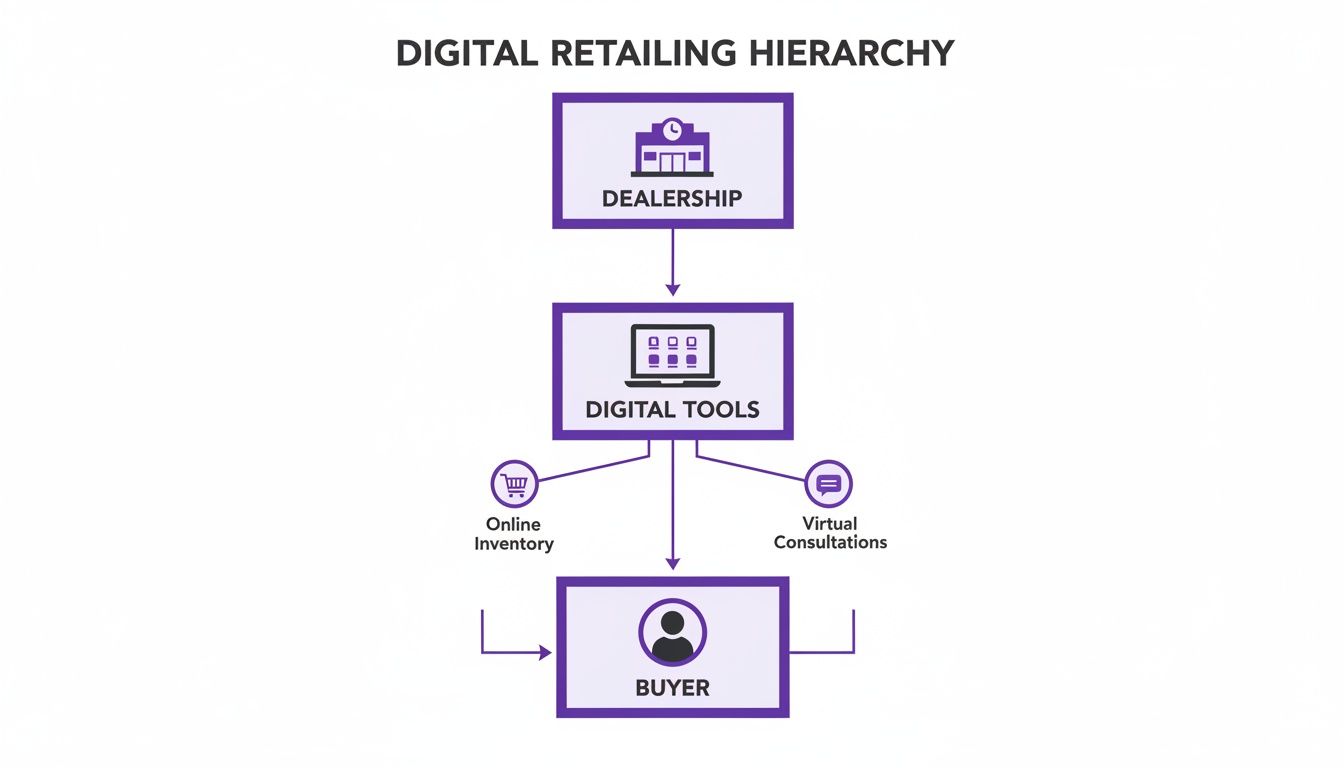
    Diagram illustrating the digital retailing hierarchy, connecting dealership to buyer through digital tools like online inventory and virtual consultations.

    As you can see, it’s a clear flow: your inventory and services pass through a set of digital tools, creating an easy, accessible path for your customers. Let’s break down the pillars that make it all happen.

    Pillar 1: Dynamic Vehicle Pages

    Your Vehicle Detail Pages (VDPs) have a much bigger job than just showing a few pictures. They need to be a virtual test drive. This means loading them up with high-resolution photo galleries, 360-degree views of the inside and out, and detailed feature lists. The goal is to anticipate and answer every single question a buyer might have about the vehicle’s condition.

    To get this right, check out our in-depth guide on effective website design for car dealers.

    Pillar 2: Transparent Deal Structuring

    Nothing frustrates a car buyer more than fuzzy math and hidden numbers. Transparent deal structuring tools, like an interactive payment calculator, get rid of that friction right away. Research from CarGurus has found that a significant portion of buyers are most annoyed by not getting payment information before they have to talk to someone.

    When you let customers play with the numbers—adjusting down payments, loan terms, and interest rates—you empower them to build a deal they're comfortable with. That confidence makes them far more likely to move forward.

    Pillar 3: Instant Trade-In Valuations

    The trade-in is often the first real financial step a customer takes. Placing an instant, data-backed valuation tool on your website gives them immediate skin in the game. When a customer gets a fair, transparent offer for their current car, they’re way more likely to stick with you for the rest of the process.

    This one simple feature can turn an anonymous visitor into a hot lead with a clear path to a purchase.

    A successful digital showroom doesn't just list cars for sale; it provides customers with the tools they need to buy a car. Each pillar is a step that removes an obstacle and builds momentum toward the final purchase.

    Pillar 4: Online Credit and Payment Tools

    Once a customer has a deal structure they like, the next logical step is financing. An integrated, secure online credit application lets serious buyers get pre-qualified without leaving their couch. This is a massive conversion point. It turns a "shopper" into a "finance-ready buyer."

    This saves everyone a ton of time at the dealership and gives your team a crystal-clear picture of the customer's buying power before they walk in the door.

    Pillar 5: Remote Paperwork and E-Signing

    Finally, giving customers the ability to handle paperwork from home is the ultimate convenience. By offering remote document signing and e-contracting, you eliminate the most tedious part of the car-buying experience. This final pillar streamlines the last step, creates a fantastic customer experience, and helps you turn your inventory that much faster.


    A truly effective digital retailing platform is built on these five pillars. Below is a simple breakdown of how each component benefits both your customers and your dealership.

    Core Components of a Digital Retailing Strategy

    Component Customer Benefit Dealership Benefit
    Dynamic VDPs Provides a complete, immersive view of the vehicle, answering questions upfront. Builds buyer confidence, increases time on site, and generates higher-quality leads.
    Transparent Deal Structuring Empowers buyers to create a personalized deal that fits their budget, reducing anxiety. Filters for serious buyers and shortens negotiation time on the lot.
    Instant Trade-In Valuations Delivers a fast, fair, and trustworthy offer, creating immediate engagement. Captures high-intent leads early and secures a key part of the deal.
    Online Credit & Payments Offers a convenient, secure way to get pre-qualified from anywhere, at any time. Streamlines the F&I process and identifies finance-ready buyers.
    Remote Paperwork & E-Signing Saves time and eliminates the hassle of in-person paperwork, concluding the sale easily. Accelerates the final sale, reduces contract errors, and improves CSI scores.

    By integrating these features, you're not just selling cars online; you're building a modern, customer-centric experience that drives real results.

    Let’s be honest: for an independent dealer, going up against the massive marketing budgets of the big franchise stores can feel like David vs. Goliath. But digital retailing tools are the ultimate slingshot, changing the game from who has the biggest billboard to who delivers the best, most convenient online experience.

    Suddenly, your dealership isn't just a physical lot with set hours. It's a 24/7 digital showroom that puts the customer in the driver's seat, letting them value their trade, calculate payments, and get pre-qualified on their own time.

    Attract Better, More Serious Buyers

    Think about the difference between traditional advertising and a digital retailing approach. Old-school ads cast a wide, often inefficient net, pulling in everyone from serious buyers to Sunday afternoon browsers. A website with real deal-building tools, however, acts as a powerful, self-service filter.

    When a shopper takes the time to fill out a trade-in form, play with payment scenarios, and submit a credit application, they're sending a crystal-clear signal. They aren't just "leads"; they're highly motivated buyers who are already emotionally invested in a specific car on your lot. This lets your sales team skip the cold prospecting and jump straight to closing with customers who are ready to go.

    Put Your Team's Time to Better Use

    How much time does your team spend on repetitive, manual tasks? Answering basic financing questions, keying in customer info, going back and forth on trade values—it all adds up. Digital retailing tools automate a huge chunk of that administrative work.

    When the initial steps of the deal happen online, you free up your team to do what they do best: build rapport, show off the cars, and finalize the sale. Let the technology handle the busywork so your people can focus on the human connection.

    For a small, lean team, this kind of efficiency isn't just a nice-to-have; it's a game-changer. You can handle more customers and close more deals without running your staff into the ground.

    Grow Your Reach and Boost Your Bottom Line

    Your physical dealership is limited by geography, but your website has no borders. A powerful digital presence pulls in buyers from the next town over, the next county, and sometimes even the next state. A bigger audience means turning your inventory faster, which is the key to profitability.

    The modern car buying journey almost always starts online. Studies show that the vast majority of buyers kick off their research on the web, with a significant portion of that happening on a smartphone. This is precisely where platforms like AutoFire™ shine, by creating clean, mobile-friendly sites that are built to capture and convert. You can find more stats on automotive digital retailing trends on Accio.com.

    On top of that, digital retailing makes it easy to introduce Finance & Insurance (F&I) products much earlier. When customers can explore options like an extended warranty or GAP coverage right in the payment calculator, they can make a decision in a low-pressure environment. The result is often higher F&I adoption and more profit on every single vehicle sold.

    Your Roadmap to a Digital-First Dealership

    Making the jump to a modern digital retailing automotive strategy can feel like a massive project, but it doesn't have to be. If you break it down into a clear, manageable roadmap, you can make the shift without the usual technical headaches. This step-by-step plan is built specifically for independent dealers, focusing on practical moves that get you results quickly.

    Think of it like building a house. You wouldn't start hanging pictures before pouring the foundation, right? Each step here builds on the last, creating a solid structure for your online sales and setting you up for success down the road.
    Digital roadmap displayed on a laptop screen on a wooden desk with a smartphone and notebook.

    Step 1: Build Your Digital Foundation

    Everything starts with your website. It’s no longer just a digital business card—it’s your main showroom, your sales floor, and your F&I office all rolled into one. Before you can bolt on any fancy deal-making tools, you need a high-performance, mobile-friendly website that’s fast, secure, and dead simple for customers to use.

    The reality is, most of your customers are shopping on their phones. If your site is slow or a pain to navigate on a small screen, they're gone. They won't be back. Your foundation has to be built with a mobile-first approach, guaranteeing a smooth ride for every visitor, no matter what device they’re on.

    A great website is the engine of your digital retailing strategy. It has to be powerful enough to handle inventory feeds, fast enough to keep buyers engaged, and reliable enough to run 24/7 without you constantly having to fix it.

    Step 2: Activate Core Sales Tools

    Okay, foundation's poured. Now it's time to add the tools that turn casual browsers into serious buyers. This is where you bring the core pieces of digital retailing to life, right on your vehicle detail pages (VDPs). The goal is simple: let customers take real, meaningful steps toward buying a car, all on their own terms.

    This means switching on features that automate the tedious stuff and capture leads from people who are genuinely interested. Start with the essentials that give you the most bang for your buck:

    • Integrated VIN Decoder: This little tool is a huge time-saver. It automatically fills in all the vehicle features and specs, so you don't have to, and it ensures everything is accurate.
    • Instant Trade-In Valuations: Let customers get a real-time estimate for their trade-in. This gives them immediate skin in the game and a clear idea of their buying power.
    • Effective Lead Capture Forms: Think of these as your digital hand-raisers. Smart, simple forms make it easy for shoppers to say, "I'm interested, let's talk."

    As you map out your dealership's online strategy, it's worth diving into these lead generation best practices, which are absolutely critical for selling cars online today. These tools work in tandem to sift through the tire-kickers and hand your sales team qualified leads who are much further along in the buying process.

    Step 3: Connect to Online Marketplaces

    The final step is to push your inventory to where the buyers are. Your website is your home base, but you need to get your listings out on the big online marketplaces to cast a wider net. This is how you get your vehicles in front of the largest possible audience.

    Connecting your inventory feed to platforms like Google Vehicle Listings is a must. This integration automatically puts your cars right in front of people searching on Google, driving free, high-quality traffic straight to your VDPs. By truly mastering how to sell cars online, you turn your dealership into an always-on sales machine, pulling in customers from well beyond your own zip code.

    Optimizing Your Digital Storefront for Customers and Search Engines
    A person optimizes a storefront on a laptop, viewing performance charts and data dashboards.

    Having the best digital retailing tools is a lot like stocking your lot with incredible cars. It’s a great start, but it doesn't mean much if buyers can't find you or have a terrible experience once they arrive. Your website is your digital storefront, and it needs just as much attention as your physical dealership to attract and hold onto serious customers.

    Think about it this way: a cluttered, poorly lit physical lot drives people away. The online version of that is a slow, confusing website that frustrates visitors and, worse, gets completely ignored by search engines. To really make this work, your digital retailing automotive strategy needs to be a perfect blend of a great user experience (UX) and smart search engine optimization (SEO).

    Creating a Welcoming Digital Experience

    User experience is all about making your website dead simple for customers to use, especially on their phones. If a potential buyer has to pinch, zoom, or sit there waiting for a page to load, they’re gone. They’ll just bounce over to your competitor’s site without a second thought.

    Your digital storefront has to be built on a foundation of speed and simplicity. Every click should feel natural, guiding the user from a vehicle search to your payment calculator without any friction. For independent dealers, this isn't just a "nice-to-have"—it's a core requirement for turning online traffic into actual sales.

    A seamless user experience is the digital equivalent of a warm welcome. It tells the customer their time is valued and that you are a professional, trustworthy dealership to do business with.

    Making Your Dealership Discoverable

    On top of a great user experience, your website has to be visible on search engines like Google, because that's where the journey starts for most car buyers. This is where automotive SEO comes into play, making sure your inventory pops up when local customers start searching.

    This involves a few key practices that help you rank higher:

    • Unique Vehicle Descriptions: Don't just copy and paste the factory specs. Write compelling, unique descriptions for each car that highlight its best features, condition, and story.
    • Local SEO Signals: Make sure your dealership's name, address, and phone number are identical everywhere online. This consistency builds trust with Google and helps you appear in local map searches.
    • Positive Online Reviews: A steady stream of good reviews is a powerful signal to both customers and search engines that you run a reputable business.

    For dealerships just getting into digital retailing, a strong online presence often requires specialized automotive reputation management to build and protect that crucial trust with potential buyers. These elements all work together, telling search engines that your site is a valuable resource.

    To really get into the weeds, you can explore our detailed guide on SEO for automotive businesses. It's all about making sure that when customers are ready to buy, your digital doors are the first ones they find.

    Measuring Success with the Right KPIs

    So, you’ve put in the work to bring digital retailing to your dealership. That’s a huge step. But how do you know if it's actually making you money? To see the real impact on your bottom line, you have to look beyond vanity metrics like website traffic and start tracking the Key Performance Indicators (KPIs) that truly matter.

    Think of these KPIs as the vital signs for your online showroom. They tell you exactly what’s working, what’s falling flat, and where to focus your efforts. Tracking the right data is what allows you to make smart, informed decisions that lead to real growth.

    Key Metrics for Digital Dealerships

    To get a clear picture of what’s happening, you need to zero in on a few crucial metrics. These numbers will tell you how well your online tools are converting casual browsers into serious buyers and help you fine-tune your entire approach.

    • Lead Conversion Rate: This is the big one. It’s the percentage of your website visitors who take a real, meaningful action—filling out a credit app, valuing their trade, or booking a test drive. If this number is climbing, you know your digital tools are doing their job and engaging the right kind of shoppers.

    • VDP Engagement: What are people doing once they land on your vehicle detail pages? Are they spending time there? Are they playing with the payment calculator or using the trade-in tool? High engagement here is a fantastic sign that you're giving buyers the transparent, useful information they need to take the next step.

    Tracking the right KPIs is the difference between guessing and knowing. It transforms your digital retailing efforts from a shot in the dark into a data-driven strategy for sustainable growth.

    Connecting Online Actions to Offline Sales

    The final piece of the puzzle is tying all this online activity back to what happens on your lot. When you know where your best deals originate, you can stop wasting money and start optimizing your sales process for pure efficiency and profit.

    • Time to Sale: One of the biggest promises of digital retailing is a shorter sales cycle. Start tracking the time from the first online touchpoint to the final handshake. If that window is getting smaller, your online tools are successfully pre-qualifying customers and making the in-person close faster and easier for everyone.

    • Lead Source Attribution: It's critical to know which channels are sending you the most valuable leads. Is it Google Vehicle Listings, a specific social media campaign, or direct traffic? This data shows you exactly where to double down with your marketing budget to generate real sales, not just empty clicks.

    Got Questions? We've Got Answers.

    Jumping into any new system comes with its share of questions. Let's tackle some of the most common ones we hear from dealers about making the switch to digital retailing.

    "My dealership is small. Is this even for me?"

    You bet it is. Digital retailing isn't about the size of your lot; it's about the quality of your customer's experience.

    Even if you only have a handful of cars, tools like online payment calculators and trade-in estimators do the heavy lifting for you. They help sift through the window shoppers and bring you buyers who are serious and pre-qualified, saving you a ton of time. Modern platforms are designed to be affordable and scalable, so you can punch well above your weight without a massive investment.

    "Am I going to have to fire my sales team?"

    Not a chance. Think of it as giving them superpowers.

    The reality is, most car buyers don't want a 100% online or 100% in-person experience—they want a mix of both. Digital retailing takes care of the tedious early steps, like financing questions and trade-in estimates. By the time a customer steps onto your lot, they're not just kicking tires; they're ready to make a move. This frees up your team to do what they do best: build relationships, lead test drives, and close deals.

    "I'm not a tech wizard. Can I actually handle this?"

    Absolutely. The whole point of a good digital retailing platform is that it’s built for car people, not coders.

    The best providers take care of all the technical headaches—website speed, security, and making sure your inventory feed is always up-to-date. You get to focus on selling cars, not wrestling with software. It's designed so you can get a professional, high-performance website up and running in minutes, no IT degree required.


    Ready to launch a digital showroom that brings in serious buyers and makes selling cars simpler? AutoFire gives independent dealers a fast, modern, and SEO-ready website platform that you can launch in minutes. No technical skills needed. Start your free plan today at goautofire.com and see how easy it is to compete and win online.
  • Explore the automotive dealership app to boost sales and delight customers

    Explore the automotive dealership app to boost sales and delight customers

    Think of an automotive dealership app as your best salesperson—the one who never sleeps. It's your digital showroom, greeting every visitor who finds you online, showing off your inventory, and grabbing leads right when a customer is most interested. It does all this, 24/7, right from their phone.

    What Is an Automotive Dealership App

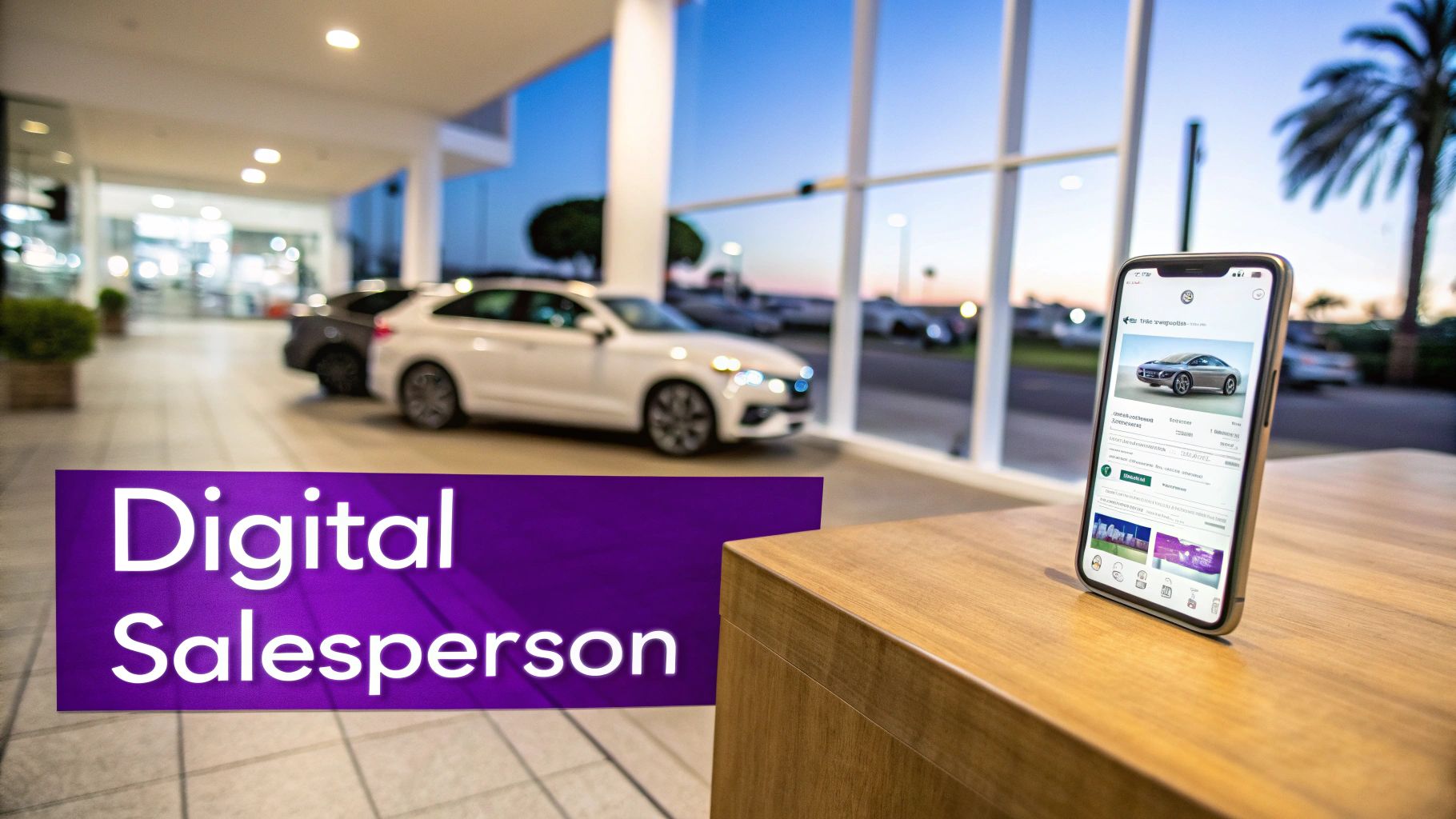
    Smartphone displaying a car sales app in a modern automotive dealership with a "Digital Salesperson" banner.

    When an independent dealer hears "app," the first thing that often comes to mind is something you have to download from an app store. That's not what we're talking about here. The best modern solutions are actually powerful, mobile-first websites built to act and feel just like a native app. The key difference? No download required. It's a smooth, instant experience for the shopper.

    This platform becomes the central hub for your entire online operation. It’s where everything you need to compete and win online comes together.

    • Live Inventory Showcase: Your cars are front and center, automatically synced and displayed with great photos and all the important details.
    • Instant Lead Capture: When a buyer is interested, they can immediately reach out with built-in forms for test drives, questions, or trade-in estimates.
    • 24/7 Sales Presence: Your lot may close at 6 PM, but your digital showroom is always open, working for you around the clock.
    • Professional Branding: It gives your dealership a polished, trustworthy look that can stand toe-to-toe with the big franchise stores.

    Why This Matters for Independent Dealers

    This kind of technology used to be out of reach for anyone but the massive dealership groups. Not anymore. Today’s platforms give smaller, independent lots the power to build a serious digital footprint without needing a team of web developers or a six-figure budget. A good automotive app handles all the technical heavy lifting for you.

    That means you can get back to what you do best—selling cars—while your online platform takes care of the security, speed, and making sure everything looks great on a phone. It's all about leveling the playing field.

    The industry numbers tell the same story. The auto dealer software market, which includes these digital platforms, was valued at USD 6.1 billion in 2025 and is on track to more than double to USD 12.5 billion by 2035, according to a market analysis by Research Nester. This isn't just a trend; it's a fundamental shift in how people buy cars. Getting the right digital tools in place now puts your dealership in the perfect position to catch this growing wave of online shoppers.

    Essential Features of a High-Performing Dealer Platform

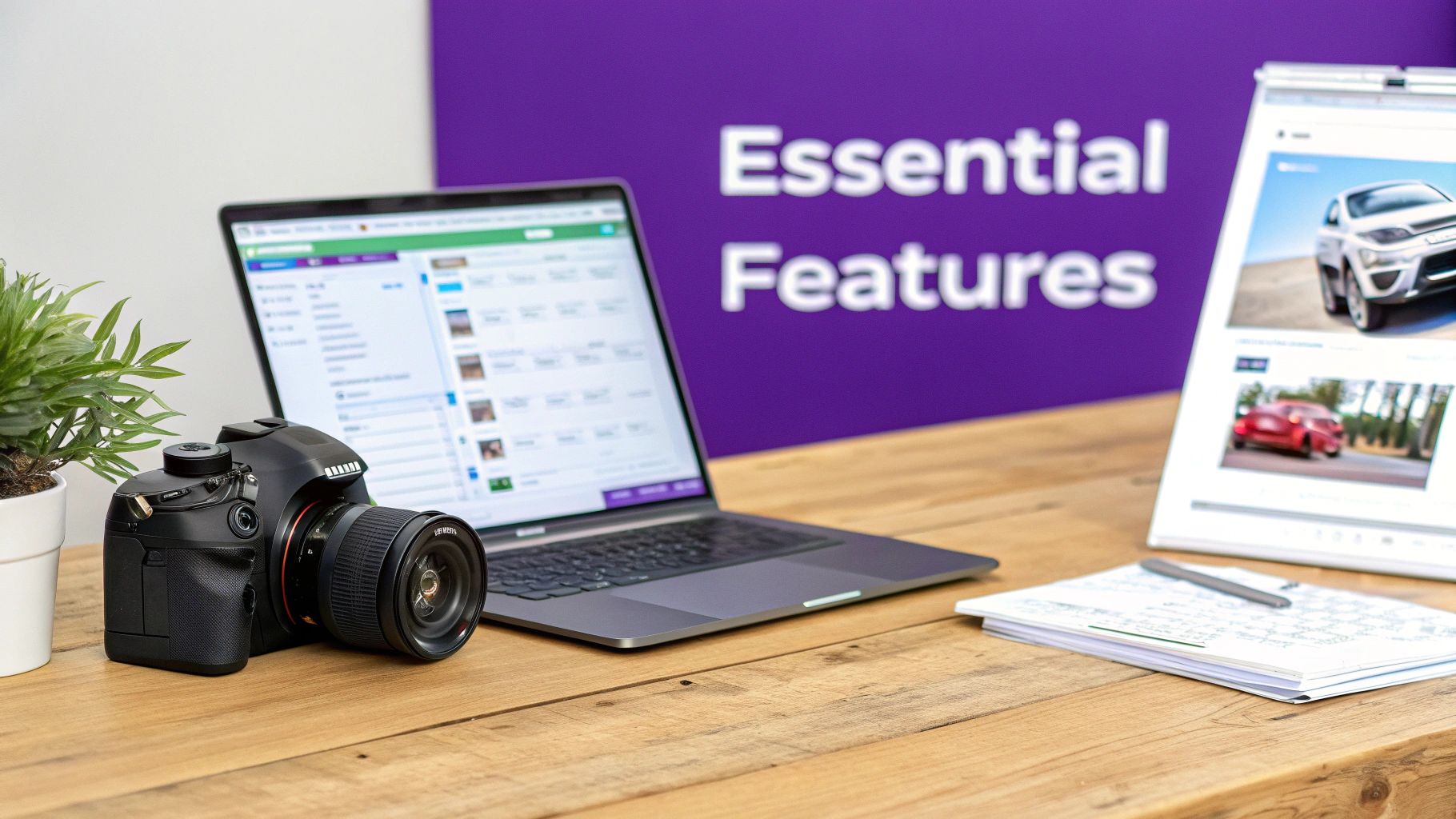
    A digital camera, laptop showing car listings, and a tablet on a wooden desk with 'Essential Features' in the background.

    Let's be honest, not all dealer platforms are built the same. A great one—whether it’s a dedicated app or a mobile-first website that functions like one—does more than just show off your cars. It actively works to turn casual lookers into serious buyers.

    The right set of features can be the difference between a website visitor who gets frustrated and leaves, and one who books a test drive. Think of these as the must-have tools in your digital toolbox. Without them, you’re leaving money on the table.

    Real-Time Inventory Syncing

    This one is non-negotiable. Nothing kills a potential deal faster than a customer falling in love with a car on your site, only to find out it was sold three days ago. That’s an instant credibility killer.

    Real-time syncing means the moment a vehicle is sold or a new one hits your lot, your website reflects it. It’s a simple concept, but it's the foundation of a trustworthy online showroom. Customers see what you actually have, period.

    Built-In VIN Decoder

    Manually typing out every single feature, trim package, and engine spec for a vehicle is a recipe for disaster. It’s slow, tedious, and one tiny typo can mislead a buyer.

    A built-in VIN (Vehicle Identification Number) decoder is an absolute game-changer. You just plug in the VIN, and the system instantly pulls in all the correct factory details, options, and specs. This saves a massive amount of time and ensures every listing is 100% accurate.

    When shoppers see detailed, reliable information, they trust you more. That trust is what gets them to pick up the phone.

    High-Resolution Photo and Video Galleries

    People buy cars with their eyes first. If your photos are dark, blurry, or low-quality, you’ve already lost the battle. Customers will just click over to the next dealer’s site.

    Your platform has to support crystal-clear, high-resolution photo galleries that let you show off every angle—inside and out. Even better is the ability to upload short walk-around videos. A quick video tour gives a customer a feel for the car that static photos just can't match. To see how these visual tools work in practice, you can explore the full list of features an effective dealer platform should offer.

    The table below breaks down how these core features directly translate into a healthier bottom line for your dealership.

    Core Features That Drive Dealership Success

    Feature Benefit for Your Dealership Why It Matters for Sales
    Real-Time Inventory Sync Eliminates outdated listings and customer frustration. Builds trust and ensures every lead is for an available car.
    Built-In VIN Decoder Saves hours of manual data entry and prevents costly errors. Provides accurate, detailed specs that serious buyers demand.
    High-Res Photo/Video Support Creates a professional, engaging online showroom experience. Helps customers emotionally connect with a vehicle before visiting.
    Social Media & Lead Tools Simplifies marketing and makes it easy for buyers to connect. Turns website traffic into actionable, qualified sales leads.

    Ultimately, each of these features is designed to remove friction from the buying process, making it as easy as possible for a customer to move forward.

    Tools for Social Media and Lead Capture

    Once you’ve created a beautiful, accurate listing, you need to get it in front of people and make it easy for them to reach out. The best platforms have these tools baked right in.

    • OpenGraph Sharing: This is a fancy term for a simple, powerful feature. It means when you or a customer shares a link to a car on social media, it automatically creates a nice-looking post with the main photo, price, and title. It turns a boring URL into a mini-advertisement.
    • Integrated Lead Forms: Every single vehicle page needs a clear, simple way for a customer to get in touch. Well-placed forms that let them ask a question or book a test drive without hunting around are critical for capturing interest the moment it strikes.

    These tools work together to make sure your inventory doesn’t just sit there—it actively generates real, qualified leads for your team to follow up on.

    How a Digital Showroom Drives Sales and Creates Loyalty

    Let's be honest, your website or app is much more than just a digital business card. It's an engine for growth. The right platform connects what you do online directly to real-world results, boosting your leads and building the kind of customer relationships that last for years. This is where you start earning a buyer's trust, long before they ever set foot on your lot.

    Think about it from the customer's perspective. If they can comfortably browse your full inventory, get a solid trade-in value, and even get a head start on financing—all from their living room—you've just removed the biggest hassles from the car-buying process. Every smooth, easy interaction builds their confidence, making it a no-brainer to choose you over the dealership down the street.

    Turning Window Shoppers into Real Buyers

    A well-built digital showroom does more than just show off your cars; it actively turns casual interest into solid, qualified leads. It's about creating clear paths for customers to engage and take that next step.

    Two of the most powerful tools for this are instant trade-in estimators and built-in financing applications.

    • Instant Trade-In Estimators: Most people need to know what their current car is worth before they can even think about buying another one. A tool that gives them a fair, immediate estimate is a game-changer. It captures their info and, more importantly, gives them a compelling reason to talk to your team.
    • Integrated Financing Applications: Letting a customer get pre-qualified for a loan right on your site is a massive win. It moves them way down the funnel and hands your team a lead who is not just interested, but ready to sign the papers.

    These features stop your website from being just a static catalog and turn it into a 24/7 sales tool that’s always working for you.

    When you make the first steps of buying a car easy and transparent, you’re not just getting a lead—you're starting a relationship. It's a relationship built on trust and convenience, and that's the bedrock of repeat business.

    Building Loyalty That Lasts

    The value of a great digital experience doesn't stop when you hand over the keys. It’s actually one of the most important drivers of customer loyalty. When someone has a seamless, positive experience with you online, they remember it. They’re far more likely to come back for their next car and tell their friends and family to do the same.

    A strong digital presence, from your website to your social media, can turn one-time buyers into loyal, lifelong customers by creating a consistent and trustworthy brand experience. You can explore more insights on automotive marketing trends that dig into this connection.

    At the end of the day, putting money into a quality digital showroom isn't just another expense. It's a strategic investment in the long-term, sustainable growth of your dealership.

    Integrating Your Platform with Key Sales Channels

    Your dealership's digital presence can't be an island. A great dealership app or website needs to be a central hub, pushing your inventory out to all the places where your customers are already shopping. If you're not connected, you're just talking to yourself.

    This is where seamless integration comes in. It's the magic that transforms a simple website into a serious sales machine. It handles all the tedious, manual updates that eat up your day and are prone to mistakes, freeing you and your team to focus on what you do best: selling cars. This interconnected system is what keeps your inventory accurate and visible everywhere that matters.

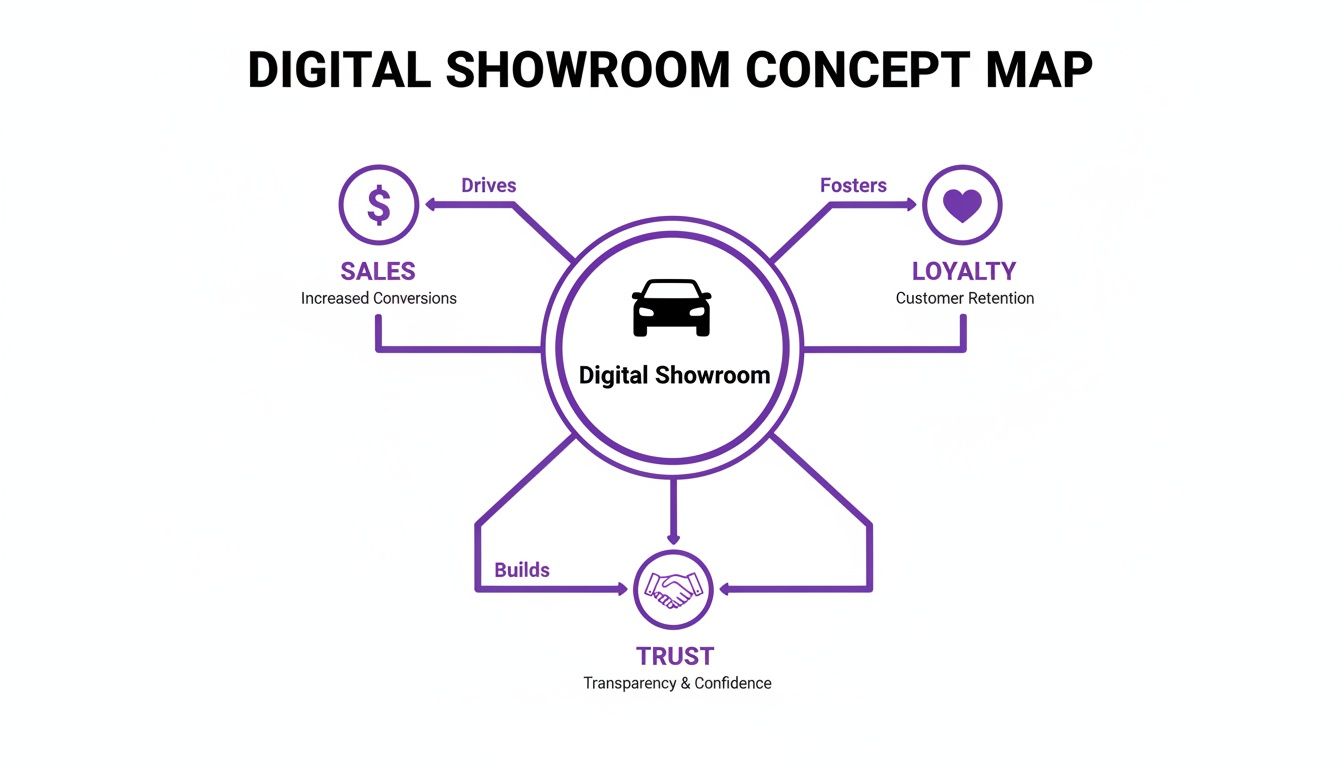
    This graphic really brings it to life, showing how your digital showroom becomes a powerful engine for driving sales, building loyalty, and earning trust from online shoppers.

    A concept map illustrating how a digital showroom drives sales, fosters loyalty, and builds customer trust.

    It’s clear that a modern platform isn’t just about listing cars—it's about creating a complete ecosystem where sales and customer relationships can thrive.

    Connecting to Your Inventory Management System

    The absolute most critical integration is with your Dealership Management System (DMS) or whatever you use as your inventory source. Trying to update everything by hand is a recipe for disaster. Automatic syncing completely eliminates the embarrassing (and trust-destroying) mistake of advertising a vehicle you sold last week.

    When a car is added, sold, or you adjust the price, that change needs to appear on your website instantly, without you lifting a finger. This ensures that every customer is looking at accurate, real-time information.

    Think of it like this: your DMS is the single source of truth for your inventory. A properly integrated platform makes sure that truth is broadcasted perfectly across your entire digital presence. This creates a consistent and reliable experience for every single shopper, every time.

    Dominating Search with Google Vehicle Listings

    When someone in your area searches "used Ford F-150," you need your truck to be one of the first things they see. A direct integration with Google Vehicle Listings (GVL) is one of the most powerful ways to make that happen. This isn’t your standard SEO—this is about getting your actual inventory placed directly into Google’s specialized car shopping results.

    A platform that automatically formats and sends your inventory data to Google puts your vehicles right in front of high-intent buyers at the exact moment they’re searching. They don't even have to find your website first; your cars are just there.

    For a much deeper dive, check out our guide on how to succeed with Google Vehicle Listings in our 2025 playbook.

    Today’s car buying journey is a mix of online research and direct contact. Industry data suggests that a significant number of vehicle shoppers will call a dealership after an online search. Prompt follow-up is critical, as leads can go cold quickly if they aren't contacted in a timely manner.

    This really highlights the urgent need for a platform that not only gets you seen but also makes lead capture seamless. This integrated approach ensures you never miss a single opportunity to connect with a ready-to-buy customer.

    Choosing the Right Automotive Dealership App

    Picking the right digital platform for your dealership can feel like a chore, but it really doesn't have to be. If you know what to look for, you can cut through the noise and find a mobile-first website or automotive dealership app that actually helps you move metal. The secret is to ignore the flashy sales pitches and zero in on the features that put money in your pocket.

    Think about it like you’re taking a car in on trade. You don’t just give it a once-over. You pop the hood, check the records, and get it on the road to see how it really performs. You need to apply that same level of inspection when choosing the tech that’s going to run your online showroom.

    Your Evaluation Checklist

    To make a smart call, you need to focus on a handful of make-or-break factors. These are the things that separate the platforms that work from the ones that just create more work for you. Have these questions ready when you start talking to different providers.

    • Is it actually easy to use? Can you add a vehicle, mark it sold, or change a price without having to watch a tutorial or call for help? A platform built for a busy dealer should feel simple and obvious from day one.
    • Is the pricing honest? Or are there hidden fees, long-term contracts, and extra charges for things you thought were included? You want clear, upfront pricing with no surprises.
    • Does it work with Google? The platform absolutely must be built to get your inventory ranked on Google and plugged directly into Google Vehicle Listings. If it doesn't, you're invisible.
    • How fast is it on a phone? Seriously, pull it up on your smartphone. If it’s slow or clunky, walk away. Most of your customers are on their phones, and a bad mobile experience is the same as locking your front door during business hours.

    If you want to dig a bit deeper, we put together a complete guide on what to look for in a modern dealership website builder that breaks everything down.

    Red Flags to Watch Out For

    Knowing what to look for is only half the battle. You also need to know what to run from. If you spot any of these red flags, it’s a good sign you should keep looking.

    A major warning sign: The platform provider doesn't specialize in the car business. The needs of an independent dealer are completely different from any other small business. A generic website builder won’t have the essential tools you live and die by, like VIN decoders and inventory management sync.

    Also, be really careful with any service that tries to lock you into a long-term contract or wants a big setup fee upfront. The best providers are confident enough in their product to let you try it out first, maybe with a free plan or a trial period. And don’t forget about support—you need a partner who actually understands your business and picks up the phone when you need them.

    To help you compare your options side-by-side, here’s a quick checklist you can use.

    Evaluation Checklist for Your Next Dealership Platform

    Evaluation Criteria What to Look For Red Flags to Avoid
    Ease of Use An intuitive interface you can figure out in minutes. Simple vehicle and content updates. A confusing dashboard, needing tech support for basic tasks, or a steep learning curve.
    Industry Focus Tools built specifically for car dealers: VIN decoding, DMS sync, Google Vehicle Listings. Generic templates, lack of automotive-specific features, one-size-fits-all solutions.
    Pricing Clear, transparent tiers with no hidden fees. Month-to-month options or a free plan. Long-term contracts, large setup fees, add-on charges for essential features.
    Mobile Performance Lightning-fast load times on smartphones. A clean, easy-to-navigate mobile design. Slow loading, clunky navigation on mobile, pages that require pinching and zooming.
    SEO & Marketing Automatic SEO for vehicle pages, seamless Google integration, lead capture forms. No built-in SEO tools, requires you to hire an expert to get found on Google.
    Customer Support Access to real people who understand the car business. Quick response times. Vague support hours, outsourced call centers, slow or unhelpful responses.

    Ultimately, the right automotive dealership app should feel less like a piece of software and more like a partner in your business—one that handles the tech stuff so you can get back to what you do best: selling cars.

    Your Digital Showroom, Live in Minutes

    Getting your dealership online shouldn't feel like a major construction project that drags on for months. With a platform like AutoFire™, you can launch a professional, high-performance website in the time it takes to brew a pot of coffee. It’s built from the ground up for independent dealers who need powerful features without the technical headaches.

    Forget about hiring expensive developers or wrestling with confusing software. AutoFire gives you a fast, code-free setup that lets you launch a modern digital showroom today. The platform even automates the hard stuff, like creating SEO-optimized pages for every single car, helping you get found on Google Vehicle Listings where your next customer is searching right now.

    Start with Zero Risk

    You can get started with a 100% Free plan to see exactly how it all works for your dealership. No contracts, no setup fees, no catch. It's a straightforward way to build a professional online presence and start capturing leads immediately, without any financial risk.

    • Seriously Fast Setup: Go from zero to a live website in minutes, not weeks.
    • Automatic SEO: Every vehicle listing is instantly optimized to rank on Google.
    • Powerful Tools Included: Get built-in lead capture forms and a handy VIN decoder on Pro plans.

    A modern, effective website isn’t a luxury anymore—it’s the engine of your business. AutoFire makes this technology accessible to every independent dealer, offering a clear path from a free start to a powerful, professional site that actually sells cars.

    Got Questions? We've Got Answers

    Let's tackle some of the most common questions we hear from independent dealers. Getting a handle on these details is the first step to making a smart decision for your dealership's future.

    Do I Really Need a Downloadable App, or Is a Mobile-Friendly Website Better?

    This is a big one, but the answer is surprisingly simple for most dealers: a mobile-friendly website that acts and feels like an app is almost always the right call. Think about it from your customer's perspective—they don't want to jump through hoops like visiting an app store and downloading something just to see your cars.

    A modern dealership platform gives them that instant, smooth, app-like experience right in their web browser. No friction, no waiting.

    Plus, and this is crucial, your website is visible to search engines. A downloadable app is a closed-off garden; Google can't see what's inside. Your website, on the other hand, is your digital billboard on the world's biggest highway, where almost every car shopper starts their search.

    How Much Tech Experience Do I Need to Run This?

    Honestly? Zero. If you can post on Facebook, you can run your entire online dealership.

    Platforms like AutoFire were built specifically for busy lot owners, not for IT wizards. We designed it so you can get your website live in a matter of minutes. Adding a new car to your inventory is as easy as filling out a quick online form.

    We handle all the heavy lifting in the background—the speed optimization, the security, making sure your site looks sharp on a phone, a tablet, or a desktop. Your job is to sell cars, not to become a part-time web developer.

    How Does This Actually Help My Cars Show Up on Google?

    This is where the magic happens. A good dealership platform automatically builds a unique, search-engine-optimized page for every single vehicle you list.

    So when a potential buyer in your town searches for "used Ford F-150," the specific F-150 on your lot has a real chance to pop up. It’s like having a dedicated salesperson for each car, working 24/7 online.

    On top of that, direct integration with tools like Google Vehicle Listings is a game-changer. This feature places your inventory right into Google's special car-shopping results. You're catching buyers with high intent at the exact moment they're looking, pulling them into your digital showroom before they even think about the competition.


    Ready to build a professional online presence that sells more cars? AutoFire provides everything an independent dealer needs to get started for free. Launch your digital showroom in minutes by visiting the AutoFire website.