Tag: automotive website

  • Mastering Auto Deal-ership Web Design to Drive Sales

    Mastering Auto Deal-ership Web Design to Drive Sales

    Your website isn't just a digital business card; it’s your #1 salesperson, working 24/7 to turn online lookers into on-the-lot buyers. Designing a fast, mobile-first website that showcases your cars, grabs leads, and shows up on Google is the single most important marketing investment you can make.

    Why Mobile-First Design Is Everything for a Modern Dealership

    Let’s get straight to it: your customers are shopping for their next car on their smartphones. The days of people spending a Saturday driving from one dealership to the next are over. Today, the car buying journey starts on a phone—scrolling through inventory on a lunch break, comparing models on the couch, or finding directions to your lot.

    This isn't just a trend; it's the reality of the market.

    An old, clunky website designed for a desktop computer is a huge liability. When a potential buyer lands on your site from their phone and has to pinch and zoom just to read the mileage, they don't stick around. They're gone in seconds. That high bounce rate tells Google your site isn't useful, which tanks your search rankings and makes you invisible to the very people you're trying to reach.

    The Real Cost of a Bad Mobile Experience

    A poor mobile website actively loses you money. Every visitor who gets frustrated and leaves is a potential sale you just handed to a competitor with a better online experience. This is all about the bottom line. In the cutthroat used car market, a professional website is the engine of your business.

    A mobile-first website doesn't just look better—it performs better. By designing for the device your customers are already using, you make the car buying process easier, build instant trust, and dramatically increase your chances of getting a lead.

    The numbers don't lie. According to research, a vast majority of car shoppers now use digital tools to research before they ever set foot on a lot. Dealerships that invest in a mobile-first site often see significantly higher conversion rates than those with outdated, desktop-centric designs. This means turning a higher percentage of your website visitors into real, actionable leads for your sales team.

    So, what does a winning mobile experience actually look like? It means the site is built for thumbs, not a mouse.

    Turning Mobile Browsers Into Buyers

    It comes down to a few key things that make a world of difference:

    • Big, Tappable Buttons: Calls-to-action like "Schedule Test Drive" or "Check Availability" need to be easy to tap without hitting the wrong thing.
    • Simple Navigation: A clean menu helps people find what they need—your inventory, financing page, or contact info—without getting lost.
    • Speed is King: Mobile users have zero patience. Your pages, especially your Vehicle Detail Pages (VDPs) loaded with photos, absolutely must load in under 3 seconds.
    • Click-to-Call: Your phone number should be a link. One tap, and they're calling your dealership. It's that simple.

    A great mobile site sends a powerful message: your dealership is modern, professional, and you respect your customers' time. That first impression is often the deciding factor that gets a buyer to your lot instead of the one down the road.


    Let's break down the essential features your website absolutely must have. Think of these as the non-negotiable building blocks for a site that actually grows your business.

    Core Features of a High-Converting Dealership Website

    This table outlines the key components that separate a simple online brochure from a powerful lead-generating machine. Each feature is designed to meet a specific shopper need while directly contributing to your bottom line.

    Feature Why It Matters for Shoppers Direct Impact on Your Business
    Mobile-First Design Provides a seamless, easy-to-use experience on the device they use most (their smartphone). Reduces bounce rate, improves Google rankings, and captures more mobile leads.
    Fast Page Load Speed Delivers instant access to vehicle photos and details, preventing frustration and abandonment. Increases visitor engagement and conversions; a key factor for high SEO rankings.
    Advanced Inventory Search Allows them to quickly filter by make, model, price, and features to find the perfect car. Keeps qualified buyers on your site longer and guides them directly to the right vehicles.
    High-Quality VDPs Offers large, clear photos, detailed specs, and a compelling description to build desire. The #1 conversion point; great VDPs turn casual browsers into serious leads.
    Clear Calls-to-Action Makes it obvious what to do next, like "Schedule Test Drive" or "Get Pre-Approved." Guides the user journey and directly increases the number of test drives and finance apps.
    Integrated Lead Forms Provides a simple way to inquire about a vehicle or apply for financing without leaving the page. Captures high-intent leads 24/7, feeding your sales pipeline even when you're closed.
    Trust Signals Showcases customer reviews, business history, and contact info to build confidence and credibility. Overcomes buyer hesitation and makes them feel comfortable doing business with you.
    Google Maps Integration Gives them instant, one-tap directions to your physical dealership. Removes a key piece of friction, making it easier for online shoppers to become lot visitors.

    Getting these core features right isn't just about having a "good" website—it's about creating a strategic tool that consistently brings in new customers and helps you sell more cars.

    Laying the Foundation: Your Website's Blueprint for Success

    Before you start picking out colors and fonts, let's talk about the single most important part of your auto dealership web design: the blueprint. A solid site architecture is the foundation everything else is built on. It’s what makes your site a breeze for customers to use and easy for search engines like Google to understand and rank.

    Think of your website just like your physical lot. The homepage is your main entrance. The inventory pages are your neatly organized rows of cars. The financing page? That’s your F&I office. Each area has to be clearly marked and guide customers logically from one place to the next. A confusing layout just sends frustrated buyers clicking away to a competitor's site.

    This diagram nails it—a well-structured website is the bedrock for building trust and, ultimately, generating more leads.
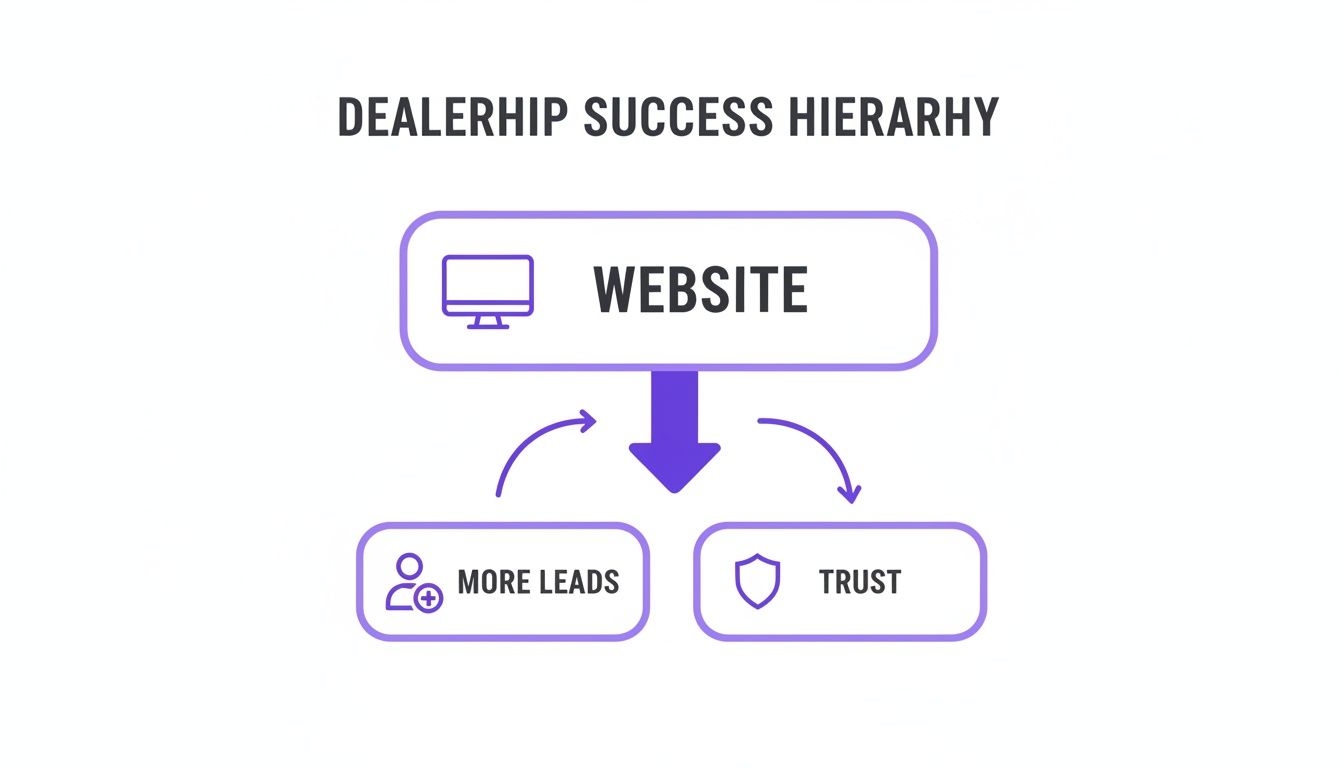
    Infographic: A website is key to dealership success, generating more leads and building trust.

    Your website isn't just a digital brochure. It’s the engine that powers customer trust and lead generation, and that all starts with a smart, simple structure.

    Nailing Down Your Core Pages

    Every great dealership website is built on a handful of essential pages. These are the pillars that answer your customers' most pressing questions and give them the confidence to head down to your lot. You don't need to overcomplicate it; a clean, logical structure is always the winner.

    Your site absolutely must include these core pages:

    • Homepage: This is your digital handshake. It needs to instantly show who you are, what you sell, and have a big, obvious inventory search bar front and center.
    • Inventory Search Page (VRP): A clean, filterable gallery of every car on your lot. This is often the very next page a shopper visits.
    • Financing Page: A simple, secure credit application is a must. This page is a lead-generation goldmine if you make it easy for people to get pre-approved.
    • About Us: Tell your story! Car shoppers want to buy from real people they feel they can trust, and this page is where you build that connection.
    • Contact Us: Make it impossible not to find you. Include your address, a clickable phone number, business hours, and an embedded Google Map.

    This kind of clear hierarchy makes navigation a no-brainer for users and crawling a piece of cake for Google. It's a win-win. If you're exploring your options, our guide on choosing the right dealership website builder dives deeper into platforms that are built with this structure from the ground up.

    Why Your Vehicle Detail Pages Are Your #1 Sales Tool

    Every page on your site has a job, but the Vehicle Detail Page (VDP) is where the magic really happens. This is your digital sales pitch for one specific car, and it's hands-down the most critical page for turning a browser into a lead. When a shopper lands on a VDP, their interest is high—this is your chance to seal the deal.

    Think of the VDP as your virtual showroom for a single car. It must provide every piece of information a serious buyer needs to make a decision. Your goal is to remove any reason for them to click away and keep looking.

    A VDP with blurry photos or missing info is a dead end. It creates friction and doubt, sending potential buyers right into the arms of your competition. A great VDP, on the other hand, builds excitement and makes it incredibly easy for a customer to take the next step.

    Anatomy of a High-Converting VDP

    To turn those VDP views into solid leads, you need to include a few key elements. Each one is there to answer a question, build trust, or nudge the shopper toward taking action.

    Here’s what every VDP absolutely must have:

    1. High-Resolution Photo Gallery: This is non-negotiable. Get 20-30 clear photos covering every single angle—interior, exterior, engine bay, and even close-ups of nice features or minor blemishes. Photos sell cars.
    2. Transparent Pricing: Put the price out there, clear as day. Including a call-to-action like "Request E-Price" is a great way to capture lead info in exchange for a special offer.
    3. Key Vehicle Specs: Automatically pull in the essentials like mileage, VIN, engine, transmission, and color. A good VIN decoder tool is your best friend here.
    4. A Real Vehicle Description: Don't just list factory specs. Write a short, engaging description that sells the car. Highlight its best features, its condition, and what makes it a great buy.
    5. Clear Calls-to-Action (CTAs): Don't make people hunt for what to do next. Big, bold buttons like "Schedule Test Drive," "Check Availability," and "Apply for Financing" should be impossible to miss.
    6. Vehicle History Report: Integrating a link to a CARFAX or AutoCheck report is one of the fastest ways to build credibility and show you have nothing to hide.

    Perfecting your VDPs is the most direct path to increasing leads and selling more cars. By focusing your auto dealership web design efforts here, you’re optimizing the most profitable pages on your entire website.

    Essential Features That Convert Visitors Into Leads

    A great website for a used car dealership does a lot more than just look good—it actively works for you. The real difference between a digital brochure and a lead-generating machine comes down to the features you build into it. These are the tools that car buyers expect to see and use, making it dead simple for them to take the next step.

    Think of your website as a dynamic extension of your lot, not just a static ad. The goal is to remove friction at every point, giving customers the info and confidence they need to reach out. This all starts with how you present your most important asset: your inventory.
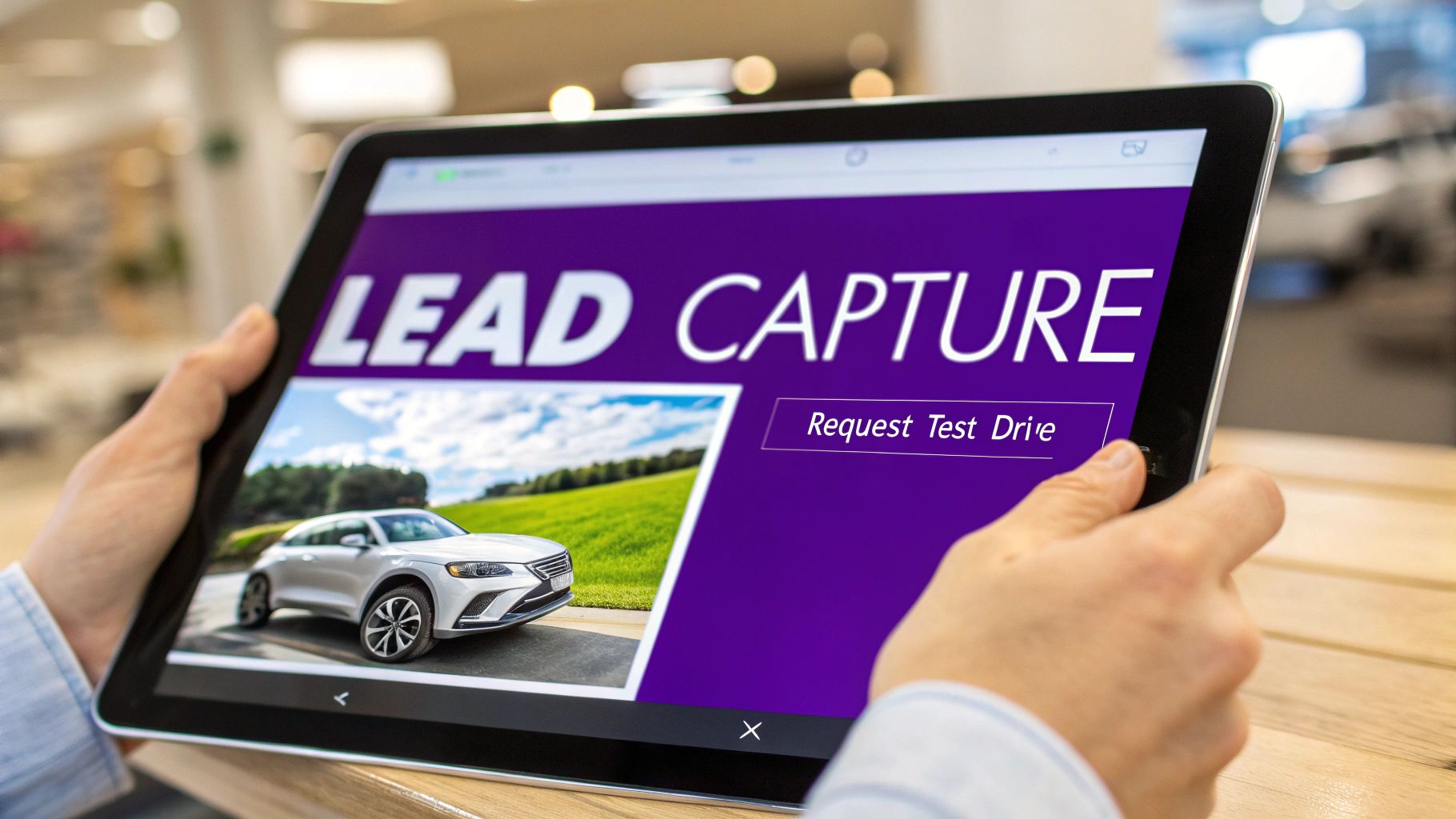
    Hands holding a tablet displaying a car dealership lead capture page with a silver SUV and test drive button.

    Automated Inventory and Immersive Galleries

    Manually updating your site every time a car sells or a new one hits the lot is a surefire way to create problems. It leads to outdated listings, frustrated shoppers, and a massive waste of your time. The answer is automated inventory management that syncs directly with your dealership management system (DMS) or whatever inventory feed you use. That way, when a vehicle is added or sold, your website updates on the spot.

    Once that automation is in place, you need to create a viewing experience that pulls people in. High-quality photo and video galleries are non-negotiable. A shopper should be able to see every angle of a car, inside and out, without ever leaving their couch.

    To build instant credibility, your vehicle detail pages (VDPs) absolutely need these elements:

    • Integrated VIN Decoder: This tool is a lifesaver. It automatically populates all the vehicle's specs—engine, transmission, trim, and factory options. It guarantees accuracy and saves you hours of tedious data entry.
    • 360° Vehicle Walkarounds: Interactive photo or video tours let shoppers virtually kick the tires. They can zoom in on features and get a real feel for the car's condition.
    • Clear Vehicle History: A one-click link to a CARFAX or AutoCheck report is a massive trust signal. It shows you're transparent and have nothing to hide.

    Frictionless Lead Capture Tools

    So, a shopper is interested in a car. You now have a very small window to capture their info. If your forms are clunky, confusing, or ask for too much upfront, they’re gone. The whole point is to make saying "yes" as easy as possible.

    Your website’s primary job is to start a conversation. Every form, button, and call-to-action should be designed to lower the barrier for a potential customer to raise their hand and show interest.

    The best lead capture tools are simple and direct. Think about the key steps in the buying journey and create easy entry points for each one. This subtle shift in thinking can have a huge impact on your bottom line.

    Believe it or not, top-performing dealership websites are now seeing 37% form submission rates by using smart digital retailing tools. That massive jump is directly tied to a site design that includes things like frictionless payment estimators and seamless inventory showcases. It's how you turn anonymous browsers into qualified leads. You can dig into more of these benchmark conversion rates at TradePending.com.

    Making the Next Step Obvious

    Your calls-to-action (CTAs) need to be impossible to miss. These are the buttons and links that guide a visitor from just looking to actually becoming a lead. Ditch the generic "Contact Us" links and use specific, action-oriented language instead.

    Here are the essential lead capture forms every dealership site needs:

    • Test Drive Request: A simple form asking for a name, email, phone, and maybe a preferred time. Keep it short.
    • Finance Pre-Approval: A secure, multi-step form is key here. Breaking it into smaller chunks feels less intimidating and dramatically improves completion rates.
    • "Check Availability" Inquiry: This is a low-commitment way for a customer to confirm a vehicle is still on the lot, giving your team an easy opening to start a dialogue.
    • Trade-In Value Estimator: Offering an instant trade-in estimate in exchange for contact info is probably the single most effective lead magnet you can have.

    By weaving these features into your auto dealership web design, you’re creating a powerful, self-sustaining system for generating real leads. You're not just showing cars; you're building a clear path that guides interested shoppers right to your sales team.

    Driving Traffic with Smart Dealership SEO

    You can have the most beautiful, feature-packed website in the world, but it won't sell a single car if local shoppers can't find it. That's where a smart SEO strategy comes into play. SEO for your dealership isn't about gaming the system; it's about making your site the most helpful and relevant answer for someone in your area searching for a used car.

    Your entire auto dealership web design needs to be built with search engines in mind right from the get-go. This means creating a logical site structure, ensuring it loads lightning-fast, and filling it with valuable content that answers the questions your potential customers are actually asking.
    A hand holds a smartphone displaying a map with a red location pin, against a blurred storefront with a 'LOCAL SEO' sign.

    Dominate Your Local Market

    For an independent dealership, local SEO is your biggest advantage. You’re not trying to sell a truck to someone three states away; you need to connect with buyers right here in your city and the surrounding towns. The absolute foundation of this is your Google Business Profile (GBP).

    Think about it: your GBP is often the very first impression a customer has of your dealership. It's what pops up in Google Maps and the "local pack" results when they search for "used car dealer near me."

    To turn your profile into a local lead magnet, you have to get it right:

    • Fill Out Everything: Don't skip a single section. Add your hours, service areas, and every attribute available. The more complete your profile is, the more Google trusts you.
    • Use High-Quality Photos: Show off your lot, your best inventory, your friendly team, and your service bays. Real photos build real trust.
    • Actively Manage Reviews: You have to respond to every single review—the good and the bad. It shows you're engaged and that you genuinely care about customer experience.

    Your Google Business Profile is your digital storefront on the world's biggest search engine. Keeping it accurate, active, and full of positive reviews is non-negotiable for grabbing the attention of nearby, ready-to-buy car shoppers.

    Optimizing Your Inventory for Search

    Every single vehicle on your lot is a chance to rank on Google. Don't just list a car as a "2019 Ford F-150." You need to create a unique, keyword-rich title for every single Vehicle Detail Page (VDP).

    A much better title looks like this: "Used 2019 Ford F-150 Lariat for Sale in [Your City, ST]". This targets both the specific truck and the local searcher.

    This simple tweak transforms each VDP into a laser-focused landing page that can attract buyers looking for that exact make and model. The game has changed completely since Google went mobile-first. In fact, research shows that a high percentage of car buyers say their decisions are influenced by what they find in search results.

    Tapping into Google Vehicle Listings

    One of the best sources of free, high-intent traffic is Google Vehicle Listings. This feature puts cars for sale right in the search results, complete with photos, mileage, price, and your dealership's name. The best part? It costs you absolutely nothing to show up there.

    To get your inventory included, your website needs to be built in a way that Google can easily read and understand your vehicle data. This is done with a technical element called schema markup.

    A modern dealership website platform should handle this automatically. When you add a car to your inventory, the system should generate the right structured data behind the scenes. This allows Google to find your car and add it to the Vehicle Listings.

    Getting this technical SEO piece right is crucial. It makes sure your inventory is seen where buyers are already looking, sending clicks directly to your VDPs without you paying for them. If you want to dive deeper, our guide on local SEO for car dealerships shows you how to pull all these tactics together.

    Launching Your Site and Tracking What Really Matters

    Getting your new dealership website live is a huge step, but don't pop the champagne just yet. The launch isn't the finish line; it’s the starting line. Before you tell the world, you need to do one last, thorough check to make sure everything works perfectly from day one.

    Think of it as the final detail on a car before it hits the front line. You wouldn't want a customer's first impression to be a broken link or a form that goes nowhere. A few minutes of testing now can save you from major headaches and lost leads later.

    Your Pre-Launch Checklist

    Before you flip the switch, run through this quick but critical inspection. It's far better to catch a glitch yourself than to have a potential buyer discover it for you.

    • Test every single form. Seriously, fill them all out yourself—test drive requests, finance applications, trade-in value forms. Did the lead email land in the right inbox? Did you get the confirmation auto-responder?
    • Check it on your phone. Pull up the site on your smartphone and act like a customer. Can you easily browse inventory? Are the buttons big enough to tap? Do the pictures look sharp?
    • Click everything. Go through your main menu, click every call-to-action button, and check the links in your footer. A dead link is a dead end for a customer and a bad signal to Google.
    • Confirm your inventory sync. If you just added a fresh batch of cars, make sure they’re showing up online with all the right photos, prices, and details.

    Once you’ve personally verified these items, you're ready to go live. Now, the real work begins: listening to what your website's data is telling you.

    Measuring What Actually Moves the Needle

    After launch, it's tempting to get obsessed with big-picture numbers like total website visitors. But those are often just vanity metrics. They don't tell you if your auto dealership web design is actually putting people in cars. You need to zero in on the Key Performance Indicators (KPIs) that directly tie to sales.

    A thousand visitors who click away in five seconds are worthless. Ten visitors who dig into your VDPs and fill out a finance application are pure gold. Your focus has to shift from the quantity of traffic to the quality of engagement.

    This is exactly why tools like Google Analytics 4 are non-negotiable. They let you see beyond the surface and understand exactly how real buyers are interacting with your inventory.

    Key Performance Indicators for Your Dealership

    Don't get lost in a sea of charts and graphs. Concentrate on the handful of metrics that truly reflect your website's health and its impact on your bottom line.

    Here’s what you should be keeping an eye on every single week:

    1. Lead Form Submissions: This is your North Star. What percentage of your visitors are taking action by requesting a test drive, asking for more info, or applying for financing? If this number is going up, your site is doing its job.
    2. Time on Vehicle Detail Pages (VDPs): Are people spending a few seconds on a vehicle page and leaving, or are they sticking around for a minute or more, scrolling through all 20-30 photos and reading the specs? Longer time on page means higher interest.
    3. Bounce Rate on Key Pages: A high bounce rate (people leaving after viewing only one page) on your main inventory page could signal a problem. Maybe the search filters are confusing or the layout is clunky. This helps you spot friction points.
    4. Traffic Source Quality: Where are your best leads coming from? By tracking where your form submissions originate, you might discover that visitors from your Google Business Profile convert at a much higher rate than those from a social media ad.

    By consistently tracking these performance-driven metrics, you can stop guessing and start making smart, data-backed decisions. You can test a different color for your "Apply Now" button or rewrite your vehicle descriptions and see, with hard data, what actually generates more leads. This cycle of measuring, tweaking, and improving is what will turn your new website into your dealership's most powerful salesperson.

    Answering Your Top Questions About Dealership Websites

    Let's cut to the chase. When you're thinking about a new website for your dealership, a lot of questions pop up—usually about money, time, and how much of a headache it's going to be. Below, I’ve answered the most common questions I hear from dealers, with straightforward advice to help you make a smart move.

    Think of this as the condensed version of everything we've talked about, designed to give you clarity and confidence.

    How Much Should a Good Dealership Website Actually Cost?

    This is the big one, and honestly, the price can be all over the map. If you go the traditional marketing agency route for a fully custom build, you could be looking at anywhere from $10,000 to over $50,000. That gets you something completely unique, but it's a massive upfront cost and a long, drawn-out process.

    On the flip side, you have the cheap, do-it-yourself website builders. It’s tempting, but it’s a classic case of getting what you pay for. They almost never have the critical tools you actually need to sell cars—things like automated inventory feeds, VIN decoding, or integration with Google Vehicle Listings. You end up with a digital business card, not a sales machine.

    For the vast majority of independent dealers, the sweet spot is a specialized SaaS (Software as a Service) platform. These services bundle everything you need—professional design, car-specific features, hosting, and security—into a predictable monthly fee. You get a purpose-built tool without the custom-built price tag.

    This model dodges the huge initial investment and saves you from the technical nightmares of managing a site yourself. You get a powerful website designed from the ground up to sell cars.

    How Long Does It Realistically Take to Launch a New Site?

    Time is money, and every month you're waiting on a website is a month of missed sales. A custom project with an agency can feel like it's dragging on forever, often taking three to six months from the first meeting to the day you finally go live. For a busy dealership, that kind of delay just isn't an option.

    This is where a modern SaaS platform designed for the auto industry completely changes the game. Because the core technology, design templates, and inventory systems are already built and optimized for dealers, the setup is incredibly fast.

    Instead of building a house from scratch, you’re just moving into a fully-furnished one and arranging the furniture. The platform is simply configured to your brand and hooked up to your inventory feed. This means you can have a professional, SEO-ready website up and running in a matter of hours or days, not months. That speed is a huge competitive advantage, letting you start generating leads right away.

    Can I Actually Manage My Website Without Being a Tech Whiz?

    You absolutely should be able to. The whole point of a modern dealership website solution is to let you manage your business, not force you to become a part-time web developer. You shouldn't need to know a line of code just to update a car's price or change your business hours.

    A well-designed platform gives you a simple, intuitive dashboard to handle all the day-to-day stuff. This typically includes:

    • Editing vehicle details and uploading photos
    • Updating your hours and contact info
    • Viewing and managing leads from your web forms
    • Publishing a blog post or creating a special offers page

    All the complicated technical work should happen in the background, completely invisible to you. Server maintenance, security patches, software updates—that's the platform's job. Your job is to focus on what you do best: buying and selling cars.

    What's the Single Most Important Page on My Dealership's Website?

    Your homepage gets the first look, but the Vehicle Detail Page (VDP) is where the magic really happens. This is your digital showroom. It's the moment a casual browser becomes a serious, high-intent buyer. When a customer lands on a VDP, they're not just kicking tires; they're actively considering that specific vehicle.

    Your VDP is where a sale is won or lost online. It needs to give a buyer every single piece of information they need to feel confident and take the next step, answering their questions before they even think to ask them.

    If you focus on optimizing one thing, make it your VDPs. A great one is so much more than a list of specs. It’s a compelling sales pitch built with high-quality photos from every angle, transparent pricing, detailed vehicle info, a clear history report, and multiple, obvious calls-to-action. Big, bold buttons like "Schedule Test Drive" or "Apply for Financing" are essential for guiding the customer forward and turning their interest into a real lead for your team.


    Ready to launch a website that works as hard as you do? AutoFire™ delivers a fast, mobile-first website platform built specifically for independent dealerships. Get online in minutes with automated inventory, built-in SEO, and lead capture tools that turn visitors into buyers.

    Start selling more cars with AutoFire today

  • Choosing a Website Builder for Auto Dealers

    Choosing a Website Builder for Auto Dealers

    A website builder for auto dealers isn't your average website tool. It's a specialized platform built from the ground up to handle the very specific digital needs of a car dealership—things generic builders simply can't do. Think of it as the engine powering your entire digital showroom, handling everything from inventory management to closing sales online. It’s the single most important tool for turning casual online browsers into paying customers.

    Your Digital Showroom Needs a Specialized Toolkit

    Man in a car showroom with a tablet displaying a digital showroom interface for car models and tools.

    The car buying journey almost always starts online now. That means your dealership's website is no longer a simple digital brochure. It has become your main storefront, your 24/7 sales floor, and the very first impression you make on nearly every potential customer. With so much riding on it, the platform you choose to build and manage this vital asset matters more than ever.

    You might be tempted to use a general-purpose website builder, the kind a local bakery or a blogger might use. While those platforms are great for simple sites, using one for a dealership is like trying to fix a modern performance engine with a basic wrench set. You might tighten a bolt or two, but you’ll be missing the specialized tools needed for the complex, high-stakes job of selling cars.

    The Right Tools for the Automotive Trade

    A generic builder simply wasn't designed for the unique demands of automotive retail. It doesn't speak the language of VINs, makes, models, or financing. This is exactly where a dedicated website builder for auto dealers proves its worth. It’s not just a tool; it’s a professional-grade toolkit built specifically for running a high-performance digital operation.

    Take a look at how a generic platform stacks up against a purpose-built solution for dealerships.

    General vs Specialized Auto Dealer Website Builders

    This quick comparison highlights the essential tools dealers need to succeed online, which are often missing from generic builders.

    Feature Generic Website Builder (e.g., Wix, Squarespace) Specialized Auto Dealer Website Builder
    Inventory Management Manual entry required; no automated feeds. Automated, real-time sync with Dealer Management Systems (DMS).
    VIN Decoding Not available. All vehicle details must be entered by hand. Instant and automatic. Populates listings with accurate specs.
    Financing Tools Relies on basic forms or third-party plugins. Fully integrated payment calculators and credit applications.
    Trade-In Estimators Requires third-party widgets that can be clunky. Built-in tools that capture leads directly from the website.
    Vehicle Detail Pages (VDP) Basic page templates; not optimized for vehicles. Highly optimized VDPs designed to convert shoppers.
    SEO for Automotive General SEO tools; lacks industry-specific features. Specialized SEO for vehicle models, locations, and local search.

    As you can see, specialized platforms come loaded with non-negotiable features built right into their core. You get everything you need, working together seamlessly, right out of the box.

    The modern dealership website must function as a complete sales and marketing hub. It’s not just about showcasing cars; it's about providing a seamless, interactive experience that guides a customer from initial research to a final purchase decision, all within a single, cohesive platform.

    Adapting to the Digital-First Car Buyer

    The need for these specialized tools is a direct response to a massive shift in how people buy cars. The growth of digital retail in the automotive sector has significantly changed consumer behavior, moving much of the sales process online.

    This trend makes one thing crystal clear: your website is now the primary battleground for winning new customers. Its design, speed, and integrated features have a direct impact on your bottom line. You can explore more about these evolving automotive trends and what they mean for your dealership. The right platform isn’t just an expense; it’s a strategic investment in capturing leads, streamlining sales, and staying ahead as the industry accelerates online.

    Must-Have Features for a Dealer Website That Actually Sells Cars

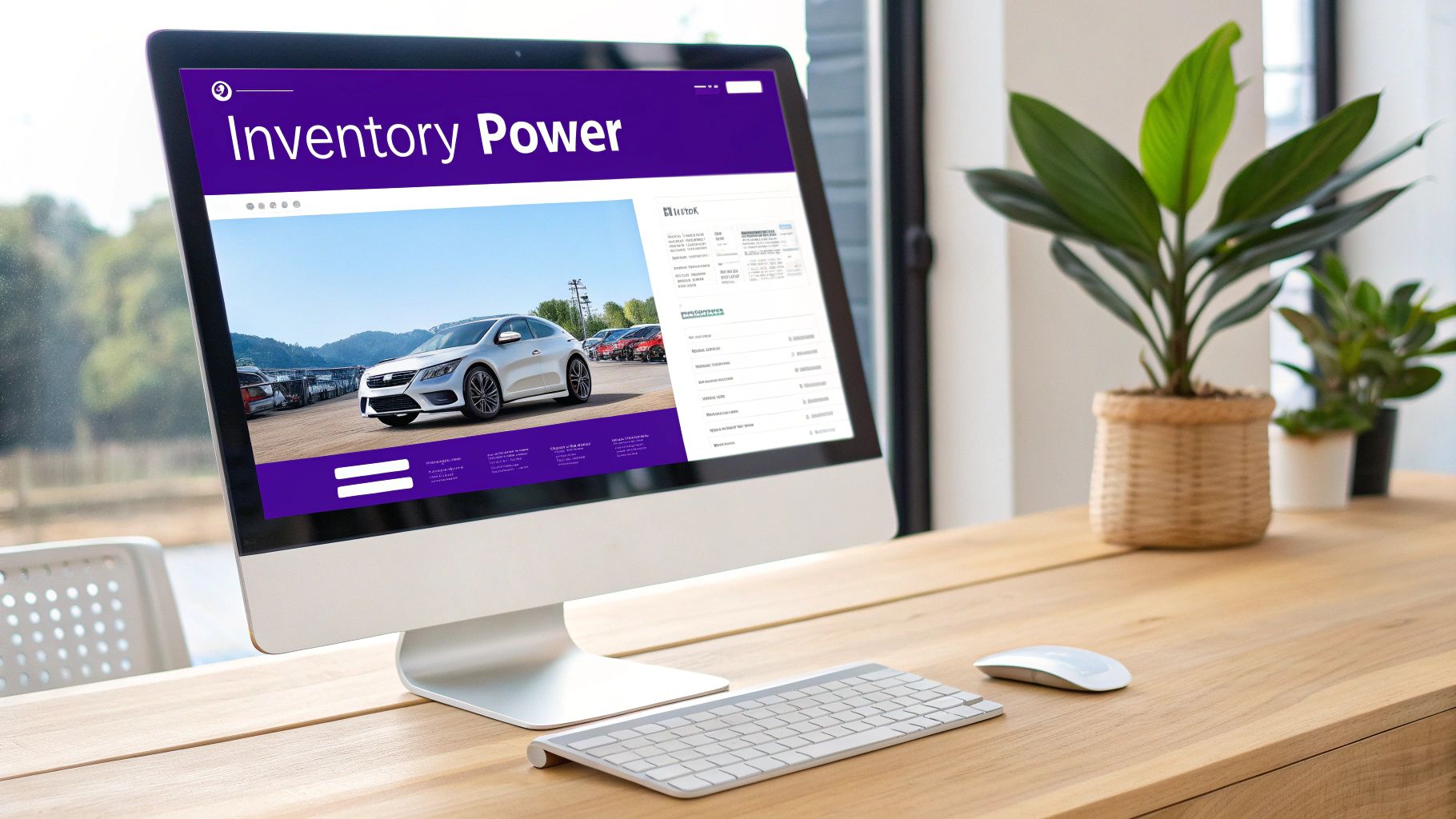
    A computer monitor on a wooden desk displays an automotive inventory website featuring a silver car.

    A top-tier dealership website is so much more than a digital business card. It’s a sales machine, and every single part needs to be engineered to turn a casual browser into a serious buyer. While a generic website can show a picture of a car, a platform built specifically for dealers creates an entire shopping experience around it.

    These features aren't just bells and whistles. They're the core machinery that grabs a customer's attention, builds trust, and captures qualified leads long before they ever set foot on your lot. Each tool is designed to meet a buyer exactly where they are in their journey, from early-stage research to the final financing questions.

    Inventory Management That Does the Heavy Lifting

    Let's be honest, your inventory is the heart and soul of your website. A proper website builder for auto dealers knows this and provides smart, automated systems to save you hours of work and prevent expensive mistakes. Forget manually typing in every last detail for every single vehicle.

    A perfect example is automatic VIN decoding. You just plug in the VIN, and the system instantly populates the listing with the right information—engine size, transmission type, standard features, you name it. This kills two birds with one stone: it eliminates tedious data entry and drastically reduces the chance of human error. It's the difference between a sparse, unprofessional listing and a detailed, trustworthy one that gives buyers confidence.

    Building Vehicle Detail Pages That Pop

    Your Vehicle Detail Pages (VDPs) are the most valuable real estate in your digital showroom. This is where a browser decides to become a buyer. A high-converting VDP needs to be visually stunning and loaded with all the information a shopper is looking for.

    • High-Resolution Photos and Videos: Buyers want to see everything. Your site has to support big, beautiful photo galleries and video walkarounds that show off the vehicle from every angle, inside and out. This is the visual proof that gets someone to book a test drive.
    • Smart, Clean Layouts: Key details like price, mileage, and a big, obvious call-to-action button should be visible right away—no scrolling required. A good design naturally guides the visitor's eye to the most important info, making the whole experience feel easy.

    A great VDP answers a customer's questions before they even think to ask. It lays everything out in one place, from specs to financing options, removing friction and pushing the buyer closer to making a decision.

    Interactive Tools That Reel In Serious Buyers

    The best dealer websites don't just throw information at people; they engage them with interactive tools that help them figure things out. These features are absolute lead magnets because they attract shoppers who are past the "just looking" phase and are genuinely thinking about buying.

    Industry research backs this up. Studies on automotive website performance have shown that integrated tools like payment calculators and vehicle history reports can dramatically increase how long users stay on a site. It turns out that a slick look, fast load times, and interactive features are key drivers of customer satisfaction.

    Here are a few tools you just can't do without:

    1. Integrated Financing Calculators: Letting a customer estimate their monthly payment right on the VDP keeps them on your site. It makes an abstract price tag feel real and manageable, and it helps them qualify themselves right then and there.
    2. Trade-In Value Estimators: Most car deals involve a trade-in. A built-in estimator tool is a genius way to capture a lead's contact info and current vehicle details in exchange for an instant, helpful quote.
    3. Vehicle Comparison Tools: Shoppers are almost always weighing their options. A tool that lets them see two or three vehicles' specs side-by-side keeps them on your website instead of sending them back to Google to get lost on a competitor's page.

    By building in these kinds of features, a dealership website goes from being a static brochure to a dynamic sales assistant that works 24/7. You can check out a full list of these powerful AutoFire™ features to see how they all work together to create a better customer experience and grow your dealership.

    Dominating Local Search with Automotive SEO

    Let's be blunt: a stunning website that nobody can find is just a pretty picture. It's the digital equivalent of a pristine showroom hidden down a back alley with no sign. If you want to connect with local car buyers, you have to show up where they're looking—and that means dominating local search results on Google.

    This isn't about some secret trick or a stroke of luck. It's about building your website on a rock-solid technical and search engine optimization (SEO) foundation. Think of SEO as the detailed map and bright, flashing road signs that guide Google's algorithms directly to your inventory. Without them, your dealership is lost in a sea of competitors. A proper website builder for auto dealers handles all the heavy lifting behind the scenes, making sure search engines can find your site and understand exactly what you have on the lot.

    The Technical Foundation for Visibility

    Before we even get to keywords and content, your site has to pass Google's basic technical inspection. These aren't just suggestions; they're non-negotiable requirements for earning a high rank, especially since most of your customers are searching on their phones.

    • Mobile-First Design: Your website absolutely must look and work perfectly on a smartphone. Search engines are all-in on mobile, and a clunky, hard-to-use mobile site will get buried in the search results.
    • Fast Page Load Speeds: Every single second matters. If your Vehicle Detail Pages (VDPs) lag, potential buyers will hit the back button before they even see the car. Meeting Google's Core Web Vitals isn't just a good idea; it's essential proof that your site offers a great user experience.
    • Clean URL Structures: A clean, readable URL like yourdealership.com/inventory/used-2022-ford-f150 does more work than you'd think. It helps both shoppers and search engines instantly understand what the page is about, unlike a messy URL filled with random characters.

    Get these elements right, and you've built the bedrock of your online presence. Without them, even the most aggressive marketing campaigns will struggle to gain traction.

    Automotive-Specific SEO That Drives Traffic

    With a solid technical base, you can start layering on SEO strategies designed specifically for the car business. This is where a specialized website builder leaves generic platforms in the dust. The game isn't just about ranking for "used cars nearby"; it's about making every single vehicle in your inventory pop up for the right buyer at the right time.

    The real goal of automotive SEO is to translate your physical inventory into a digital language that Google can read, understand, and rank highly. It’s all about structuring your vehicle data to perfectly match what a car shopper is typing into the search bar.

    The most powerful weapon in your arsenal for this is schema markup. In simple terms, this is a special code that acts like a label for all the key details on your VDPs—the make, model, year, price, mileage, and more. When Google sees these labels, it understands your inventory with perfect clarity.

    The payoff? Google can then feature your vehicles in highly-visible "rich results," like the interactive carousels you see at the very top of the search page. Snagging a spot in that prime digital real estate can send a flood of highly-qualified traffic straight to your VDPs.

    Optimizing Your Most Valuable Pages

    Your Search Results Pages (SRPs) and VDPs are where the magic happens—it's where shoppers turn into leads. They need to be perfectly optimized for search from the get-go. A good dealer website platform will give you templates that are already built for SEO success. That means they automatically generate keyword-rich titles, meta descriptions, and headers that align with common search terms.

    Finally, a truly effective platform gives you the tools to build your reputation as the local authority. An integrated blog is a perfect example, letting you publish articles that answer real customer questions like, "What are the best used SUVs for families?" or "What should I look for when buying a used truck?" This shows you're an expert, not just a seller. Couple that with tools for managing your Google Business Profile, and you'll be well on your way to dominating the local map pack and driving actual foot traffic to your showroom.

    How to Choose the Right Website Builder Partner

    Choosing a website builder isn't just a technical decision; it's a strategic partnership. You’re not just buying a piece of software. You’re picking a technology partner that will play a huge role in your dealership’s growth for years to come.

    A great partner will feel like an extension of your team, making your life easier and your sales process smoother. The wrong one? They'll become a massive roadblock, costing you valuable time and, more importantly, sales. The key is to look past the flashy sales pitch and really dig into the details that matter to your daily operations.

    Vetting Potential Partners Systematically

    First things first: schedule live demos. Don't settle for a pre-recorded video. You need to be on a call with a real person, walking you through the platform in real time. This is your chance to interrupt, ask very specific questions, and see how the system handles the exact scenarios your dealership faces every day.

    During these demos, zero in on integrations. A dealership website is useless if it’s an island. You have to confirm—not just assume—that the platform has solid, proven connections to your existing Dealer Management System (DMS) and Customer Relationship Management (CRM) software. Ask the nitty-gritty questions: How often does the data sync? Is it a one-way push or a two-way conversation? Flawless integration is non-negotiable.

    Think of your website builder as the central hub of your digital operations. If it can't talk seamlessly with your DMS and CRM, you’re just creating data logjams that will bring your entire sales process to a crawl.

    Asking the Hard Questions

    Once you’ve confirmed the tech can do the job, it’s time to talk about what happens when things go wrong—and how you’ll get started. If you're moving from an old site, how will they handle migrating all your existing data? A bumpy transition can disrupt business for weeks.

    And what about customer support? When your site is down or a feature isn't working, you need expert help, fast.

    • What are their support hours? Are they available when you actually need them?
    • Is support handled by experts or a generic call center? You need someone who understands the car business, not just a script.
    • What are the guaranteed response times? Don’t accept vague promises. Get a real commitment.

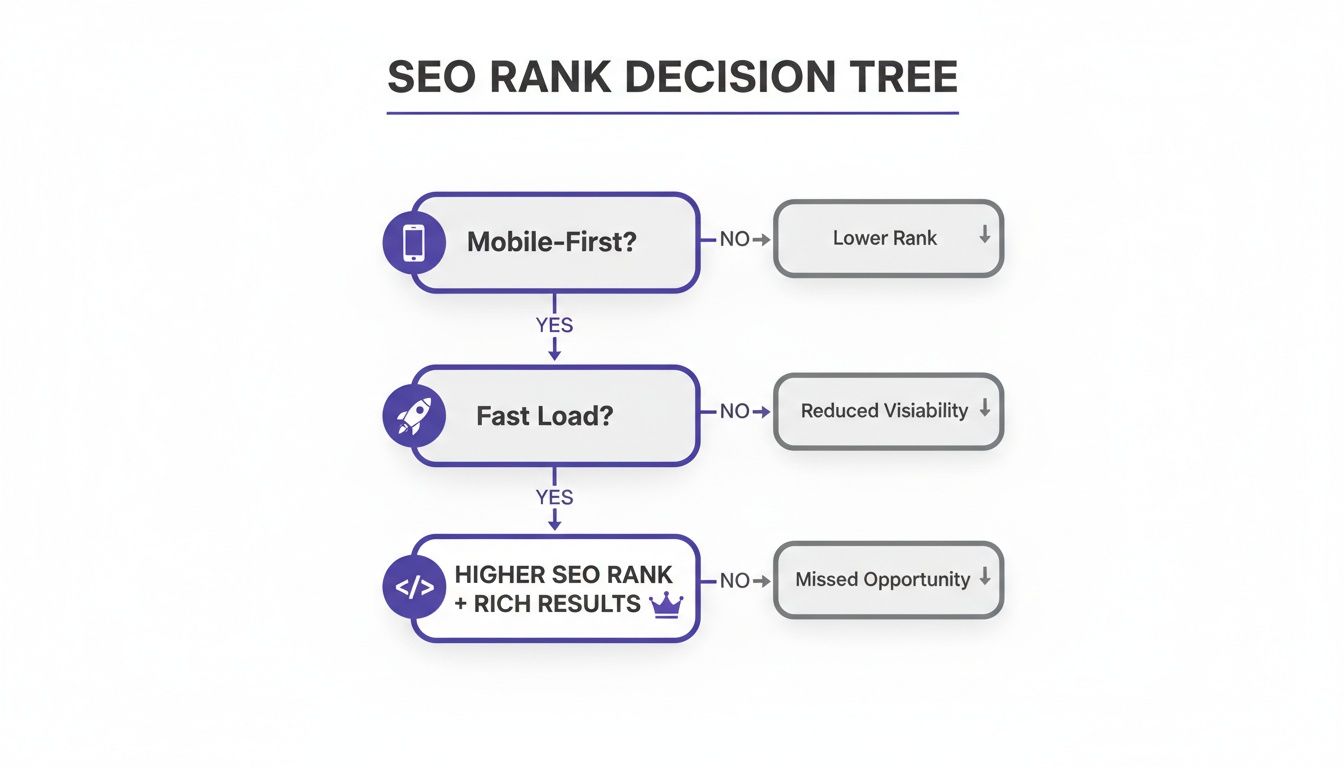
    This decision tree shows just how crucial foundational elements like mobile-first design and fast loading speeds are. They aren't just nice-to-haves; they are the absolute starting point for achieving better SEO and unlocking those valuable rich results on Google.

    SEO Rank Decision Tree showing mobile-first design and fast loading as key factors for higher SEO and rich results.

    This visual makes it clear: without these core technical pillars in place from the start, all your other SEO efforts will be fighting an uphill battle. You need a provider that builds its platform on this solid foundation.

    Scrutinizing the Fine Print

    Finally, demand a detailed breakdown of all costs. It’s a classic move: lure you in with a low monthly fee, then hit you with a dozen hidden charges for things you can’t operate without. Get a complete fee schedule in writing before you sign anything.

    Keep an eye out for extra costs tied to:

    1. Initial setup and data migration
    2. DMS/CRM integration modules
    3. Premium support tiers
    4. Specific feature add-ons

    A transparent partner will be completely upfront about every potential expense. By following this process and asking tough, detailed questions, you can truly compare providers on an apples-to-apples basis. Taking the time to schedule a personalized demo will give you a clear picture of what a modern, dealer-focused platform should deliver. This approach ensures you choose a partner that doesn't just meet today's needs but is ready to help your dealership grow for the long haul.

    AutoFire: A Platform Built for Dealer Growth

    A man in a suit views two laptops showing data dashboards and charts in an office environment, featuring 'AUTOFIRE PLATFORM'.

    It’s one thing to understand the need for specialized tools, great features, and a rock-solid SEO foundation. It's a completely different challenge to find a single platform that actually brings it all together. This is where AutoFire comes in. We go way beyond a simple checklist of features to deliver a complete growth engine for your dealership.

    AutoFire was built from the ground up to solve the real-world problems dealers face every single day. Think of it less like another piece of software and more like a partner designed to help you save time, capture more leads, and ultimately, sell more cars.

    From Good Ideas to Real Results

    We've talked about how critical unique, high-quality content is for your Vehicle Detail Pages (VDPs). But let's be honest—manually writing compelling descriptions for every single car on your lot is a massive job that often falls by the wayside. AutoFire tackles this head-on with AI-powered VDP descriptions that generate engaging, SEO-friendly content automatically. This ensures every vehicle listing is pulling its weight to attract buyers.

    The same idea applies to technical performance. You shouldn’t have to be a web developer to compete online. AutoFire’s lightning-fast architecture is engineered to satisfy Google's demanding Core Web Vitals right out of the box. That means your website is built for speed and mobile performance from day one, giving you an immediate leg up in local search.

    AutoFire bridges the gap between knowing what your dealership needs and actually having it. It translates best practices in automotive marketing and SEO into a practical, automated platform that works for you 24/7.

    More Than a Website—A Growth Partner

    A truly effective website builder for auto dealers is all about benefits, not just a long list of features. Every tool within the AutoFire platform is designed with one clear goal: to drive your dealership's success and give you a competitive edge.

    • Seamless Inventory Management: Forget about tedious manual updates. AutoFire syncs directly with your inventory, using tools like our VIN Decoder to ensure every listing is accurate and rich with detail. This saves your team countless hours, freeing them up to focus on selling.
    • Advanced Lead Generation Tools: We build the tools that capture serious buyers directly into the shopping experience. From trade-in estimators to financing calculators, every feature is strategically placed to turn passive browsers into hot leads for your sales team.
    • Effortless SEO Dominance: AutoFire handles the technical heavy lifting of automotive SEO. From creating clean URL structures to implementing the schema markup that helps your inventory stand out in Google, the platform does the work so you can reap the rewards.

    Tapping Into a Growing Digital Market

    The shift to online car shopping isn't just a trend; it's a permanent change in how people buy cars. The global automotive ecommerce market continues to expand, with forecasts predicting aggressive growth for years to come. For dealerships, this is a massive opportunity, but only for those with the right digital tools. You can read more about the automotive ecommerce surge on BigCommerce.

    This is precisely the environment AutoFire was built for. We give independent dealers the technology to compete and win in this expanding digital marketplace. By bringing everything you need into one cohesive platform, we get rid of the technical hurdles that hold so many dealerships back.

    Ultimately, choosing AutoFire is a commitment to your own growth. We handle the tech, the speed, the security, and the SEO so you can concentrate on what you do best: building relationships and moving metal. To see how this all comes together, you can explore the entire AutoFire platform and find a smarter way to run your digital showroom.

    Your Top Questions About Dealer Websites, Answered

    Choosing a new website platform is a big move for any dealership. It’s totally normal to have questions about how it all works, what it costs, and what it really means for your business. Let's tackle some of the most common questions we hear from dealers to give you the straight scoop.

    How Long Does It Take To Launch a New Dealer Website?

    Downtime is a deal-killer, and nobody wants a launch to drag on forever. The good news? With a team that knows the auto industry, getting a powerful new site live doesn't have to be a painful process. While every dealership is different, a typical timeline from kickoff to launch is usually somewhere between two and six weeks.

    A professional launch isn’t just a flip of a switch; it's broken down into clear, manageable stages. This makes sure nothing falls through the cracks and your team is ready for the changeover.

    • Discovery and Design: We start by getting to know your dealership—your brand, your goals, and your customers. This helps us create a design that feels like you.
    • Data Migration: This is where the magic happens. We pull your entire vehicle inventory from your Dealer Management System (DMS) and get it loaded onto the new site. A good partner makes this completely painless.
    • Content and SEO Setup: We build out your core pages and put all the foundational automotive SEO in place, so search engines can start finding you from day one.
    • Training and Go-Live: Your team gets a walkthrough of the new system, learning how to manage leads and update content. Once everyone feels confident, we launch the site.

    A dedicated project manager should be your guide through this entire process. Their job is to handle all the technical details, keep you in the loop, and make sure the transition is so smooth your business never misses a beat.

    Can a New Website Integrate With My Existing CRM and DMS?

    Yes, it absolutely has to. This is a non-negotiable. Any top-tier website builder for auto dealers is built from the ground up to connect with the major Dealer Management Systems (DMS) and Customer Relationship Management (CRM) tools you already use. This is the glue that holds your digital operations together.

    Why is this so critical? Seamless integration automates your most important work. When a customer fills out a form on your site, that lead should instantly appear in your sales team's CRM. No more manual data entry, no more delays, and no more good leads getting lost in the shuffle.

    It also keeps your online inventory perfectly in sync with your physical lot. A car sells? It’s automatically removed from the website. This prevents that frustrating call from a customer asking about a vehicle that’s already gone. Before you sign with any provider, get a firm "yes" that they have proven, certified integrations with the systems you rely on every day.

    What Is the Real ROI of a Specialized Auto Dealer Website?

    The return on your investment goes way beyond just a fresh design. A specialized dealer website impacts your bottom line in several real, measurable ways. It's not an expense; it's an investment in a more efficient, profitable business.

    First and foremost, you'll see a big jump in both the quantity and quality of your leads. Smart tools like payment calculators, trade-in estimators, and engaging Vehicle Detail Pages (VDPs) are designed to capture the interest of serious buyers. They help you connect with shoppers who are much further down the road to making a purchase.

    Second, think of the operational efficiency you'll gain. When you automate inventory management, VDP creation, and lead routing, you give your team their time back. They can spend less time on busywork and more time on what they do best: building relationships and selling cars.

    Think of the ROI in two ways: making more money and saving more money. Great SEO drives more organic traffic over time, which means you can gradually pull back on how much you spend on paid ads.

    Finally, a fast, professional, and easy-to-use website builds your dealership's reputation. In an industry built on trust, a high-quality digital showroom tells customers you're credible and gives them the confidence to do business with you. That better experience leads directly to higher closing rates and customers who come back again and again.

    How Much Does a Website Builder for Auto Dealers Cost?

    Getting a clear picture of the costs is essential. For a dedicated website builder for auto dealers, the price is usually split into two parts: a one-time setup fee and an ongoing monthly subscription.

    The one-time setup fee covers all the initial heavy lifting—things like the custom design work, the technical process of migrating your inventory data, and getting your foundational SEO configured.

    The recurring monthly subscription is for all the ongoing services that keep your site secure, fast, and up-to-date. This fee typically bundles:

    • High-speed web hosting
    • Security monitoring and software updates
    • Platform feature enhancements
    • Access to customer and technical support

    Monthly costs can range from a few hundred to over a thousand dollars, depending on the provider and the features you need. A word of caution: be wary of rock-bottom prices. They often hide extra fees for things that should be standard, like CRM integrations or key sales tools. Always ask for a detailed proposal that spells out every single cost before you sign anything.


    Ready to see how a modern website can drive real growth for your dealership? AutoFire provides an all-in-one platform engineered to get you online fast and start capturing leads immediately. Discover the AutoFire difference today!