Tag: automotive lead gen

  • A Modern Playbook for Generating Auto Dealership Leads

    A Modern Playbook for Generating Auto Dealership Leads

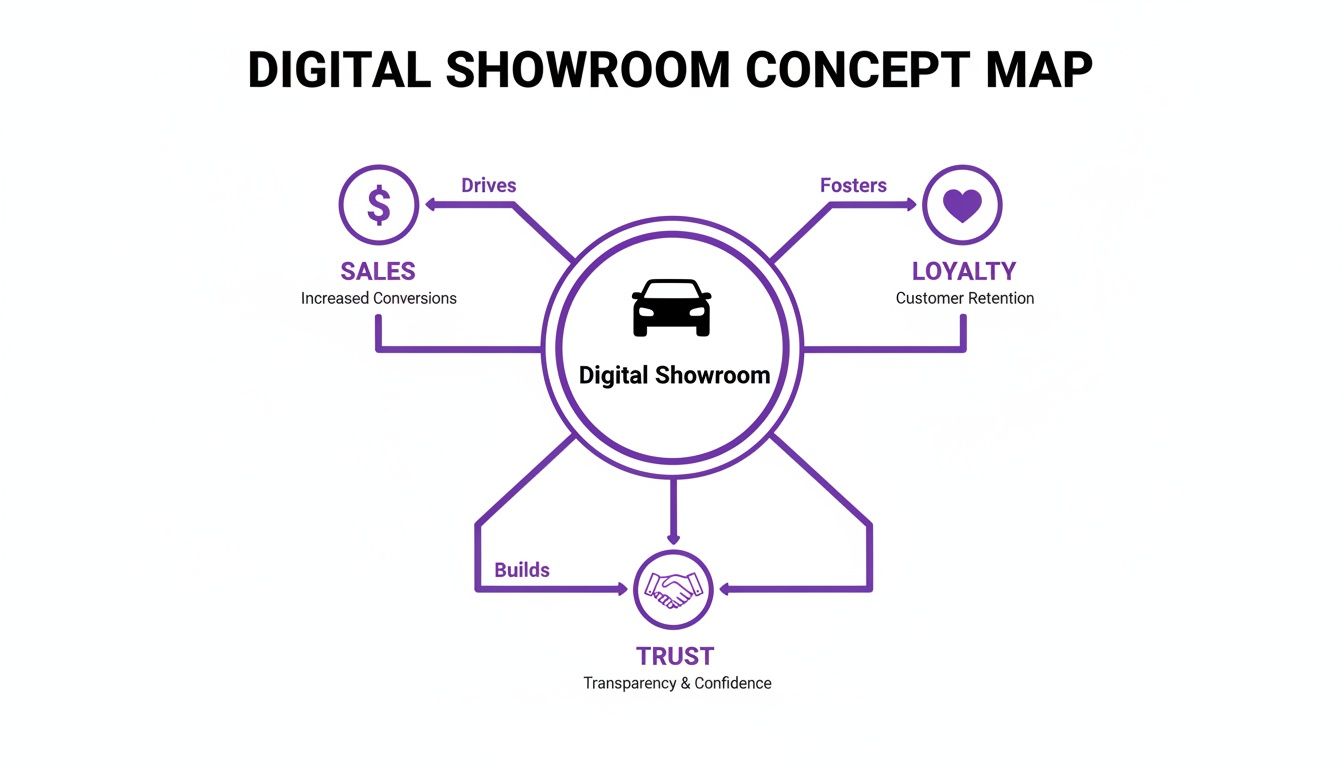
    Your website isn't just an online business card anymore. It's your digital showroom, your top salesperson, and by far your most powerful tool for generating real, high-quality auto dealership leads. A sharp, mobile-friendly design isn't just a nice-to-have; it's the absolute foundation for turning casual online browsers into paying customers on your lot.

    The whole game is about creating a smooth digital experience that builds immediate trust and makes it incredibly easy for a shopper to take the next step.

    Building a Digital Showroom That Converts

    Think about it: your website is often the very first handshake with a potential buyer. Long before they smell the new car scent or kick a single tire, they've already sized you up based on their experience online. This is where the modern battle for leads is won or lost.

    The journey from a casual Google search to a submitted lead form on your site has to be seamless. This visual breaks down that critical path.
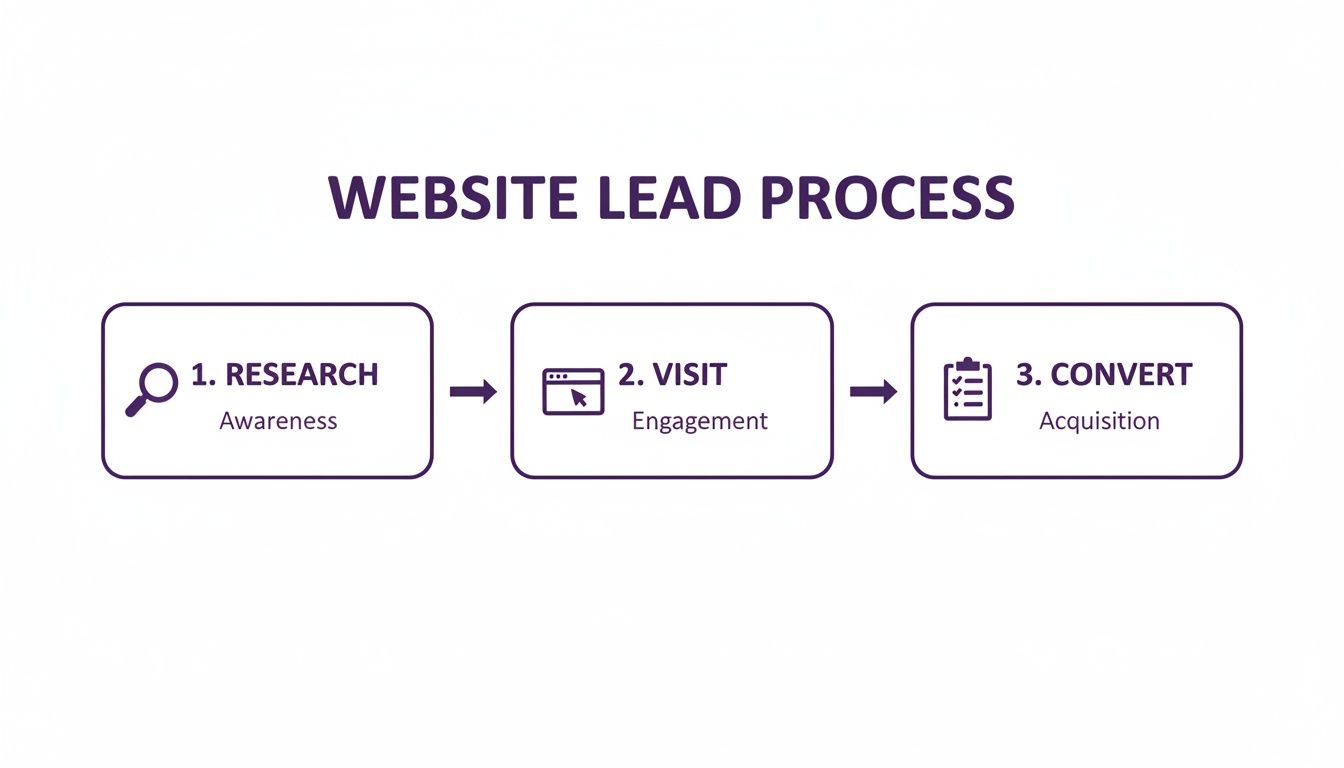
    Flowchart illustrating the website lead process: Research, Visit, Convert, with awareness, engagement, and acquisition stages.

    As you can see, the path is straightforward. Your job is to remove any and all friction between those steps.

    To help visualize how specific website components directly contribute to lead generation, here’s a breakdown of the essentials.

    Essential Website Elements for Lead Conversion

    Website Element Impact on Leads Real-World Example
    Mobile-First Design Captures the majority of traffic from smartphones; prevents high bounce rates. A site where a user can easily browse inventory and fill out a form with one thumb on their phone.
    High-Quality VDPs Builds trust and answers questions upfront, pre-qualifying the lead. Including multiple high-res photos, a walkaround video, and an embedded CarFax report for every vehicle.
    Clear CTAs Guides visitors toward conversion actions instead of letting them wander. Using buttons like "Schedule a Test Drive" or "Get Today's Price" prominently above the fold on every VDP.
    Simple Lead Forms Reduces friction and increases form submissions by only asking for essential info. A contact form that only asks for name, email, and phone number, rather than a 10-field questionnaire.
    Live Chat/Texting Engages hesitant buyers in real-time, capturing leads that might otherwise leave. A chat widget that proactively asks, "Have questions about this Silverado? We can text you the details."

    Ultimately, every single element on your site should be strategically designed with one goal in mind: making it simple and compelling for a visitor to raise their hand and say, "I'm interested."

    The Mobile-First Imperative

    Let's be blunt: "mobile-first" is no longer a buzzword; it's the price of entry. The vast majority of your customers are looking at your cars on their phones, probably while on their lunch break or sitting on the couch. This means your site has to be designed for a small screen from the ground up—not as an afterthought.

    A truly mobile-first experience delivers on a few key promises:

    • It’s fast. Every second a customer waits for a page to load is a chance for them to hit the back button.
    • It’s easy to use. Big, thumb-friendly buttons and simple menus are crucial. No one wants to play tap-the-tiny-link.
    • It’s clean. A cluttered mobile site is a confusing mobile site. Key information like inventory, pricing, and your phone number should be impossible to miss.

    If a potential buyer has to pinch-and-zoom just to read a vehicle description, you've already lost them. It's that simple.

    Crafting High-Conversion Vehicle Detail Pages

    The Vehicle Detail Page (VDP) is where the magic happens. This is the moment a casual looker decides to become a serious lead. Your VDP is the digital equivalent of your best salesperson making a pitch for a specific car on your lot.

    Your VDP should answer every question a buyer might have before they even think to ask it. Transparency is the currency of trust online, and a detailed, honest VDP is your best tool for earning it.

    To make your VDPs work for you, not against you, every single one needs these core components:

    • High-Resolution Photos: Don't skimp here. We're talking a gallery of multiple crystal-clear photos. Show every angle—inside, outside, close-ups on the wheels, the dashboard, and even any minor imperfections.
    • Video Walkarounds: A quick 1-2 minute video tour brings the car to life in a way photos can't. It feels personal and shows you have nothing to hide.
    • Transparent Pricing: Display the price clearly. Even better, include a payment calculator or a link for financing pre-approval. Nothing kills trust faster than hidden fees or "call for price."
    • Detailed Vehicle History: Integrating a CarFax or AutoCheck report directly on the VDP is a massive trust-builder. It removes doubt instantly.
    • Obvious Calls-to-Action (CTAs): Guide the shopper with prominent buttons. "Check Availability," "Schedule Test Drive," and "Get E-Price" are your money-makers.

    Your goal is to build so much confidence and provide so much information that submitting their contact info feels like the natural next step. For a deeper dive into this, explore our comprehensive guide on effective website design for car dealers.

    Driving High-Intent Traffic to Your Inventory

    A world-class website is useless if the right buyers can't find it. Once your digital showroom is built to convert, the real mission begins: opening the floodgates to a steady stream of serious shoppers. We're not talking about random clicks; we're talking about attracting qualified visitors who are ready to become auto dealership leads.
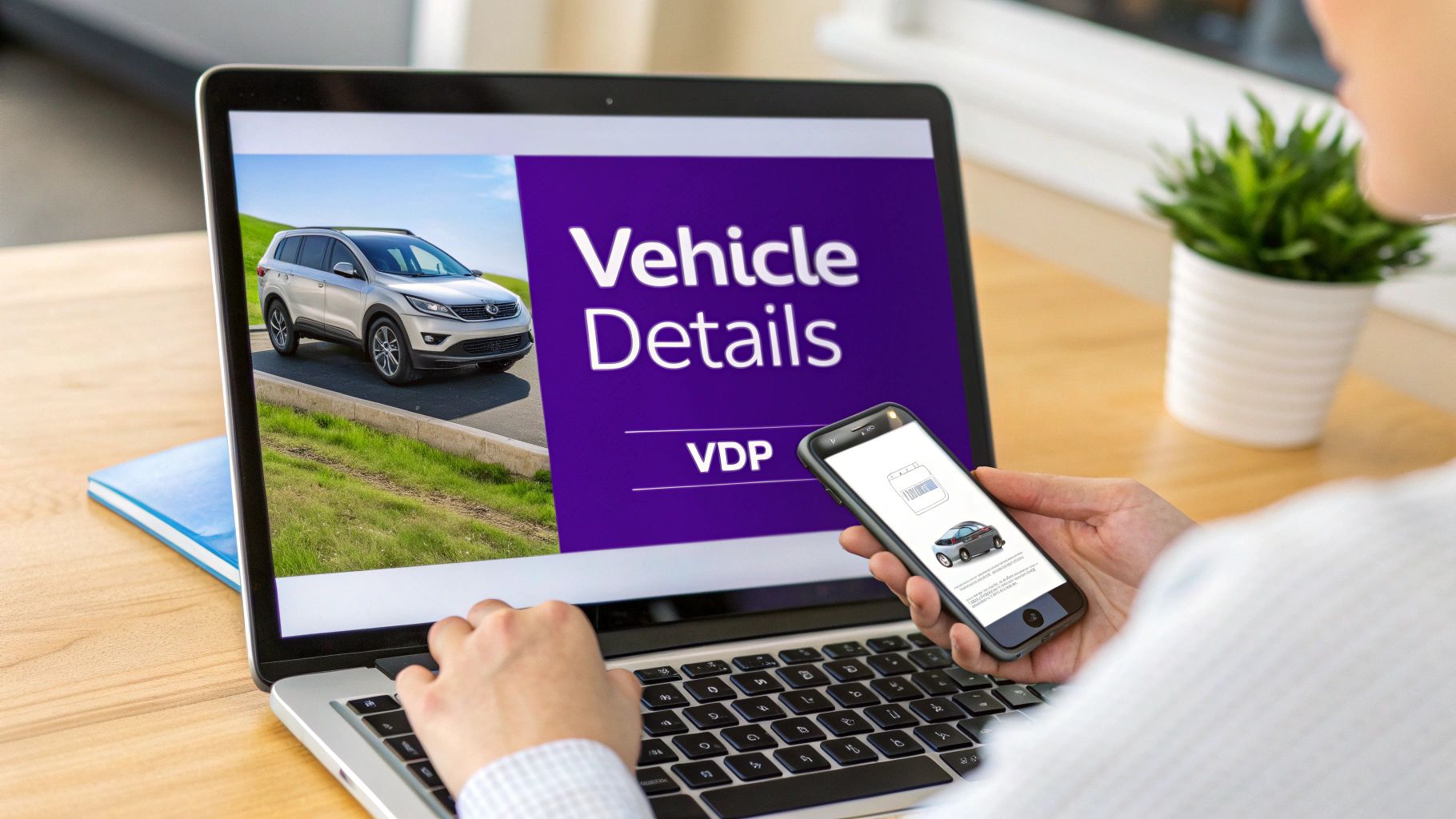
    Person uses laptop and smartphone to view vehicle details, likely for car sales or management.

    The foundation for attracting these buyers is being visible right where they start their search: Google. This calls for a smart, multi-channel approach that blends organic search tactics with sharply targeted paid advertising.

    Dominate Local Search with Automotive SEO

    When someone in your town types "used Ford F-150 near me" into their phone, you have to show up. That’s the entire game of local automotive SEO—optimizing your digital footprint to rank high for the exact location-based and inventory-specific searches your customers are making every day.

    Think of it as digital curb appeal. Just as you want your physical lot to look immaculate to anyone driving by, your website needs to be front and center for digital searchers.

    Here’s where you need to focus your efforts for a strong local SEO strategy:

    • Google Business Profile (GBP) Optimization: Your GBP is your digital storefront on Google. It needs to be perfect. Fill it out completely with accurate hours, your address, phone number, and load it up with high-quality photos of your dealership and your best-looking inventory.
    • Location-Specific Website Content: Don't just be a generic dealership online. Create pages on your website dedicated to the towns and cities you serve. A simple page titled "Quality Used Cars in Springfield" can make all the difference in ranking for searches from that area.
    • Consistent Business Information: Make sure your dealership’s name, address, and phone number (what we call NAP) are identical everywhere online. From Yelp to your own website, any inconsistency can confuse search engines and drag down your rankings.

    A strong local SEO presence ensures you're not just another dealership on the internet, but the local dealership for a customer's specific needs. It’s the most cost-effective way to generate a consistent flow of highly qualified traffic over the long term.

    For a deeper dive, our guide on automotive SEO strategies covers more advanced tactics to help you climb those search rankings.

    Capture Ready-to-Buy Shoppers with Google Ads

    While SEO is your long game, Google Ads lets you jump the line and capture buyers with immediate intent. It's a pay-to-play strategy, but when done right, the ROI is fantastic. You’re essentially bidding on specific keywords to get your dealership right at the top of the search results page.

    The trick is to zero in on high-intent keywords. These are the search terms people use when they're done researching and are ready to pull the trigger.

    Keyword Type Example Buyer Intent
    Low Intent "best family SUVs" Just browsing, not ready to buy.
    High Intent "Honda CR-V for sale near me" Actively looking for a specific vehicle to purchase now.
    High Intent "used truck dealership Springfield" Searching for a specific type of dealership in their area.

    By targeting these bottom-of-the-funnel keywords, you ensure your ad budget goes toward clicks that are far more likely to turn into real leads. Your campaigns should always send users directly to a relevant VDP or a pre-filtered inventory search page, making it dead simple for them to go from search to lead.

    Tap into Social Marketplaces

    Don't sleep on the platforms where your local community already hangs out. Facebook Marketplace, in particular, has exploded into a massive hub for used vehicle searches. Listing your inventory there puts your cars directly in front of a local, engaged audience that trusts the platform.

    This channel lets you connect with buyers in a more direct, conversational way. To really make this work for you, check out this guide on Generating Auto Dealership Leads with Facebook Ads. By combining your organic visibility, targeted ads, and social selling, you build a powerful system for driving a continuous flow of great traffic right to your inventory pages.

    Turning Website Visitors into Qualified Prospects

    Getting people to your dealership’s website is a great start, but it's just half the battle. The real goal is turning those anonymous clicks into actual auto dealership leads. If someone browses your inventory and leaves without giving you their information, it’s a lost opportunity—no matter how great your cars are.

    You have to make it incredibly simple and genuinely compelling for a potential buyer to raise their hand. It's all about understanding what a car shopper is thinking and doing on your site. They're looking for answers, and your job is to guide them toward actions that help you both. This means ditching the generic buttons and getting strategic.

    Crafting Calls-to-Action That Actually Work

    Let's be honest: the "Contact Us" button is probably the most passive and least effective call-to-action (CTA) out there. It puts all the work on the customer and offers them nothing of value in return. A CTA that truly works meets the shopper exactly where they are in their buying journey with a specific, compelling offer.

    Instead of vague requests, your Vehicle Detail Pages (VDPs) need prominent, action-oriented buttons that align with what a buyer actually wants to do.

    • "Check Availability": This creates a little urgency and is a super low-commitment way for a shopper to start a conversation.
    • "Get E-Price": Perfect for the price-conscious buyer who wants instant, valuable information without having to ask.
    • "Schedule a Test Drive": This one targets visitors who are much further down the funnel and are ready for the in-person experience.
    • "Hold This Vehicle": A seriously powerful option for in-demand models that creates a feeling of exclusivity.

    By tailoring your CTAs like this, you provide clear, helpful next steps that don't feel demanding. This simple shift can make a massive difference in the number of leads you capture from the exact same amount of website traffic.

    Engaging Visitors Instantly with Chat and AI

    Not every visitor is ready to fill out a long form or pick up the phone. Many people browse inventory after hours or on a quick lunch break when they can't talk. This is where live chat and AI-powered chatbots become absolute game-changers for lead capture.

    A chat widget lets you engage with visitors in real-time, answering questions and building rapport the moment they're most interested. More importantly, it gives them a low-pressure way to share their contact info. A simple prompt like, "Have a question about this F-150? I can text you the answer," can instantly turn a silent browser into a warm lead.

    Today's AI chatbots can handle initial questions 24/7, qualify leads by asking a few basic questions, and even book appointments for your team. This means you never miss an opportunity, even if it comes in at 2 a.m.

    To take it a step further, many successful dealers are using text messaging to generate leads, engaging potential buyers directly on the device they use most.

    Prioritizing Your Hottest Leads with Lead Scoring

    Let's face it: not all leads are created equal. A visitor who downloaded a brochure is in a very different place than someone who viewed the same VDP three times and played with your payment calculator. Without a system to tell them apart, your sales team wastes precious time chasing cold leads while the hot ones go stale. This is where a simple lead scoring system comes in.

    Lead scoring is just a way of assigning points to leads based on their actions and attributes, allowing you to automatically see who is most likely to buy right now.

    Here’s a basic scoring model you can adapt for your dealership:

    Action Taken by Visitor Points Awarded Lead Temperature
    Visited 1 VDP +5 Lukewarm
    Viewed 3+ VDPs +15 Warming Up
    Used Payment Calculator +20 Hot
    Submitted a "Get E-Price" Form +25 On Fire
    Opened a Follow-Up Email +5 Lukewarm

    By adding up the points, your CRM can automatically flag the highest-value prospects for your team. A lead with a high score needs an immediate phone call. A lead with a score of just 5? They can be placed into an automated email nurture campaign. This data-driven approach ensures your team focuses its energy where it will have the biggest impact, turning more prospects into sales.

    Mastering the Follow-Up to Close More Car Deals

    Getting a lead is just the starting line. The real race is won in the follow-up. Those first few moments after a potential buyer sends you their information are the most critical part of the entire sales process. If you're slow to respond, you're practically handing that sale over to a competitor who was just a little bit faster.

    A person holds a tablet displaying a 'GET E-PRICE' button and an input field, tapping the screen.

    In this business, speed is everything. When someone requests an e-price or asks about a specific vehicle, their interest is at an absolute peak. Your ability to connect with them in that crucial window is what separates the top performers from everyone else.

    The goal here isn't just to be fast; it's to build a follow-up system that is rapid, persistent, and feels personal. You need a process that ensures no opportunity ever slips through the cracks.

    The Undeniable Power of Speed

    The difference between getting back to a lead in five minutes versus five hours is staggering. Think about it: in the car business, a rapid response to an online inquiry significantly increases your chances of having a meaningful conversation with that lead.

    A quick response does more than just answer a question. It sends a powerful message that you’re professional, you're on top of your game, and you value their time. That's how you start building the trust needed to make a big-ticket sale.

    Building Automated, Yet Personal, Follow-Up Sequences

    Let’s be realistic—you can't manually follow up with every single lead the second it comes in, especially after hours. This is where automated SMS and email sequences become your secret weapon. They let you deliver immediate and consistent communication without chaining your sales team to their desks.

    The trick is to make your automation feel human. Your sequences shouldn't sound like they came from a robot. They need to be helpful, timely, and offer real value with every message.

    Your follow-up automation should feel less like a machine and more like a helpful concierge guiding the customer through their next steps. The goal is to stay top-of-mind by providing value, not by being intrusive.

    A well-designed sequence can handle that initial, time-sensitive outreach, warming up the lead so your salespeople can focus their energy on conversations with people who are ready to talk.

    A High-Impact Lead Follow-Up Cadence

    To give you a clearer picture, here’s a sample multi-touch follow-up schedule designed to maximize engagement in those critical first few days. This is a great starting point you can adapt for your own dealership.

    A High-Impact Lead Follow-Up Cadence
    Timeline Action to Take Communication Channel
    First 5 Minutes Send an automated text confirming you got their request. Ask a simple qualifying question, like, "Thanks for your interest in the F-150! Are you looking to trade in a vehicle?" SMS Text
    First 15 Minutes A personalized email from a salesperson follows, with more vehicle details and a clear call-to-action to schedule a call or test drive. Email
    2 Hours Later The assigned salesperson makes their first call. No answer? Leave a short, friendly voicemail. Phone Call
    Day 2 Send another email, this time offering more value. Link to similar vehicles in your inventory or a helpful guide like "Top 5 Features of the Honda CR-V." Email
    Day 3 Fire off a quick, casual text: "Hi Alex, just wanted to see if you had any other questions about the CR-V. Let me know!" SMS Text
    Day 5 Make a final follow-up call to offer assistance one last time before moving the lead into a long-term nurture campaign. Phone Call

    This persistent, multi-channel approach meets customers where they are, dramatically increasing your chances of getting a response.

    Creating a Seamless Workflow with CRM Integration

    Your follow-up strategy is only as good as the system running it. A lead that gets forgotten or goes stale is pure lost profit—and it's completely avoidable with the right tech. That’s why integrating your website's lead forms directly with your Customer Relationship Management (CRM) system is non-negotiable.

    When a customer fills out a form on your site, this integration should instantly and automatically:

    • Create a new lead profile in your CRM.
    • Assign that lead to the right salesperson.
    • Kick off the appropriate automated follow-up sequence.

    This seamless connection gets rid of manual data entry, stops leads from getting lost in a cluttered inbox, and gives you a clear, time-stamped record of every interaction. It creates total accountability for your team and guarantees every lead gets the immediate attention it deserves. If you're exploring options, our guide on the best CRM for car dealers can help you find the right fit.

    Using Data to Fine-Tune Your Lead Generation Engine

    Throwing money at marketing and just hoping for the best is a fast way to go broke. Real, sustainable growth comes from making smart decisions based on hard data. To build a reliable engine for generating high-quality auto dealership leads, you have to measure what’s working, understand what the numbers are telling you, and constantly tweak your strategy.

    This data-first approach is what separates the dealerships that thrive from those that just survive. It ensures every single marketing dollar you spend is pulling its weight to bring real buyers to your lot.

    A person working at a desk with a laptop displaying charts, holding a smartphone, with "Quick Follow Up" banner.

    Identifying the KPIs That Actually Matter

    Don't get bogged down in a sea of vanity metrics. Key Performance Indicators (KPIs) are the vital signs of your marketing health, and you only need to focus on a handful that tie directly to your sales goals. These are the numbers you should be looking at every single week.

    • Cost Per Lead (CPL): This is your bottom line. Simply divide your total ad spend for a channel (like Google Ads) by the number of leads it generated. A low CPL means you're getting leads efficiently.
    • Lead Source ROI: Forget about which channels bring you the most leads—which ones bring you the most sales? You need to track leads from SEO, Facebook Marketplace, and third-party sites all the way to a closed deal. This tells you where your best customers are really coming from.
    • VDP Conversion Rate: What percentage of people looking at a specific car on your website actually fill out a form or start a chat? This KPI is crucial because it tells you how well your vehicle pages turn casual browsers into active leads.

    This is how you move from just spending money to making strategic investments. When you know your Cost Per Lead from Google Ads is lower than your CPL from another channel, you know exactly where to put your next marketing dollar for the best return.

    Using Analytics to See What Your Customers Do

    Tools like Google Analytics are a goldmine, and they're free. Think of it as putting a security camera in your digital showroom. It lets you watch exactly how shoppers move through your site, what they click on, and—most importantly—where they get frustrated and leave.

    By looking at user behavior flows, you can spot the leaks in your sales funnel. For example, maybe you see that a high percentage of visitors who start your credit application abandon it on the second page. That’s a massive red flag. It’s a clear sign that the form is too long, confusing, or asking for too much sensitive information too soon. Armed with that knowledge, you can simplify the form and likely see an immediate jump in your lead volume.

    Boosting Conversions with Simple A/B Tests

    You don't need a team of data scientists to start improving your site. A/B testing is a straightforward way to find out what really works. All you do is show two different versions of an element—like a button or a headline—to different visitors and see which one gets more clicks or conversions.

    The key is to change only one thing at a time. It’s these small, data-backed adjustments that compound over time to create huge gains in your lead count.

    Here are a few dead-simple A/B tests you can run on your site right away:

    Element to Test Version A (Control) Version B (Variation) Goal of the Test
    CTA Button Text "Submit" "Get My E-Price" Find out if a benefit-driven CTA increases form fills.
    Form Layout Two-column layout Single-column layout See if a simpler, mobile-friendly design reduces drop-offs.
    Hero Image Photo of your dealership Photo of a happy family with their new car Test whether a relatable, human image builds more trust.

    When you start testing and measuring, you replace guesswork with certainty. You stop wondering what works and you start knowing what works. This creates a powerful feedback loop of continuous improvement that will keep your lead generation engine tuned up and running at peak performance.

    Your Top Auto Lead Generation Questions, Answered

    As you start dialing in your strategy to get more high-quality auto dealership leads, you're going to have questions. It's totally normal. Buyer habits are always shifting, new tech pops up constantly, and it's tough to keep up.

    This section cuts right to the chase, giving you straight answers to the questions we hear all the time from dealership managers. Think of it as a quick guide to help you tackle those daily challenges and make smarter decisions.

    How Much Should I Be Paying for a Lead?

    This is the big one, right? The honest answer is, "it depends." The right Cost Per Lead (CPL) for your dealership is a moving target, influenced by your local market, the cars you sell, and where the lead came from. You can obviously afford to pay more for a lead on a high-margin luxury SUV than you can for someone kicking the tires on an older, budget-friendly sedan.

    But you're not flying blind. You can set a solid baseline by working backward from your numbers. Let's say your average gross profit on a vehicle is $2,500. If your sales team closes about 10% of the qualified leads they get, you know it takes ten leads to make one sale.

    Doing the math, that means you could spend up to $250 per lead just to break even on that one deal. Your real goal, of course, is to push that CPL way lower to make every sale as profitable as possible.

    The key is to track your CPL from every single source—Google Ads, Facebook Marketplace, third-party listing sites, you name it. That data is gold. It will show you exactly which channels are your most efficient performers and where your marketing dollars should be going.

    Should My Dealership Really Be Using AI for Leads?

    Yes, without a doubt. Artificial intelligence isn't some sci-fi concept anymore; it's a real-world tool that gives you a serious leg up on the competition. AI can make a huge difference in how you handle and qualify auto dealership leads, freeing up your team to do what they do best: sell cars. In fact, a recent CDK Global study found that 68% of dealerships already using AI are seeing a positive impact.

    Here’s how you can put it to work right away:

    • Round-the-Clock Lead Response: AI-powered chatbots can chat with your website visitors 24/7. They can answer common questions, grab contact info, and even book test drives long after your team has gone home for the night.
    • Instant Lead Qualification: Smart AI algorithms can analyze what a visitor does on your site—which VDPs they looked at, if they used the payment calculator—and score their buying intent on the spot. This instantly flags the hottest prospects for your team to jump on.
    • Smarter Follow-Up: AI can help automate personalized emails and texts based on the specific vehicles a customer showed interest in. It makes your outreach feel less robotic and a lot more relevant.

    Using these tools means you're faster and smarter with your response, which is everything in this market.

    What's More Important: Lead Quality or Quantity?

    It’s easy to get caught up in the numbers game, but the hands-down winner here is quality. A list of 100 random names and phone numbers is just going to frustrate your sales team and lead to a lot of dead ends. On the other hand, ten genuinely qualified leads who are actively showing they're ready to buy? That's where the money is.

    Focusing on quality forces you to be more precise with your marketing. Instead of casting a wide, generic net, you’re zeroing in on high-intent keywords for your ads or creating website content that speaks directly to someone deep in the buying cycle.

    A high-quality lead isn't just a name and number. It's someone who has signaled real interest through their actions online. When you prioritize these people, you ensure your sales team is spending their time on conversations that actually turn into sales.

    At the end of the day, your goal isn't just to cram your CRM with contacts—it's to sell cars. A strategy built around attracting better, more qualified auto dealership leads will always win. It creates a more efficient sales process, keeps your team motivated, and drives a healthier bottom line for your dealership.


    Ready to turn your website into a lead generation powerhouse? AutoFire™ provides independent dealerships with modern, mobile-first websites designed to convert browsers into buyers. Get online in minutes and start capturing more high-quality leads today. Explore AutoFire plans and start for free.

  • Proven Strategies to Generate More Car Sales Leads

    Proven Strategies to Generate More Car Sales Leads

    Let's be honest, car sales leads are just people—potential customers who've raised their hand, showing they’re interested in a car on your lot. The real game isn't just about getting a flood of names and numbers. It's about building a smart, automated system that attracts genuinely qualified buyers and makes it ridiculously easy for them to connect with you. Think of your website as your dealership's 24/7 sales engine.

    Turn Your Website Into a High-Converting Digital Showroom

    Your website is your single most important salesperson. It works tirelessly, day and night, to grab a buyer's attention and turn that initial click into a solid lead. In an era where almost every car buying journey starts on Google, your site can't just be a static digital brochure. It has to be a well-oiled machine, engineered from the ground up to attract, engage, and convert.

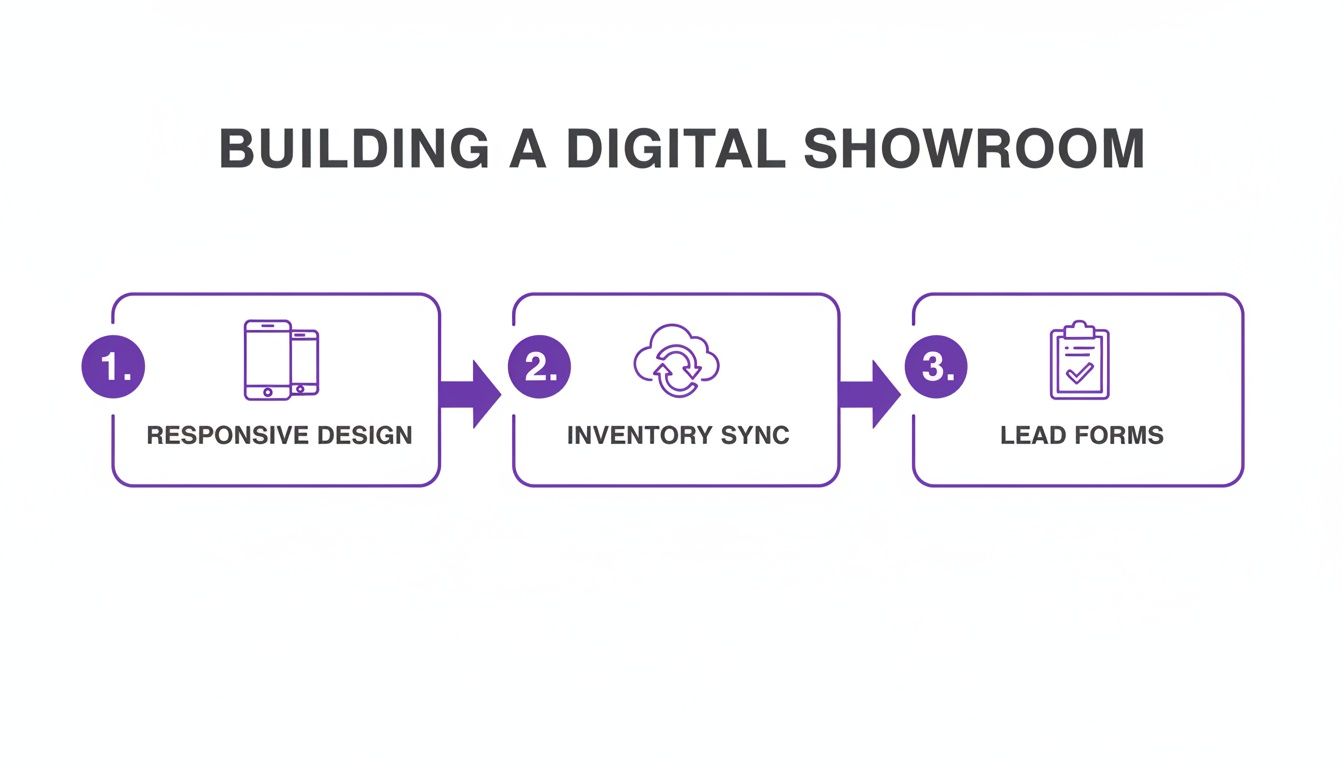
    This is what that machine looks like in its simplest form.

    Flowchart illustrating three steps to build a digital showroom: responsive design, inventory sync, and lead forms.

    It all boils down to three things: a flawless mobile experience, live inventory updates, and smart lead forms that capture interest at the right moment.

    It All Starts with a Mobile-First Foundation

    Most of your customers are scrolling through your inventory on their phones, often while standing in line for coffee or sitting on their couch. A clunky, slow-loading mobile site is the fastest way to lose them forever. Chasing high PageSpeed scores isn't just for the tech nerds; it's a business decision that directly impacts your bottom line. An impatient buyer won't wait for your site to load—they'll just leave.

    If you want to dive deeper into what makes a great site, we've covered it all in our guide on modern dealership website design.

    The market is heating up. S&P Global is forecasting 91.7 million light-vehicle sales for 2025, which will blow past pre-pandemic numbers. With the majority of auto buyers starting their hunt online, you have to be ready. A site that’s built for performance can significantly boost your inquiries, helping you grab your piece of that growing pie.

    The biggest wins come from making it incredibly simple for a buyer to express interest the moment they find a car they love. Your website should remove friction, not create it.

    Automate Your Inventory and Never Miss an Opportunity

    Stop wasting time manually updating your online inventory. It's a recipe for mistakes and missed sales. Setting up automatic inventory syncing is a game-changer. It ensures that the moment you add a car to your management system, it’s live on your website—accurate and ready to sell. This saves you countless hours and prevents that dreaded "Sorry, that one just sold" conversation.

    Finally, place simple, clear lead capture forms on every single vehicle detail page (VDP). Don't force a potential buyer to go searching for a "Contact Us" page. Put buttons like "Check Availability" or "Schedule Test Drive" right there, next to the photos of the car they're looking at. For those looking to get even more proactive, exploring some chatbot lead generation tactics can be a great way to engage visitors and turn casual browsers into qualified prospects.

    To pull this all together, here's a quick checklist of the must-have features your website needs to become a lead-generating powerhouse.

    Key Website Features for Generating Leads

    Feature Why It Drives Leads AutoFire Solution
    Responsive, Mobile-First Design Ensures a perfect browsing experience on any device, especially smartphones where most car shoppers start their search. All AutoFire websites are built with a mobile-first philosophy, ensuring fast load times and a seamless user experience.
    Automatic Inventory Sync Keeps your online listings 100% accurate without manual work, building trust and preventing customer frustration. Our platform syncs directly with your DMS, pushing real-time inventory updates to your site, Google, and Facebook.
    High-Quality VDPs Detailed Vehicle Detail Pages with large photos, videos, and key specs keep buyers engaged and on your site longer. We create compelling VDPs with unlimited photos, video integration, and clear feature lists to showcase every vehicle.
    Strategic Lead Forms & CTAs Simple forms placed on every VDP make it easy for shoppers to take the next step the moment they're interested. Customizable lead forms ("Check Availability," "Get ePrice") are placed strategically to maximize conversion opportunities.
    Online Credit Application Lets serious buyers start the financing process immediately, qualifying them and moving them down the funnel. Our secure, built-in credit applications help you capture high-intent leads and streamline the F&I process.
    Trade-In Valuation Tool Engages potential sellers and provides a valuable lead by capturing details about their current vehicle. Integrated trade-in forms powered by trusted valuation sources give you a steady stream of local inventory leads.

    Making sure these components are in place and working together is the first, most crucial step in building a predictable pipeline of car sales leads from your own website.

    Own Your Backyard: How to Dominate Local Search and Attract Buyers

    If you want a steady flow of high-quality car sales leads, you absolutely have to be visible the moment a local shopper starts looking for a car you have on your lot. This isn't about blanketing the internet with ads; it’s about being in the right place at the right time. That place is local search.

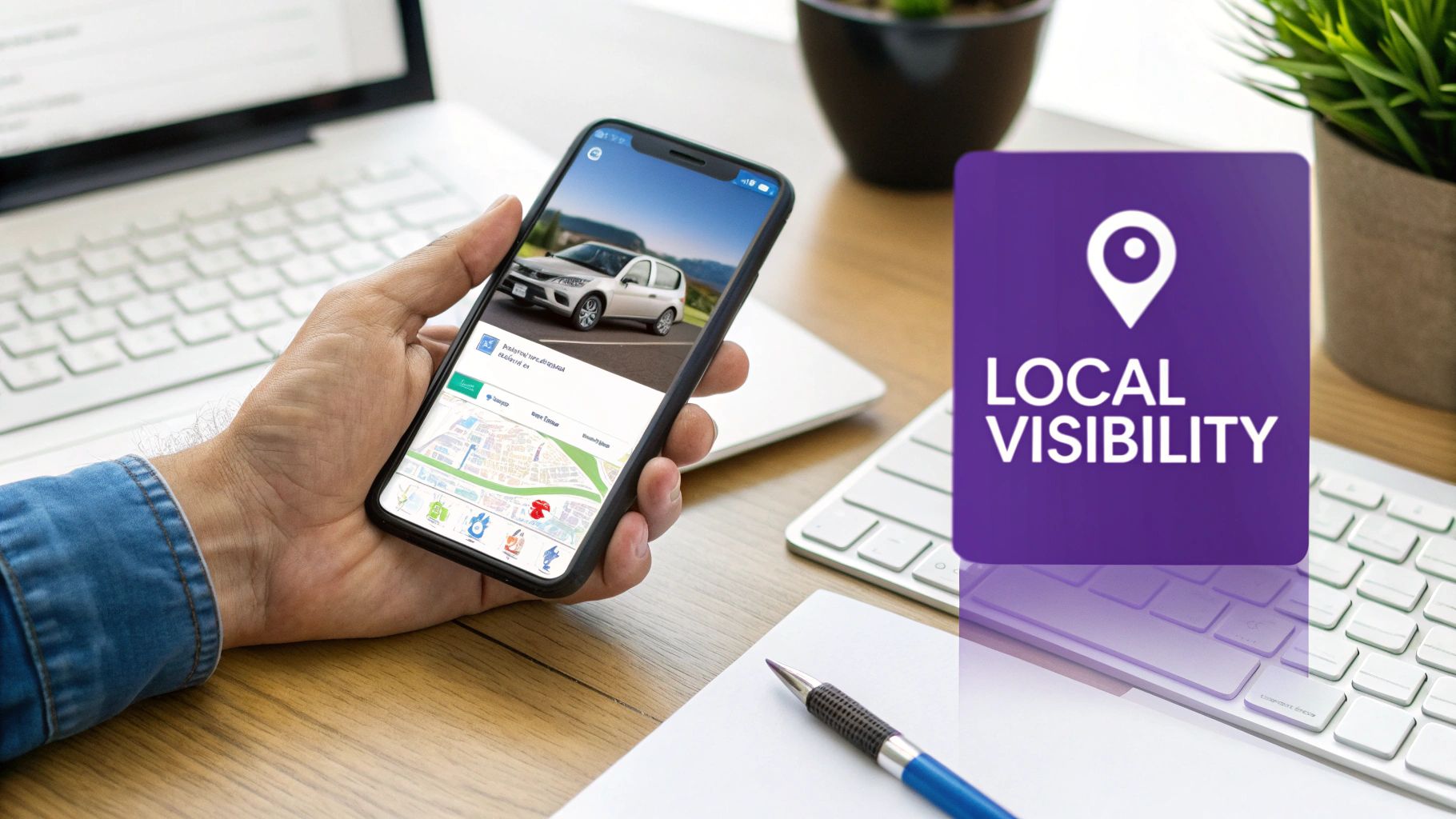
    A hand holds a smartphone displaying a car sales app and a map, with a 'LOCAL VISIBILITY' sign nearby.

    When someone down the street pulls out their phone and searches "used Ford F-150 near me," you need your dealership to pop up first. This kind of traffic is pure gold. These aren't just tire-kickers; they have intent and are often ready to make a move. The entire game hinges on mastering your presence on Google.

    Your Google Business Profile: The New Front Door

    Forget your physical storefront for a second. Your Google Business Profile (GBP) is the real front door to your dealership today. It’s the first impression you make on nearly every local customer, so it needs to be sharp. Just claiming it is the bare minimum. You need to treat it like an active, information-rich hub for your business.

    First things first, get the basics right. Your address, phone number, and hours must be 100% accurate. Nothing kills a lead faster than sending them to the wrong address. Next, load it up with high-quality photos. Go beyond a simple picture of the building—show off your best inventory, your friendly sales team, and even your clean service area. These visuals give people a feel for your dealership and start building trust before they even visit.

    Think of it this way: A complete and active Google Business Profile is the single most powerful free marketing tool you have for generating local leads. It’s what gets you on the map—literally—and connects you with shoppers who are ready to buy now.

    Finally, you need a game plan for customer reviews. They are a massive factor in how Google ranks you and are the ultimate social proof. Make it easy for happy customers to leave you a review, and be sure to respond to all of them, good and bad. It shows Google (and future buyers) that you’re engaged and stand behind your business. For a deep dive, our complete guide to local SEO for car dealerships has more advanced tactics you can put to work.

    Put Your Actual Cars Directly on Google

    A well-oiled GBP is crucial, but the real magic happens with Google Vehicle Listings. This is where you can push your live inventory feed directly into Google's search results.

    Imagine a potential buyer searching for a specific car. Instead of just seeing your dealership's name, Google shows them the exact 2019 Toyota Camry on your lot—complete with photos, your listed price, and the mileage. This is a game-changer.

    • Unbeatable Visibility: It puts your specific cars in front of motivated buyers, leapfrogging competitors who are still relying on just their website.
    • Highly Qualified Clicks: The people clicking these listings aren't just browsing; they are interested in that specific car. The lead quality is off the charts.
    • Instant Credibility: Having your inventory listed officially on Google lends a huge amount of trust to your dealership.

    The key is making sure your inventory management system or website provider can generate and send a compatible feed to Google. When you get this set up, you start turning casual searchers into motivated shoppers looking at your VDPs, which is how you generate some of the best car sales leads possible.

    Expand Your Reach with Smart Acquisition Channels

    While a solid SEO foundation is your long game, you can’t just wait for customers to find you. You need a mix of marketing channels working together to bring in a steady flow of car sales leads right now. Putting all your eggs in one basket is a recipe for disaster. A smart, multi-channel system means you're always connecting with potential buyers, no matter where they're looking.

    The trick is to go where the buyers already are. For used cars, that’s social media and the big online marketplaces. These are goldmines for independent dealers because you can run highly targeted, budget-friendly campaigns that put your best metal in front of local shoppers who are ready to buy.

    Dominate Social Media Advertising

    For dealers, Facebook and Instagram are still absolute powerhouses. The real magic isn't just posting pictures of your cars; it's the incredibly detailed targeting. Imagine showcasing that F-150 you just got in directly to people in your zip code who have been browsing truck forums or visiting competitor sites. That's the level of precision we're talking about.

    This goes way beyond just "boosting" a post. A real social ad strategy that moves cars involves:

    • Dynamic Inventory Ads: These are brilliant. They automatically show cars from your live inventory feed to people who have already visited your website. It’s like a personalized, digital follow-up.
    • Lead Generation Forms: Use Meta’s built-in lead forms. A potential buyer can show interest and send you their info without ever leaving Facebook or Instagram. This simple step can dramatically increase how many leads you get.
    • Video Walkarounds: Forget slick, overly-produced ads. A quick, authentic video walkaround of a hot car on your lot grabs attention and builds trust way faster than a static photo ever could.

    These platforms are visual. They’re perfect for showing off what you do best—selling great cars. If you feel like your marketing could use a shot in the arm, check out our guide on modern car dealership marketing strategies for more proven ideas.

    Tap Into High-Intent Marketplaces

    Let's not forget the old standbys. Platforms like Facebook Marketplace and Craigslist are still the first stop for a huge chunk of used car shoppers. Listing your inventory here puts you directly in the path of people who are actively hunting for their next vehicle.

    The name of the game on these sites is standing out and being lightning-fast. Your listings need high-quality photos (from every angle!) and detailed, honest descriptions. When an inquiry hits your inbox, you need to be on it immediately. Seriously. The first dealer to respond often gets the appointment. It’s a hands-on approach, but it builds momentum and shows customers you're serious. To make sure your team is chasing the right opportunities, it's worth brushing up on these 10 essential sales prospecting best practices.

    Looking at the bigger picture, the demand is definitely there. From January to November 2025, global new vehicle sales hit 14.8 million units—a 2.4% jump from the previous year. What's really interesting is the 5.1% surge in light trucks like SUVs and pickups. This trend is a massive opportunity for dealers who stock the right inventory and have a smart plan to reach these buyers. You can find more insights about the 2025 global car market trends at accio.com.

    Convert More Visitors with Engaging Onsite Tools

    Getting a shopper to your website is a huge win, but let’s be honest, it’s only half the battle. Now, you’ve got to convince them to actually talk to you. The trick is to turn your website from a passive digital brochure into an active tool that makes it incredibly easy for visitors to raise their hand and become a real car sales lead.

    Laptop displaying car sales website to boost conversions on a wooden desk with coffee.

    This all comes down to the user experience (UX). You need to remove friction and add genuine value. When a shopper feels like your website is actually helping them make a smart decision, they're far more likely to hand over their contact info.

    Make Lead Forms Effortless

    The single biggest mistake I see dealerships make is creating long, complicated lead forms. Think about it: modern car buyers spend a significant amount of time researching online. They don't have the patience for clunky forms that feel like an interrogation.

    Keep your forms short, simple, and place them where they feel natural. A simple "Check Availability" button on a vehicle detail page is a perfect, low-commitment entry point. It feels less like a hard sell and more like a helpful next step. You want to make it an easy, almost thoughtless, choice for a visitor to show they're interested.

    By removing friction and adding value, you make it an easy choice for a visitor to become a lead. Don't make them hunt for a way to contact you; put the opportunity right in front of them.

    Add Value with Smart Conversion Tools

    Beyond just a basic contact form, you can dramatically boost engagement by giving shoppers tools they actually want to use. These tools turn your site into a valuable resource, which keeps them from clicking away to a competitor’s site to finish their research.

    A few high-impact tools I've seen work wonders include:

    • A VIN Decoder: This is a fantastic way to offer instant value. If a customer is thinking about a trade-in, letting them enter their VIN to get detailed vehicle info builds trust and captures a lead from someone with high intent.
    • A Vehicle Comparison Tool: Shoppers are always comparing models. A tool like AutoFire's FireCompare lets them see specs for two or three cars side-by-side without ever leaving your website. This keeps them on your page and moves them closer to a decision.
    • High-Quality Photo Galleries: This isn't just a feature; it's a necessity. Today, the vast majority of vehicle buyers use digital sources for information. Your photos are your digital showroom. Invest in high-resolution, multi-angle shots that give people a true sense of the car's condition.

    At the end of the day, every single element on your site should work toward one goal: building enough trust and providing enough value that a visitor wants to connect. Transparent pricing, clear calls-to-action like "Schedule Test Drive," and helpful tools are what transform casual browsers into the high-quality car sales leads that actually grow your business.

    A Follow-Up System That Actually Closes Deals

    Getting a lead is just the starting gun. The real race is won in the follow-up. A name and a number in your CRM are pretty much worthless until you engage that person with a smart, persistent, and helpful communication plan. Honestly, this is where most dealerships completely drop the ball, and it's your single biggest opportunity to blow past the competition.

    Man using a smartphone and tablet simultaneously to manage sales leads and close deals.

    The key to all of this? Speed. The data is clear: leads contacted within the first five minutes are significantly more likely to convert. Every single minute you wait, the odds of that person buying from you plummet. A structured, multi-touch system is your insurance policy against lost opportunities.

    This isn't about being pushy. It’s about being present and genuinely helpful. When you combine immediate automated messages with timely personal calls, you start building real rapport and stay top-of-mind while they're making their decision.

    Design a Multi-Touch Follow-Up Sequence

    A solid follow-up plan has to hit prospects from multiple angles. Not everyone answers their phone on the first try, and plenty of people ignore emails. A blended approach is the only way to reliably generate and convert car sales leads.

    Here's a simple, effective sequence you can put into action today:

    • The Instant Response (Within 5 Minutes): The second a lead form hits your system, an automated text and email should fire off. This instantly confirms you got their message and sets the right expectation. Something simple like, "Hi [Name], thanks for your interest in the [Car Model]! This is [Salesperson Name] from [Dealership]. I'm confirming the vehicle is here and will call you in a few minutes to answer any questions. You can see it here: [Link to VDP]" is perfect.

    • The First Personal Call (Within 15-30 Minutes): This isn't a hard sell. The goal here is to build a connection, answer their initial questions, and set the next step. And that next step should always be scheduling a test drive.

    • Day 2 Follow-Up (Email & Text): If you couldn't connect, send another message. This time, add a little value. Try something like: "Hi [Name], just following up. Here’s a link to the CARFAX report for the [Car Model] you were looking at. Let me know if a quick test drive this afternoon works for you."

    This kind of structured workflow ensures you're persistent without being annoying. As the market heats up, this efficiency is everything. In the first half of 2025, global car registrations climbed 5% to 37.4 million units, and the full year is projected to hit 91.7 million. To grab your piece of that pie, a disciplined follow-up system is non-negotiable. You can learn more about these 2025 auto industry market trends.

    Prioritize Your Hottest Leads with Simple Scoring

    Let's be real—not all leads are created equal. The person who downloaded a brochure is in a very different place than the person who just submitted a full credit app. Lead scoring is a straightforward way to help your team focus their time on the prospects who are ready to buy now.

    Lead scoring isn't about some complex algorithm. It's just about paying attention to a lead's digital body language and using that info to point your sales team toward the easiest wins.

    You can start by simply assigning points to leads based on the actions they take on your website. This creates an instant priority list for your team.

    Action Taken Points Awarded Why It Matters
    Submitted Credit Application +25 The highest-intent action a buyer can take online. This is a five-alarm fire.
    Used Trade-In Tool +15 Shows they are serious about their budget and making a move soon.
    Scheduled a Test Drive +10 A clear signal they are ready to come in and kick the tires.
    Viewed VDP 3+ Times +5 Indicates strong interest in a specific vehicle on your lot.

    With a system like this, your team can immediately spot the leads most likely to close, making them more efficient and driving more sales. It's that simple.

    Your Top Questions About Car Sales Leads Answered

    When you're running an independent dealership, figuring out the best way to get—and handle—car sales leads can feel like a moving target. I get asked about this stuff all the time, so let's clear up a few of the most common questions.

    What's The Best Channel For Car Sales Leads?

    Everyone wants to know the "one best place" to get leads, but the honest answer is there isn't one. The real magic happens when you build a smart mix of different channels.

    Think of it like this: your own website, powered by good SEO and a dialed-in Google Business Profile, is your long-term powerhouse. It's fantastic for pulling in local buyers who are actively searching for what you sell. The catch? It takes time to get that momentum going.

    For results you can see this week, targeted social media ads are your best friend. Running a campaign on Facebook can put your best inventory right in front of people in your town who match your ideal buyer profile.

    A healthy lead pipeline combines both:

    • Long-term anchors: Your website and a strong local search presence.
    • Quick wins: Paid social ads and listings on busy online marketplaces.

    This way, you're not putting all your eggs in one basket. You get a steady stream of car sales leads from multiple places, which makes your business a lot more stable.

    How Can A Small Team Manage All These Leads?

    This is a huge one. It doesn't matter how many leads you get if you can't follow up with them properly. For a small team, the secret isn't hiring more people—it's working smarter with the right tools and a solid process.

    Automation and prioritization are your best friends here.

    First, you need a simple way to score your leads. A customer who submits a full credit application is obviously a hotter prospect than someone who just downloaded a PDF of a vehicle's specs. A basic scoring system helps your team instantly see who to call first.

    Next, set up automated first-touch responses. An immediate text or email that says "Thanks for your inquiry, we'll be in touch shortly!" works wonders. It acknowledges the customer right away, even if you're out on the lot with another buyer.

    A well-known study from the Harvard Business Review found that getting in touch with a new lead within the first hour makes you seven times more likely to have a meaningful conversation. Automation makes this speed possible without burning out your team.

    How Do I Measure The ROI Of My Lead Generation Efforts?

    You have to know if your marketing dollars are actually working. Don't get lost in a sea of complicated analytics. To start, just focus on two key numbers for every channel you're using: Cost Per Lead (CPL) and Cost Per Acquisition (CPA).

    • Cost Per Lead (CPL): Take the total you spent on a channel (like your monthly Facebook ad budget) and divide it by the number of leads you got from it. This tells you what you paid for each opportunity.

    • Cost Per Acquisition (CPA): Now, take that same ad spend and divide it by the number of cars you actually sold from those leads. This is the bottom line—what it cost you to sell a car.

    Tracking just these two numbers will tell you a story. You'll quickly see which channels are bringing you profitable customers and which ones are just wasting your money. It's the difference between guessing and having a real, data-driven strategy.


    Ready to turn your website into a lead-generating machine? AutoFire™ provides independent dealers with modern, mobile-first websites that automatically sync inventory and capture leads from day one. Get started in minutes at https://goautofire.com.

  • A Guide to High-Performing Car Dealer Web Design

    A Guide to High-Performing Car Dealer Web Design

    Car dealer web design is all about creating a digital showroom that’s open 24/7 — one that pulls in local buyers, shows off your inventory, and brings in solid leads. It’s no longer just an online brochure; it's your number one sales tool, and a modern, mobile-first approach is absolutely critical for getting found on Google and convincing shoppers to visit your lot.

    Your Website Is Your Most Valuable Salesperson

    Let's be real for a minute: the way people buy cars has completely changed. Your physical lot still matters, of course, but the sales process for nearly every customer now starts online. A great website isn't just a line item on your budget; it's your hardest-working employee, running around the clock without ever needing a coffee break.

    This means you have to stop thinking of your site as a technical expense and start seeing it as a core investment in your sales engine. A fast, easy-to-use website is often the deciding factor that sends a buyer to your dealership instead of the one down the street. It’s your first handshake, the virtual test drive, and the foundation of trust for every new customer.

    Meeting Customers Where They Are

    The car buying journey today begins on a smartphone. The data doesn't lie: roughly 60% of all vehicle searches start on a mobile device. What's more, a similar percentage of those shoppers end up calling a dealership directly from their phone after finding it online.

    A mobile-first website that loads in a snap and displays your inventory in a clean, tappable format is your best bet for turning those online lookers into real-life leads. If you want to dive deeper into the numbers, check out these insights on car dealership conversion rates.

    The bottom line for independent dealers is simple: if your website is a pain to use on a phone, you're invisible to the majority of your potential customers.

    Building Trust Before They Even Arrive

    A professional website does a lot more than just list cars for sale—it builds instant credibility. Put yourself in the buyer’s shoes for a second. An outdated site that's slow or confusing to navigate immediately sends a bad signal. It suggests the dealership might be just as disorganized in real life.

    A website is your digital handshake. It communicates professionalism, transparency, and a customer-first attitude long before a buyer ever steps onto your lot. A clean design and clear information are non-negotiable for earning trust.

    On the flip side, a modern site packed with high-quality photos, transparent pricing, and detailed vehicle information builds confidence. It tells the customer you're a serious, professional operation they can trust with one of the biggest purchases they'll make. This is your chance to go head-to-head with the big franchise stores by offering a better, more personal online experience that translates directly into showroom traffic.

    Blueprint for a User-Friendly Dealership Website

    Before you even touch colors or fonts, a winning car dealer web design starts with a solid plan. It's just like building a house—you wouldn't start without a blueprint showing where every room goes and how people will move through the space. For your dealership, a well-thought-out website structure guides customers from casually browsing your inventory to hitting "submit" on a finance application, all without a single moment of frustration.

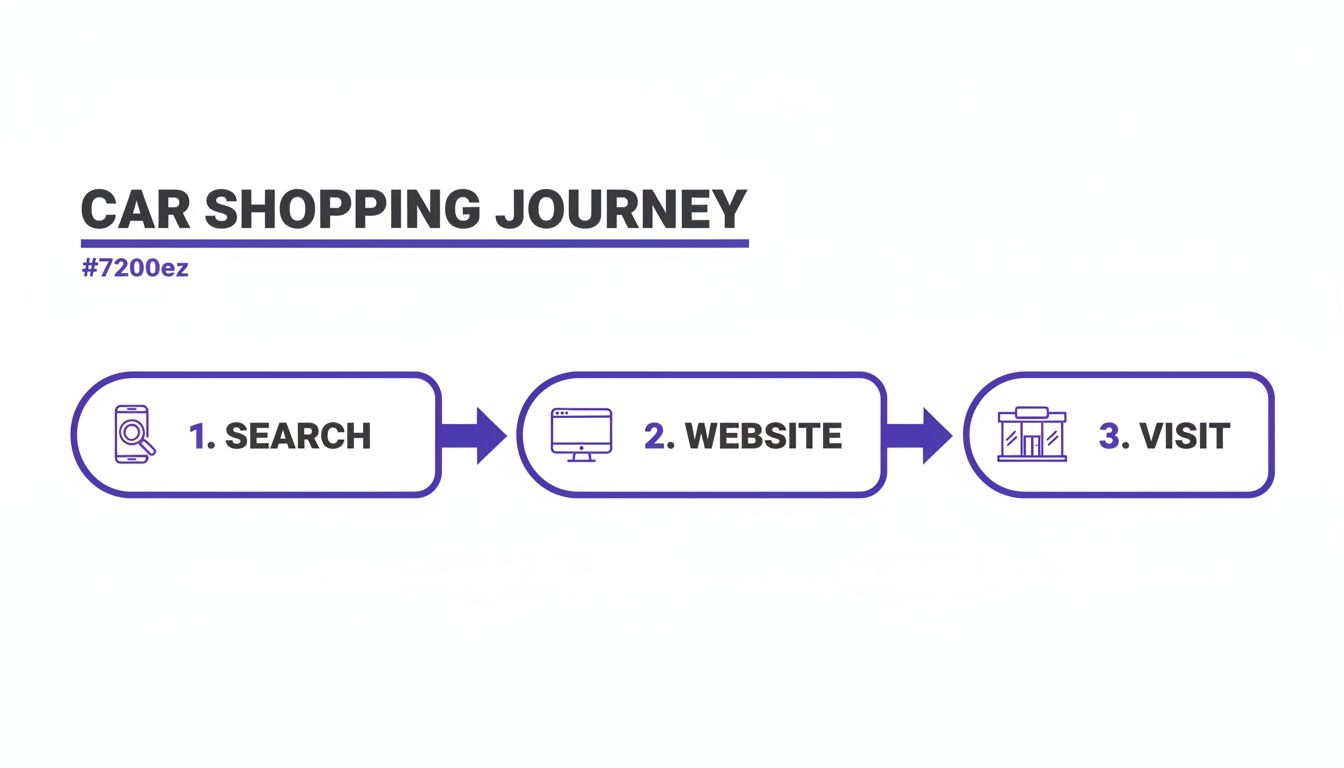
    For most car buyers today, the path from online research to visiting your lot is a straight line. Your website's job is to make that journey as smooth as possible.

    Visual representation of the car shopping journey, showing three steps: search, website, and visit.

    This simple flow drives home a critical point: your website is the bridge between a shopper's initial search and their decision to walk through your doors. If that bridge is confusing or poorly built, you lose the sale before you ever had a chance to make it.

    The Core Pages Every Dealer Website Needs

    To build a website that actually generates leads, you need a handful of essential pages. Each one plays a specific role in moving a buyer from just looking to taking action.

    • A Dynamic Inventory Page: This is your digital showroom. It absolutely must have intuitive filters for make, model, year, and price. Shoppers expect to sort results and pinpoint the exact vehicle they want without having to scroll for days.
    • Compelling Vehicle Detail Pages (VDPs): The moment a customer clicks on a car, the VDP needs to do the selling. This page should be loaded with high-quality photos (the more, the better), a walk-around video if you can swing it, detailed specs, and a clear, upfront price.
    • A Simple Online Finance Application: The biggest hurdle is often the paperwork. By offering a secure, mobile-friendly finance form right on your site, you drastically reduce that friction. The easier it is to fill out, the more pre-qualified leads will land in your inbox.
    • A Trust-Building 'About Us' Page: Here’s your chance to tell your story and stand out. Share your dealership's history, put a face to the name with friendly team photos, and explain what makes you different from the big-box store down the street.
    • A Clear Contact Page: Don't make people dig for your info. Your contact page should prominently display your address, phone number, and hours, along with an interactive map that makes getting to your dealership a no-brainer.

    Structuring Your Site for Customers and Google

    How you arrange these pages is just as important as what's on them. A logical site structure and navigation menu don't just help users find what they need; they also help search engines understand your site and rank your inventory. Cluttering the main menu with a dozen different options just overwhelms visitors and sends them packing.

    Your website's navigation is the roadmap for your customers. If the signs are confusing or lead to dead ends, most people will just turn around and leave. Prioritize simplicity and clarity above all else.

    Let's look at how a typical, outdated structure stacks up against a modern, streamlined one. The difference in the user's experience is night and day, and the impact on your lead generation will be just as dramatic. A clean layout ensures that high-value actions like "View Inventory" and "Get Pre-Approved" are never more than a click away.

    Dealership Website Structure Comparison

    A well-organized site doesn't just look better; it performs better. It guides users naturally toward the actions you want them to take.

    Page/Feature Traditional Approach (Avoid) Modern Approach (Implement)
    Navigation Cluttered menu with confusing dropdowns and vague labels like "Services." Simple, clear menu: Home, Used Cars, Finance, About, Contact.
    Inventory One long, unsorted list of vehicles with tiny, low-quality photos. Filterable inventory page with high-res images and clear pricing.
    Finance Page A downloadable PDF form that customers have to print, fill out, and fax. A simple, secure, and mobile-friendly online application form.
    Contact Info Phone number hidden deep in the footer text. Address and phone number are prominent in the header and on a dedicated contact page with a map.

    Ultimately, a modern structure respects the user's time and makes it incredibly easy for them to get the information they need, which is the first step in earning their business.

    Turning Inventory Listings Into Sales Opportunities

    Let's be honest: your online inventory is the heart of your dealership. You can have the slickest website design in the world, but if your Vehicle Detail Pages (VDPs) don't do the selling for you, you're just spinning your wheels. This is where browsers become buyers, and where your attention to detail will either make or break a potential sale.

    The secret isn't some flashy gimmick. It's about giving modern, research-obsessed shoppers what they actually want: authentic details, transparent pricing, and crystal-clear visuals. They want to kick the tires virtually before they even think about stepping onto your lot.

    A hand holds a smartphone showing car listings, with a car dealership lot in the background and 'Sell Inventory' text.

    Ditch the Stock Photos and Generic Blurbs

    In a sea of nearly identical online listings, your photos and videos are your most powerful weapon. We've all seen them—the lazy listings with one blurry stock photo. It screams "I don't care," and it kills trust instantly. You have to show them the actual car, warts and all.

    • Go All-In on High-Res Photos: Aim for 20-30 clear, well-lit photos of every single vehicle. Get every angle, open the doors, show the dash (with the mileage visible!), zoom in on the tires, and highlight any special features. This visual tour builds massive confidence and answers questions before a buyer even has to ask.
    • Shoot a Quick Walk-Around Video: Seriously, you can do this on your phone. A simple one-minute video where you walk around the car, point out a few key features, and start the engine gives a buyer a feel for the vehicle that static images just can't match.

    The story you tell is just as important. Never, ever use the generic, manufacturer-provided description that a dozen other dealers are using. Write a few unique sentences about that specific car. Did it have just one owner? Does it have a rare trim package or immaculate service records? That personal touch is what connects with a buyer and makes your listing memorable.

    Let Automated VIN Decoding Do the Heavy Lifting

    Manually typing in every feature for every car isn't just a grind—it's a recipe for mistakes. This is where automated VIN decoding becomes your best friend. A modern dealership website platform can take a VIN and instantly populate the listing with every last standard and optional feature, accurately and completely.

    This isn't just a time-saver. It ensures your listings are packed with the rich, specific data that both savvy car shoppers and search engine algorithms love.

    Automated VIN decoding is a non-negotiable for independent dealers today. It removes the guesswork, guarantees data accuracy, and loads your VDPs with the exact specifications that build customer trust and supercharge your automotive SEO.

    Think about how people search. They aren't just looking for a "Ford F-150." They're searching for a "used Ford F-150 Lariat with a V8 and heated seats." When your VIN-decoded listing has all those keywords naturally included, your chances of showing up for that search go through the roof.

    Transparency Is Your Most Powerful Sales Tool

    Nothing kills a deal faster than hidden fees. In today's market, buyers not only expect but actively reward transparency. Don't make them dig for the real price.

    Simple Rules for Pricing Transparency:

    1. Show the Price. Always. Never hide your price behind a "Call for Price" button. Display it prominently right at the top of the page.
    2. Break It Down. If you can, provide a simple breakdown of the vehicle price, any dealer fees, and estimated taxes. An online payment calculator is a fantastic feature for this.
    3. Be Upfront About Financing. Clearly state your finance options, including APRs and terms. This shows integrity and puts the customer in the driver's seat.

    This kind of radical honesty builds a foundation of trust that many of your competitors simply don't have. When a customer knows you’re being straight with them online, they're far more likely to walk through your door ready to do business. For a deeper dive, check out our guide on crafting compelling car listings that boost sales.

    By mastering these fundamentals—great visuals, unique descriptions, accurate data, and honest pricing—you turn every inventory listing from a static webpage into a powerful, 24/7 sales machine.

    4. Winning with Local Search and Google Vehicle Listings

    Look, you can have the most beautiful website on the planet, loaded with stunning inventory photos, but it means nothing if local buyers can't find you. If someone in your town searches for a car you have in stock and you don't show up, you're invisible. This is where a sharp, focused approach to local Search Engine Optimization (SEO) becomes your most powerful sales tool.

    The goal isn't to reach every car buyer in the country. It's about being the first and best answer for the customer searching for a car right in your own backyard.

    Optimizing Your Digital Front Door

    Think of your website's search engine presence as your digital curb appeal. It's the first impression you make on Google, and it's what makes a potential buyer stop and look or just keep scrolling. A huge piece of this puzzle is getting your Vehicle Detail Pages (VDPs) optimized for how local people actually search.

    This means you have to move beyond generic page titles. "2019 Honda CR-V" is a start, but it's not enough. Your title needs to be specific and targeted, something like "Used 2019 Honda CR-V for sale in Austin, TX." That small change is a game-changer because it matches precisely how real customers search.

    • Page Titles: Get specific. Include the make, model, year, and your city/town.
    • Meta Descriptions: Write a short, punchy sentence that includes the key vehicle details and location. This is your chance to earn the click from the search results page.
    • Image Alt Text: Don't skip this. Label your photos descriptively, like "2019-honda-crv-exl-interior-austin-tx." Every little bit helps.

    These details are signals that tell search engines your inventory is highly relevant to buyers right there in your community.

    Getting Seen with Google Vehicle Listings

    One of the best-kept secrets for independent dealers is Google Vehicle Listings. These are the free inventory listings that pop up right at the top of Google's search results when someone is car shopping. Landing your cars here gives you prime real estate, often appearing above the regular organic results, without costing you a penny.

    So, how do you get your inventory featured? The good news is, it's not about paying Google. The magic is in how your website is built. A modern car dealer web design platform should automatically format your inventory data using what's called schema markup.

    Think of schema as a translator. It’s a special code that tells Google exactly what each piece of info on your VDP means—this is the make, this is the model, this is the mileage, this is the price.

    A website with properly structured inventory data is your golden ticket to free, high-visibility placement in Google Vehicle Listings. It’s not an optional feature; it's a fundamental requirement for competing online today.

    When your site speaks Google's language, your inventory gets this incredible exposure, driving highly qualified shoppers directly to your VDPs.

    Your Google Business Profile Is Your Digital Billboard

    While your site is the destination, your Google Business Profile (GBP) is often the first impression. It’s that info box that appears on Google Maps and in local search results, showing your dealership's name, address, phone number, hours, and those all-important customer reviews.

    An incomplete or inaccurate GBP is a huge red flag for both customers and Google. A fully optimized profile, however, builds instant trust and gives your local search ranking a massive boost. For a deep dive, check out our guide on local SEO for car dealerships.

    Your Essential GBP Checklist:

    • Verify Your Listing: First things first. You have to do this. It proves to Google you're a real, physical business.
    • Nail Down Your NAP: Your Name, Address, and Phone number must be identical everywhere—your website, GBP, and any other online directory. Even a small difference like "St." vs. "Street" can cause problems.
    • Show Off Your Lot: Upload plenty of high-quality photos. Show your inventory, your showroom, and your team. Help customers get a feel for your dealership before they even stop by.
    • Manage Your Reviews: Customer reviews are a huge ranking factor. Actively ask happy customers for feedback and always, always respond professionally to every review, good or bad. It shows you’re engaged and you care.

    Turning Your Website Into a Lead-Generating Machine

    Let's be honest: a beautiful website that doesn't generate leads is just an expensive digital brochure. The real measure of your car dealer web design is its ability to turn a casual browser into a hot lead. That means guiding visitors to take that next step—scheduling a test drive, asking about a specific vehicle, or getting pre-approved for a loan. This is where we get into the nitty-gritty of conversion optimization.

    A hand taps a smartphone screen displaying 'Get More Leads' and a 'GET' button, illustrating digital lead generation.

    It’s all about creating clear, compelling pathways for your shoppers. You’d be surprised how a few small, strategic tweaks to your buttons and forms can make a massive difference in your lead count, without you needing to spend a single extra dollar on traffic.

    Writing Calls-to-Action That Actually Get Clicked

    The words on your buttons matter far more than you might think. We’ve all seen the generic, lazy calls-to-action (CTAs) like "Learn More" or "Submit." They’re vague, uninspiring, and frankly, they create hesitation because the user has no idea what happens next.

    Your most successful competitors use specific, action-oriented language that taps directly into what a car buyer actually wants to do. Put yourself in their shoes. When they land on a Vehicle Detail Page (VDP), what’s their goal? They want to know if the car is still on the lot, if they can afford it, and when they can drive it.

    High-Impact CTAs Your VDPs Need:

    • Schedule Test Drive: This is the big one. It’s the ultimate goal for a serious buyer and a crystal-clear signal of high intent.
    • Check Availability: This simple phrase creates a little urgency and kicks off a direct conversation about a specific car.
    • Get Pre-Approved: You’ll catch the finance-focused buyers with this one, pulling them deeper into your sales process early on.

    Focusing on these high-value actions can completely change your website's performance. Think about it: moving from a 0.5% to a 1.5% form conversion rate effectively triples your sales pipeline. And the proof is in the pudding—data from across the industry shows "Test Drive" leads are pure gold. If you want to dive deeper, you can find some great automotive conversion rate insights from other dealers.

    Building Lead Forms People Don’t Hate

    Nothing kills a potential lead faster than a long, complicated form, especially on a phone. Every single field you add is another opportunity for a motivated buyer to get frustrated and just leave. When it comes to forms, simplicity is everything.

    Your job is to remove every possible point of friction. Ask only for the absolute bare minimum you need to get the conversation started. You can always gather more details over the phone or in person.

    Your lead form should feel like a quick text message, not a tax return. Keep it short, simple, and mobile-friendly to maximize submissions and start more conversations.

    For a test drive request, what do you really need? A name, email, and phone number. That's it. Make the form fields big enough to tap easily with a thumb, and make that final button bright and impossible to miss.

    Tracking What Actually Matters

    So, how do you know if any of these changes are actually working? You have to track your results. Setting up some basic analytics isn't nearly as scary as it sounds, and it gives you the hard data you need to see what's driving real business.

    To start, just focus on a few key metrics:

    1. Lead Form Submissions: A simple count of how many people successfully fill out each of your forms (test drive, financing, general contact, etc.).
    2. VDP Conversion Rate: This is crucial. What percentage of people who look at a specific car end up submitting a lead from that page?
    3. Phone Call Clicks: If you have a clickable phone number (and you should!), you need to track how many mobile visitors are tapping to call you.

    Once you start tracking, you’ll unlock powerful insights. You might find that your "Check Availability" button gets double the clicks of your "Get ePrice" button. That’s the kind of information that allows you to stop guessing and start making smart, data-backed decisions to grow your dealership. To get a better handle on turning your website traffic into real results, check out our complete guide on lead generation for car dealerships.

    A Living Website: Your Key to Continuous Growth

    Getting your new website live is a huge milestone, but don't pop the champagne just yet. Think of the launch as the starting line, not the finish. The dealerships that truly succeed are the ones who treat their website like another member of the sales team—a living, breathing part of the business that’s always learning and adapting.

    Forget the old "set it and forget it" mentality. Your site needs to be a dynamic tool that responds to how real customers are using it, what’s happening in the market, and the cars you’re trying to move off the lot. This constant cycle of observation and improvement is what turns a decent website into a lead-generating machine.

    Your Go-Live Launch Checklist

    Before you flip the switch, there are a few final checks to make sure you're truly open for business online. A solid platform provider should handle the heavy lifting, but it’s your name on the door. It’s always smart to double-check their work.

    • Connect Your Custom Domain: Is your professional domain name (e.g., www.yourdealership.com) pointing to the new site? This is your digital storefront, so make sure the address is right.
    • Submit Your Sitemap to Google: A sitemap is basically a road map for search engines. By submitting it through Google Search Console, you're telling Google, "Hey, I'm here and ready for customers."
    • Run a Final Content Review: This is your last chance to catch the small stuff. Click through every single page. Are there typos? Is the phone number right? And most importantly, fill out a lead form yourself to make sure it actually works and lands in your inbox.

    Monitoring Performance and Making Smart Tweaks

    Alright, you're live. Now the real fun begins. You don't need a Ph.D. in data science to figure out what's working. By keeping an eye on a couple of key numbers, you can get a surprisingly clear picture of what visitors are doing on your site and where you’re losing them.

    Your website data tells a story about your customers. If you listen to that story and make small, informed adjustments, you can systematically improve your lead generation and sell more cars. It’s that simple.

    Start with these two metrics: your bounce rate and your VDP conversion rate.

    The bounce rate tells you how many people land on a page and leave without clicking anything else. If it's high, it could mean the page is slow, the design is confusing, or the car they clicked on from an ad isn't what they expected.

    Your VDP conversion rate is even more critical—it's the percentage of people looking at a specific car who actually fill out a form. If this number is low, your calls-to-action might not be working, or maybe your photos aren't compelling enough to make them take the next step.

    Simple Tactics for Ongoing Growth

    Continuous improvement doesn’t mean you need to dedicate hours every day to the website. It's about building small, consistent habits that keep your site sharp and effective.

    Ongoing Optimization Ideas:

    • Refresh Your Vehicle Photos: Got a hot model on the lot? Take some fresh, high-quality photos and make it the star of your homepage for a week. A little visual refresh can make a huge difference.
    • A/B Test Your CTAs: This sounds technical, but it’s not. For two weeks, change a button on your VDPs from "Get ePrice" to "Check Availability." Then, see which version generated more leads. Simple as that.
    • Create Content Around Popular Models: If everyone in your town is searching for a used Ford F-150, write a quick blog post about "5 Things to Check Before Buying a Used F-150." This is a fantastic way to pull in local search traffic from buyers who are already in the market for a truck you sell.

    When you adopt this mindset, your website stops being a static online brochure and becomes a core driver of your dealership's success, month after month.

    Your Top Car Dealer Web Design Questions, Answered

    If you're an independent dealer, you've probably got a few questions about getting your business online. It's a big step, and getting straight answers is key to building a website that actually helps you sell more cars. Let's tackle some of the most common ones we hear from dealers.

    How Much Should I Expect to Pay for a Good Website?

    This one's a biggie. You'll see a huge range, from massive one-time fees for a completely custom site to more manageable monthly plans from a dedicated dealership platform.

    Honestly, for most independent dealers, the best bang for your buck comes from a platform that bundles everything you need. Look for a plan that includes a mobile-first design (this is non-negotiable), automatic VIN decoding, and powerful SEO tools right out of the box. This way, you get a high-performance site without the huge upfront cost, making your budget predictable and your life easier.

    How Do I Get My Inventory to Show Up on Google?

    Getting your cars into Google Vehicle Listings is a game-changer, and it's simpler than you might think. The magic behind it is something called "schema markup"—a specific type of code that your website uses to describe your inventory to Google.

    A quality car dealer web design platform handles this for you automatically. Every time you add a vehicle, the system formats the data correctly so Google can find it, understand it, and show it to local shoppers. No coding, no extra effort on your part—it just works.

    The right website platform lets you focus on selling cars, not fighting with technology. Your online showroom should be just as easy to manage as your physical lot.

    Do I Need to Be a Tech Whiz to Run My Own Site?

    Absolutely not. Modern dealership websites are built for car people, not coders. The best systems have a super intuitive dashboard where you can easily add new inventory, upload photos and videos, and check on your incoming leads from your phone or desktop.

    If you can post a picture on social media, you have all the skills you need to manage a professional dealership website.


    Ready to build a dealership website that turns online visitors into lot-traffic? With a platform like AutoFire™, you can get your entire inventory online in minutes. It's automatically optimized for local search and designed from the ground up to capture leads. Launch your dealership website today and see what a modern, mobile-first website can do for your sales.

  • Explore the automotive dealership app to boost sales and delight customers

    Explore the automotive dealership app to boost sales and delight customers

    Think of an automotive dealership app as your best salesperson—the one who never sleeps. It's your digital showroom, greeting every visitor who finds you online, showing off your inventory, and grabbing leads right when a customer is most interested. It does all this, 24/7, right from their phone.

    What Is an Automotive Dealership App

    Smartphone displaying a car sales app in a modern automotive dealership with a "Digital Salesperson" banner.

    When an independent dealer hears "app," the first thing that often comes to mind is something you have to download from an app store. That's not what we're talking about here. The best modern solutions are actually powerful, mobile-first websites built to act and feel just like a native app. The key difference? No download required. It's a smooth, instant experience for the shopper.

    This platform becomes the central hub for your entire online operation. It’s where everything you need to compete and win online comes together.

    • Live Inventory Showcase: Your cars are front and center, automatically synced and displayed with great photos and all the important details.
    • Instant Lead Capture: When a buyer is interested, they can immediately reach out with built-in forms for test drives, questions, or trade-in estimates.
    • 24/7 Sales Presence: Your lot may close at 6 PM, but your digital showroom is always open, working for you around the clock.
    • Professional Branding: It gives your dealership a polished, trustworthy look that can stand toe-to-toe with the big franchise stores.

    Why This Matters for Independent Dealers

    This kind of technology used to be out of reach for anyone but the massive dealership groups. Not anymore. Today’s platforms give smaller, independent lots the power to build a serious digital footprint without needing a team of web developers or a six-figure budget. A good automotive app handles all the technical heavy lifting for you.

    That means you can get back to what you do best—selling cars—while your online platform takes care of the security, speed, and making sure everything looks great on a phone. It's all about leveling the playing field.

    The industry numbers tell the same story. The auto dealer software market, which includes these digital platforms, was valued at USD 6.1 billion in 2025 and is on track to more than double to USD 12.5 billion by 2035, according to a market analysis by Research Nester. This isn't just a trend; it's a fundamental shift in how people buy cars. Getting the right digital tools in place now puts your dealership in the perfect position to catch this growing wave of online shoppers.

    Essential Features of a High-Performing Dealer Platform

    A digital camera, laptop showing car listings, and a tablet on a wooden desk with 'Essential Features' in the background.

    Let's be honest, not all dealer platforms are built the same. A great one—whether it’s a dedicated app or a mobile-first website that functions like one—does more than just show off your cars. It actively works to turn casual lookers into serious buyers.

    The right set of features can be the difference between a website visitor who gets frustrated and leaves, and one who books a test drive. Think of these as the must-have tools in your digital toolbox. Without them, you’re leaving money on the table.

    Real-Time Inventory Syncing

    This one is non-negotiable. Nothing kills a potential deal faster than a customer falling in love with a car on your site, only to find out it was sold three days ago. That’s an instant credibility killer.

    Real-time syncing means the moment a vehicle is sold or a new one hits your lot, your website reflects it. It’s a simple concept, but it's the foundation of a trustworthy online showroom. Customers see what you actually have, period.

    Built-In VIN Decoder

    Manually typing out every single feature, trim package, and engine spec for a vehicle is a recipe for disaster. It’s slow, tedious, and one tiny typo can mislead a buyer.

    A built-in VIN (Vehicle Identification Number) decoder is an absolute game-changer. You just plug in the VIN, and the system instantly pulls in all the correct factory details, options, and specs. This saves a massive amount of time and ensures every listing is 100% accurate.

    When shoppers see detailed, reliable information, they trust you more. That trust is what gets them to pick up the phone.

    High-Resolution Photo and Video Galleries

    People buy cars with their eyes first. If your photos are dark, blurry, or low-quality, you’ve already lost the battle. Customers will just click over to the next dealer’s site.

    Your platform has to support crystal-clear, high-resolution photo galleries that let you show off every angle—inside and out. Even better is the ability to upload short walk-around videos. A quick video tour gives a customer a feel for the car that static photos just can't match. To see how these visual tools work in practice, you can explore the full list of features an effective dealer platform should offer.

    The table below breaks down how these core features directly translate into a healthier bottom line for your dealership.

    Core Features That Drive Dealership Success

    Feature Benefit for Your Dealership Why It Matters for Sales
    Real-Time Inventory Sync Eliminates outdated listings and customer frustration. Builds trust and ensures every lead is for an available car.
    Built-In VIN Decoder Saves hours of manual data entry and prevents costly errors. Provides accurate, detailed specs that serious buyers demand.
    High-Res Photo/Video Support Creates a professional, engaging online showroom experience. Helps customers emotionally connect with a vehicle before visiting.
    Social Media & Lead Tools Simplifies marketing and makes it easy for buyers to connect. Turns website traffic into actionable, qualified sales leads.

    Ultimately, each of these features is designed to remove friction from the buying process, making it as easy as possible for a customer to move forward.

    Tools for Social Media and Lead Capture

    Once you’ve created a beautiful, accurate listing, you need to get it in front of people and make it easy for them to reach out. The best platforms have these tools baked right in.

    • OpenGraph Sharing: This is a fancy term for a simple, powerful feature. It means when you or a customer shares a link to a car on social media, it automatically creates a nice-looking post with the main photo, price, and title. It turns a boring URL into a mini-advertisement.
    • Integrated Lead Forms: Every single vehicle page needs a clear, simple way for a customer to get in touch. Well-placed forms that let them ask a question or book a test drive without hunting around are critical for capturing interest the moment it strikes.

    These tools work together to make sure your inventory doesn’t just sit there—it actively generates real, qualified leads for your team to follow up on.

    How a Digital Showroom Drives Sales and Creates Loyalty

    Let's be honest, your website or app is much more than just a digital business card. It's an engine for growth. The right platform connects what you do online directly to real-world results, boosting your leads and building the kind of customer relationships that last for years. This is where you start earning a buyer's trust, long before they ever set foot on your lot.

    Think about it from the customer's perspective. If they can comfortably browse your full inventory, get a solid trade-in value, and even get a head start on financing—all from their living room—you've just removed the biggest hassles from the car-buying process. Every smooth, easy interaction builds their confidence, making it a no-brainer to choose you over the dealership down the street.

    Turning Window Shoppers into Real Buyers

    A well-built digital showroom does more than just show off your cars; it actively turns casual interest into solid, qualified leads. It's about creating clear paths for customers to engage and take that next step.

    Two of the most powerful tools for this are instant trade-in estimators and built-in financing applications.

    • Instant Trade-In Estimators: Most people need to know what their current car is worth before they can even think about buying another one. A tool that gives them a fair, immediate estimate is a game-changer. It captures their info and, more importantly, gives them a compelling reason to talk to your team.
    • Integrated Financing Applications: Letting a customer get pre-qualified for a loan right on your site is a massive win. It moves them way down the funnel and hands your team a lead who is not just interested, but ready to sign the papers.

    These features stop your website from being just a static catalog and turn it into a 24/7 sales tool that’s always working for you.

    When you make the first steps of buying a car easy and transparent, you’re not just getting a lead—you're starting a relationship. It's a relationship built on trust and convenience, and that's the bedrock of repeat business.

    Building Loyalty That Lasts

    The value of a great digital experience doesn't stop when you hand over the keys. It’s actually one of the most important drivers of customer loyalty. When someone has a seamless, positive experience with you online, they remember it. They’re far more likely to come back for their next car and tell their friends and family to do the same.

    A strong digital presence, from your website to your social media, can turn one-time buyers into loyal, lifelong customers by creating a consistent and trustworthy brand experience. You can explore more insights on automotive marketing trends that dig into this connection.

    At the end of the day, putting money into a quality digital showroom isn't just another expense. It's a strategic investment in the long-term, sustainable growth of your dealership.

    Integrating Your Platform with Key Sales Channels

    Your dealership's digital presence can't be an island. A great dealership app or website needs to be a central hub, pushing your inventory out to all the places where your customers are already shopping. If you're not connected, you're just talking to yourself.

    This is where seamless integration comes in. It's the magic that transforms a simple website into a serious sales machine. It handles all the tedious, manual updates that eat up your day and are prone to mistakes, freeing you and your team to focus on what you do best: selling cars. This interconnected system is what keeps your inventory accurate and visible everywhere that matters.

    This graphic really brings it to life, showing how your digital showroom becomes a powerful engine for driving sales, building loyalty, and earning trust from online shoppers.

    A concept map illustrating how a digital showroom drives sales, fosters loyalty, and builds customer trust.

    It’s clear that a modern platform isn’t just about listing cars—it's about creating a complete ecosystem where sales and customer relationships can thrive.

    Connecting to Your Inventory Management System

    The absolute most critical integration is with your Dealership Management System (DMS) or whatever you use as your inventory source. Trying to update everything by hand is a recipe for disaster. Automatic syncing completely eliminates the embarrassing (and trust-destroying) mistake of advertising a vehicle you sold last week.

    When a car is added, sold, or you adjust the price, that change needs to appear on your website instantly, without you lifting a finger. This ensures that every customer is looking at accurate, real-time information.

    Think of it like this: your DMS is the single source of truth for your inventory. A properly integrated platform makes sure that truth is broadcasted perfectly across your entire digital presence. This creates a consistent and reliable experience for every single shopper, every time.

    Dominating Search with Google Vehicle Listings

    When someone in your area searches "used Ford F-150," you need your truck to be one of the first things they see. A direct integration with Google Vehicle Listings (GVL) is one of the most powerful ways to make that happen. This isn’t your standard SEO—this is about getting your actual inventory placed directly into Google’s specialized car shopping results.

    A platform that automatically formats and sends your inventory data to Google puts your vehicles right in front of high-intent buyers at the exact moment they’re searching. They don't even have to find your website first; your cars are just there.

    For a much deeper dive, check out our guide on how to succeed with Google Vehicle Listings in our 2025 playbook.

    Today’s car buying journey is a mix of online research and direct contact. Industry data suggests that a significant number of vehicle shoppers will call a dealership after an online search. Prompt follow-up is critical, as leads can go cold quickly if they aren't contacted in a timely manner.

    This really highlights the urgent need for a platform that not only gets you seen but also makes lead capture seamless. This integrated approach ensures you never miss a single opportunity to connect with a ready-to-buy customer.

    Choosing the Right Automotive Dealership App

    Picking the right digital platform for your dealership can feel like a chore, but it really doesn't have to be. If you know what to look for, you can cut through the noise and find a mobile-first website or automotive dealership app that actually helps you move metal. The secret is to ignore the flashy sales pitches and zero in on the features that put money in your pocket.

    Think about it like you’re taking a car in on trade. You don’t just give it a once-over. You pop the hood, check the records, and get it on the road to see how it really performs. You need to apply that same level of inspection when choosing the tech that’s going to run your online showroom.

    Your Evaluation Checklist

    To make a smart call, you need to focus on a handful of make-or-break factors. These are the things that separate the platforms that work from the ones that just create more work for you. Have these questions ready when you start talking to different providers.

    • Is it actually easy to use? Can you add a vehicle, mark it sold, or change a price without having to watch a tutorial or call for help? A platform built for a busy dealer should feel simple and obvious from day one.
    • Is the pricing honest? Or are there hidden fees, long-term contracts, and extra charges for things you thought were included? You want clear, upfront pricing with no surprises.
    • Does it work with Google? The platform absolutely must be built to get your inventory ranked on Google and plugged directly into Google Vehicle Listings. If it doesn't, you're invisible.
    • How fast is it on a phone? Seriously, pull it up on your smartphone. If it’s slow or clunky, walk away. Most of your customers are on their phones, and a bad mobile experience is the same as locking your front door during business hours.

    If you want to dig a bit deeper, we put together a complete guide on what to look for in a modern dealership website builder that breaks everything down.

    Red Flags to Watch Out For

    Knowing what to look for is only half the battle. You also need to know what to run from. If you spot any of these red flags, it’s a good sign you should keep looking.

    A major warning sign: The platform provider doesn't specialize in the car business. The needs of an independent dealer are completely different from any other small business. A generic website builder won’t have the essential tools you live and die by, like VIN decoders and inventory management sync.

    Also, be really careful with any service that tries to lock you into a long-term contract or wants a big setup fee upfront. The best providers are confident enough in their product to let you try it out first, maybe with a free plan or a trial period. And don’t forget about support—you need a partner who actually understands your business and picks up the phone when you need them.

    To help you compare your options side-by-side, here’s a quick checklist you can use.

    Evaluation Checklist for Your Next Dealership Platform

    Evaluation Criteria What to Look For Red Flags to Avoid
    Ease of Use An intuitive interface you can figure out in minutes. Simple vehicle and content updates. A confusing dashboard, needing tech support for basic tasks, or a steep learning curve.
    Industry Focus Tools built specifically for car dealers: VIN decoding, DMS sync, Google Vehicle Listings. Generic templates, lack of automotive-specific features, one-size-fits-all solutions.
    Pricing Clear, transparent tiers with no hidden fees. Month-to-month options or a free plan. Long-term contracts, large setup fees, add-on charges for essential features.
    Mobile Performance Lightning-fast load times on smartphones. A clean, easy-to-navigate mobile design. Slow loading, clunky navigation on mobile, pages that require pinching and zooming.
    SEO & Marketing Automatic SEO for vehicle pages, seamless Google integration, lead capture forms. No built-in SEO tools, requires you to hire an expert to get found on Google.
    Customer Support Access to real people who understand the car business. Quick response times. Vague support hours, outsourced call centers, slow or unhelpful responses.

    Ultimately, the right automotive dealership app should feel less like a piece of software and more like a partner in your business—one that handles the tech stuff so you can get back to what you do best: selling cars.

    Your Digital Showroom, Live in Minutes

    Getting your dealership online shouldn't feel like a major construction project that drags on for months. With a platform like AutoFire™, you can launch a professional, high-performance website in the time it takes to brew a pot of coffee. It’s built from the ground up for independent dealers who need powerful features without the technical headaches.

    Forget about hiring expensive developers or wrestling with confusing software. AutoFire gives you a fast, code-free setup that lets you launch a modern digital showroom today. The platform even automates the hard stuff, like creating SEO-optimized pages for every single car, helping you get found on Google Vehicle Listings where your next customer is searching right now.

    Start with Zero Risk

    You can get started with a 100% Free plan to see exactly how it all works for your dealership. No contracts, no setup fees, no catch. It's a straightforward way to build a professional online presence and start capturing leads immediately, without any financial risk.

    • Seriously Fast Setup: Go from zero to a live website in minutes, not weeks.
    • Automatic SEO: Every vehicle listing is instantly optimized to rank on Google.
    • Powerful Tools Included: Get built-in lead capture forms and a handy VIN decoder on Pro plans.

    A modern, effective website isn’t a luxury anymore—it’s the engine of your business. AutoFire makes this technology accessible to every independent dealer, offering a clear path from a free start to a powerful, professional site that actually sells cars.

    Got Questions? We've Got Answers

    Let's tackle some of the most common questions we hear from independent dealers. Getting a handle on these details is the first step to making a smart decision for your dealership's future.

    Do I Really Need a Downloadable App, or Is a Mobile-Friendly Website Better?

    This is a big one, but the answer is surprisingly simple for most dealers: a mobile-friendly website that acts and feels like an app is almost always the right call. Think about it from your customer's perspective—they don't want to jump through hoops like visiting an app store and downloading something just to see your cars.

    A modern dealership platform gives them that instant, smooth, app-like experience right in their web browser. No friction, no waiting.

    Plus, and this is crucial, your website is visible to search engines. A downloadable app is a closed-off garden; Google can't see what's inside. Your website, on the other hand, is your digital billboard on the world's biggest highway, where almost every car shopper starts their search.

    How Much Tech Experience Do I Need to Run This?

    Honestly? Zero. If you can post on Facebook, you can run your entire online dealership.

    Platforms like AutoFire were built specifically for busy lot owners, not for IT wizards. We designed it so you can get your website live in a matter of minutes. Adding a new car to your inventory is as easy as filling out a quick online form.

    We handle all the heavy lifting in the background—the speed optimization, the security, making sure your site looks sharp on a phone, a tablet, or a desktop. Your job is to sell cars, not to become a part-time web developer.

    How Does This Actually Help My Cars Show Up on Google?

    This is where the magic happens. A good dealership platform automatically builds a unique, search-engine-optimized page for every single vehicle you list.

    So when a potential buyer in your town searches for "used Ford F-150," the specific F-150 on your lot has a real chance to pop up. It’s like having a dedicated salesperson for each car, working 24/7 online.

    On top of that, direct integration with tools like Google Vehicle Listings is a game-changer. This feature places your inventory right into Google's special car-shopping results. You're catching buyers with high intent at the exact moment they're looking, pulling them into your digital showroom before they even think about the competition.


    Ready to build a professional online presence that sells more cars? AutoFire provides everything an independent dealer needs to get started for free. Launch your digital showroom in minutes by visiting the AutoFire website.