Category: Uncategorized

  • AI Search for Car Dealers: What Cox’s New Data Means for Your Lot

    AI Search for Car Dealers: What Cox’s New Data Means for Your Lot

    Watch: AI Search for Car Dealers: Can ChatGPT Read Your Inventory?

    On October 23, Cox Automotive published a new look at its AI in Auto Retail Tracker, and one gap stands out for anyone running a used-car lot: 63% of in-market shoppers say they will definitely or probably use AI on their next vehicle purchase, while only 29% of dealers say they have started adjusting for AI-powered search. For an independent lot, AI search for car dealers comes down to whether those tools can read accurate facts about your store. A shopper in your town can ask ChatGPT, Gemini, or Google’s AI Mode which lots carry a clean SUV under $15,000, and the answer gets built from whatever the assistant can find about you today.

    This post covers what Cox found, how these assistants pick up facts about a used-car lot, and a checklist an independent dealer can work through this week on the lot site, the vehicle pages, and the business listings. None of it requires buying a new tool.

    What Cox Automotive found about AI search and car dealers

    The Cox Automotive AI in Auto Retail Tracker surveys franchise and independent dealers (483 in the second-quarter wave, fielded in May 2026) and 1,502 shoppers who plan to buy within 12 months. The October 23 write-up, published through CBT News, pulled the shopper and dealer numbers side by side. The ones that matter for a lot website:

    • 63% of shoppers say they will definitely or probably use AI during their next vehicle purchase, roughly steady from 61% in the first quarter.
    • AI tools (36%) now sit close to automotive sites (38%) as a research channel.
    • 67% of shoppers trust AI at least some, flat from the first quarter.
    • Only 29% of dealers are actively adjusting for AI-powered search, down from 32% in the first quarter.
    • 32% of dealers know they need to act and have not started, up from 26%. Another 26% are not sure what AI search means for them, and 23% say it is not on their radar.
    • Among shoppers who use AI, 26% use it to come up with questions to ask the dealer, 24% say it makes them feel more prepared, and only 17% use it to avoid talking to staff.

    Cox also pointed out that buyers are less decided when they start. In 2020, 37% knew exactly which vehicle they wanted at the start of shopping. Today 29% do. So a shopper may open ChatGPT with a budget and a body style, not a year, make, and model, and ask the assistant to narrow it down.

    For an independent lot, that last part is the opening. A question like “best used SUV under $15,000 near me” is a budget and inventory question, and independent dealers own a big share of that inventory. The lots whose prices, mileage, and stock status are readable on the open web give the assistant something concrete to cite.
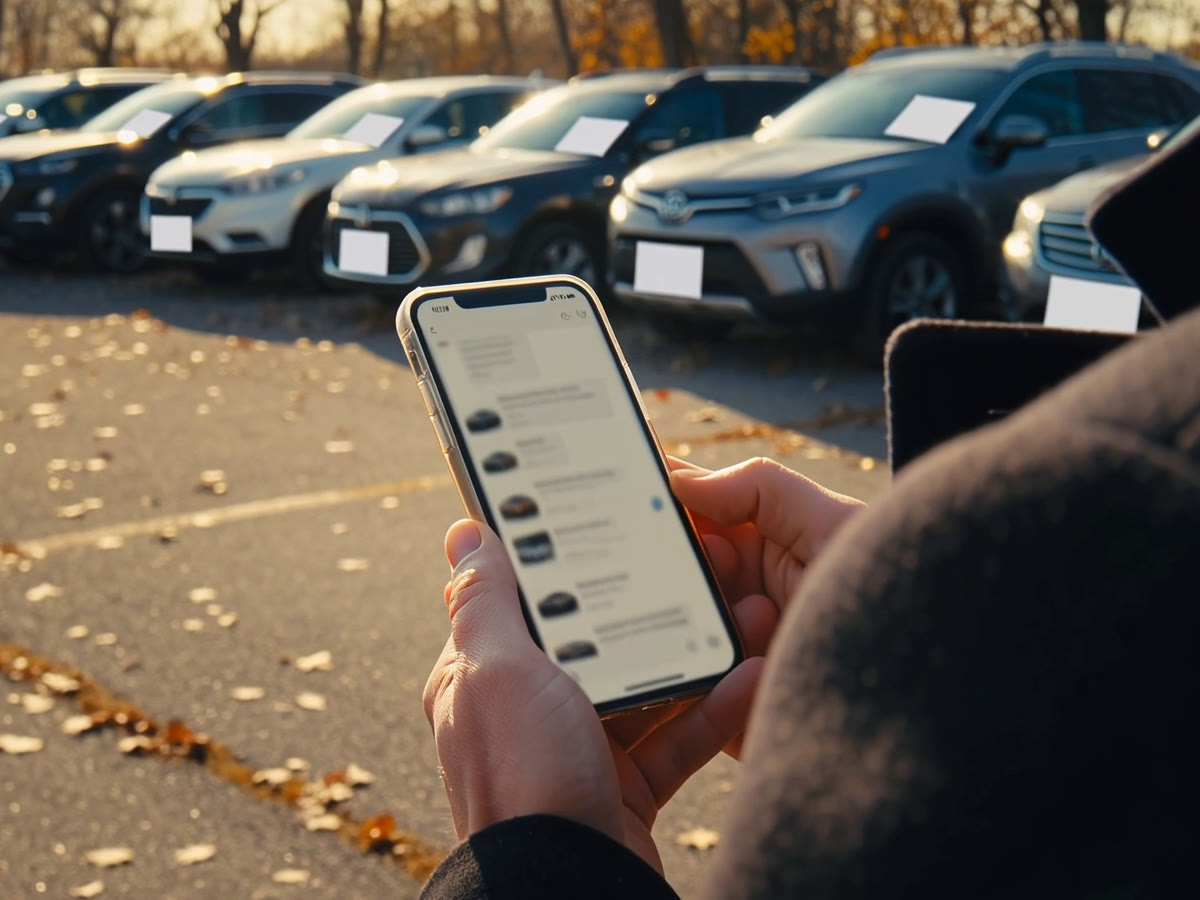
    Car shopper on a used-car lot holding a phone with an AI chat answer listing vehicles, a row of SUVs with window stickers behind

    How AI search finds a used-car lot

    Dealers hear a lot of vendor theory about how AI picks businesses. The useful parts come from the documentation OpenAI and Google publish, and both say roughly the same thing: the assistants work from pages they can crawl, index, and read as text.

    ChatGPT

    When a question needs current local information, ChatGPT can search the web and show the sources it used. OpenAI’s crawler documentation names OAI-SearchBot as the crawler that surfaces websites in ChatGPT search. Sites that block it will not be shown in ChatGPT search answers, though they can still appear as plain navigational links. OpenAI recommends allowing OAI-SearchBot in robots.txt and letting its published IP ranges through your host or firewall, and it says a robots.txt change takes about 24 hours to register for search.

    GPTBot is a separate crawler that collects content that may be used to train OpenAI’s models. You can block GPTBot and still allow OAI-SearchBot. Plenty of dealer sites block both because someone copied a “block all AI bots” snippet from a forum, which takes the store out of ChatGPT search answers entirely.

    Google AI Overviews and AI Mode

    Google’s guidance on AI features and your website says there are no extra technical requirements to appear in AI Overviews or AI Mode. A page has to be indexed and eligible to show in Google Search with a snippet. Google lists the usual basics as still worth doing, including allowing crawling in robots.txt and at the CDN, keeping important content in text form, making sure structured data matches the visible text on the page, and keeping Merchant Center and Business Profile information current. Google also says you do not need new machine-readable files, AI text files, or special schema to appear.

    Since August 31, 2026, Search Console has a Search generative AI control under Settings for every site. The default includes your site in AI Overviews, AI Mode, and generative features in Discover. If someone at your store or your website vendor switched it to exclude, your pages stop appearing in those answers within a few days. It takes two minutes to check.

    An AI search for car dealers checklist you can run this week

    Work through these in order. The first three cover most of the problems we see on independent lot sites, and each one also helps regular Google rankings and marketplace leads.

    1. Make sure the crawlers can get in

    Open yoursite.com/robots.txt in a browser. Look for lines that disallow OAI-SearchBot, Googlebot, Bingbot, or a blanket rule for every user agent. A setup that keeps search access open while opting out of model training looks like this:

    User-agent: OAI-SearchBot
    Allow: /
    
    User-agent: GPTBot
    Disallow: /
    
    User-agent: *
    Allow: /

    Then ask your website provider, in writing, whether a CDN or bot-protection service challenges automated visitors. A robots.txt file that allows OAI-SearchBot does nothing if a firewall blocks OpenAI’s IP ranges before the crawler reaches the page.

    2. Put the vehicle facts in plain page text

    Each car needs its own URL with the year, make, model, trim, price, mileage, VIN, stock number, and lot address in the HTML, not baked into a photo or loaded by a script after the page opens. A December 2024 analysis by Vercel, The rise of the AI crawler, found that OpenAI’s crawlers did not render JavaScript at the time. Inventory widgets that build the page in the browser can show a nice listing to a person and a blank shell to a crawler.

    A quick test: open a vehicle detail page, right-click, choose View Page Source, and search for the VIN. If the VIN is not in the source, assume an AI crawler cannot see it either. Our explainer on what makes a vehicle page crawlable walks through the rest of the page basics.

    Independent dealer at an office desk reviewing a vehicle detail page on a monitor to check that price, mileage and VIN are readable

    3. Show one price everywhere, with mandatory fees included

    Assistants pull from your site, your Google listing, and marketplaces like CarGurus and Cars.com. If the website says $14,995, the feed says $13,995, and the description adds a $699 dealer fee “not included,” the answer a shopper gets can quote any of those numbers. That is a bad first impression, and under the FTC’s September guidance it is also a compliance problem. The advertised price has to be the price any buyer can pay, with only government charges left out. Our breakdown of the FTC price transparency FAQs for dealers covers the fee rules, and the post on feed and vehicle page price mismatches covers keeping the feed and the page in sync.

    4. Add structured data that matches the page

    Google says no special schema is required for its AI features, but structured data that matches the visible text still helps search systems read a page without guessing. On a used-car site that means AutoDealer markup on the homepage and contact page (name, address, phone, hours) and Vehicle or Car markup on each vehicle page (VIN, mileage, price, availability). The prices and mileage in the markup have to match what the page shows. If you want to check what you have, our vehicle and AutoDealer schema generator builds the JSON-LD from your own facts and flags missing fields in markup you paste in.

    5. Make the store details match on every listing

    Use the same business name, address, phone number, and hours on your website, Google Business Profile, Bing Places, Apple Business Connect, Facebook Page, Yelp, and your dealer profiles on each marketplace. Pay attention to old phone numbers from a tracking vendor you dropped, a second lot you closed, or a “Sunday by appointment” line that lives on one listing and nowhere else. When an assistant finds two versions of your hours, it has to pick one, and it may pick the wrong one. Our guide to local SEO for car dealerships covers the Business Profile side in more depth.

    6. Answer the questions shoppers bring

    Among shoppers who use AI, Cox found the top way it helps with the dealer relationship is generating questions to ask the dealer. Those questions are predictable on a used lot: Can I trade in a car I still owe money on? What do I need to bring for financing? Do you hold a car with a deposit, and is it refundable? Do you take out-of-state buyers? Is there a warranty on this car or is it sold as-is?

    Put short, honest answers to those on your own site, one question per page section, in your store’s words and with your store’s real policies. A “Financing” page that lists the documents you ask for (proof of income, proof of residence, a valid license, references) gives an assistant a specific answer to cite. A page that says “we work with all credit types” gives it nothing.

    Budget pages help too. If your site can show a live, crawlable page of every car under $15,000, or every third-row SUV on the lot, that page matches the way Cox says shoppers now start: with a budget and a use, not a model. Keep these pages tied to live inventory so they never show sold cars.

    7. Pull sold cars quickly

    A car that sold Saturday and still shows “available” on Tuesday is a wasted lead and a bad review waiting to happen. When an AI answer cites that listing, the shopper calls about a car you no longer have. Mark units sold or remove them the same day, and make sure the marketplace feeds update on the same cycle. Our FTC FAQ breakdown also covers why a sold unit should never stay advertised and why off-site or in-transit units need to be labeled on the listing.

    How to test what ChatGPT and Google say about your lot

    Do this once now and once a month. Open a fresh ChatGPT chat with search on, then do the same in Gemini and Google’s AI Mode. Ask the questions a local buyer would ask, using your town by name:

    • Which used-car dealers in [your town] have a good reputation?
    • Where can I buy a used SUV under $15,000 near [your town]?
    • Does [your dealership name] have any pickups under 100,000 miles?
    • What are [your dealership name]’s hours on Saturday?
    • Can I trade in a car with a loan at [your dealership name]?

    For each answer, write down the date, which assistant, whether your store was named, which URLs were cited, and anything wrong. Ask each question two or three times, because answers change from run to run.

    The sources list matters most. If the assistant quotes old hours from a directory, fix the directory. If it cites a marketplace listing instead of your vehicle page, compare the two pages and figure out what the marketplace page shows that yours does not, which is usually price, mileage, or VIN in text. If your store never shows up on the budget question, look at whether your site has a crawlable page that answers it.

    Vendor research suggests budget and inventory questions are where most lots disappear. VIN Index, which sells dealer AI visibility services, published a September 29 sample of 216 saved answers from ChatGPT, Gemini, and Perplexity in Ottawa. The two “where should I buy” questions named a reviewed local dealership in every answer, a used SUV under CAD $25,000 question named one in 17%, and “best used seven-passenger SUV under CAD $30,000” named one in 6%. It is one market and one vendor’s sample, but it matches what you would expect: general questions get general answers unless a dealer page gives the assistant real inventory to point to.

    How to measure AI search traffic

    OpenAI’s publisher FAQ says ChatGPT adds utm_source=chatgpt.com to referral links, so in Google Analytics you can filter sessions by that source and see which pages people land on. Expect small numbers at first. A shopper who reads an answer that names your store and then searches your name on Google shows up as a branded search or a phone call, not as a ChatGPT session.

    For Google, clicks from AI Overviews and AI Mode are counted inside the regular Web search numbers in the Search Console Performance report, according to Google’s documentation. The Search Console help page for the generative AI control also points to a Generative AI performance report. Check it after you make changes to robots.txt or vehicle pages.

    The simplest tracking for a small lot is still the sales desk. Add “found us through ChatGPT or Google AI” as a lead source option in your CRM or on the deal sheet, and ask every walk-in how they heard about the car.

    What not to pay for

    ChatGPT, Gemini, and Google pick the sources for each answer themselves. Allowing a crawler only makes a page available to them. No vendor can sell you a guaranteed spot in an AI answer. Be careful with pitches that lead with a special AI file, a proprietary “AI schema,” or a monthly fee to “submit” your dealership to ChatGPT. Google says outright that its AI features need none of those things.

    Spend the time on the work above instead. Every item on the checklist also improves classic Google rankings, Google Vehicle Ads quality, and marketplace lead quality, so none of it is wasted if AI search grows slower than Cox’s survey suggests.

    Where AutoFire fits

    AutoFire gives every published vehicle its own detail page on your lot site, and the JSON-LD structured data and meta tags are generated from the listing fields. Update the price or mileage on the vehicle and the page updates with it, so the markup and the visible text stay in step. Your hours and contact details sit on the same site with consistent branding. AutoFire does not promise rankings or AI citations, but it handles the page structure covered above. You can see how the vehicle page SEO and structured data work, or look around at goautofire.com. If you also want ChatGPT or Claude to help manage inventory from the back office, we covered that in our guide to running your dealership with MCP.

    Whatever platform you use, start with the first three checks this week: robots.txt and firewall access, vehicle facts in the page source, and one fee-inclusive price on every channel. Then run the five test questions and save the sources list. That gives you a baseline to compare against when Cox publishes its third-quarter wave.

    This post is general marketing guidance, not legal advice. Check state advertising and fee rules with your attorney or state dealer association.


  • CarGurus Deal Rating Rules After the NYC Lawsuit: What Dealers Should Fix

    CarGurus Deal Rating Rules After the NYC Lawsuit: What Dealers Should Fix

    Watch: CarGurus Deal Ratings and Dealer Fees: What to Fix

    On October 15, 2026, New York City’s Department of Consumer and Worker Protection (DCWP) sued CarGurus in New York State Supreme Court. The city says CarGurus labeled used cars “Great Deal” or “Good Deal” based on asking prices that left out mandatory dealer fees, down payment conditions, and trade-in requirements, and that it did so more than 2,000 times. CarGurus says the claims don’t reflect the facts and that it will defend itself.

    CarGurus is the defendant, but every listing quoted in the complaint was posted by a dealer. Two days before the suit, on October 13, CarGurus also rewrote its Dealer Pricing Policy with tighter fee rules and a list of fee labels it will treat as violations. If you list used cars on CarGurus, your Deal Ratings now depend on how you fill out the fee setup tool and what you leave in your vehicle descriptions. This post covers what the city alleges, what the October 13 policy says, and the changes an independent lot can make to its CarGurus listings and its own website this week.

    What New York City says CarGurus did

    DCWP enforces the New York City Consumer Protection Law, which bans false advertising and special offers with hidden conditions. The complaint makes three main claims against CarGurus.

    • Deal Ratings and “below market” savings figures were calculated on an asking price that did not include every fee or condition in the dealer’s offer. The complaint counts at least 1,211 NYC listings rated “Great” or “Good” on a false asking price between September 15, 2023 and June 29, 2026, and at least 2,017 published savings calculations it calls deceptive.
    • The fee badges CarGurus added in late April (“Price includes fees,” “No additional dealer fees,” “Fees not disclosed”) were wrong on at least 149 NYC listings between April 30 and June 29, 2026, because the dealer disclosed a small fee in the tool and kept larger fees in a disclaimer.
    • CarGurus’ AI chatbot could generate lists of “Great Deals” in New York City without showing the dealer disclaimer or vehicle description, so a shopper using it had no way to see the extra fees without clicking through to each listing.

    The city also argues that CarGurus publishes dealer pricing guidelines and says it enforces them, but left deceptive listings up after DCWP sent cease-and-desist letters in July 2023 and May 2025. The complaint asks for a permanent injunction, restitution, and civil penalties of up to $3,500 for each knowing violation.

    A New York City rule sits underneath all of this. Under 6 RCNY § 2-103(i), the selling price of a car from a licensed second-hand dealer is the price advertised, and it “shall include all charges connected with the sale.” DCWP also proposed a citywide junk fee rule in July that would require the full price, with all mandatory charges, up front for any good or service.

    The listings in the complaint

    Two listings from the complaint show what a shopper saw.

    On June 15, 2026, CarGurus showed a 2018 Honda CR-V EX AWD from Elite Mitsubishi at $16,174, $2,212 below market and rated a “Great Deal.” The listing carried the “includes dealer fees” badge, and clicking it showed a $175 documentation fee inside the price. Further down, a separate disclaimer listed Prep & Destination at $1,995, a Conveyance Fee of $995, and an Admin Fee of $695. That is $3,685 in fees outside the price. By the city’s math the car was $1,473 above market, which by CarGurus’ own definitions is no Great Deal.

    On September 22, 2026, a 2018 Mercedes-Benz GLE 350 from Novo Motors was listed at $18,590 and shown as $3,413 below market. The dealer disclaimer at the bottom said the advertised price reflected “the balance after a 20% downpayment.” The complaint puts the real cost $1,234.50 above market.

    The complaint also says DCWP denied Elite Mitsubishi’s most recent license application, in part over its persistent misleading ads. Dealers whose listings end up as exhibits can face their own consequences.

    A CarEdge report cited in the complaint found that mandatory fees added about $1,100 on average to listed prices across more than 40,000 online quotes. If your doc fee and prep fee sit outside your CarGurus price, your listing looks like the ones in this complaint.

    What CarGurus changed this year, and what the October 13 policy adds

    CarGurus has been moving toward all-in pricing for months, and the complaint lays out the timeline.

    • Around April 30, CarGurus added fee badges and a shopper filter for listings that include dealer fees.
    • On June 24, it told dealers that starting July 14, used listings without disclosed fees would get “No Rating” and drop lower in search results, and that IMV (Instant Market Value) and Deal Ratings would be calculated on the all-in price including disclosed fees.
    • On July 29, according to the complaint, CarGurus reported that more than 90% of used inventory from subscribing dealers included disclosed fees.

    The updated Dealer Pricing Policy, dated October 13, 2026, goes further than a disclosure requirement. Every price on CarGurus must be the price available to any shopper and must include all mandatory dealer-imposed fees, with only tax, title, license, registration, and other government fees left out. A price cannot be conditioned on a down payment, a trade-in, dealer or preferred-lender financing, a payment method, or buying another product. Rebates and discounts can only be baked in if every shopper gets them without applying or qualifying.

    The policy names the fees it expects to see disclosed: documentation fees, reconditioning fees, dealer processing fees, electronic filing fees, market adjustments, and mandatory dealer-installed or pre-installed products and packages. It also lists fee entries that will not pass, including “John’s Dealership Financing Rebate,” “Down payment required,” a fee named “120,” and “Price Does Not Include Prep Fee 299.”

    The policy also says dealers “must not manipulate the CarGurus fee disclosure tools,” which the policy defines as disabling, mislabeling, or toggling fee entries to make the price look lower or earn a better Deal Rating. And CarGurus says it may check your own website, shopper feedback, and other platforms when it decides whether you comply. Penalties run from pulling your Deal Ratings and pricing to removing some or all of your inventory, with or without notice.

    Why a lawsuit against the marketplace lands on your listings

    CarGurus has a lawsuit to answer, and its fastest lever is enforcement against dealers. Its CEO’s statement says the Trust and Safety team uses AI tools and human review to find listings that break the rules and can remove Deal Ratings, pricing, or dealers from the platform. With a lawsuit pending, it is reasonable to expect more of those checks, comparing your disclosed fees against your description text and the price on your own vehicle pages.

    Regulators are working the same issue from the dealer side. The FTC warned 97 dealer groups in March to advertise prices that include all mandatory fees, and its October 8 settlement with Greenway Auto Group spelled out how a dealer’s third-party listings are treated. We covered what the Greenway order requires and how its listing safe harbor works last week, and the fee math for building an advertised price is in our walkthrough of the FTC’s dealer pricing guidance. This post sticks to what changes inside CarGurus.

    A “No Rating” listing also ranks lower, and shoppers can now filter to see only listings with fees included. If CarGurus is a meaningful lead source for your store, a fee setup that is incomplete or gamed costs you visibility before any regulator gets involved.

    Dealer laptop showing a marketplace listing with a fee breakdown next to a highlighted buyer's order, used to check CarGurus deal rating fee setup

    Set up CarGurus fee disclosure so the Deal Rating holds up

    Start with your buyer’s orders before you open the dashboard. Pull three recent retail deals and write down every charge that was not tax, title, or registration. That list is what CarGurus means by mandatory dealer fees. If a charge showed up on every deal, it belongs in the price.

    1. Open the dealer fee setup tool in your CarGurus Dealer Dashboard and enter each mandatory fee as its own line. Use the same name the buyer sees on paperwork. CarGurus’ Digital Deal setup guide asks for consumer-facing fee names of 40 characters or less that match how the fee appears in store.
    2. Leave government charges out. Tax, title, and registration are excluded by the policy, and CarGurus’ setup guide says it pulls them from a third party.
    3. If your feed already sends an all-in price, turn on the setting that says fees are included in your inventory feed. Leaving it off can cost you the Deal Rating even when the number is right. Turning it on when the feed price excludes fees is the kind of toggling the October 13 policy calls manipulation.
    4. Check the price preview in the tool against a real buyer’s order for one car. The preview number should match what your desk would quote a cash buyer before tax and tags.
    5. Update fees the same day they change at the store. If you raise the doc fee on the first of the month, the CarGurus number changes on the first of the month.

    Mandatory packages need a decision. Nitrogen tires, window etch, or a theft device that is already on the car and cannot be declined is a mandatory charge under the policy. Either put it in the price or make it optional in practice, which means a buyer can say no and pay the advertised number.

    Delete the fee disclaimers buried in your descriptions

    Almost every example in the complaint followed the same pattern. A small fee was disclosed through the tool, and larger fees were listed in the vehicle description or a disclaimer box near the bottom of the page. That pattern got the listings flagged, and the October 13 policy now names it.

    Most lots did not write those disclaimers last week. They came from a template in the DMS, a feed provider default, or a description someone wrote in 2022 and nobody touched since. Search your feed or description templates for these strings:

    • “does not include,” “plus,” “excludes,” and “not included”
    • “prep,” “reconditioning,” “conveyance,” “admin,” “processing,” “dealer fee,” and “documentation”
    • “down payment,” “with approved credit,” “when financed,” “with trade,” and “after rebates”
    • “internet price” or “e-price” when it differs from what the desk will honor

    Every hit has two possible fixes. Fold the charge into the price and delete the sentence, or confirm a buyer can decline the charge and rewrite the line so it says so plainly. Do not keep a disclaimer that contradicts a “Price includes fees” badge. That combination is the core of the city’s case.

    Watch payment and down-payment language too. A listing that advertises the balance after 20% down, like the GLE 350 in the complaint, fails the policy outright. If you want to show payments, show them as a separate figure below a price any cash buyer can pay.

    Dealership website VDP and marketplace listing for the same crossover shown side by side with matching prices and a VIN checklist

    Keep your website and your CarGurus price on the same number

    CarGurus says it may look at your own website when checking compliance. If the VDP on your site shows $16,174 with “plus $1,995 prep” and your CarGurus listing shows $19,859 with fees included, the mismatch looks like an error at best and a bait price at worst.

    The fix is one price source. Set the all-in price once, in your inventory system or website platform, and send that same number to your site, CarGurus, Facebook, Cars.com, and Google. Every marketplace has its own rules for fees, and the safest feed is one where no destination has to add anything. We made the same argument for Google in our guide to feed and landing-page price mismatches, where Merchant Center disapproves vehicles when the feed and the page disagree.

    Check timing as well as amounts. If your website updates prices hourly and your CarGurus feed runs once a night, a price drop can leave the two numbers apart for most of a day. Ask your feed provider when each export runs and whether price changes trigger an extra push.

    If you display CarGurus Deal Rating badges on your own VDPs, read that section of the policy closely. Badges have to be requested from CarGurus each time a page loads, shown only in the exact form CarGurus provides, and the price beside them has to follow the same fee rules. A saved image of a “Great Deal” badge next to a fee-excluded price would put the problem New York is suing over onto your own site.

    Down payment, trade-in, and financing-only prices

    Buy-here-pay-here and finance-focused lots run into the October 13 rules more than anyone. A price that only works with in-house financing, a minimum down payment, or a trade cannot be the CarGurus price. Neither can a price with a rebate that only some buyers qualify for, such as a military or loyalty discount.

    You can still advertise financing. The headline price on CarGurus and on your VDP has to be the cash price any shopper can pay, with payment offers below it and their own terms. If your business model depends on a lower “with financing” number, expect CarGurus to treat those listings as non-compliant, and expect a shopper who reads the city’s press release to ask about it.

    What the chatbot claim means for your listing data

    The chatbot section of the complaint is short. It says the chatbot’s “Great Deal” lists showed price and rating but left out the dealer disclaimer and vehicle description. Assume every AI shopping tool, marketplace search page, and Google listing works the same way, reading structured fields like price, mileage, and Deal Rating and skipping the fine print at the bottom of your description.

    Anything that changes what a buyer pays has to live in the price field. If that field excludes $2,000 in fees, every tool that quotes it is quoting a price your desk won’t honor.

    Folder of dated listing screenshots and buyer's orders on a used-car dealer's desk, kept as a record for CarGurus pricing compliance

    A one-week CarGurus Deal Rating cleanup for a 40 to 150 car lot

    This is a few hours of work spread across a week, and most of it is checking.

    1. Monday: Pull three recent buyer’s orders and list every non-government charge. Decide which are mandatory and which a buyer can really decline.
    2. Tuesday: Update the CarGurus fee setup tool to match that list, with fee names buyers will recognize. Set the feed-includes-fees option to match what your feed sends.
    3. Wednesday: Search description templates and dealer disclaimers for fee, down payment, and financing language. Fold charges into price or rewrite them as optional.
    4. Thursday: Compare ten VINs across your website, CarGurus, and Facebook. The headline price should match on all three, and any CarGurus listing showing “Fees not disclosed” or “No Rating” goes on a fix list.
    5. Friday: Brief the sales desk. A shopper who saw $19,859 with fees included should get a buyer’s order that starts at $19,859 before tax and tags. Save screenshots of ten listings and their matching buyer’s orders in a dated folder.

    Keep the screenshots. If CarGurus pulls a Deal Rating or a shopper complains to a regulator, a dated record showing the listing price matched the quote is the most useful thing you can produce.

    Repeat the ten-VIN check monthly. Fees change, new templates get added, and staff paste old descriptions onto new cars. Our post on how VINMax picks which cars to promote covers why a clean price matters before you pay to boost a listing, and our comparison of the two biggest used-car marketplaces covers how CarGurus stacks up against Autotrader on reach and cost.

    Where AutoFire fits

    AutoFire™ gives independent used-car dealers a lot website where every car gets its own page, and the same inventory record feeds the site and your marketplace syndication. You set the price once, with your fees inside it, and that number goes everywhere. If your CarGurus and website prices have drifted apart, you can get your lot online with AutoFire or book a short demo to see how one price source works.

    Sources

  • FTC Greenway Order: What It Requires and a Dealer Compliance Checklist

    FTC Greenway Order: What It Requires and a Dealer Compliance Checklist

    Watch: FTC Total Price Rule: Dealer Checklist

    On October 8, 2026, the FTC filed a complaint and a stipulated settlement against Greenway Auto Group, a set of Kia and Hyundai stores around Orlando. The FTC Greenway order is the first court order to come out of this year’s dealer pricing push, and it reads like a compliance spec: a fee definition, a prominence standard, a safe harbor for third-party listings, bans on specific sales tactics, and five years of recordkeeping. Greenway is a franchise group, but every provision maps to something an independent lot does every week.

    This post walks through what the FTC alleged, what each part of the order requires, and a dealer checklist mapped to those provisions. If you want the general fee math and VDP layout walkthrough, our FTC price transparency FAQs post is the place for that, and this post links back to it instead of repeating it. It is practical guidance from a dealer-website team, not legal advice. Run anything state-specific past your attorney.

    What the FTC alleged against Greenway

    The complaint, filed in the Middle District of Florida (Case 6:26-cv-02337), describes a pricing pattern many shoppers will recognize. Greenway advertised specific vehicles online and on third-party sites at one price, then charged more when the buyer sat down to sign. According to the FTC, buyers in more than 92% of transactions paid more than the advertised price, and those buyers paid an average of $3,354 more.

    The complaint lists where the extra money came from:

    • Dealer-imposed fees. One Greenway Kia North disclaimer named a $1,199.95 Dealer Fee, a $399.50 Administration Fee, and a $189.95 PTA Fee, bundled in the same sentence as taxes, tags, and title.
    • Reconditioning or “inspection” fees that, according to the complaint, often appeared nowhere in the online listing.
    • A roughly $995 “loyalty” discount baked into the internet price, which only repeat customers could get.
    • Discounts that only applied if the buyer financed through the dealership.
    • Mandatory add-on packages, including a $2,295 “Greenway Advantage” package the complaint says staff told buyers could not be removed.
    • Government charges such as title and registration that the FTC says were inflated.

    The fee disclaimer sat at the bottom of the VDP, below several screens of unrelated content. The FTC’s complaint calls that fine print deceptive in its own right, because it mixed dealer profit items with government charges and made the add-ons look like taxes.

    In March 2026 the FTC’s Bureau of Consumer Protection sent warning letters to 97 dealer groups, Greenway among them, telling them the price in an ad has to be the price the buyer pays apart from government charges. According to the complaint, Greenway responded by adding banners that read “GREENWAY ALL-IN PRICE” and “ZERO HIDDEN FEES,” plus new disclaimer copy promising transparent pricing. The complaint says that on May 28, 2026, a 2026 Kia Sportage X-Line advertised at a “Greenway Sale Price” of $37,752 was quoted in writing at $39,854.40.

    The complaint also covers prize mailers that told recipients they had won cash they could collect at the dealership. The FTC says the prizes were not real.

    What the FTC Greenway order requires, provision by provision

    Greenway neither admitted nor denied the allegations. Per the FTC, a stipulated order has the force of law once the district judge signs it, and this one is specific enough to use as a checklist.

    Total Price, defined

    The order defines Total Price as “the maximum total price, including all mandatory fees or charges a consumer must pay for a motor vehicle,” minus only charges that a federal, state, or local government requires the consumer to pay. Doc fees, dealer fees, admin fees, prep fees, reconditioning fees, and any package the buyer cannot decline all belong inside that number. Sales tax, title, and registration that go to the state can stay out. That matches the “actual price” standard FTC staff described in September, so if you already did the fee math from our pricing transparency FAQs walkthrough, the order confirms it rather than changing it.

    Most prominent, clear, and conspicuous

    Section II bars Greenway from showing “any amount a consumer may pay to purchase, finance, or lease” a vehicle without also showing the Total Price, clearly and conspicuously, “as the most prominently displayed item in any visual disclosure.” That covers monthly payments, down payments, and “as low as” figures as well as the sticker number.

    The order also spells out what clear and conspicuous means. A visual disclosure has to stand out by size, contrast, location, and how long it appears. On a website or app it has to be “unavoidable,” so a link to a disclaimer page or a tooltip does not count. It cannot be contradicted by anything else in the ad, and in video it has to be spoken and shown at the same time.

    A safe harbor for third-party listings

    Greenway is not automatically in violation when a marketplace or other third party advertises one of its cars with the wrong number, as long as three things are true. Greenway gave the third party the Total Price and asked that it be shown as the most prominent item, Greenway did nothing to undercut that request, and Greenway took every step within its control to get the third party to display it that way.

    Every dealer who lists on CarGurus, Cars.com, AutoTrader, Facebook, or Google vehicle ads faces the same question. Responsibility for the price on those sites starts with the feed and the request you send, and the dealer has to be able to show both.

    Records by VIN and by channel

    For five years, Greenway has to keep, for each advertised vehicle, the VIN or stock number, the vehicle description, the advertised prices and the dates those prices ran, and the disclaimer text it supplied. It also has to keep one representative ad per marketing channel per month, plus every pencil, four-square, buyer’s order, and consumer complaint. That is close to a ready-made logging spec for any lot.

    No fine, for now

    The order carries no monetary relief. According to Hudson Cook’s enforcement alert, after the Supreme Court’s 2021 decision in AMG Capital Management v. FTC, Section 13(b) of the FTC Act does not let the agency collect money, and with the CARS Rule vacated there was no trade regulation rule violation to support civil penalties. Greenway still ends up under a federal injunction, with sworn compliance reports for years and court contempt as the risk if it slips.

    Why an order against one group matters to an independent lot

    The order binds only Greenway. Its Total Price definition lines up with what FTC staff told every dealer in writing a month earlier. The FTC’s press release calls price transparency “a top priority,” and it follows the September 15, 2026 staff FAQs we covered in FTC Price Transparency FAQs for Dealers. The FAQs were guidance. Greenway is a lawsuit against a group that got one of the March warning letters and, according to the FTC, kept advertising the same way.

    Microsoft Advertising is moving the same way. Microsoft Advertising updated its pricing policy for U.S. automotive dealer ads in early October, with PPC News Feed spotting the change on October 2 and Search Engine Land reporting it on October 5. Coverage so far says the policy targets how vehicle prices and discounts are represented. If you run Microsoft search ads, pull the current policy text from your account before you change templates rather than relying on summaries.

    Fee surprises also cost sales. Shoppers compare your listing to three others on the same screen. If your $14,995 car becomes $16,300 at the desk, the shopper who drove 40 minutes leaves a review about it, and that review sits on your Google profile longer than any price drop. Greenway’s complaint describes a couple who confronted the dealership and then posted a negative review, after which the store lowered the online price on that same car.

    Run Section II as a pass or fail test

    Dealer laptop open to a vehicle page while a manager checks it against the FTC Greenway order requirements

    Section II is the heart of the order, and it works best as a yes or no test rather than a redesign project. Open three of your vehicle pages and one marketplace listing on a phone and answer four questions. Is any payment, down payment, “as low as,” or strike-through figure larger or higher on the screen than the all-in price? Is any required dealer fee missing from that price? Does any discount in the headline number depend on financing, a trade, loyalty, or a group affiliation? Is the fee explanation behind a link, tooltip, or footer instead of next to the price?

    Any yes is a fail under the order’s language. The fixes themselves (fee math per unit, price hierarchy, payment-widget labels, sold and in-transit status) are covered step by step in our lot-site audit for the FTC pricing FAQs, so work from that list and use this test to confirm the result.

    Use Greenway’s disclaimer as the example of what to delete

    Windshield price card on a used car, a reminder that the FTC Greenway order counts dealer fees as part of the price

    Greenway’s original disclaimer named dealer fees in the same sentence as taxes and tags, ran about 240 words, and sat at the bottom of the page. The complaint treats that structure as deceptive on its own, because it made profit items look like government charges. A version that fits the order is two sentences, placed right under the price:

    “Price includes all dealer fees. Sales tax, title, and registration fees paid to the state are extra.”

    If you sell optional products such as service contracts, GAP, or appearance packages, say they are optional and are not in the price, and make sure the desk treats them that way. Greenway also added “optional” language to its disclaimer, and the complaint says staff still told buyers the package could not come off.

    Build a safe-harbor file for every third-party channel

    The safe harbor protects Greenway only if it can prove three things: it supplied the right price, it asked for that price to lead, and it did everything in its control to get the listing fixed. For an independent lot on CarGurus, Cars.com, AutoTrader, or Facebook, that proof lives in a saved folder of emails and screenshots.

    1. Send each marketplace rep a short written request that your listed price displays as your all-in price with dealer fees included, and save the email and the reply.
    2. Keep one screenshot per channel per month next to the matching page on your own site, so you can show the numbers agreed on that date.
    3. When a listing shows a different number, log the date you noticed, the follow-up you sent, and the date it was fixed.
    4. Do the same for any agency or co-op program that runs ads in your name.

    The safe harbor does not cover a feed you mapped wrong. If your Facebook catalog or Google feed pulls a pre-fee field, that is your error, and our post on Google vehicle ads feed and VDP mismatches covers how those drift. The order also bars misrepresenting “the availability of vehicles at an advertised price,” so a sold unit still live on three marketplaces is a gap in the file too.

    Only claim “no hidden fees” if the desk can back it up

    After the warning letter, the Greenway stores added “ZERO HIDDEN FEES” and “the price you see advertised online is the real price” to their websites without changing what the sales desk quoted. In the FTC’s complaint, those banners show up as proof that the dealership knew the rules.

    Before you add a transparency badge to your site, run a quick test. Pick three stock numbers at random. Have someone who does not work the desk ask for a written out-the-door quote by text or email. Compare each quote, line by line, to the VDP price plus state tax, title, and registration. If any line other than government charges shows up, fix the process first and add the badge later. Our free out-the-door price calculator is a quick way to show a shopper the government charges on top of your Total Price.

    Train the desk on the same point. A salesperson who says “that internet price was for financed buyers” is repeating one of the specific practices in the complaint. So is “every car gets our protection package.” If a product is mandatory, it goes in the price. If it is optional, the buyer can say no and pay the advertised number.

    Copy the order’s five-year recordkeeping spec

    Dealer desk with a binder of listing screenshots and a pricing spreadsheet kept the way the FTC Greenway order describes

    The order’s recordkeeping section is useful even for a 30-car lot, because it describes what an investigator or an attorney general’s office would ask for first. A shared spreadsheet covers most of it.

    • One row per stock number with VIN, year, make, model, and the date it went live.
    • Each advertised price and the date it changed, including price drops.
    • The disclaimer text that ran with the listing.
    • A monthly screenshot of one listing from each channel you use (your site, CarGurus, Cars.com, AutoTrader, Facebook, Google).
    • Copies of the buyer’s order and any worksheet used to pencil the deal.
    • Every price complaint, including bad reviews about fees, and what you did about it.

    If your website keeps a price history per vehicle, export it monthly instead of retyping it. The goal is to show, for any car on any date, what price you advertised and what the buyer paid.

    Prize mailers, loyalty pricing, and financing-only deals

    Three smaller items in the order affect promotions independent lots run all the time.

    Prize and scratch-off mailers are covered directly. The order bans misrepresenting whether someone won, what the prize is, and what it is worth. If you use a direct-mail vendor for a “you may have already won” piece, read the copy yourself. The dealership’s name is on it, not the vendor’s.

    Loyalty or returning-customer discounts are fine as a separate offer. Greenway’s problem, according to the complaint, was a $995 loyalty discount built into the advertised price that most buyers could not get. Keep the advertised number at what any buyer pays, and list the loyalty savings below it.

    Financing-only pricing is the third. The order bars misrepresenting “whether any type of or source for financing is required” to get a vehicle at a particular price. Buy-here-pay-here and in-house finance lots should be especially careful. If cash buyers and outside-financing buyers pay a different price than in-house buyers, the advertised price has to be the one every buyer can get.

    FTC Greenway order checklist for dealers

    Each line below maps to a specific part of the order. Print it, work through it with whoever sets prices and whoever runs the desk, and date it when it is done.

    1. Fee definition. You have a written list of every fee charged on every deal, each marked required or optional, and every required fee sits inside the advertised price.
    2. Prominence (Section II). Three vehicle pages, one search results page, and one marketplace listing pass the four-question test above on a phone.
    3. Clear and conspicuous. Nothing about fees lives only behind a link, tooltip, or footer, and any video ad that states a payment also says and shows the all-in price.
    4. Conditional offers. Financing-only, trade-in, loyalty, and group discounts appear below the headline price with their conditions, never inside it.
    5. Financing representations. Cash buyers and outside-financing buyers can buy at the advertised price, and nobody on the floor says otherwise.
    6. Add-ons. Every package a buyer cannot decline is in the price, and every optional one can actually be removed at the desk.
    7. Transparency claims. Any “no hidden fees” or “all-in price” badge has passed a three-car written quote test run by someone outside sales.
    8. Safe harbor. Each third-party channel has a saved written price request and a current monthly screenshot.
    9. Prize promotions. Someone at the dealership has read the copy on every mailer or scratch-off before it ships.
    10. Records. A spreadsheet exists with VIN or stock number, advertised prices and dates, disclaimer text, monthly channel screenshots, deal worksheets, and price complaints, with a calendar reminder to keep it current.

    Moving required fees into every listed price can push your cars lower on price-sorted marketplace results for a while. The trade is a listing that matches the desk, fewer walkouts, fewer one-star fee reviews, and a file that answers the first question an investigator asks.

    Where AutoFire fits

    AutoFire™ gives each car its own vehicle page on a lot website you run yourself. On Pro, the same inventory record feeds the private outbound feeds you share with marketplace partners, so a price you correct once on the website goes out to every enabled channel without a separate spreadsheet. That shortens the prominence and safe-harbor items on the checklist above. You can see how the feeds work on our inventory syndication page, or start a site at goautofire.com and keep one price on every channel.

    Sources

  • CarGurus VINMax for Dealers: Cut Inventory Turn Without Blind Boosts

    CarGurus VINMax for Dealers: Cut Inventory Turn Without Blind Boosts

    Watch: VINMax: Don’t Boost Blind

    On September 29, 2026, CarGurus published details on VINMax, a VIN-level marketing tool that uses the company’s marketplace demand data to decide which cars get extra exposure. CarGurus says boosted listings sold nine days faster than comparable non-boosted ones (a 23% turn improvement in their study window) and produced 34% more daily leads. Those figures come from CarGurus’ own analysis of about 10,300 boosted listings versus 24,000 similar never-boosted listings between February 1 and July 13, 2026. Treat them as vendor research, not a guarantee for your market.

    If you run an independent used-car lot that lists on CarGurus, the useful question is not “is AI cool.” It is whether you can change how you pick boosts, fix VDPs before spend spikes, and catch aging units earlier this week. That is the operator guide below.

    What CarGurus VINMax actually does for dealers

    VINMax sits in CarGurus’ dealer toolkit next to pricing and shopper tools. In CarGurus’ framing, PriceVantage flags when a price change may help margin or velocity, VINMax decides where extra visibility can help after pricing is in range, and Shopper Signals points at buyers who look more likely to convert. VINMax promotes selected VINs on CarGurus and through off-site channels using live supply and demand signals. Strong-demand cars get pushed while interest is high. Soft cars get attention earlier, before they become 60- and 90-day problems.

    For a 40-120 unit independent lot, that matters because most stores still boost the wrong way: the manager’s favorite car, the highest pack, or whatever the rep pitched last month. VINMax’s pitch is that the marketplace data should pick the VIN, not the Monday morning gut feel. You still own the photos, price, fees, and sold-car hygiene. The AI does not fix a dead VDP.

    Why this passes the retail lot test this week

    A used-car dealer can change something on the lot site, marketplace listings, ads, or lead follow-up because of this launch:

    • Turn VINMax on or ask your CarGurus rep how it is provisioned on your account
    • Audit which VINs currently get paid boosts and kill blind boosts on cars with weak photos or wrong prices
    • Bring aging inventory into a weekly review with price + merchandising + boost decisions in one meeting
    • Make sure your website VDP and CarGurus listing match on price, mileage, and availability before you pay for more views
    • Staff the BDC for a higher lead volume on boosted VINs so the extra inquiries do not die in voicemail

    That is retail action. It is not a wholesale auction index story.

    Rows of used cars on an independent lot representing aging inventory CarGurus VINMax dealers may boost

    What the press release leaves out for independents

    Wire coverage of VINMax mostly restates CarGurus’ turn-time and lead claims. Independent operators need the unglamorous parts:

    1. Boosting a car with three phone photos and a mismatched fee still wastes money, even if the algorithm picked the VIN.
    2. If your CarGurus price still excludes a mandatory doc fee while your lot site shows all-in pricing (or the reverse), you are training shoppers to distrust both pages. Pair this with the all-in price work from the FTC price transparency FAQ checklist.
    3. Faster turn on CarGurus does not help if the unit is still live on your site and other marketplaces after it sells.
    4. Off-site promotion in the VINMax stack can send traffic to a landing experience you do not control as tightly as your own VDP. Check what URL and creative shoppers land on.
    5. Lead quality still depends on your response time. A 34% bump in daily leads is a staffing problem as much as a marketing win.

    Build a VINMax-ready VDP before you spend

    Before you let any AI decide which VIN deserves more exposure, run a hard VDP gate. If a car fails the gate, fix the page first. Do not boost it.

    Price and fees. The cash price a shopper sees on CarGurus should match the price any buyer can pay on your lot site, aside from government charges. If you recently moved to all-in advertised pricing, confirm the feed field CarGurus uses is the same number your website shows. Marketplace deal badges and shopper comparisons get noisier when half the industry still games the sticker and half does not.

    Photos. Minimum for a boost candidate: clean exterior set, interior, odometer, and at least one detail shot that proves condition. Dark garage phone pics and dealer-lot clutter kill conversion after the click. If VINMax sends more traffic to a weak gallery, you pay for bounce.

    Copy. Write the options, recent service, and known issues in plain language. Skip slogan soup. Shoppers comparing two similar Compacts care about tires, brakes, Carfax notes, and whether the price is the real price.

    Availability. In-transit and sold statuses must be honest. Boosting a car that already has a deposit is how you burn the next lead and your CarGurus reputation.

    Vehicle photo station for VDP readiness before CarGurus VINMax dealers boost a listing

    A two-hour VINMax audit for a 50-150 car lot

    Block two hours this week. Bring your CarGurus login, your website inventory list, and last month’s aged units.

    1. Map every paid boost you already run

    Export or screenshot every VIN with a featured, spotlight, or other paid placement. Note days in stock, internet price, photo count, and lead count for the last 14 days. Anything with weak photos or a price you would not defend on your own VDP comes off boost today.

    2. Ask how VINMax is configured on your store

    Ask your CarGurus contact three plain questions: Is VINMax active on our rooftop? Which channels can it promote to? What budget or caps do we control? Write the answers in your ops notes. Do not assume the product that launched in the press release is already live on every package.

    3. Build an aging triage list outside the algorithm

    Pull every unit at 30, 45, and 60 days. For each one, force a decision: reprice, remake photos, wholesale, or keep and boost. VINMax can help the “keep” bucket. It should not be your excuse to avoid wholesale on a dead truck.

    4. Sync website and CarGurus from one source

    When price, mileage, or status changes on the lot, both the dealer website and the CarGurus listing need the same update on the same day. Feed lag is still one of the fastest ways to turn paid clicks into angry phone calls. If you also run Google Vehicle Ads, keep the same discipline you use for feed and VDP mismatch. CarGurus now withholds Deal Ratings from used listings whose price leaves out mandatory dealer fees, so read what the NYC lawsuit and the new fee rules mean for your listings.

    5. Set a response SLA for boosted VINs

    If VINMax works, lead volume climbs on specific cars. Assign an owner. Target first response in minutes during business hours, not “sometime today.” Log which boosted VINs produced appointments versus tire-kickers so you can tell whether the tool is buying traffic or buyers.

    Dealer BDC desk phone and laptop ready for extra CarGurus VINMax dealers leads

    How VINMax fits affordability pressure heading into Q4

    On September 28, 2026, Cox Automotive’s Derek Hansen told CBT News that used demand is tilting toward vehicles shoppers can actually finance, and that total inventory counts matter less than having cars in the price bands that are moving. Late-model used supply is still tight from pandemic production cuts, while new-car averages crossing $50,000 again keep more shoppers on the used lot.

    That context is why VIN-level marketing is more useful than blanket homepage ads. If your lot is heavy in a slow band, boosting every unit equally spreads budget across cars the market is not financing. Pair VINMax (or any selective boost) with honest merchandising on your site: payment examples only when compliant, clear all-in prices, and filters that help shoppers find the financeable band you actually stock.

    Independents who connect service-drive and CRM acquisition to the retail site still have an edge on sourcing those scarce bands. Marketing automation does not replace that inventory work. It only decides which of the cars you already own deserve more airtime this week.

    Dealer examples: three boost mistakes VINMax will not save

    The 72-day truck with one photo. A Midwest independent kept boosting a high-pack pickup because wholesale felt like a loss. CarGurus traffic rose. Appointments did not. The VDP still showed a single exterior shot and a price that ignored a mandatory doc fee shown on the buyer’s order. Fixing photos and all-in price moved the truck faster than another month of boost spend.

    The “manager’s special” that never aged. A 35-car lot spent boost budget on a low-mileage SUV the owner liked. Meanwhile three Compacts in the hottest payment band sat quiet at day 40. A VIN-level tool that watches demand would have flipped that priority. Even without VINMax, sorting boost candidates by days supply in your price band beats sorting by ego.

    The sold car that stayed featured. A store sold a sedan on Saturday, forgot to pull marketplace status until Tuesday, and kept paying for clicks into a “call for availability” dead end. Same-day sold suppression on the website feed and CarGurus listing is non-negotiable if you automate promotion.

    A seven-day plan for CarGurus VINMax dealers

    Day 1. Read CarGurus’ VINMax notes on the dealer site and confirm account access. Screenshot current boosts.

    Day 2. Run the VDP gate on every currently boosted VIN. Fix or pause failures.

    Day 3. Build the 30/45/60 aging list. Decide keep, reprice, remake, or wholesale.

    Day 4. Align website internet price, CarGurus price, and fee disclosures. Spot-check five live VINs on both surfaces.

    Day 5. If VINMax is available, enable or expand it with a clear monthly cap. If it is not on your package yet, ask for timeline and interim manual boost rules based on the aging list.

    Day 6. Train sales and BDC on the boosted VIN list and the response SLA. Make sure STOP and consent rules still hold on text follow-up (see the recent TCPA texting after STOP notes if your store texts leads).

    Day 7. Review leads, appointments, and turns on boosted VINs. Keep what produced appointments. Kill what only produced clicks.

    Questions to ask before you sign a VINMax add-on

    Independent dealers get burned when marketplace add-ons arrive with fuzzy packaging. Before you expand spend, get written answers on:

    • Whether VINMax is included in your current CarGurus package or billed as incremental spend
    • Which off-site channels it can use, and whether you can exclude any of them
    • How quickly a sold or price-changed VIN stops getting promoted after your feed updates
    • What reporting you get per VIN: spend, views, leads, and sold outcomes
    • Whether your store can override the algorithm and force a VIN off boost for operational reasons

    If the rep cannot answer those in one call, pause. Selective boosting only helps when you can measure it against appointments and turns on your own lot, not against a national median from a press release.

    Where AutoFire fits

    AutoFire™ is a same-day retail lot website for independent used-car dealers. Each car gets its own page, and you run the site yourself. When marketplace tools like VINMax send more shoppers at specific VINs, the VDP on your own domain has to be ready: accurate price, current photos, and same-day sold updates. If you want that lot site in place without waiting on an agency queue, start at www.goautofire.com.

    Sources

    This article is operator guidance for retail used-car dealers, not legal advice. Confirm product availability, pricing, and advertising rules with CarGurus and your counsel.

  • TCPA Dealership Texting After STOP: Fix Dual-Purpose SMS This Week

    TCPA Dealership Texting After STOP: Fix Dual-Purpose SMS This Week

    Watch: TCPA Texting After STOP: The Dealer Checklist

    Dealership TCPA texting risk just got sharper for independent lots that keep messaging after a shopper replies STOP. On September 21, 2026, the Northern District of Ohio denied a motion for judgment on the pleadings in Shafer v. Toyota of Boardman (2026 WL 2819768). The court allowed claims to proceed over follow-up texts that asked for permission to keep texting and for a quick call about the customer’s current car, even though those lines did not pitch a specific vehicle. Context and purpose mattered more than the wording. Industry coverage on TCPAWorld and the National Law Review summarized the holding on September 23, 2026.

    Skip the price-transparency FAQ angle. This one is about lead and SMS operations. If your CRM, BDC tool, or “we buy cars” campaign can still fire after an opt-out, treat that as a this-week fix, not a someday policy rewrite. Nothing here is legal advice. Have counsel review your scripts, consent language, and vendor contracts for your state and stack.

    Independent dealers also win when the same discipline shows up on the lot site: clear consent on forms, accurate vehicle pages for the cars you discuss by text, and one place that owns lead follow-up. Soft path if you need a same-day retail site and lead inbox: www.goautofire.com.

    What Shafer said about dual-purpose SMS

    According to reporting on the decision, the dealership’s chain started with an upgrade-style marketing text. The consumer replied STOP. Two later messages were the ones before the court:

    • “May I communicate with you via text?”
    • A request for a quick phone call about the consumer’s 2018 Camry

    Read alone, those lines look polite and informational. Read in the sales sequence that came before them, the court said they could serve a dual purpose: reopen a sales conversation by talking about the customer’s current vehicle. Dual-purpose communications have long been treated as marketing under TCPA analysis. The defense’s motion for judgment on the pleadings failed, and the case is still pending, so this is not a final ruling on liability or damages. It is a clear signal that “we were only asking a process question” is a weak shield when the surrounding campaign is about selling cars.

    Two practical notes from the same coverage: intent and context beat creative wordsmithing, and the defense did not raise every available argument in that motion. Do not treat one district-court denial as a national rulebook. Do treat it as a reason to stop gambling on cute follow-ups after STOP.

    Why independent used lots should care this week

    Franchise stores often have corporate legal templates and multi-store suppression tools. Many independent used-car lots run a thinner stack: one CRM, a texting add-on, a marketplace lead pipe, and maybe a separate “equity” or “we buy your car” vendor. That mix creates the exact failure mode in Shafer: a STOP lands in one channel while another tool keeps poking the same phone number with softer language.

    Retail applicability is straightforward. You can change, this week:

    • What happens in your texting tool the second STOP arrives
    • Whether “permission to text” or “quick call about your trade” templates still fire after an opt-out
    • Whether website lead forms collect express written consent for automated texts
    • Whether sold, traded, or dead leads stay on blast lists
    • Whether your public lot site and VDP still match the cars your BDC mentions in SMS

    If a story cannot change lot-site, ads, VDP, leads, or compliance this week, it does not belong in a Monday dealer post. Shafer passes that test.

    Map every path that can text a shopper

    Before you rewrite one template, inventory the pipes. Write them on a single page so the owner and the BDC lead see the same list.

    1. Website forms on inventory search, VDP, finance, and trade-in pages
    2. Marketplace and third-party lead providers that push SMS-ready contacts
    3. CRM or BDC sequences for new internet leads
    4. Sold-customer and service reactivation campaigns
    5. “We want to buy your car” / equity mining vendors
    6. AI dialers, voice drops, or chat-to-text bridges tied to the same numbers

    For each pipe, record who owns it, which phone numbers it can dial or text, where consent is stored, and what happens on STOP. If you cannot answer those four points for a vendor, pause that vendor’s campaigns until you can. Fisher Phillips’ June 2026 dealership TCPA overview makes the same operational point in broader form: dealers, not vendors, usually carry the burden of proving consent when a suit arrives.

    Treat STOP as a hard stop, not a soft restart

    Shafer’s fact pattern is a warning label for a common BDC habit: treat STOP as “they are annoyed, try a milder opener.” That habit is expensive. Build a rule that any reasonable opt-out, including STOP, freezes promotional SMS and related outbound sales nudges for that number across every tool you control.

    Operational checklist for the next 48 hours:

    • In every texting platform, confirm STOP adds the number to a shared suppression list within minutes, not overnight
    • Disable templates that ask for fresh texting permission after an opt-out unless counsel has approved a narrowly limited confirmation path
    • Disable “quick call about your current vehicle” texts that sit inside a prior sales sequence after STOP
    • Sync suppression to marketplace lead routers and AI outreach tools, not only the main CRM
    • Log the opt-out timestamp, channel, exact words, and which systems received the suppression

    FCC opt-out guidance in recent years has pushed businesses to honor reasonable revocation methods and to stop promotional traffic on a short clock. Your counsel should confirm the current federal and state rules for your programs. The dealer takeaway is simpler: one STOP should not become three “helpful” follow-ups.

    Dealership TCPA texting phone showing STOP opt-out on a used car lot desk
    After STOP, do not restart the sales conversation with a softer SMS.

    Dual-purpose language to pull from live templates

    Audit active SMS for messages that look informational but exist to reopen a deal. Common independent-lot examples:

    • “Can I text you about your trade appraisal?” after a prior upgrade pitch
    • “Are you free for a quick call about your 2018 Camry?” when the real goal is a new unit
    • “Just checking if this number is still good” inside a dead lead reactivation blast
    • “We have a buyer looking for your model” when the shopper already opted out of marketing texts
    • Service-style reminders that suddenly attach financing or inventory offers

    Replace dual-purpose lines with messages that stay inside the consent you can prove. If you only have consent for appointment reminders, do not smuggle a sales pitch into the reminder. If you have no durable consent record, do not text. Call on a consented path, email if appropriate, or wait for the shopper to re-engage on the website.

    Fix website lead-form consent before you buy more leads

    Many TCPA fights start on the form, not in the courtroom. Independent lots should review every public form that collects a mobile number:

    • Consent language is clear, near the submit button, and not buried only in a terms link
    • Checkboxes for automated marketing texts are not pre-checked
    • The disclosure says who will text or call and that consent is not a condition of purchase where required
    • The CRM stores the form version, timestamp, IP or session evidence, and the exact disclosure text
    • Trade-in and “sell us your car” forms do not reuse buyer-consent language that never mentioned outbound SMS

    If your lot site cannot attach the vehicle, source, and consent status to the lead, fix that routing before you spend on more marketplace traffic. AutoFire™’s lead management workflow is built for independent dealers who need source and shopping context on the same record. For a broader lead operating plan that stays separate from this compliance angle, see auto sales leads for car dealerships.

    Dealership TCPA texting consent checkbox on a used car website lead form
    Consent language on the VDP and trade forms is part of dealership TCPA texting compliance.

    Keep SMS promises aligned with live inventory and VDPs

    Compliance and retail trust meet on the vehicle detail page. If a text mentions a Camry, Escape, or F-150 that already sold, you create both a customer complaint and a messy paper trail. Independent lots should run a daily loop:

    • Remove or mark sold units on the public site the same day they leave
    • Stop SMS templates that hard-code a VIN or stock number after the car is unavailable
    • Match price and mileage on the VDP to what BDC scripts are allowed to say
    • Send shoppers a link to the live VDP instead of restating stale numbers in the text body

    That habit also supports other retail channels. If you run Google Vehicle Ads, feed-to-VDP mismatches create Merchant Center trouble of their own; we covered that ops path in Google Vehicle Ads feed vs VDP mismatches. Pricing transparency on ads and pages remains a separate FTC topic covered in FTC price transparency FAQs for dealers. Use those posts for price and feed work. Use this one for SMS opt-out and dual-purpose risk.

    Centralize suppression across CRM, vendors, and AI tools

    Shafer is about texts after STOP. The next failure usually comes from fragmented tools. A customer opts out in the sales texting app, then an equity vendor texts the same number, then an AI voice product leaves a ringless drop. From the customer’s seat, that is one dealership that ignored them.

    This week’s owner task:

    1. Name one person who owns the master suppression list
    2. Require every outbound SMS vendor to read that list before send
    3. Turn off AI or prerecorded outreach on numbers with marketing opt-outs until counsel clears the use case
    4. Train sales and BDC that verbal “don’t text me” during a call counts as an opt-out to log immediately
    5. Spot-check ten opted-out numbers across every platform you pay for

    Document the spot-check. In TCPA disputes, retrieval of consent and opt-out history often decides early bargaining position. Screenshots of today’s settings are cheaper than reconstructing them under a complaint deadline.

    Dealership TCPA texting CRM desk with suppression list for used car leads
    One suppression list should govern CRM, marketplace, and AI texting tools.

    A 7-day dealer action plan

    Day 1: Export every active SMS template. Flag dual-purpose lines and anything that can send after STOP. Pause the flagged templates.

    Day 2: Verify STOP and other opt-out paths write to one suppression list shared by CRM and vendors. Test with a controlled internal number.

    Day 3: Review website lead, finance, and trade forms for express written consent language and evidence storage. Fix pre-checked boxes.

    Day 4: Reconcile live inventory with any VIN-specific SMS cadences. Kill texts that reference sold cars.

    Day 5: Meet vendors. Get written answers on consent proof, STOP timing, and indemnification. Pause anyone who cannot answer.

    Day 6: Train the floor and BDC with three examples: valid reminder, dual-purpose restart, and hard STOP. Role-play the logging step.

    Day 7: Have counsel review the revised templates and form language. Keep the dated packet with your compliance file.

    What not to do after reading Shafer

    • Do not “A/B test” softer openers on people who already opted out
    • Do not assume a past purchase lets you text anything for 18 months without reading current rules and your consent scope
    • Do not rely on a vendor badge that says compliant without seeing the form language and logs
    • Do not bury this as a franchise-only problem; independent lots get sued too
    • Do not confuse this post with legal advice or with FTC advertising-price FAQs

    Where the lot site fits

    Texting compliance lives next to retail execution. Shoppers still judge you on whether the car is real, the price is clear, and someone answers the lead. A same-day independent dealer website with per-car pages, syndication, and a lead inbox reduces the urge to spray stale SMS when inventory data is messy. If you need that foundation, start at www.goautofire.com and keep your counsel in the loop on consent language before you turn campaigns back on.

    Last reviewed September 28, 2026. Based on public reporting of Shafer v. Toyota of Boardman and general dealership TCPA guidance. Not legal advice. Confirm requirements with your attorney for your state, vendors, and message types.

  • Hello world!

    Welcome to WordPress. This is your first post. Edit or delete it, then start writing!